
BuddhistCatholicContemplativeEvangelicalGeneral ChristianHinduJewishLatter-day SaintMuslimNew VisionsProgressive Christian
Beliefs
- Buddhist
- Catholic
- Contemplative
- Evangelical
- General Christian
- Hindu
- Jewish
- Latter-day Saint
- More Voices
- Muslim
- New Visions
- Pagan
- Progressive Christian
Topics
- Religion News
- Food and Religion
- Sports and Religion
- Religious Art
- Religious Music and Entertainment
- Religious Events
- History and Religion
- Style and Religion
- Politics and Religion
- Women in Religion
- Recreation Outdoors and Religion
- Business Finance and Religion
- Careers Workplace and Religion
- Education and Religion
- Family Parenting and Religion
- Health Fitness and Religion
- Home and Religion
- Relationships and Religion
- Technology and Religion
- Travel and Religion
Columnists
- Buddhist Columnists
- Business Finance and Religion Columnists
- Careers Workplace and Religion Columnists
- Catholic Columnists
- Contemplative Columnists
- Education and Religion Columnists
- Evangelists Columnists
- Family Parenting and Religion Columnists
- General Christian Columnists
- Health Fitness and Religion Columnists
- Hindu Columnists
- History and Religion Columnists
- Home and Religion Columnists
- Jewish Columnists
- More Voices Columnists
- Latter Day Columnists
- Muslim Columnists
- New Visions Columnists
- Nonreligious Columnists
- Pagan Columnists
- Politics and Religion Columnists
- Progressive Columnists
- Recreation Outdoors and Religion Columnists
- Relationships and Religion Columnists
- Religion News Columnists
- Religious Art Columnists
- Religious Events Columnists
- Religious Music and Entertainment Columnists
- Sports and Religion Columnists
- Style and Religion Columnists
- Technology and Religion Columnists
- Travel and Religion Columnists
- Women in Religion Columnists
Resource Library
- 2026 Calendar
- Library of World Religions
- The 100 Most Holy Places on Earth
- Patheos Answers
- Podcasts
- Videos
- Faith Leaders Database
- Anglican Episcopalian
- Bahai
- Baptist
- Buddhism
- Christianity
- Confucianism
- Eastern Orthodoxy
- Hinduism
- Holiness and Pentecostal
- ISKCON
- Islam
- Judaism
- Lutheran
- Methodist
- The Church of Jesus Christ of Latter-day Saints
- New Age
- Paganism
- Presbytarian and Reformed
- Protestantism
- Religion Behind the Scenes
- Roman Catholic
- Scientology
- Shia Islam
- Sikhism
- Sufism
- Sunni Islam
- Taoism
- Zen
- See all religions
Research Tools
 Ad-Free & Subscriber Log-In Subscription Support
Ad-Free & Subscriber Log-In Subscription Support
Follow Patheos 

- Trending:
- Forgiveness
- |
- Marriage
- |
- Consciousness
- |
- Death Penalty
- |
- Election
- |
- Halloween

- Home
- Evangelical
- Read my Mohler Interview
Read my Mohler Interview
Last updated on: June 22, 2020 at 2:11 pm by Adrian Warnock
Read my Mohler Interview 2020-06-22T14:11:39+01:00 Adrian Warnock
Patheos Explore the world's faith through different perspectives on religion and spirituality! Patheos has the views of the prevalent religions and spiritualities of the world.
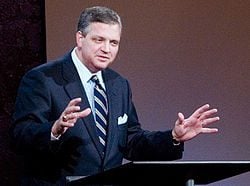 This is a transcript of the interview I did with Al Mohler before Christmas on leadership. Thanks to Mandy Johnson for typing this up!
Adrian: Hello there! My name is Adrian Warnock, I am here with Dr Albert Mohler and we are broadcasting live on the internet. Thanks for joining me Al.
Albert: It’s great to be with you Adrian. Thank you.
Adrian: We are obviously going to talk quite a bit about your book, but before we get to that I did not think we could let your briefing go by without a brief comment from me. You seemed to imply that non-religion boxes indicated that people were atheist and that there was a massive decline in the UK Church over here. I just wanted to point out that a lot of those people will not be atheists, first of all. Secondly, we are not that worried over here and here’s the reason why. The decline is almost exclusively in nominal and so what we are seeing is a much purer Church, and the evangelical Church is, in some places, still growing. Any thoughts or comments on that, Al?
Albert: Yes, I actually looked at the data and it is interesting that there has been a significant spike on both sides of the Atlantic in terms of the number of persons who are self-identifying as either atheists or agnostics. That can indicate a number of things. For instance, in the British census data for England and Wales, it is interesting that there were more persons who newly identified as atheists or agnostics than, you might say, dis-identified themselves and affiliated themselves as Christians. It is the same thing with this in the United States. You are exactly right, what you are looking at here is the exit of the nominal and at least the gain of that, as it were, defining what Christianity is so that people know when they are not Christians, so there is a gain in that. But it also tells us that the process of secularisation has actually reached a trajectory that a considerable amount even down the road than some of the most influential sociologists that believed.
Adrian: I know, and so for sure we are in an environment now that is much more hostile to Christianity and I think that, unusually perhaps, we are ahead of the game in the UK. We are often used to saying that trends hit us from the US but I feel that what we are experiencing is coming your way. Some people talk about, for example, a place like Seattle as being one of the least churched cities in the US but when I hear the stats about Seattle or places like that, I would just love for those stats over here in our most churched city.
Albert: Right. I think what many people call American exceptionalism in terms of being a highly developed society, a highly advanced economy and still having a high percentage of persons who identify as believers of one sort or another, Christians in particular, I think what many people do not realise is that there is a tremendous amount of what you would call nominal, and what we would call cultural, Christianity in that mix and if you look at the two coasts: the east coast and especially the Boston/New York quarter, and to the west coast all the way down from Seattle to Los Angeles you really see Europeanisation of American culture and if you watch Americas (I know you do), what happens on the coast moves to the interior. It is just a matter of time.
Adrian: Really then, we are in a similar position. We are in a society that tells us we are too conservative on all kinds of issues, that tells us we are out of step with society, and that we need to wise up and become more liberal and then maybe society will want to come. But I know that in your book, you have got a rather different view and it is a view which I share, despite some differences on secondary issues that you and I have. We would represent a convictional evangelicalism. Why is it, do you think, that it is so important?
Albert: I would say that conviction is an important dimension of life and even the secular world recognises that to some extent. Historians will talk about those who operated as convictional leaders or as, they might say, ideological leaders over against those who were merely office holders or pragmatists. But for Christians, and evangelicals in particular, we understand that what we stake our lives on is fundamentally a series of truth claims and, not only that, but a comprehensive understanding of truth that means that we understand conviction to be absolutely essential to our functioning as faithful Christians and, thus, when you consider the task of leadership being an amplification of those things, it just makes even more stark the realisation that convictional leadership should be the mode of Christian leadership.
Adrian: But Al, do you think that that has always been the case?
Albert: I think it has always been the case that it should have been that way but I think we also need to recognise that in populous and evangelicalism, charismatic leadership has always had a major role to play and there have always been those who are attracted to charismatic leaders and I mean that with a little ‘c’.
Adrian: I understand that. (smiling)
Albert: You might say both, depending on the circumstance but we have been a personality-led movement in many ways. But the same thing could be said of the early Church with figures like Peter and James and John and Paul. I think that things are the same but as Chesterton said, probably not more so.
Adrian: You mention this whole idea of a personality-driven thing, and I know some people are quite anti that today. Some people feel like we should not have Christian celebrities. They are even anti-leadership. What would you say to someone like that?
Albert: As a Christian I would go back to Scripture rather than just to a kind of review of history, that is valuable too, but you will notice that the early Church itself had to struggle with this to the extent that the Apostle Paul (by the way was keen to identify himself as an Apostle, he was speaking with apostolic authority and he was also keen to say to Timothy and others ‘emulate me’) would write ‘were you baptised in my name? Were you baptised into Peter? Were you baptised into Apollos? No, you were baptised into Christ’. I think that where you have a mass of human beings, you have the necessity of some very strong and visible leadership but you also have the danger of it becoming a personality cult.
Adrian: How do we avoid that? How does your book address that?
Albert: I think, first of all, if it is convictional leadership, the first way to deal with this is to say it is not about me, it is about the truths that I represent. If I move away from the truth then you get rid of me. You are committed to Christ and you are committed to the gospel and so the only leadership that Christians should follow is leadership that is deeply faithful to Christ and clearly faithful to the gospel. The convictional leader to me is absolutely key there precisely so that it does not become a personality-driven phenomenon.
Adrian: That makes an awful lot of sense. At the beginning of your book, you talk a lot about different styles or types of leadership. You talked about believers and you talked about leaders. I do think I resonate with what you said in that actually in the Church there have sometimes been leaders who are really into leading but you wonder ‘what do you actually stand for’? Maybe in a society that understands what an evangelical is and what a Christian is, that is perhaps almost acceptable. But moving forward, I guess what you are saying is that we need to bring those two together. Can you talk a bit about that?
Albert: Gladly. I have been around this kind of conversation for a long time and I have been a student of leadership since I was a kid. I have always been very observant and curious and intently interested in seeing how leadership works. Thus, I never thought it was a bad thing that evangelicals became so enamoured of the topic and, by the way, we did so simply because without leadership, nothing happens. There was a tremendous resurgence of leadership and, you know, it is interesting that in the culture you had very few debates about leadership until the end of the second, a second after the twentieth century, where the military leaders and the political leaders had been redefined in terms of their credibility and in the Church there were similar questions about leadership.
So then you had Bill Hybels of Willow Creek start a leadership conference that pulls a few hundred in, then multiple thousands. You had someone like John Maxwell who writes a book on leadership that frankly is not so much a work of genius, as he would be the first to tell you, but is immediately practical and, furthermore, is filled with a kind of common sense that really is not common. That is why people needed the book and why they read the book. I have talked about this as my own parable: I was on an aeroplane flying a bunch of preachers across the country to a conference and half are reading John MacArthur and the other half are reading John Maxwell. As I say, when they get to the Grand Canyon they need to switch books because we have an awful lot of people that have deep conviction but they despise leadership, they have not learned anything about leadership and, as a Baptist deacon told me, they cannot lead a decent two car funeral procession. That is a problem. On the other hand, the cult of leadership, itself, has produced people who appeared to be interested in leadership for no apparent reason, and so I am hoping that we can bridge that divide, and that is why I wrote the book.
Adrian: I have just had a little interruption…. (Adrian’s son appears in the video!) Fatherhood is probably the most important leadership role of all, Al.
Albert: Absolutely, and you are there to fill it.
Adrian: Indeed. Going back to what we were just talking about. What I thought was interesting about the book was from ways in which convictional leadership has worked out. In your own life, you are the leader of an organisation but you also have this broader leadership role on the internet and things like that. Could you talk a bit about how that works and what your book can contribute in that area?
Albert: In the book, what I hope to help people to see is that leadership, first of all, is not a one size fits all kind of equation. There are certain tasks of leadership that we all bear, that is why I give a lot of attention to the leader as a speaker, as a thinker, as a strategist, as a communicator because we believe it is not by accident that God made us in His image and gave us the capacity of language. At the end of the day, you do not really lead someone by sitting next to them. You have to use words and words, of course, are what the business world would call strategy and vision and plan, but what would say is far more important: conviction.
We need to recognise that there are some basic tasks there. Team-building is a contemporary word that is very important. But I also want to deal with the fact that leadership is far more comprehensive than it was in the past because we live very public lives. The very fact that we are having this conversation over a technology that did not exist ten years ago and the fact that other people can listen in and participate by Twitter and can communicate ongoingly by digital media, that indicates that if you are going to lead these days, you have to develop skills in leading across a multiplicity of platforms because if you are really about conviction, you want to reach people with ideas. You want to reach people with the gospel, with truth, and that means we have to reach them in ways that they are equal to receive. So, digital media, social media, the internet is a huge phenomenon.
New technologies of communication are very important and the biggest issue, Adrian, as you well know because you are involved in this world, is generational. If you want to reach people 29 and under, if you are not credibly online, you do not credibly exist. If you want to reach 80-year-olds, the internet is not your main concern and, in the Church, we need attention to those who are not digitally connected as well. But if you are 29 and under you are trying to reach that generation, their primary communication, their entertainment, their information input, comes overwhelmingly from a digital format.
Adrian: Yeah, and I think a bit older than that as well. I am 41 now Al and I am an internet guy, but maybe I was early adopter.
Albert: I am with you. I am 53 and I have a closet filled with all the technology that is already out of date. But I want to say that one of the most important things a leader has to understand, and I mean this in ways that I could not exaggerate, if you want to have leadership that lasts, you had better have 30-year-olds and 40-year-olds and teenagers with you or you are fooling yourself. That is harder work as you get older, but all you have to do is look at the world and see the John Pipers and the others who have clearly understood that and have seized that as a challenge and I certainly intend to seize that myself.
Adrian: There is an interesting aspect here as the world away from your day-to-day leadership responsibilities, away from your organisational responsibilities, in the world of the organisation, and I think that sometimes those things can almost seem to conflict. There are some people, I think, who would still be very much like ‘well, I want to go to church, I want my pastor to help me, I do not want to read anything, I do not want to learn from anywhere else’. But then there are others who actually do not even go to church these days and say, ‘well, I do not need to go to church, I can just put John Piper’s sermons on. I can listen to Al Mohler’s briefings. I can read a few blogs. Why do I need to go to church to listen to a preacher who maybe is not as up to date as I am, who does not have the latest Bible software?’ What would you say to that? Do you see those two realms as necessarily conflicting? I guess you do not, because you are involved in both.
Albert: No, I do not see them as conflicting at all but I do see it as adding a considerable level of challenge to the leader’s life simply because it is now 24/7. The simplicity of the 9 to 5 workday and, quite frankly, the simplicity of having an organisational structure and being able to have a meeting and seeing everyone is here and know who we are and this is what we need to do, that has gone. The institution, I believe, requires massive upward projection. We do not have over 4,000 students simply because we open the door. It requires massive saturation of opportunity and we do not do that just to build the institution, we do it because the institution exists for the cause of truth. It is the truth and the gospel that we want to convey and the institution becomes the vehicle for that.
But there is a sense in which people can live too much of their life online, and you are talking to a Baptist here and I was speaking to a friend when it comes to the final importance of the local church. The New Testament has no notion of a lone ranger Christianity, quite frankly, of a merely social media Christianity. We need the life of the local church. We need 16-year-olds sitting next to 90-year-olds and singing the same songs and hearing the same message.
I am looking at a book right now written by someone far outside my life and field. He is a movie reviewer but he said one of the things that he had to get over was something he called a platform agnosticism about movies. He said it does make a difference if you are watching a movie on an iPod alone or if you are watching it in a theatre together. He said it is a totally different experience and I think the Church has to learn we cannot be platform agnostic.
When it comes to the preaching and teaching of the Word of God, we live by what happens when we sit next to others in church to hold them accountable under the Lordship of Christ. But we can certainly supplement that , we can be fed enormously, not only by preachers who are alive now and on the internet but those who are dead. I just wrote a foreword to a new edition of a book by Martin Lloyd-Jones and one of the points I made was I am too young to have known him but I have heard hundreds of hours of his preaching. There is no excuse for not being well fed.
Adrian: I think that is right. It is interesting, isn’t it, because those who criticise the idea of going online and listening to a John Piper sermon or whatever, reading a blog, would probably, if they were consistent, have to criticise reading a book by a dead preacher too or listening to a dead preacher’s sermons.
Albert: Or even during the lifetime of someone like Charles Spurgeon, admittedly a singular personality but nonetheless, who was criticised for using the media of his day and, as you know, his penny sermons that were available within days and hours of their preaching saturated London with the biblical knowledge that went far beyond the ability for him to speak to people there at the Metropolitan Tabernacle.
I think you find that also in the Reformation when, to be honest, without the Guttenberg press it is hard to imagine how Luther could have communicated the beliefs and manifestos of the Reformation. Even in Calvin’s Geneva why all of a sudden you need chapter and verse divisions in the Scriptures because so many people can now hold them and read them and take them home to read because we need to remember that all that is a sign of the fact that where you find great resurgences of Christian faith and of conviction, you also find a multiplied media kind of approach as well germane to its time.
Adrian: I guess there will be some that function more in that kind of influential, broader way and some that will function more in the local sense of leadership. But I guess that most people will at least have to have some of both, don’t they?
Albert: Well they do, but just a moment a go you spoke of being a father and you said that that is probably the most important leadership responsibility to have. I would say it certainly is. One of the problems that we have with our definition of leadership is that we think it is limited to people standing before thousands of people. Actually, a mother with her children might be the quintessential picture of leadership. A teacher with a classroom of children is a quintessential model of leadership. All Christians are called to lead.
That does not mean we are called to public leadership; James writes ‘not many of you should be teachers because you will be held to a stricter judgement’ and there is clear criteria given for Christian leadership in different contexts. Leadership for some persons might be a retired businessman befriending younger men in the church who desperately need influence and mentoring, who in this fatherless age need a father. Leadership might be shown when one mother invites a newly-wed bride into her house to learn how to get some things done. We all need that and so we need not to privilege leadership as something that requires a vast congregation or a vast institution. If we do that, we miss where most people are called to be faithful.
Adrian: That’s very good, I like that. So, what other real tips would you give to someone maybe who is not a church leader the lessons they can apply to their own role of leadership?
Albert: If you are driven by ideas and convictions, and as I’ve mentioned convictions are not just beliefs, they are the core beliefs that possess us, then if you truly understand them you have an urgency as well. One of the wonderful things about the New Testament is that you find Paul overcome with a sense of urgency to communicate these truths and to see them come alive in others. You find this with Peter and John before the Sanhedrin. ‘You throw us in jail if you have to but we know what we have to do’ and so where you find someone who has that conviction, you find someone who has an urge, a call, a sense of urgency to lead in some capacity.
I would say do it, but do it for the glory of God and become more skilful at it. It would be a shame if an architect did not get better at his craft or a singer get better at her art over a period of time. Leaders should get better at what we do. We should aspire to be better leaders the same way we should aspire to be a better teacher if we teach or a better preacher if we preach or if a carpenter a better woodcrafter. I wrote the book hoping to inspire people of several different principles of who to think more strategically.
If I could have a final word, I think the Christian world helps us to understand the terminus of our leadership as a very important thing we should always keep in mind. We are going to die. Someone else is going to take this up. We will never accomplish anything meaningful in this life. That is a humbling realisation. We will leave everything important to us unfinished. The leader ought to be very concerned about legacy and succession, otherwise we are either so arrogant that we believe we are going to get this thing done (and remember the apostles are long dead, still awaiting the day of resurrection) and behind us there need to be not only followers but new leaders.
Adrian: I think that is a great place to end, Al. Thanks so much for joining us. It has been a really great time.
Albert: Adrian, I appreciate your work in ministry and it is a great privilege to be with you today.
Previous Post

January 3, 2013
The Best of the Blog: 2011
Next Post
January 7, 2013 Best of the blog - 2010
Browse Our Archives
Select a Category 1 and 2 Corinthians 1 and 2 Thessalonians 1 and 2 Timothy 1 John 300 Leaders A Life of Joy Abortion Acts of the Apostles Adrian on radio Adrian on TV Adrian's Story Albert Mohler Amazing Grace Arminocalvinist Spectrum Assurance Atonement Atonement Series Attributes of God Barnabas Best of the Blog Bible Bible Software Bible Translation Biblical Inerrancy Billy Graham Bob Roberts Books C. J. Mahaney Calvinism Cessationism Charis Warnock Charismatic Spectrum Charles Simeon Charles Spurgeon Church Leadership Colossians Complementarian - Egalitarian Spectrum Complementarianism Conferences Culture Daniel Debates Deuteronomy DGM08 DGM13 Discernment Doctrine Don Carson Ed Stetzer Eddy Leo Ephesians ESV Bible Translators Interview Evangelism in a Post-Christian World evolution Exodus Expository Preaching Ezekial Faith and Feelings Family Florida Galatians General Genesis Get Wisdom - Proverbs sermons Gifts of The Holy Spirit Gifts of the Holy Spirit 2006 Global Faith Forum Godly Attitudes Gospel Gospels Grace Greg Haslam Grudem vs Piper: The Baptism Debate Healing Heaven Hell and Rob Bell Hebrews Henry Tyler Henry Warnock Holy Spirit Holy Spirit Baptism Hope Reborn Hugh Palmer Irresistable Grace Isaiah J. I. Packer Jack Hayford Joel Joel Warnock John John Lanferman John MacArthur John Newton John Owen John Piper John Smyth Jonathan Edwards Josh Harris Justification Justin Taylor Kenneth Ulmer Leadership Leadership Lessons from 1 & 2 Samuel Lex Loizides Liam Goligher Lig Duncan Limited Atonement Lou Fellingham Mark Dever Mark Driscoll Martyn Lloyd-Jones Matt Chandler Mental Health Missionary Methods: St Paul’s or Ours? My Story N. T. Wright Nehemiah NWA08 NWA09 NWA10 Opinion OT History Books Pentateuch Personal Personal Revival Philippians PJ Smyth Podcast Politics Preaching Prophecy Proverbs Psalms Raised With Christ Reformed Charismatic Regeneration Relationships Resurrection Resurrection & Salvation Revival Rice Broocks Rich Man and Lazarus Rick Warren Rob Rufus Roland Allen Romans Sam Storms Sanctification Series Sermons Sermons on Philippians Serving Jesus at Work Sexuality Sin St Paul Steve Chalke Strange Fire Suffering T4G T4G Statement TAB09 Tamasin Warnock Teamwork Terry Virgo The Atonement Debate - Chalke book The Soulwinner The Spirit-Filled Church The Traitor Within Theologcial Spectrums Theosis Tim Challies Tim Keller Titus TOAM06 TOAM07 TOAM08 TOAM09 TOAM10 TOAM11 Todd Bentley Tope Koleoso Total Depravity Video Water Baptism Wayne Grudem Worship
Select a Month October 2026 September 2026 August 2026 July 2026 June 2026 May 2026 April 2026 March 2026 February 2026 January 2026 December 2025 November 2025 October 2025 September 2025 May 2025 April 2025 January 2025 November 2024 October 2024 August 2024 July 2024 June 2024 May 2024 April 2024 March 2024 February 2024 January 2024 December 2023 August 2023 May 2023 April 2023 February 2023 October 2022 September 2022 August 2022 July 2022 June 2022 May 2022 April 2022 March 2022 February 2022 August 2021 May 2021 April 2021 February 2021 January 2021 December 2020 October 2020 September 2020 August 2020 July 2020 June 2020 May 2020 April 2020 March 2020 February 2020 January 2020 December 2019 November 2019 October 2019 September 2019 June 2019 May 2019 April 2019 March 2019 January 2019 December 2018 October 2018 September 2018 August 2018 July 2018 June 2018 May 2018 April 2018 March 2018 February 2018 January 2018 December 2017 November 2017 October 2017 September 2017 June 2017 April 2017 March 2017 February 2017 January 2017 December 2016 November 2016 October 2016 June 2016 March 2016 February 2016 January 2016 December 2015 November 2015 September 2015 August 2015 July 2015 June 2015 May 2015 April 2015 March 2015 February 2015 January 2015 December 2014 November 2014 October 2014 September 2014 August 2014 July 2014 June 2014 May 2014 April 2014 March 2014 February 2014 January 2014 December 2013 November 2013 October 2013 September 2013 August 2013 July 2013 June 2013 May 2013 April 2013 March 2013 February 2013 January 2013 December 2012 November 2012 October 2012 September 2012 August 2012 July 2012 June 2012 May 2012 April 2012 March 2012 February 2012 January 2012 December 2011 November 2011 October 2011 September 2011 August 2011 July 2011 June 2011 May 2011 April 2011 March 2011 February 2011 January 2011 December 2010 November 2010 October 2010 September 2010 August 2010 July 2010 June 2010 May 2010 April 2010 March 2010 February 2010 January 2010 December 2009 November 2009 October 2009 September 2009 August 2009 July 2009 June 2009 May 2009 April 2009 March 2009 February 2009 January 2009 December 2008 November 2008 October 2008 September 2008 August 2008 July 2008 June 2008 May 2008 April 2008 March 2008 February 2008 January 2008 December 2007 November 2007 October 2007 September 2007 August 2007 July 2007 June 2007 May 2007 April 2007 March 2007 February 2007 January 2007 December 2006 November 2006 October 2006 September 2006 August 2006 July 2006 June 2006 May 2006 April 2006 March 2006 February 2006 January 2006 December 2005 November 2005 October 2005 September 2005 August 2005 July 2005 June 2005 May 2005 April 2005 March 2005 February 2005 January 2005 December 2004 November 2004 October 2004 September 2004 August 2004 July 2004 June 2004 May 2004 April 2004 March 2004 February 2004 January 2004 December 2003 November 2003 October 2003 September 2003 August 2003 July 2003 June 2003 May 2003 April 2003
Follow Us!
TAKE THE
Religious Wisdom Quiz
True or False: Hebrews teaches that the blood of bulls and goats can take away sins.
Select your answer to see how you score.
TRUE FALSE
Books by This Author Books by Adrian Warnock
Related posts from Adrian Warnock

"Open" is not Biblical, "eagerly desire spiritual gifts"...

Twelve Steps to Becoming a Successful Published Author
Jesus was not Manipulated by Anyone. He Knew...

The Andy Burnham Bounce is Real. What next...
TRENDING AT PATHEOS Evangelical

How the author of the world's best hymn...
I've been working with John Newton for a while now. This makes...

Long before this Lectio Divina, Psalm 130 - the song - started...

What About the Trees? Another Living Parable
After I finished writing the last article about falling leaves as a...

Why Classical Education Is a Conversation, Not a...
Come and Read: Joy in Classical Education When I was a little...

Falling Leaves: A Living Parable on Letting Go
I’ve spent the vast majority of my life in the southeast corner...

Cornell University has received a great deal of negative publicity and intense...
view all Evangelical blogs
Ad-Free & Subscriber Log-In Subscription Support
- About Us
- 2026 Calendar
- Videos
- Podcasts
- Library of World Religions
- Faith In Media Tracker
- Advertise With Us
- Write for Us
- Privacy Policy
- Terms of Service
- Do Not Sell My Data
- Contact Us
- Radiant Digital
- Manage Newsletter Subscriptions
- Unsubscribe From Notifications
- Sitemap
Copyright 2008-2026, Patheos. All rights reserved.
Subscription Support Ad-Free & Subscriber Log-In
Follow Patheos