
BuddhistCatholicContemplativeEvangelicalGeneral ChristianHinduJewishLatter-day SaintMuslimNew VisionsProgressive Christian
Beliefs
- Buddhist
- Catholic
- Contemplative
- Evangelical
- General Christian
- Hindu
- Jewish
- Latter-day Saint
- More Voices
- Muslim
- New Visions
- Pagan
- Progressive Christian
Topics
- Religion News
- Food and Religion
- Sports and Religion
- Religious Art
- Religious Music and Entertainment
- Religious Events
- History and Religion
- Style and Religion
- Politics and Religion
- Women in Religion
- Recreation Outdoors and Religion
- Business Finance and Religion
- Careers Workplace and Religion
- Education and Religion
- Family Parenting and Religion
- Health Fitness and Religion
- Home and Religion
- Relationships and Religion
- Technology and Religion
- Travel and Religion
Columnists
- Buddhist Columnists
- Business Finance and Religion Columnists
- Careers Workplace and Religion Columnists
- Catholic Columnists
- Contemplative Columnists
- Education and Religion Columnists
- Evangelists Columnists
- Family Parenting and Religion Columnists
- General Christian Columnists
- Health Fitness and Religion Columnists
- Hindu Columnists
- History and Religion Columnists
- Home and Religion Columnists
- Jewish Columnists
- More Voices Columnists
- Latter Day Columnists
- Muslim Columnists
- New Visions Columnists
- Nonreligious Columnists
- Pagan Columnists
- Politics and Religion Columnists
- Progressive Columnists
- Recreation Outdoors and Religion Columnists
- Relationships and Religion Columnists
- Religion News Columnists
- Religious Art Columnists
- Religious Events Columnists
- Religious Music and Entertainment Columnists
- Sports and Religion Columnists
- Style and Religion Columnists
- Technology and Religion Columnists
- Travel and Religion Columnists
- Women in Religion Columnists
Resource Library
- 2026 Calendar
- Library of World Religions
- The 100 Most Holy Places on Earth
- Patheos Answers
- Podcasts
- Videos
- Faith Leaders Database
- Anglican Episcopalian
- Bahai
- Baptist
- Buddhism
- Christianity
- Confucianism
- Eastern Orthodoxy
- Hinduism
- Holiness and Pentecostal
- ISKCON
- Islam
- Judaism
- Lutheran
- Methodist
- The Church of Jesus Christ of Latter-day Saints
- New Age
- Paganism
- Presbytarian and Reformed
- Protestantism
- Religion Behind the Scenes
- Roman Catholic
- Scientology
- Shia Islam
- Sikhism
- Sufism
- Sunni Islam
- Taoism
- Zen
- See all religions
Research Tools
 Ad-Free & Subscriber Log-In Subscription Support
Ad-Free & Subscriber Log-In Subscription Support
Follow Patheos 

- Trending:
- Forgiveness
- |
- Marriage
- |
- Consciousness
- |
- Death Penalty
- |
- Election
- |
- Halloween

- Home
- Evangelical
- What is an Evangelical?
What is an Evangelical?
Last updated on: June 13, 2020 at 6:31 am by Adrian Warnock
What is an Evangelical? 2020-06-13T06:31:39+01:00 Adrian Warnock
Patheos Explore the world's faith through different perspectives on religion and spirituality! Patheos has the views of the prevalent religions and spiritualities of the world.
Authentic Christianity
In this post, I offer a meaning of Evangelical, but this must be read in conjunction with my post “What is a Christian?” I do not claim in this post to be outlining the boundary markers of Christianity. Evangelicalism is a part of the broader Christian movement. I also do not claim any special authority to lay out these principles which are not new to me. It is true that Evangelicalism can be hard to define. But this is I believe because it is more about attitudes than doctrinal statements.
Some people argue that Evangelicalism is merely a social movement. This cannot be the case, as all such social movements have roots that go beyond “we like being together.” Perhaps partly because in recent years we have been a movement that has not been very good at defining ourselves, there are many today who have left behind “traditional” Evangelical views but would still want to socially identify with our “group.” I will be particularly interested to hear from some of my Patheos Blog neighbors in the “Progressive” stream to know if they resent a narrow view below that could be seen to exclude them.
Others see Evangelicalism as a political movement. Whilst there is a “Religious Right” in America especially, and most of those would also be Evangelicals, it is not a requirement that an Evangelical be a member of the Republican Party. Most Evangelicals will argue that their convictions come first, and they only vote for candidates or parties that most match their positions. So, for example, although it seems clear who the Billy Graham Evangelistic Association would like you to vote for in the USA elections, they have stopped short of actually stating that, instead arguing Christians should vote for the candidates that most matches Christian values in the voters opinion. Certainly in the UK such there is not such a strong connection between Evangelicals and our Conservative Party (despite Gordon Brown’s best efforts), and the Trade Union movement historically had a strong connection with so-called “low churches” many of which would be Evangelical. So we should not think of Evangelicalism as a predominantly political movement.
SEE ALSO How to tell if you are an Evangelical or a Progressive Christian What is a Christian? I believe in Jesus: A Sermon on the Trinity and the Resurrection
Three people might uphold precisely the same denominational statement of faith and be happy to affirm all it’s clauses. One might freely admit to being an Evangelical, and all kinds of attitudes and behaviours he displayed would confirm it for all to see. Another might freely admit he was not an Evangelical, and perhaps own the label “Neo-Liberal” or “Progressive.” A third might want to stay within the social movement that is Evangelicalism, but have attitudes on all kinds of issues that really sets him at variance with most evangelicals. There is inevitably almost a democratic nature about this, with Evangelicals being people who believe and practice the same way other Evangelicals do. Since Evangelicalism is not a denomination, but rather a set of ideals, it could almost be said that you will know one when you meet one.
But equally, three people could come from three very different religious backgrounds. One an Episcopalian, one a Baptist, one a Pentecostal. They might sit down and argue tooth and nail about some of their convictions about baptism, or many other things. But as they do so, you would also quickly realize “they are all Evangelical in the way they are discussing things.” And, if you interupted their debates, they would quickly acknowledge each other as brothers and claim that these “secondary matters” do not truly divide them relationally, though of course they remain committed to their denominations. Actually the typical Evangelical man or woman has two group loyalties; one to their denomination, one to broader Evangelicalism. They will recognize they may have much more in common with a fellow evangelical from a different denomination than with a non-evangelical from their own.

Evangelist Billy Graham preaches one Sunday to more than 40,000 worshipers at the Los Angeles Memorial Coliseum. (UCLA
Historically Evangelicalism has its roots in the Evangelical revivals. But beyond that, it is always a movement that is very aware of a connection going back as far as the Reformers. In fact, growing up in the average Evangelical church you could almost be forgiven for thinking that the Church of Jesus began with Luther and Calvin. The Puritans, Whitfield, Wesley, Jonathan Edwards, Spurgeon, Lloyd-Jones, John Stott, J.I.Packer and of course Billy Graham are also heroes of this movement. Of course these stalwarts would disagree on a number of issues, but they would all be quickly recognized as an evangelical if you spent some time listening to them. What is it that holds them together and still inspires today? Why would someone want to use the label in the 21st Century while so many mock it or want it to mean something totally different?
To me, the Evangelical movement is simply one attempt at setting out the implications of Jesus resurrection in more detail. Some of those answers to the question, “how then should we live?” do indeed overlap with other movements within Christianity, but anyone who identifies with all of these would surely find it easier to identify with being an evangelical than any other group. Note, however, that all of the foundational truths listed in my previous definition of a Christian are also held by Evangelicals. In other words, every Evangelical is also a Christian, but not every Christian is also an Evangelical.
Evangelicalism then is surely an outgrowth of the work of the Reformation, though note that it is broader than the movement which is often called “Reformed” or “Calvinist” as though those two terms were synonymous. When I thought about how to explain what is an Evangelical, it struck me that the attitudes I am looking for in a fellow evangelical have been highlighted before, but I don’t think I have seen anyone put them all together. My points of definition below then are not in any way unique to me, but are based on a combination of Bebbingtons famous quadrilateral, and the 5 Solas of the Protestant Reformation. In explaining and elaborating on theses I have also gone back and re-read various statements of faith and articles, some of which are quoted below.
What attitudes define the meaning of Evangelical?
1. A literal (where appropriate) approach to the whole Bible as the sole source of authority in the believer’s life (= “Biblicism” or “Sola Sciptura,” which means “Only Scripture”)
As the UK’s Evangelical Alliance explains it this constitutes a belief that, “God s objective truth was supremely revealed through his Word in the Old and New Testaments, and that the Bible must always take precedence over reason, tradition, ecclesiastical authority and individual experience.”
The Chicago Statement on Biblical inerrancy is a modern attempt to put into words this attitude to the Bible that definitely seems to have characterized Evangelicals historically. This statement is well worth a read, and begins,
“We affirm that the Holy Scriptures are to be received as the authoritative Word of God.
We deny that the Scriptures receive their authority from the Church, tradition, or any other human source.” READ MORE
I believe, though am willing to be corrected, that it would be hard for a Roman Catholic to uphold this phrase and others in this statement.
As my pastor, Tope Koleoso likes to say “We don’t place ourselves over the Bible, we place ourselves under the Bible.” To an Evangelical, although the interpretations of others can be helpful, it is the Bible alone that is to be followed. Popes, church councils, and statements of faith all hold no formal validity except where they are supported by a plain reading of the Scripture. Critics of the Evangelical movement point to its splintered nature, and argue that instead of one pope we have created thousands.
But, for all our differences, Evangelicals will always say “show me where I am wrong from the Bible, and I will change my mind!” In practice, and this is very important, Evangelicals tend to approach the Bible in a certain way, and this way is very different from the way some others approach it. Wherever it is sensible to do so, the Evangelical will tend to interpret the Bible literally. They will believe in the Bible’s infallibility, inerrancy, and also in its clarity. In other words they will claim that God has ensured the Bible has a clear message for us today on every important matter. Thus they are very unlikely to conclude any discussion about doctrine by saying “well, there are lots of options that are acceptable and the Bible just isn’t clear which we should believe.”
If you get two Evangelicals in the room talking about a doctrinal matter they disagree on, each is likely to point to certain verses they believe support their position, and will try to explain why the other persons verses do not mean quite what they think they do. So, evangelicals can be complementation or egalitarian, they can have different views on creation and evolution, be charismatic or cessationist, baptise babies or believers only, among many other differences. But they will all speak the same language and understand each other. One of the things that struck me debating the author of the book, Love Wins, was that Rob Bell and I simply did not seem to be approaching the Bible in the same way. As a result we talked past each other a fair bit, and though we managed at one point, getting Bell to state his own views clearly was something of a challenge!
Thus, I would argue that when I speak with anybody about the Bible, and what it says to us today, I can quickly discern whether they have evangelical tendencies or not. It is true that there is a range of views in Evangelicalism on issues such as gender roles, homosexuality, and evolution, among other things, but it has to be said that in most of these areas Evangelicals tend to trend towards having more conservative views on the spectrum available to them.
2. A strong focus on personal response of faith to the gospel (= Conversionism and Sola Fide, which means “Faith Alone”)
Another way to put this is to speak about the primacy of the belief that we are saved only through faith in Christ. The reformers argued that good works have no part to play in our salvation, though they will flow from it. To an Evangelical it is not possible to be born as a Christian, and Infant Baptism does not incorporate you into the body of Christ (though some will believe in Infant Baptism as a symbol). The focus instead is on a crisis response to listening to the gospel preached. It is not uncommon to be asked in such circles “when were you born again?” (see John 3) or “when were you converted?” So much so that many use the term “Born Again Christian” as virtually synonymous with Evangelical. It is not that the concept of conversion is absent from any other traditions, just that to the Evangelical it is literally everything. Many as a result spend time worrying about their conversion experience, asking if it was genuine, and it is not uncommon for young people especially to regularly publicly respond to the gospel “just to be sure” that they are saved.
The ongoing experiential nature of the Christian walk through prayer and Bible study has always been emphasized by Evangelicals, although the precise way our relationship with God is worked out is far from universally agreed. As a result many Evangelicals come from both charismatic and cessationist camps.
Baptism would be seen as a vital part of that conversion process by most evangelicals, though some would support Infant Baptism.
3. Activity to promote the conversion of others. (=Activism)
Perhaps one of the most crucial descriptions is simply this, Evangelicals evangelize. In this regard the crusades of Billy Graham are like an archetype. The preacher would come into town, a stadium would be hired, people from many different churches would come, and bring their interested friends. The preacher would speak a simple gospel message that would usually contain the message “Jesus died for you. Jesus rose again for you. Now he is calling you to respond.” I have written previously more about Billy Graham’s crusades.
Compelled by a force they could not understand thousands would then respond by leaving their seats, coming to the front and being counseled individually through a moment of personal commitment to Christ. Billy Graham had a remarkable appeal which was broader than a tight view of what is an Evangelical. But one could define someone as not being an Evangelical if they did not like Billy Graham (except for a few whose anxieties about being seen to work with Catholics meant they would not work with him). Many evangelicals will also focus on various forms of social action to simultaneously relieve suffering and demonstrate the love of God to the world. Historically some Evangelicals are dismissive of the “social gospel,” however many today recognise that it is helpful to first feed a starving man and then tell him about Jesus.
4. A focus on the cross of Jesus as the only means of salvation. (=Crucicentrism and Sola Christa, which means “Only Christ”)
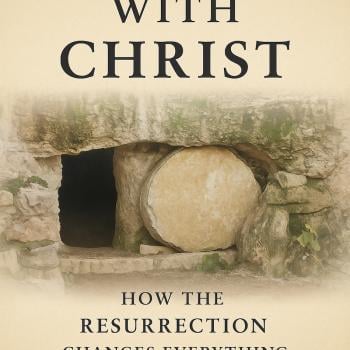
In practice this has tended to mean a belief that Jesus took the punishment for our sins on the cross, turning away God’s wrath. Some today within the movement have denied this calling it “Cosmic Child Abuse“, but the resulting controversy surely demonstrates that for most Evangelicals this is central to their view of the gospel. The cross did other things, and nothing the Cross accomplished is possible without the resurrection, but for most evangelicals historically the primary message of the gospel has been “Jesus died for our sins.” This has even meant that sometimes people preach the gospel without even mentioning Jesus rose again, a clear deficiency that was one of the main prompts for me to write my book, Raised With Christ – How the Resurrection Changes Everything.
Evangelicals believe that without accepting the work of the cross as personal to them nobody can be saved. They take Jesus exclusive claims very seriously when he says “I am the way the truth and the life, no one comes to the Father but by me.” (John 14:6 ESV). Evangelicals believe that the only way you can be sure that you are going to heaven is by expressing your faith in Jesus, following him, and believing in his physical resurrection. However, they will also believe that God has promised us all, “seek the LORD your God and you will find him, if you search after him with all your heart and with all your soul.” (Deuteronomy 4:29 ESV) They may therefore differ on precisely how people can come to Jesus, and on how many people will be saved, but they will all proclaim Jesus is the only way to God.
5. Grace alone (=Sola Gratia)
The is the notion that it is only by God’s initiative that we can be saved. Humans have nothing to offer him. There is no merit that makes us deserving of his salvation. There is here no notion of proving our worth to God by good works, and this was a prime motivation for the Reformation. Evangelicals believe we were as Ephesians 2:8 puts it “dead in our trespasses and sins. . but God made us alive“.
It is very easy to see how Calvinistic ideas about predestination arise from all this. But there are many Arminians who would still hold to this and all the other points. Historically Evangelicalism has been a movement that included both Calvinists and Arminians. These two systems can be seen as different ways of holding together the tension that exists between the idea of God is sovereign, and yet man has responsibility.
6. To God alone belongs glory. (=Soli deo gloria)
Evangelicals have a dislike for pomp and ceremony. They say that only God should be glorified. In a similar vein, they would not advocate praying to saints. Evangelicals celebrate certain attributes of God that many other Christians also emphasise. The idea of God as all-knowing, all-powerful, and all-loving inspires worship that is often vibrant and passionate. Evangelical worship has spawned an entire industry. There are some today that openly doubt the idea of God knowing the future, terming this Open Theism. It is hard to see how such a viewpoint fits within the evangelical view of the glorious God, in charge of the universe, in whom we can place personal trust and have a personal relationship.
So, over to you now. Do you agree with my broad definitions of what is a Christian and my narrow definition of what is an Evangelical? How would you improve on them? Do you self identify as one or both of these? If so why or why not?
SEE ALSO How to tell if you are an Evangelical or a Progressive Christian What is a Christian? I believe in Jesus: A Sermon on the Trinity and the Resurrection
Previous Post
October 22, 2012
What is a Christian?
Next Post

October 25, 2012 US Presidential Elections: A nation divided
Browse Our Archives
Select a Category 1 and 2 Corinthians 1 and 2 Thessalonians 1 and 2 Timothy 1 John 300 Leaders A Life of Joy Abortion Acts of the Apostles Adrian on radio Adrian on TV Adrian's Story Albert Mohler Amazing Grace Arminocalvinist Spectrum Assurance Atonement Atonement Series Attributes of God Barnabas Best of the Blog Bible Bible Software Bible Translation Biblical Inerrancy Billy Graham Bob Roberts Books C. J. Mahaney Calvinism Cessationism Charis Warnock Charismatic Spectrum Charles Simeon Charles Spurgeon Church Leadership Colossians Complementarian - Egalitarian Spectrum Complementarianism Conferences Culture Daniel Debates Deuteronomy DGM08 DGM13 Discernment Doctrine Don Carson Ed Stetzer Eddy Leo Ephesians ESV Bible Translators Interview Evangelism in a Post-Christian World evolution Exodus Expository Preaching Ezekial Faith and Feelings Family Florida Galatians General Genesis Get Wisdom - Proverbs sermons Gifts of The Holy Spirit Gifts of the Holy Spirit 2006 Global Faith Forum Godly Attitudes Gospel Gospels Grace Greg Haslam Grudem vs Piper: The Baptism Debate Healing Heaven Hell and Rob Bell Hebrews Henry Tyler Henry Warnock Holy Spirit Holy Spirit Baptism Hope Reborn Hugh Palmer Irresistable Grace Isaiah J. I. Packer Jack Hayford Joel Joel Warnock John John Lanferman John MacArthur John Newton John Owen John Piper John Smyth Jonathan Edwards Josh Harris Justification Justin Taylor Kenneth Ulmer Leadership Leadership Lessons from 1 & 2 Samuel Lex Loizides Liam Goligher Lig Duncan Limited Atonement Lou Fellingham Mark Dever Mark Driscoll Martyn Lloyd-Jones Matt Chandler Mental Health Missionary Methods: St Paul’s or Ours? My Story N. T. Wright Nehemiah NWA08 NWA09 NWA10 Opinion OT History Books Pentateuch Personal Personal Revival Philippians PJ Smyth Podcast Politics Preaching Prophecy Proverbs Psalms Raised With Christ Reformed Charismatic Regeneration Relationships Resurrection Resurrection & Salvation Revival Rice Broocks Rich Man and Lazarus Rick Warren Rob Rufus Roland Allen Romans Sam Storms Sanctification Series Sermons Sermons on Philippians Serving Jesus at Work Sexuality Sin St Paul Steve Chalke Strange Fire Suffering T4G T4G Statement TAB09 Tamasin Warnock Teamwork Terry Virgo The Atonement Debate - Chalke book The Soulwinner The Spirit-Filled Church The Traitor Within Theologcial Spectrums Theosis Tim Challies Tim Keller Titus TOAM06 TOAM07 TOAM08 TOAM09 TOAM10 TOAM11 Todd Bentley Tope Koleoso Total Depravity Video Water Baptism Wayne Grudem Worship
Select a Month October 2026 September 2026 August 2026 July 2026 June 2026 May 2026 April 2026 March 2026 February 2026 January 2026 December 2025 November 2025 October 2025 September 2025 May 2025 April 2025 January 2025 November 2024 October 2024 August 2024 July 2024 June 2024 May 2024 April 2024 March 2024 February 2024 January 2024 December 2023 August 2023 May 2023 April 2023 February 2023 October 2022 September 2022 August 2022 July 2022 June 2022 May 2022 April 2022 March 2022 February 2022 August 2021 May 2021 April 2021 February 2021 January 2021 December 2020 October 2020 September 2020 August 2020 July 2020 June 2020 May 2020 April 2020 March 2020 February 2020 January 2020 December 2019 November 2019 October 2019 September 2019 June 2019 May 2019 April 2019 March 2019 January 2019 December 2018 October 2018 September 2018 August 2018 July 2018 June 2018 May 2018 April 2018 March 2018 February 2018 January 2018 December 2017 November 2017 October 2017 September 2017 June 2017 April 2017 March 2017 February 2017 January 2017 December 2016 November 2016 October 2016 June 2016 March 2016 February 2016 January 2016 December 2015 November 2015 September 2015 August 2015 July 2015 June 2015 May 2015 April 2015 March 2015 February 2015 January 2015 December 2014 November 2014 October 2014 September 2014 August 2014 July 2014 June 2014 May 2014 April 2014 March 2014 February 2014 January 2014 December 2013 November 2013 October 2013 September 2013 August 2013 July 2013 June 2013 May 2013 April 2013 March 2013 February 2013 January 2013 December 2012 November 2012 October 2012 September 2012 August 2012 July 2012 June 2012 May 2012 April 2012 March 2012 February 2012 January 2012 December 2011 November 2011 October 2011 September 2011 August 2011 July 2011 June 2011 May 2011 April 2011 March 2011 February 2011 January 2011 December 2010 November 2010 October 2010 September 2010 August 2010 July 2010 June 2010 May 2010 April 2010 March 2010 February 2010 January 2010 December 2009 November 2009 October 2009 September 2009 August 2009 July 2009 June 2009 May 2009 April 2009 March 2009 February 2009 January 2009 December 2008 November 2008 October 2008 September 2008 August 2008 July 2008 June 2008 May 2008 April 2008 March 2008 February 2008 January 2008 December 2007 November 2007 October 2007 September 2007 August 2007 July 2007 June 2007 May 2007 April 2007 March 2007 February 2007 January 2007 December 2006 November 2006 October 2006 September 2006 August 2006 July 2006 June 2006 May 2006 April 2006 March 2006 February 2006 January 2006 December 2005 November 2005 October 2005 September 2005 August 2005 July 2005 June 2005 May 2005 April 2005 March 2005 February 2005 January 2005 December 2004 November 2004 October 2004 September 2004 August 2004 July 2004 June 2004 May 2004 April 2004 March 2004 February 2004 January 2004 December 2003 November 2003 October 2003 September 2003 August 2003 July 2003 June 2003 May 2003 April 2003
Follow Us!
TAKE THE
Religious Wisdom Quiz
Which book of the Bible contains the "Armor of God" passage?
Select your answer to see how you score.
Romans Galatians Colossians Ephesians
Books by This Author Books by Adrian Warnock
Related posts from Adrian Warnock

How the author of the world's best hymn...

"Open" is not Biblical, "eagerly desire spiritual gifts"...

Thank God Atheists Do Not Live By Their...
Grab this weeks Amazon Number One Best Seller...
TRENDING AT PATHEOS Evangelical

How the author of the world's best hymn...
I've been working with John Newton for a while now. This makes...

Long before this Lectio Divina, Psalm 130 - the song - started...

What About the Trees? Another Living Parable
After I finished writing the last article about falling leaves as a...

Why Classical Education Is a Conversation, Not a...
Come and Read: Joy in Classical Education When I was a little...

Falling Leaves: A Living Parable on Letting Go
I’ve spent the vast majority of my life in the southeast corner...

Cornell University has received a great deal of negative publicity and intense...
view all Evangelical blogs
Ad-Free & Subscriber Log-In Subscription Support
- About Us
- 2026 Calendar
- Videos
- Podcasts
- Library of World Religions
- Faith In Media Tracker
- Advertise With Us
- Write for Us
- Privacy Policy
- Terms of Service
- Do Not Sell My Data
- Contact Us
- Radiant Digital
- Manage Newsletter Subscriptions
- Unsubscribe From Notifications
- Sitemap
Copyright 2008-2026, Patheos. All rights reserved.
Subscription Support Ad-Free & Subscriber Log-In
Follow Patheos