
BuddhistCatholicContemplativeEvangelicalGeneral ChristianHinduJewishLatter-day SaintMuslimNew VisionsProgressive Christian
Beliefs
- Buddhist
- Catholic
- Contemplative
- Evangelical
- General Christian
- Hindu
- Jewish
- Latter-day Saint
- More Voices
- Muslim
- New Visions
- Pagan
- Progressive Christian
Topics
- Religion News
- Food and Religion
- Sports and Religion
- Religious Art
- Religious Music and Entertainment
- Religious Events
- History and Religion
- Style and Religion
- Politics and Religion
- Women in Religion
- Recreation Outdoors and Religion
- Business Finance and Religion
- Careers Workplace and Religion
- Education and Religion
- Family Parenting and Religion
- Health Fitness and Religion
- Home and Religion
- Relationships and Religion
- Technology and Religion
- Travel and Religion
Columnists
- Buddhist Columnists
- Business Finance and Religion Columnists
- Careers Workplace and Religion Columnists
- Catholic Columnists
- Contemplative Columnists
- Education and Religion Columnists
- Evangelists Columnists
- Family Parenting and Religion Columnists
- General Christian Columnists
- Health Fitness and Religion Columnists
- Hindu Columnists
- History and Religion Columnists
- Home and Religion Columnists
- Jewish Columnists
- More Voices Columnists
- Latter Day Columnists
- Muslim Columnists
- New Visions Columnists
- Nonreligious Columnists
- Pagan Columnists
- Politics and Religion Columnists
- Progressive Columnists
- Recreation Outdoors and Religion Columnists
- Relationships and Religion Columnists
- Religion News Columnists
- Religious Art Columnists
- Religious Events Columnists
- Religious Music and Entertainment Columnists
- Sports and Religion Columnists
- Style and Religion Columnists
- Technology and Religion Columnists
- Travel and Religion Columnists
- Women in Religion Columnists
Resource Library
- 2026 Calendar
- Library of World Religions
- The 100 Most Holy Places on Earth
- Patheos Answers
- Podcasts
- Videos
- Faith Leaders Database
- Anglican Episcopalian
- Bahai
- Baptist
- Buddhism
- Christianity
- Confucianism
- Eastern Orthodoxy
- Hinduism
- Holiness and Pentecostal
- ISKCON
- Islam
- Judaism
- Lutheran
- Methodist
- The Church of Jesus Christ of Latter-day Saints
- New Age
- Paganism
- Presbytarian and Reformed
- Protestantism
- Religion Behind the Scenes
- Roman Catholic
- Scientology
- Shia Islam
- Sikhism
- Sufism
- Sunni Islam
- Taoism
- Zen
- See all religions
Research Tools
 Ad-Free & Subscriber Log-In Subscription Support
Ad-Free & Subscriber Log-In Subscription Support
Follow Patheos 

- Trending:
- Forgiveness
- |
- Marriage
- |
- Consciousness
- |
- Death Penalty
- |
- Election
- |
- Halloween

- Home
- Evangelical
- Guest post by Jude St. John: Roasting Coffee and Reviewing Books
Guest post by Jude St. John: Roasting Coffee and Reviewing Books
Last updated on: September 16, 2017 at 6:42 pm by Adrian Warnock
Guest post by Jude St. John: Roasting Coffee and Reviewing Books 2017-09-16T18:42:57+01:00 Adrian Warnock
Patheos Explore the world's faith through different perspectives on religion and spirituality! Patheos has the views of the prevalent religions and spiritualities of the world.
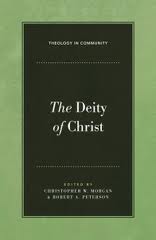 When The Deity of Christ, a book sent by Crossway for me to review, was delivered to my house I was in the backyard roasting coffee. I was in process of creating a blend to commemorate a friend’s wedding. A blend in the world of coffee is a mixture of coffees from multiple origins and is typically blended to produce a balanced cup. As I perused the volume that had just arrived I was intrigued by the concept behind the book and the similarities between that and the coffee blend I was working on. The Theology in Community series “assembles teams of scholars to explore key theological themes and apply them to contemporary themes.” It seems this series of books is a blend of authors, from various origins, that would result in a balanced book on a particular topic. I generally enjoy these types of books as they expose one to multiple authors with multiple perspectives. With coffee beans cracking in the heat of the roaster, I cracked open The Deity of Christ.
The deity of Christ, in the eyes of the editors, is a topic of paramount import; “The deity of Christ is vital to Christian faith and practice. In fact, nothing is more important than whether or not Jesus Christ is God. If Jesus is not God incarnate, then Christianity is not true; if he is, then it is true. The critical importance of Christ’s deity is sufficient reason for this book.” (20) Though no further defence for a book of this sort is needed, the editors share several other reasons this volume is important; an increase in popularity of ‘gospels’ denying the divinity of Christ, the worldwide expansion of Islam which denies Christ is God, religious pluralism which undermines the exclusivity of Christ’s salvation, and the proliferation of cults whose status as cults is a result of their denial of the central doctrine of Christ’s deity.
With so much at stake, a book of this sort is more than a nicety; it is a necessity. And though there have been many written works on this topic, a fresh, contemporary look at this integral doctrine should not be overlooked.
A Standard
It occurred to me that the editors and others of this volume, in producing this book, are raising a standard. A quick glimpse in a dictionary for the definition of standard resulted in over 30 definitions. Nevertheless, several of them pertain directly to this book. The deity of Christ, and hence this book, is a doctrine that embodies several of the definitions I came across. The editors and authors of The Deity of Christ employ this doctrine as a standard for the Christian church. How is this doctrine a ‘standard’? The doctrine of Christ being divine is a standard in the sense that is something to conform to and a basis for comparison. A Christian church, to be truly Christian, must conform to this doctrine and if an individual Christian’s beliefs are found lacking when compared to this doctrine, the designation of Christian is speculative at best. A standard is also a flag representing a sovereign which one can rally to, and the writers call the church to rally to Christ, the second person of the trinity, our sovereign Redeemer. Finally, the truth of Christ’s divinity is a standard as in a support; Christ as God provides an unfaltering practical support to the believer and to the church. Practically speaking, Christ’s divinity is a necessity for our daily walk of faith.
The Deity of Christ as a book raises a standard in the multifaceted ways described above and presents a myriad of applications. The various authors serve their purpose well in providing a collection of chapters that rally Christians around their King and Saviour, explain and elucidate the doctrine which historic Christianity has used as a means of comparison and conformity, and strategically support the saints in their safeguarding of this tenet of their faith. This book, and the others in this series, attempt this this by approaching the topic through biblical, historical, systematic and practical perspectives.
A Biblical Viewpoint
The deity of Christ as it is revealed to us in Scripture is deftly handled by Ray C. Ortlund Jr., Stephen J. Welllum, and Andreas J. Kostenberger. Of the three, I had only read work by Ortlund, but recognized Kostenberger and Wellum by name and looked forward to their contributions. If this book is to be considered a significant contribution on the subject at hand, then a solid and insightful dealing with the doctrine as it is presented in the Bible is essential. Ortlund, pastor of Immanuel Church in Nashville, provided the chapter on the deity of Christ in the Old Testament.
Ortlund develops this topic by considering eight significant passages from the Old Testament. Ortlund’s careful handling of the topic is evident as he provides three categories to distribute the passages under consideration to: passages inaccurately construed to reveal the deity of Christ, passages accurately construed to reveal his deity, and passages that are unclear concerning Christ’s deity. Ortlund’s cautious approach sets a serious tone for the biblical perspectives and he leads us into consideration of the New Testament declaring “the deity of the Christ is unmistakably, if mysteriously, revealed in the Old Testament texts.” (58)
Wellum grabs the reigns with his look at the Synoptic Gospels and further on in the book deals with Apostolic witness. Having never read Welllum before, I was unsure of what to expect. I must admit, I was quite pleased. He has organized his chapters in a manner that aids in understanding and his easy-to-read style adds to their readability. I would not hesitate to read more of him in the future. Wellum examines the divinity of Christ in the Synoptics by discussing the implicit and explicit clams to deity. Wellum shows how these gospels implicitly present Jesus as the incarnate God in his fulfilment of the Old Testament, his baptism, his life and ministry, and his own understanding of his death and resurrection. Wellum continues by showing how the gospels of Matthew, Mark, and Luke explicitly portray Jesus as understanding himself to be God through his use of Abba, his self-identity as the Son and the Son of Man, and his statements that declare he does the to works of God.
Wellum also provides an analysis of the evidence of the deity of Christ in the Apostolic witness. This is accomplished by looking at four crucial texts; Romans 1:3-4, Philippians 2:5-11, Colossians 1:15-20, and Hebrews 1:1-4. The thorough explanations of the passages are both enlightening and enjoyable. Again, Wellum’s organizational choice of focusing on significant passages, as opposed to categories he used in the earlier chapter, was a welcome change that I found encouraged me to keep reading.
The writings of John are left in the capable hands of Kostenberger. Though I had not read any of his materials, his expertise on Johanine writings is well-known and I anticipated his chapters more than any of the other writers. He did not disappoint. With chapters entitled The Deity of Christ in John’s Gospel and The Deity of Christ in John’s Letters and the Book of Revelation, Kostenberger completes this book’s biblical perspective on the deity of Christ. Kostenberger writes in an engaging manner and I read both of his chapters without putting the book down. Richard Baxter has said, “It is, at best, a sign that a man hath not well digested the matter himself, if he is not able to deliver it plainly to others.” Contrary to the quote, it is clear Kostenberger has digested this material and his command of it results in a clear and comfortable read. Topics covered in the investigation into the gospel of John include Jesus as the Word, the One and Only Son, Son of God, Son of Man, the I Am, Lord and God, the resurrection, and Jesus’ foreknowledge. The other chapter by this Johanine scholar looked at relevant passages and concepts from the letters of John and in Revelation he considers depictions of Christ-trinitarian, the first and last, the eschatalogical king/judge/warrior, returning judge and saviour-which are thoroughly convincing. I will definitely be reading more books from this author.
As people of the Book, Christians should expect the biblical evidence for the deity of Christ to be the backbone of any inquiry into the doctrine of the incarnate God. The Deity of Christ definitely emphasizes the Word as it pertains to this topic. It is full of biblical passages and their explanations. These chapters alone would suffice for a book on this topic. Their handling of the deity of Jesus in the Bible is not exhaustive, as that would require many volumes, but it is convincing.
A Historical Viewpoint
The Deity of Christ in Church History is the chapter dedicated to a historical look into the deity of Christ. This was a fascinating look at some of the pivotal issues in church history pertaining to the Son of God. Gerald Bray takes the reader through various eras and errors. The eras include those around the Nicene and Chalcedonian creeds. The errors the church confronted include Arianism, Apollinarianism, and kenoticism. Bray reminds us that despite the fact that “ none of the fathers of the church ever believed that, in confessing the deity of Christ, he was adding anything to the teachings of Jesus himself” (176), the fight for Christ’s divinity is an ongoing battle, with a long history, that resurfaces regularly. This chapter was an interesting perusal of the issue in the annals of the church’s history.
A Systematic Viewpoint
In an effort to synthesize and systematize the earlier investigations concerning the deity of Christ, Robert A. Peterson arrays five arguments: 1) Jesus is identified with God, 2) Jesus receives devotion due to God alone, 3) Jesus brings the age to come, 4) Jesus saves us when we are spiritually united to him, and 5) Jesus performs the works of God. I found Peterson’s categories interesting and in particular his explanation of how Jesus’ inauguration of the age to come proves he is God was unexpected and stimulating. This chapter does an efficient job of providing the reader a summary of issues discussed in the book. It also provides the reader a framework with which to harmonize the various strands of argument and evidence promoted.
A Practical Viewpoint
The practical perspective that the affirmation of the divinity of Jesus Christ brings us to as presented by The Deity of Christ is twofold. The first issue of application pertains to the relation between the deity of Christ and cults. This chapter, written by Talbot School of Theology professor Alan W. Gomes, presents a repository of information on Christian Cults and their deficient stance on Christ as God. His method is inviting. He considers the different historical christologies and then classifies modern cults in relation to the cristologies advanced. By explaining polytheism, dynamic monarchianism, gnosticism, Arianism, and modalistic monarchianism, Gomes exposes Mormonism, Jehovah’s Witnesses, Unitarianism, Oneness Pentecostalism, Christian Science and other belief systems as cults for it becomes evident that all these belief systems undermine a central doctrine of the Christian faith; the deity of Christ. This chapter is an excellent initial resource for further study on the cults.
The second practical perspective concerns itself with missions, world religions, and pluralism. I found this chapter by J. Nelson Jennings the most difficult to read. I think this was because the author brings some unexpected, yet provocative, outlooks and insights into these topics. This is a chapter which I need to re-read, but it was intriguing enough that I will re-read it. Of particular interest to me was the paradigm through which to consider other religions. Jennings suggests that a healthy approach when considering other religions is threefold; consider how sin is involved, consider how Satan is involved, and consider how searching for truth is involved. That concept alone will be very helpful.
‘Bonus’ Material
One of the positives that I have yet to mention is that many of the chapters have “bonus” material. Whether it is Wellum explaining the Promise-Fulfilment Motif, Kostenberger’s overview of First-Century Jewish Monotheism, or Gomes’ defining of cults, this book contains plenty of helpful material beyond what might be expected. I have also failed to touch upon Stephen J. Nichols chapter which the book essentially begins with. This is an honest look at the contemporary condition of the church’s view of the deity of Christ. Like a good doctor, Nichols observes some symptoms of what ails us, diagnoses the problem, and then prescribes a remedy. I suggest you read this chapter before you decide to buy the book. You’ll buy the book if you do.
Some books are classics that you will read many times over your lifetime. This is not that book. Some books are barely worth reading, and having read them, you’ll never crack them open again. This is not that type of book either. But, some books are valuable in that they provide you with a resource for future reference that you will consult at different times for different reasons at many times. That is this book. Though I do not foresee myself reading this book from cover to cover again, I am quite certain I will revisit this book for numerous reasons on various occasions. Like a good cup of your favourite blend of coffee, this book will always leave you wanting another sip.
Thanks to Jude St. John for this guest post. You can visit the original post here: Roasting Coffee and Reviewing Books and Jude’s blog here: www.quercuscalliprinos.blogspot.com
Previous Post

August 25, 2011
Popular posts: Heaven, Hell and Rob Bell
Next Post
August 29, 2011 Guest post: Martyn Lloyd-Jones sermon downloads
Browse Our Archives
Select a Category 1 and 2 Corinthians 1 and 2 Thessalonians 1 and 2 Timothy 1 John 300 Leaders A Life of Joy Abortion Acts of the Apostles Adrian on radio Adrian on TV Adrian's Story Albert Mohler Amazing Grace Arminocalvinist Spectrum Assurance Atonement Atonement Series Attributes of God Barnabas Best of the Blog Bible Bible Software Bible Translation Biblical Inerrancy Billy Graham Bob Roberts Books C. J. Mahaney Calvinism Cessationism Charis Warnock Charismatic Spectrum Charles Simeon Charles Spurgeon Church Leadership Colossians Complementarian - Egalitarian Spectrum Complementarianism Conferences Culture Daniel Debates Deuteronomy DGM08 DGM13 Discernment Doctrine Don Carson Ed Stetzer Eddy Leo Ephesians ESV Bible Translators Interview Evangelism in a Post-Christian World evolution Exodus Expository Preaching Ezekial Faith and Feelings Family Florida Galatians General Genesis Get Wisdom - Proverbs sermons Gifts of The Holy Spirit Gifts of the Holy Spirit 2006 Global Faith Forum Godly Attitudes Gospel Gospels Grace Greg Haslam Grudem vs Piper: The Baptism Debate Healing Heaven Hell and Rob Bell Hebrews Henry Tyler Henry Warnock Holy Spirit Holy Spirit Baptism Hope Reborn Hugh Palmer Irresistable Grace Isaiah J. I. Packer Jack Hayford Joel Joel Warnock John John Lanferman John MacArthur John Newton John Owen John Piper John Smyth Jonathan Edwards Josh Harris Justification Justin Taylor Kenneth Ulmer Leadership Leadership Lessons from 1 & 2 Samuel Lex Loizides Liam Goligher Lig Duncan Limited Atonement Lou Fellingham Mark Dever Mark Driscoll Martyn Lloyd-Jones Matt Chandler Mental Health Missionary Methods: St Paul’s or Ours? My Story N. T. Wright Nehemiah NWA08 NWA09 NWA10 Opinion OT History Books Pentateuch Personal Personal Revival Philippians PJ Smyth Podcast Politics Preaching Prophecy Proverbs Psalms Raised With Christ Reformed Charismatic Regeneration Relationships Resurrection Resurrection & Salvation Revival Rice Broocks Rich Man and Lazarus Rick Warren Rob Rufus Roland Allen Romans Sam Storms Sanctification Series Sermons Sermons on Philippians Serving Jesus at Work Sexuality Sin St Paul Steve Chalke Strange Fire Suffering T4G T4G Statement TAB09 Tamasin Warnock Teamwork Terry Virgo The Atonement Debate - Chalke book The Soulwinner The Spirit-Filled Church The Traitor Within Theologcial Spectrums Theosis Tim Challies Tim Keller Titus TOAM06 TOAM07 TOAM08 TOAM09 TOAM10 TOAM11 Todd Bentley Tope Koleoso Total Depravity Video Water Baptism Wayne Grudem Worship
Select a Month October 2026 September 2026 August 2026 July 2026 June 2026 May 2026 April 2026 March 2026 February 2026 January 2026 December 2025 November 2025 October 2025 September 2025 May 2025 April 2025 January 2025 November 2024 October 2024 August 2024 July 2024 June 2024 May 2024 April 2024 March 2024 February 2024 January 2024 December 2023 August 2023 May 2023 April 2023 February 2023 October 2022 September 2022 August 2022 July 2022 June 2022 May 2022 April 2022 March 2022 February 2022 August 2021 May 2021 April 2021 February 2021 January 2021 December 2020 October 2020 September 2020 August 2020 July 2020 June 2020 May 2020 April 2020 March 2020 February 2020 January 2020 December 2019 November 2019 October 2019 September 2019 June 2019 May 2019 April 2019 March 2019 January 2019 December 2018 October 2018 September 2018 August 2018 July 2018 June 2018 May 2018 April 2018 March 2018 February 2018 January 2018 December 2017 November 2017 October 2017 September 2017 June 2017 April 2017 March 2017 February 2017 January 2017 December 2016 November 2016 October 2016 June 2016 March 2016 February 2016 January 2016 December 2015 November 2015 September 2015 August 2015 July 2015 June 2015 May 2015 April 2015 March 2015 February 2015 January 2015 December 2014 November 2014 October 2014 September 2014 August 2014 July 2014 June 2014 May 2014 April 2014 March 2014 February 2014 January 2014 December 2013 November 2013 October 2013 September 2013 August 2013 July 2013 June 2013 May 2013 April 2013 March 2013 February 2013 January 2013 December 2012 November 2012 October 2012 September 2012 August 2012 July 2012 June 2012 May 2012 April 2012 March 2012 February 2012 January 2012 December 2011 November 2011 October 2011 September 2011 August 2011 July 2011 June 2011 May 2011 April 2011 March 2011 February 2011 January 2011 December 2010 November 2010 October 2010 September 2010 August 2010 July 2010 June 2010 May 2010 April 2010 March 2010 February 2010 January 2010 December 2009 November 2009 October 2009 September 2009 August 2009 July 2009 June 2009 May 2009 April 2009 March 2009 February 2009 January 2009 December 2008 November 2008 October 2008 September 2008 August 2008 July 2008 June 2008 May 2008 April 2008 March 2008 February 2008 January 2008 December 2007 November 2007 October 2007 September 2007 August 2007 July 2007 June 2007 May 2007 April 2007 March 2007 February 2007 January 2007 December 2006 November 2006 October 2006 September 2006 August 2006 July 2006 June 2006 May 2006 April 2006 March 2006 February 2006 January 2006 December 2005 November 2005 October 2005 September 2005 August 2005 July 2005 June 2005 May 2005 April 2005 March 2005 February 2005 January 2005 December 2004 November 2004 October 2004 September 2004 August 2004 July 2004 June 2004 May 2004 April 2004 March 2004 February 2004 January 2004 December 2003 November 2003 October 2003 September 2003 August 2003 July 2003 June 2003 May 2003 April 2003
Follow Us!
TAKE THE
Religious Wisdom Quiz
What does Paul tell Titus that the grace of God teaches us to do?
Select your answer to see how you score.
Say no to ungodliness and live self-controlled, upright and godly lives Spread the gospel Obey the authorities Love one another
Books by This Author Books by Adrian Warnock
Related posts from Adrian Warnock

"Open" is not Biblical, "eagerly desire spiritual gifts"...

Twelve Steps to Becoming a Successful Published Author

Thank God Atheists Do Not Live By Their...
Grab this weeks Amazon Number One Best Seller...
TRENDING AT PATHEOS Evangelical

The REST of Your Life: A Creative Wrestles...
This week I had a conversation with a good friend from church....

How the author of the world's best hymn...
I've been working with John Newton for a while now. This makes...

Long before this Lectio Divina, Psalm 130 - the song - started...

What About the Trees? Another Living Parable
After I finished writing the last article about falling leaves as a...

Why Classical Education Is a Conversation, Not a...
Come and Read: Joy in Classical Education When I was a little...

Cornell University has received a great deal of negative publicity and intense...
view all Evangelical blogs
Ad-Free & Subscriber Log-In Subscription Support
- About Us
- 2026 Calendar
- Videos
- Podcasts
- Library of World Religions
- Faith In Media Tracker
- Advertise With Us
- Write for Us
- Privacy Policy
- Terms of Service
- Do Not Sell My Data
- Contact Us
- Radiant Digital
- Manage Newsletter Subscriptions
- Unsubscribe From Notifications
- Sitemap
Copyright 2008-2026, Patheos. All rights reserved.
Subscription Support Ad-Free & Subscriber Log-In
Follow Patheos