
BuddhistCatholicContemplativeEvangelicalGeneral ChristianHinduJewishLatter-day SaintMuslimNew VisionsProgressive Christian
Beliefs
- Buddhist
- Catholic
- Contemplative
- Evangelical
- General Christian
- Hindu
- Jewish
- Latter-day Saint
- More Voices
- Muslim
- New Visions
- Pagan
- Progressive Christian
Topics
- Religion News
- Food and Religion
- Sports and Religion
- Religious Art
- Religious Music and Entertainment
- Religious Events
- History and Religion
- Style and Religion
- Politics and Religion
- Women in Religion
- Recreation Outdoors and Religion
- Business Finance and Religion
- Careers Workplace and Religion
- Education and Religion
- Family Parenting and Religion
- Health Fitness and Religion
- Home and Religion
- Relationships and Religion
- Technology and Religion
- Travel and Religion
Columnists
- Buddhist Columnists
- Business Finance and Religion Columnists
- Careers Workplace and Religion Columnists
- Catholic Columnists
- Contemplative Columnists
- Education and Religion Columnists
- Evangelists Columnists
- Family Parenting and Religion Columnists
- General Christian Columnists
- Health Fitness and Religion Columnists
- Hindu Columnists
- History and Religion Columnists
- Home and Religion Columnists
- Jewish Columnists
- More Voices Columnists
- Latter Day Columnists
- Muslim Columnists
- New Visions Columnists
- Nonreligious Columnists
- Pagan Columnists
- Politics and Religion Columnists
- Progressive Columnists
- Recreation Outdoors and Religion Columnists
- Relationships and Religion Columnists
- Religion News Columnists
- Religious Art Columnists
- Religious Events Columnists
- Religious Music and Entertainment Columnists
- Sports and Religion Columnists
- Style and Religion Columnists
- Technology and Religion Columnists
- Travel and Religion Columnists
- Women in Religion Columnists
Resource Library
- 2026 Calendar
- Library of World Religions
- The 100 Most Holy Places on Earth
- Patheos Answers
- Podcasts
- Videos
- Faith Leaders Database
- Anglican Episcopalian
- Bahai
- Baptist
- Buddhism
- Christianity
- Confucianism
- Eastern Orthodoxy
- Hinduism
- Holiness and Pentecostal
- ISKCON
- Islam
- Judaism
- Lutheran
- Methodist
- The Church of Jesus Christ of Latter-day Saints
- New Age
- Paganism
- Presbytarian and Reformed
- Protestantism
- Religion Behind the Scenes
- Roman Catholic
- Scientology
- Shia Islam
- Sikhism
- Sufism
- Sunni Islam
- Taoism
- Zen
- See all religions
Research Tools
 Ad-Free & Subscriber Log-In Subscription Support
Ad-Free & Subscriber Log-In Subscription Support
Follow Patheos 

- Trending:
- Forgiveness
- |
- Marriage
- |
- Consciousness
- |
- Death Penalty
- |
- Election
- |
- Halloween

- Home
- Evangelical
- Twelve Literary Features of the Bible
Twelve Literary Features of the Bible
Last updated on: January 28, 2018 at 4:37 pm by Adrian Warnock
Twelve Literary Features of the Bible 2018-01-28T16:37:20+00:00 Adrian Warnock
Patheos Explore the world's faith through different perspectives on religion and spirituality! Patheos has the views of the prevalent religions and spiritualities of the world.
UPDATE
In January 2008, the following post was identified as the 20th all-time most popular post with readers of this blog. The 21st most popular post was my interview with Mark Dever.
This post introduced us to a remarkable new approach to a study Bible, brought to us by Crossway. In January 2008, I’m still working my way through this, reading it from cover-to-cover. I’m enjoying it very much.
***************
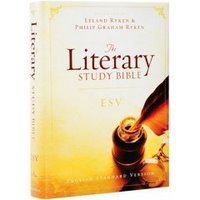 Crossway has made the preface of its new ESV Literary Study Bible available online. They have also made the text available for electronic purchase. I am very impressed with the introductions they offer to every passage in the Bible. I cannot recommend this highly enough. Too many Christians think that the literary study of the Bible necessarily implies that we do not believe it is inspired by God. This is, of course, not true. The Bible is, after all, a book. You will almost certainly find the comments in this new work totally different to those you have read in any other study Bible. As far as I know, this is the first truly literary study Bible.
Crossway has kindly given me permission to share the following extract here. It explains twelve literary features of the Bible which together make it unique:
A unifying story line.
Although the overall genre of the Bible is the anthology of individual books and passages, the Bible possesses a unity far beyond that of other literary anthologies. The technical term for a unifying superstructure such as we find in the Bible is metanarrative (big or overarching story). In the Bible, the metanarrative is the story of salvation history—the events by which God worked out his plan to redeem humanity and the creation after they fell from original innocence. This story of salvation history is Christocentric in the sense that it focuses ultimately on the substitutionary sacrifice and atonement of Christ on the cross and his resurrection from death. The unifying story line of the Bible is a U-shaped story that moves from the creation of a perfect world, through the fall of that world into sin, then through fallen human history as it slowly and painfully makes its way toward consummation and arrives at the final destruction of evil and the eternal triumph of good.
The presence of a central character.
All stories have a central character or protagonist, and in the overarching story of the Bible God is the protagonist. He is the unifying presence from the beginning of the Bible to the end. All creatures interact with this central and ultimate being. All events are related to him. The story of human history unfolds within the broader story of what God does. The result is a sense of ultimacy that comes through as we read the pages of the Bible.
Religious orientation.
The subject of literature is human experience, and this is true of the Bible, too, but a distinctive feature of the Bible is that it overwhelmingly presents human experience in a religious and moral light. Events that other writers might treat in a purely human and natural light—a sunrise, a battle, a birth, a journey—are presented by the authors of the Bible within a moral or spiritual framework. Part of this moral and spiritual framework is the assumption of the biblical authors that a great conflict between good and evil is going on in our world and, further, that people are continually confronted with the need to choose between good and evil, between working for God’s kingdom and going against God.
Variety of genres and styles.
Every literary anthology of the Bible’s magnitude displays a range of literary forms, but the Bible’s range may well top them all. We need to be alert to this, because the religious uses to which we put the Bible can easily lull us into assuming that the Bible is all one type of writing. The list of individual forms, if we include such specific motifs as the homecoming story or trickster or love poem, keeps expanding. (A complete guide to these literary forms as we find them in the Bible is Leland Ryken, James C. Wilhoit, and Tremper Longman III, eds., Dictionary of Biblical Imagery [Downers Grove, Ill.: InterVarsity Press, 1998].) The variety that we find in the Bible stems partly from the large categories that converge—history, theology, and literature, for example, or prose and poetry, realism and fantasy, past and future, God and people.
Preference of the concrete over the abstract.
While the New Testament contains a great deal of theological writing, the general preference of biblical authors is for concrete vocabulary. This is especially true of the Hebrew language of the Old Testament. In the Bible, God is portrayed as light and rock and thunder. Slander is a sharp knife. Living the godly life is like putting on a garment or suit of armor. Heaven is a landscape of jewels. To read the Bible well, we need to read with the “right side” of the brain—the part that is activated by sensory data.
Realism.
The prophetic and apocalyptic parts of the Bible give us a steady diet of fantasy (flying scrolls, for example, and red horses), but the general tendency of the Bible is toward everyday realism. The Bible displays the flaws of even its best characters (Oliver Cromwell famously said that the biblical writers paint their characters “warts and all”). Although the Bible does not delineate the sordid experiences of life in the extreme detail that modern literary realism does, it nonetheless covers the same real experiences, such as violence, murder, sexuality, death, suffering, and famine. Of course the Bible differs from modern realism by showing us that there is a realism of grace as well as a realism of carnality. In other words, the Bible is not content to portray the degradation of a world that has fallen into sin without also portraying the redemptive possibilities of a world that has been visited by the grace of God and is destined for glory.
Simplicity.
Although the Bible is certainly not devoid of examples of the high style, especially in the poetic parts, its overall orientation is toward the simple. The prevailing narrative style is plain, unembellished, matter-of-fact prose. Shakespeare’s vocabulary is approximately twenty thousand words, Milton’s thirteen thousand, and English translations of the Bible six thousand. Biblical writers often work with such simplified dichotomies as good and evil, light and darkness, heroes and villains. Of course there is a simplicity that diminishes and a simplicity that enlarges. The simplicity of the Bible paradoxically produces an effect of majesty and authority.
Preference for the brief unit.
Linked with this simplicity is a marked preference for the brief literary unit. Biblical poets tend to write brief lyrics, for example, not long narrative poems. Most long narratives in the Bible such as the story of Abraham or the Gospels are actually cycles of stories in which the individual episodes are briefer and more self-contained than what we find in a novel. The prophetic books are actually anthologies of self-contained oracles and snatches of narrative. Other familiar biblical genres reinforce this tendency toward simplicity—proverb or saying, parable, lists of individual commands or rules, summaries of what various kings did, occasional letters (epistles) in which the
author responds to a list of questions that have been asked or a crisis that has arisen in a local church.
Elemental quality.
The Bible is a book of universal human experience. It is filled with experiences and images that are the common human lot in all places and times. The Bible embraces the commonplace and repeatedly shows ordinary people engaged in the customary activities of life—planting, building, baking, fighting, worrying, celebrating, praying. The world that biblical characters inhabit is likewise stripped and elemental, consisting of such natural settings as day and night, field and desert, sky and earth. Even occupations have an elemental quality—king, priest, shepherd, homemaker, missionary.
Oral style.
Even though the Bible that we read is a written book, in its original form much of it existed orally. This is true because ancient cultures were predominantly oral cultures in which information circulated chiefly by word of mouth. The literary forms of the Bible show this rootedness in an oral culture. The prevalence of dialogue (directly quoted speeches) in the Bible is without parallel in literature generally until we come to the novel. Everywhere we turn in the Bible, we hear voices speaking and replying. The spare, unembellished narrative style of the Bible arises from the situation of oral circulation of the stories. Additionally, many of the nonnarrative parts of the Bible show signs of oral speech—the prophetic discourses and oracles, the psalms (which were sung in temple worship), the epistles (which were read aloud in churches), and the Gospels (where the words of Jesus are a leading ingredient).
Aphoristic quality.
An aphorism is a concise, memorable statement of truth—in the words of English poet Alexander Pope, “What oft was thought, but ne’er so well expressed.” The Bible is the most aphoristic book of the Western world. It is filled with sayings that are part of the common storehouse of proverbs and idioms: “pride goes before destruction” (Proverbs 16:18); seeing “eye to eye” (Isaiah 52:8); a “house divided against itself” (Matthew 12:25). This quality is present not only in the wisdom literature of the Bible, but in all parts of the Bible and most notably in the sayings of Jesus.
The literature of confrontation.
When we read Shakespeare or Dickens, we find ourselves moved to agreement or disagreement, but we do not ordinarily feel that we have been confronted by someone or something that requires us to make a choice. By contrast, when we assimilate the Bible we feel as though we have been personally confronted with something that requires a response. While this choice is ultimately for or against God, the ideas of the Bible, too, require us to believe or disbelieve them. The Bible displays a vivid consciousness of values—of the difference between good and evil—with the result that it is virtually impossible to remain neutral about the ideas that confront us as we read the Bible.
Summary
Perhaps none of the twelve features noted above is unique in itself. But if we put them together, they produce a book that is unique. Reading the Bible is not just like reading another book. It has an affective power and aura of authority that cannot be duplicated. It possesses a quality of encounter that other books do not display, so that as we read we are confronted with the voice and presence of God and are virtually compelled to believe or disbelieve what we are reading. The Westminster Confession of Faith provides an apt summary of the things that make the Bible unique: “the heavenliness of the matter, the efficacy of the doctrine, the majesty of the style, the consent of all the parts, the scope of the whole [which is to give all glory to God], the full discovery it makes of the only way of man’s salvation, the many other incomparable excellencies, and the entire perfection thereof, are arguments whereby it doth abundantly evidence itself to be the Word of God.”From The Literary Study Bible, copyright 2007 by Crossway Bibles, a division of Good News Publishers. Used by permission. All rights reserved. For more information see also my previous posts on the ESV Bible.
Previous Post

October 24, 2007
John Owen and Charles Spurgeon on John Bunyan
Next Post

October 25, 2007 Blogging, Discernment, and a Book by Tim Challies
Browse Our Archives
Select a Category 1 and 2 Corinthians 1 and 2 Thessalonians 1 and 2 Timothy 1 John 300 Leaders A Life of Joy Abortion Acts of the Apostles Adrian on radio Adrian on TV Adrian's Story Albert Mohler Amazing Grace Arminocalvinist Spectrum Assurance Atonement Atonement Series Attributes of God Barnabas Best of the Blog Bible Bible Software Bible Translation Biblical Inerrancy Billy Graham Bob Roberts Books C. J. Mahaney Calvinism Cessationism Charis Warnock Charismatic Spectrum Charles Simeon Charles Spurgeon Church Leadership Colossians Complementarian - Egalitarian Spectrum Complementarianism Conferences Culture Daniel Debates Deuteronomy DGM08 DGM13 Discernment Doctrine Don Carson Ed Stetzer Eddy Leo Ephesians ESV Bible Translators Interview Evangelism in a Post-Christian World evolution Exodus Expository Preaching Ezekial Faith and Feelings Family Florida Galatians General Genesis Get Wisdom - Proverbs sermons Gifts of The Holy Spirit Gifts of the Holy Spirit 2006 Global Faith Forum Godly Attitudes Gospel Gospels Grace Greg Haslam Grudem vs Piper: The Baptism Debate Healing Heaven Hell and Rob Bell Hebrews Henry Tyler Henry Warnock Holy Spirit Holy Spirit Baptism Hope Reborn Hugh Palmer Irresistable Grace Isaiah J. I. Packer Jack Hayford Joel Joel Warnock John John Lanferman John MacArthur John Newton John Owen John Piper John Smyth Jonathan Edwards Josh Harris Justification Justin Taylor Kenneth Ulmer Leadership Leadership Lessons from 1 & 2 Samuel Lex Loizides Liam Goligher Lig Duncan Limited Atonement Lou Fellingham Mark Dever Mark Driscoll Martyn Lloyd-Jones Matt Chandler Mental Health Missionary Methods: St Paul’s or Ours? My Story N. T. Wright Nehemiah NWA08 NWA09 NWA10 Opinion OT History Books Pentateuch Personal Personal Revival Philippians PJ Smyth Podcast Politics Preaching Prophecy Proverbs Psalms Raised With Christ Reformed Charismatic Regeneration Relationships Resurrection Resurrection & Salvation Revival Rice Broocks Rich Man and Lazarus Rick Warren Rob Rufus Roland Allen Romans Sam Storms Sanctification Series Sermons Sermons on Philippians Serving Jesus at Work Sexuality Sin St Paul Steve Chalke Strange Fire Suffering T4G T4G Statement TAB09 Tamasin Warnock Teamwork Terry Virgo The Atonement Debate - Chalke book The Soulwinner The Spirit-Filled Church The Traitor Within Theologcial Spectrums Theosis Tim Challies Tim Keller Titus TOAM06 TOAM07 TOAM08 TOAM09 TOAM10 TOAM11 Todd Bentley Tope Koleoso Total Depravity Video Water Baptism Wayne Grudem Worship
Select a Month October 2026 September 2026 August 2026 July 2026 June 2026 May 2026 April 2026 March 2026 February 2026 January 2026 December 2025 November 2025 October 2025 September 2025 May 2025 April 2025 January 2025 November 2024 October 2024 August 2024 July 2024 June 2024 May 2024 April 2024 March 2024 February 2024 January 2024 December 2023 August 2023 May 2023 April 2023 February 2023 October 2022 September 2022 August 2022 July 2022 June 2022 May 2022 April 2022 March 2022 February 2022 August 2021 May 2021 April 2021 February 2021 January 2021 December 2020 October 2020 September 2020 August 2020 July 2020 June 2020 May 2020 April 2020 March 2020 February 2020 January 2020 December 2019 November 2019 October 2019 September 2019 June 2019 May 2019 April 2019 March 2019 January 2019 December 2018 October 2018 September 2018 August 2018 July 2018 June 2018 May 2018 April 2018 March 2018 February 2018 January 2018 December 2017 November 2017 October 2017 September 2017 June 2017 April 2017 March 2017 February 2017 January 2017 December 2016 November 2016 October 2016 June 2016 March 2016 February 2016 January 2016 December 2015 November 2015 September 2015 August 2015 July 2015 June 2015 May 2015 April 2015 March 2015 February 2015 January 2015 December 2014 November 2014 October 2014 September 2014 August 2014 July 2014 June 2014 May 2014 April 2014 March 2014 February 2014 January 2014 December 2013 November 2013 October 2013 September 2013 August 2013 July 2013 June 2013 May 2013 April 2013 March 2013 February 2013 January 2013 December 2012 November 2012 October 2012 September 2012 August 2012 July 2012 June 2012 May 2012 April 2012 March 2012 February 2012 January 2012 December 2011 November 2011 October 2011 September 2011 August 2011 July 2011 June 2011 May 2011 April 2011 March 2011 February 2011 January 2011 December 2010 November 2010 October 2010 September 2010 August 2010 July 2010 June 2010 May 2010 April 2010 March 2010 February 2010 January 2010 December 2009 November 2009 October 2009 September 2009 August 2009 July 2009 June 2009 May 2009 April 2009 March 2009 February 2009 January 2009 December 2008 November 2008 October 2008 September 2008 August 2008 July 2008 June 2008 May 2008 April 2008 March 2008 February 2008 January 2008 December 2007 November 2007 October 2007 September 2007 August 2007 July 2007 June 2007 May 2007 April 2007 March 2007 February 2007 January 2007 December 2006 November 2006 October 2006 September 2006 August 2006 July 2006 June 2006 May 2006 April 2006 March 2006 February 2006 January 2006 December 2005 November 2005 October 2005 September 2005 August 2005 July 2005 June 2005 May 2005 April 2005 March 2005 February 2005 January 2005 December 2004 November 2004 October 2004 September 2004 August 2004 July 2004 June 2004 May 2004 April 2004 March 2004 February 2004 January 2004 December 2003 November 2003 October 2003 September 2003 August 2003 July 2003 June 2003 May 2003 April 2003
Follow Us!
TAKE THE
Religious Wisdom Quiz
Who said, "All things work together for good"?
Select your answer to see how you score.
John James Peter Paul
Books by This Author Books by Adrian Warnock
Related posts from Adrian Warnock

"Open" is not Biblical, "eagerly desire spiritual gifts"...

Twelve Steps to Becoming a Successful Published Author

Thank God Atheists Do Not Live By Their...
Grab this weeks Amazon Number One Best Seller...
TRENDING AT PATHEOS Evangelical

How the author of the world's best hymn...
I've been working with John Newton for a while now. This makes...

Long before this Lectio Divina, Psalm 130 - the song - started...

What About the Trees? Another Living Parable
After I finished writing the last article about falling leaves as a...

Why Classical Education Is a Conversation, Not a...
Come and Read: Joy in Classical Education When I was a little...

Falling Leaves: A Living Parable on Letting Go
I’ve spent the vast majority of my life in the southeast corner...

Cornell University has received a great deal of negative publicity and intense...
view all Evangelical blogs
Ad-Free & Subscriber Log-In Subscription Support
- About Us
- 2026 Calendar
- Videos
- Podcasts
- Library of World Religions
- Faith In Media Tracker
- Advertise With Us
- Write for Us
- Privacy Policy
- Terms of Service
- Do Not Sell My Data
- Contact Us
- Radiant Digital
- Manage Newsletter Subscriptions
- Unsubscribe From Notifications
- Sitemap
Copyright 2008-2026, Patheos. All rights reserved.
Subscription Support Ad-Free & Subscriber Log-In
Follow Patheos