
BuddhistCatholicContemplativeEvangelicalGeneral ChristianHinduJewishLatter-day SaintMuslimNew VisionsProgressive Christian
Beliefs
- Buddhist
- Catholic
- Contemplative
- Evangelical
- General Christian
- Hindu
- Jewish
- Latter-day Saint
- More Voices
- Muslim
- New Visions
- Pagan
- Progressive Christian
Topics
- Religion News
- Food and Religion
- Sports and Religion
- Religious Art
- Religious Music and Entertainment
- Religious Events
- History and Religion
- Style and Religion
- Politics and Religion
- Women in Religion
- Recreation Outdoors and Religion
- Business Finance and Religion
- Careers Workplace and Religion
- Education and Religion
- Family Parenting and Religion
- Health Fitness and Religion
- Home and Religion
- Relationships and Religion
- Technology and Religion
- Travel and Religion
Columnists
- Buddhist Columnists
- Business Finance and Religion Columnists
- Careers Workplace and Religion Columnists
- Catholic Columnists
- Contemplative Columnists
- Education and Religion Columnists
- Evangelists Columnists
- Family Parenting and Religion Columnists
- General Christian Columnists
- Health Fitness and Religion Columnists
- Hindu Columnists
- History and Religion Columnists
- Home and Religion Columnists
- Jewish Columnists
- More Voices Columnists
- Latter Day Columnists
- Muslim Columnists
- New Visions Columnists
- Nonreligious Columnists
- Pagan Columnists
- Politics and Religion Columnists
- Progressive Columnists
- Recreation Outdoors and Religion Columnists
- Relationships and Religion Columnists
- Religion News Columnists
- Religious Art Columnists
- Religious Events Columnists
- Religious Music and Entertainment Columnists
- Sports and Religion Columnists
- Style and Religion Columnists
- Technology and Religion Columnists
- Travel and Religion Columnists
- Women in Religion Columnists
Resource Library
- 2026 Calendar
- Library of World Religions
- The 100 Most Holy Places on Earth
- Patheos Answers
- Podcasts
- Videos
- Faith Leaders Database
- Anglican Episcopalian
- Bahai
- Baptist
- Buddhism
- Christianity
- Confucianism
- Eastern Orthodoxy
- Hinduism
- Holiness and Pentecostal
- ISKCON
- Islam
- Judaism
- Lutheran
- Methodist
- The Church of Jesus Christ of Latter-day Saints
- New Age
- Paganism
- Presbytarian and Reformed
- Protestantism
- Religion Behind the Scenes
- Roman Catholic
- Scientology
- Shia Islam
- Sikhism
- Sufism
- Sunni Islam
- Taoism
- Zen
- See all religions
Research Tools
 Ad-Free & Subscriber Log-In Subscription Support
Ad-Free & Subscriber Log-In Subscription Support
Follow Patheos 

- Trending:
- Forgiveness
- |
- Marriage
- |
- Consciousness
- |
- Death Penalty
- |
- Election
- |
- Halloween

- Home
- Evangelical
- John Piper on John Owen and Assurance of Salvation
John Piper on John Owen and Assurance of Salvation
Last updated on: July 6, 2018 at 10:56 am by Adrian Warnock
John Piper on John Owen and Assurance of Salvation 2018-07-06T10:56:36+01:00 Adrian Warnock
Patheos Explore the world's faith through different perspectives on religion and spirituality! Patheos has the views of the prevalent religions and spiritualities of the world.
There are few places where one can go to study church history more rewarding than Dr. John Piper’s biographical talks. He has a way of opening up the life of a great hero of the faith and showing us what we can learn from them. I’m finding myself in John Owen’s Communion with the Triune God quite consistently at the moment, and am now over half-way through the book. I am finding it to be sweet to the soul and, thanks to Justin & Company, relatively easy going on the eyes!
 I thought I would have a look at what the modern John has to say about his namesake. Piper begins his biography by emphasizing just how prominent an influence Owen has had in the centuries since his death. He even quotes approvingly those who elevate John Owen above Piper’s other theological hero, Jonathan Edwards! Certainly his list of modern greats who express their debt to Owen is impressive.
But what I want to draw your attention to this Friday is the section which speaks about the experiential nature of an event that happened to John Owen years after he had become intellectually convinced of Calvinism. The event below is often described as Owen’s conversion, although Piper, in introdcucing it, expresses some doubt about that. When confronted with events as experiential as those described below, we are faced with a dilemma. Many Christians today never experience this kind of personalized assurance of salvation. For many of those who have come before us, until they knew something of the love of God shed abroad in their own hearts, they could not confidently claim to be Christians.
Thus, one of two conclusions become possible. First, we might infer from reading about previous heroes of the faith that all salvation MUST be accompanied by an experience. Thus, we would have to conclude that many alive today in our churches have never truly been saved. Second, we could infer that while it is possible to become a Christian without any great emotional fireworks being set off, there is a distinct experience of God’s Spirit that is available and brings assurance.
Ironically, a doctrine of a distinct experience of God could, in fact, be necessary precisely to allow for the fact that believers differ in the extent of their awareness of the presence and love of God. Far from creating “second class” Christians, it could be that this doctrine is necessary to ensure that people whose conversion expereince is not as dramatic as those outlined below can still be classed as Christians.
Can anyone read these accounts and be satisfied with an inferior experience of God? Or, like me, does reading them make you yearn for more of God? If the latter, let me encourage you to pray that God will reveal himself personally to you in the way he has to so many others before you. Then, read the Bible, sit under sermons, and continue to trust in God irrespective of what you feel while earnestly seeking the God who loved you so much that he came and died for you.
Let’s see how John Piper describes the conversion of John Owen, which he writes about in a section detailing five events that shaped Owen’s life:
The first is his conversion—or his assurance of salvation and deepening of his personal communion with God.
It is remarkable that it happened in a way almost identical to Charles Spurgeon’s conversion two centuries later. On January 6, 1850 Spurgeon was driven by a snow storm into a Primitive Methodist Chapel where a layman stood in for the pastor and took the text from Isaiah 45:22, “Look to me and be saved, all the ends of the earth.” Spurgeon looked and was saved.
Owen was a convinced Calvinist with large doctrinal knowledge, but he lacked the sense of the reality of his own salvation. That sense of personal reality in all that he wrote was going to make all the difference in the world for Owen in the years to come. So what happened one Sunday in 1642 is very important.
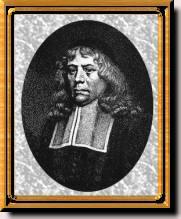
When Owen was 26 years old he went with his cousin to hear the famous Presbyterian, Edmund Calamy, at St. Mary’s Church Aldermanbury. But it turned out Calamy could not preach and a country preacher took his place. Owen’s cousin wanted to leave. But something held Owen to his seat. The simple preacher took as his text Matthew 8:26, “Why are you fearful, O you of little faith?” It was God’s appointed word and appointed time for Owen’s awakening. His doubts and fears and worries as to whether he was truly born anew by the Holy Spirit were gone. He felt himself liberated and adopted as a Son of God. When you read the penetrating practical works of Owen on the work of the Spirit and the nature of true communion with God it is hard to doubt the reality of what God did on this Sunday in 1642.
Later in this biographical article Piper quotes Packer to further elaborate on this vital issue of communion with God:
Packer says that the Puritans differ from evangelicals today because with them “. . . communion with God was a great thing; to evangelicals today it is a comparatively small thing. The Puritans were concerned about communion with God in a way that we are not. The measure of our unconcern is the little that we say about it. When Christians meet, they talk to each other about their Christian work and Christian interests, their Christian acquaintances, the state of the churches, and the problems of theology—but rarely of their daily experience of God.”
But God was seeing to it that Owen and the suffering Puritans of his day lived closer to God and sought after communion with God more earnestly than we. Writing a letter during an illness in 1674 he said to a friend, “Christ is our best friend, and ere long will be our only friend. I pray God with all my heart that I may be weary of everything else but converse and communion with Him.” God was using illness and all the other pressures of Owen’s life to drive him into communion with God and not away from it.
But Owen was also very intentional about his communion with God. He said, “Friendship is most maintained and kept up by visits; and these, the more free and less occasioned by urgent business . . .” In other words, in the midst of all his academic and political and ecclesiastical labors he made many visits to his Friend, Jesus Christ.
And when he went he did not just go with petitions for things or even for deliverance in his many hardships. He went to see his glorious friend and to contemplate his greatness. The last book he wrote—he was finishing it as he died—is called Meditations on the Glory of Christ. That says a great deal about the focus and outcome of Owen’s life. In it he said:
“The revelation . . . of Christ . . . deserves the severest of our thoughts, the best of our meditations and our utmost diligence in them . . . What better preparation can there be for [our future enjoyment of the glory of Christ] than in a constant previous contemplation of that glory in the revelation that is made in the Gospel?”
Lest we be in any doubt about how personally challenging John Piper finds the life of Owen, he states:
“Owen was authentic in commending in public only what he had experienced in private.
One great hindrance to holiness in the ministry of the word is that we are prone to preach and write without pressing
into the things we say and making them real to our own souls. Over the years words begin to come easy, and we find we can speak of mysteries without standing in awe; we can speak of purity without feeling pure; we can speak of zeal without spiritual passion; we can speak of God’s holiness without trembling; we can speak of sin without sorrow; we can speak of heaven without eagerness. And the result is a terrible hardening of the spiritual life.”
Piper goes on to quote Owen as follows:
“A man preacheth that sermon only well unto others which preacheth itself in his own soul. And he that doth not feed on and thrive in the digestion of the food which he provides for others will scarce make it savoury unto them; yea, he knows not but the food he hath provided may be poison, unless he have really tasted of it himself. If the word do not dwell with power in us, it will not pass with power from us.”
Previous Post

September 27, 2007
Was John Owen a Charismatic?
Next Post
September 28, 2007 John Owen on Communion With God the Father
Browse Our Archives
Select a Category 1 and 2 Corinthians 1 and 2 Thessalonians 1 and 2 Timothy 1 John 300 Leaders A Life of Joy Abortion Acts of the Apostles Adrian on radio Adrian on TV Adrian's Story Albert Mohler Amazing Grace Arminocalvinist Spectrum Assurance Atonement Atonement Series Attributes of God Barnabas Best of the Blog Bible Bible Software Bible Translation Biblical Inerrancy Billy Graham Bob Roberts Books C. J. Mahaney Calvinism Cessationism Charis Warnock Charismatic Spectrum Charles Simeon Charles Spurgeon Church Leadership Colossians Complementarian - Egalitarian Spectrum Complementarianism Conferences Culture Daniel Debates Deuteronomy DGM08 DGM13 Discernment Doctrine Don Carson Ed Stetzer Eddy Leo Ephesians ESV Bible Translators Interview Evangelism in a Post-Christian World evolution Exodus Expository Preaching Ezekial Faith and Feelings Family Florida Galatians General Genesis Get Wisdom - Proverbs sermons Gifts of The Holy Spirit Gifts of the Holy Spirit 2006 Global Faith Forum Godly Attitudes Gospel Gospels Grace Greg Haslam Grudem vs Piper: The Baptism Debate Healing Heaven Hell and Rob Bell Hebrews Henry Tyler Henry Warnock Holy Spirit Holy Spirit Baptism Hope Reborn Hugh Palmer Irresistable Grace Isaiah J. I. Packer Jack Hayford Joel Joel Warnock John John Lanferman John MacArthur John Newton John Owen John Piper John Smyth Jonathan Edwards Josh Harris Justification Justin Taylor Kenneth Ulmer Leadership Leadership Lessons from 1 & 2 Samuel Lex Loizides Liam Goligher Lig Duncan Limited Atonement Lou Fellingham Mark Dever Mark Driscoll Martyn Lloyd-Jones Matt Chandler Mental Health Missionary Methods: St Paul’s or Ours? My Story N. T. Wright Nehemiah NWA08 NWA09 NWA10 Opinion OT History Books Pentateuch Personal Personal Revival Philippians PJ Smyth Podcast Politics Preaching Prophecy Proverbs Psalms Raised With Christ Reformed Charismatic Regeneration Relationships Resurrection Resurrection & Salvation Revival Rice Broocks Rich Man and Lazarus Rick Warren Rob Rufus Roland Allen Romans Sam Storms Sanctification Series Sermons Sermons on Philippians Serving Jesus at Work Sexuality Sin St Paul Steve Chalke Strange Fire Suffering T4G T4G Statement TAB09 Tamasin Warnock Teamwork Terry Virgo The Atonement Debate - Chalke book The Soulwinner The Spirit-Filled Church The Traitor Within Theologcial Spectrums Theosis Tim Challies Tim Keller Titus TOAM06 TOAM07 TOAM08 TOAM09 TOAM10 TOAM11 Todd Bentley Tope Koleoso Total Depravity Video Water Baptism Wayne Grudem Worship
Select a Month October 2026 September 2026 August 2026 July 2026 June 2026 May 2026 April 2026 March 2026 February 2026 January 2026 December 2025 November 2025 October 2025 September 2025 May 2025 April 2025 January 2025 November 2024 October 2024 August 2024 July 2024 June 2024 May 2024 April 2024 March 2024 February 2024 January 2024 December 2023 August 2023 May 2023 April 2023 February 2023 October 2022 September 2022 August 2022 July 2022 June 2022 May 2022 April 2022 March 2022 February 2022 August 2021 May 2021 April 2021 February 2021 January 2021 December 2020 October 2020 September 2020 August 2020 July 2020 June 2020 May 2020 April 2020 March 2020 February 2020 January 2020 December 2019 November 2019 October 2019 September 2019 June 2019 May 2019 April 2019 March 2019 January 2019 December 2018 October 2018 September 2018 August 2018 July 2018 June 2018 May 2018 April 2018 March 2018 February 2018 January 2018 December 2017 November 2017 October 2017 September 2017 June 2017 April 2017 March 2017 February 2017 January 2017 December 2016 November 2016 October 2016 June 2016 March 2016 February 2016 January 2016 December 2015 November 2015 September 2015 August 2015 July 2015 June 2015 May 2015 April 2015 March 2015 February 2015 January 2015 December 2014 November 2014 October 2014 September 2014 August 2014 July 2014 June 2014 May 2014 April 2014 March 2014 February 2014 January 2014 December 2013 November 2013 October 2013 September 2013 August 2013 July 2013 June 2013 May 2013 April 2013 March 2013 February 2013 January 2013 December 2012 November 2012 October 2012 September 2012 August 2012 July 2012 June 2012 May 2012 April 2012 March 2012 February 2012 January 2012 December 2011 November 2011 October 2011 September 2011 August 2011 July 2011 June 2011 May 2011 April 2011 March 2011 February 2011 January 2011 December 2010 November 2010 October 2010 September 2010 August 2010 July 2010 June 2010 May 2010 April 2010 March 2010 February 2010 January 2010 December 2009 November 2009 October 2009 September 2009 August 2009 July 2009 June 2009 May 2009 April 2009 March 2009 February 2009 January 2009 December 2008 November 2008 October 2008 September 2008 August 2008 July 2008 June 2008 May 2008 April 2008 March 2008 February 2008 January 2008 December 2007 November 2007 October 2007 September 2007 August 2007 July 2007 June 2007 May 2007 April 2007 March 2007 February 2007 January 2007 December 2006 November 2006 October 2006 September 2006 August 2006 July 2006 June 2006 May 2006 April 2006 March 2006 February 2006 January 2006 December 2005 November 2005 October 2005 September 2005 August 2005 July 2005 June 2005 May 2005 April 2005 March 2005 February 2005 January 2005 December 2004 November 2004 October 2004 September 2004 August 2004 July 2004 June 2004 May 2004 April 2004 March 2004 February 2004 January 2004 December 2003 November 2003 October 2003 September 2003 August 2003 July 2003 June 2003 May 2003 April 2003
Follow Us!
TAKE THE
Religious Wisdom Quiz
According to Paul, what is the "root of all kinds of evil"?
Select your answer to see how you score.
Love of learning The love of money Fear of God Worry
Books by This Author Books by Adrian Warnock
Related posts from Adrian Warnock

How the author of the world's best hymn...

Ten Reasons Christians Don't Know Jesus Like in...

Revive a hymn: How Sweet the Name of...

"As I read John Newton, he reminds me...
TRENDING AT PATHEOS Evangelical

How the author of the world's best hymn...
I've been working with John Newton for a while now. This makes...

Long before this Lectio Divina, Psalm 130 - the song - started...

What About the Trees? Another Living Parable
After I finished writing the last article about falling leaves as a...

Why Classical Education Is a Conversation, Not a...
Come and Read: Joy in Classical Education When I was a little...

Falling Leaves: A Living Parable on Letting Go
I’ve spent the vast majority of my life in the southeast corner...

Cornell University has received a great deal of negative publicity and intense...
view all Evangelical blogs
Ad-Free & Subscriber Log-In Subscription Support
- About Us
- 2026 Calendar
- Videos
- Podcasts
- Library of World Religions
- Faith In Media Tracker
- Advertise With Us
- Write for Us
- Privacy Policy
- Terms of Service
- Do Not Sell My Data
- Contact Us
- Radiant Digital
- Manage Newsletter Subscriptions
- Unsubscribe From Notifications
- Sitemap
Copyright 2008-2026, Patheos. All rights reserved.
Subscription Support Ad-Free & Subscriber Log-In
Follow Patheos