
BuddhistCatholicContemplativeEvangelicalGeneral ChristianHinduJewishLatter-day SaintMuslimNew VisionsProgressive Christian
Beliefs
- Buddhist
- Catholic
- Contemplative
- Evangelical
- General Christian
- Hindu
- Jewish
- Latter-day Saint
- More Voices
- Muslim
- New Visions
- Pagan
- Progressive Christian
Topics
- Religion News
- Food and Religion
- Sports and Religion
- Religious Art
- Religious Music and Entertainment
- Religious Events
- History and Religion
- Style and Religion
- Politics and Religion
- Women in Religion
- Recreation Outdoors and Religion
- Business Finance and Religion
- Careers Workplace and Religion
- Education and Religion
- Family Parenting and Religion
- Health Fitness and Religion
- Home and Religion
- Relationships and Religion
- Technology and Religion
- Travel and Religion
Columnists
- Buddhist Columnists
- Business Finance and Religion Columnists
- Careers Workplace and Religion Columnists
- Catholic Columnists
- Contemplative Columnists
- Education and Religion Columnists
- Evangelists Columnists
- Family Parenting and Religion Columnists
- General Christian Columnists
- Health Fitness and Religion Columnists
- Hindu Columnists
- History and Religion Columnists
- Home and Religion Columnists
- Jewish Columnists
- More Voices Columnists
- Latter Day Columnists
- Muslim Columnists
- New Visions Columnists
- Nonreligious Columnists
- Pagan Columnists
- Politics and Religion Columnists
- Progressive Columnists
- Recreation Outdoors and Religion Columnists
- Relationships and Religion Columnists
- Religion News Columnists
- Religious Art Columnists
- Religious Events Columnists
- Religious Music and Entertainment Columnists
- Sports and Religion Columnists
- Style and Religion Columnists
- Technology and Religion Columnists
- Travel and Religion Columnists
- Women in Religion Columnists
Resource Library
- 2026 Calendar
- Library of World Religions
- The 100 Most Holy Places on Earth
- Patheos Answers
- Podcasts
- Videos
- Faith Leaders Database
- Anglican Episcopalian
- Bahai
- Baptist
- Buddhism
- Christianity
- Confucianism
- Eastern Orthodoxy
- Hinduism
- Holiness and Pentecostal
- ISKCON
- Islam
- Judaism
- Lutheran
- Methodist
- The Church of Jesus Christ of Latter-day Saints
- New Age
- Paganism
- Presbytarian and Reformed
- Protestantism
- Religion Behind the Scenes
- Roman Catholic
- Scientology
- Shia Islam
- Sikhism
- Sufism
- Sunni Islam
- Taoism
- Zen
- See all religions
Research Tools
 Ad-Free & Subscriber Log-In Subscription Support
Ad-Free & Subscriber Log-In Subscription Support
Follow Patheos 

- Trending:
- Forgiveness
- |
- Marriage
- |
- Consciousness
- |
- Death Penalty
- |
- Election
- |
- Halloween

- Home
- Evangelical
- The Risks and Rewards of Using Technology in Sermon Preparation
The Risks and Rewards of Using Technology in Sermon Preparation
Last updated on: June 27, 2018 at 11:05 pm by Adrian Warnock
The Risks and Rewards of Using Technology in Sermon Preparation 2018-06-27T23:05:20+01:00 Adrian Warnock
Patheos Explore the world's faith through different perspectives on religion and spirituality! Patheos has the views of the prevalent religions and spiritualities of the world.
Note: I originally wrote this article for www.sermoncentral.com where it appeared on February 26, 2007.
__________________________________________________
Technology helps me in both my sermon preparation and in my personal devotional life. By technology, I’m referring specifically to the Internet and Bible software. I love it and have no apology for using it to discover insights from God’s Word and to improve the quality of my preaching.
People have three different reactions when I talk to them about using technology to help us understand God’s Word. Some respond enthusiastically. Others—well, their eyes just glaze over. The third group starts talking about plagiarism of sermons and how terrible it is that pastors are no better than children who buy essays online to submit as coursework. Perhaps you have had similar responses when you talk about SermonCentral.com. Maybe you don’t even like to talk about it for fear of these responses. I hope that by the time you have finished reading this article you will be able to hold your head high about your use of SermonCentral.com and other forms of technology to help you preach.
What about the fear of abuses of technology, particularly Internet sermon access? I’ll simply put my cards on the table here: I think there is a lot of unnecessary concern about it. I do not think that there are many men of God who are lifting whole sermons from elsewhere and simply re-preaching them. Sure it happens. But for those of us who are conscientiously and diligently putting our hearts into our sermon preparation, it’s not worth wasting our time on those who aren’t. Let’s just preach the Word!
On Judgment Day I would not want to be in the shoes of anyone who made a habit of the loathsome practice of simply passing off other people’s sermons as their own. As preachers, we should never forget the following very serious words of warning:
“Not many of you should become teachers, my brothers, for you know that we who teach will be judged with greater strictness” (James 3:1, ESV).
Those words should haunt you as a preacher. They do me as I sit here writing this article having preached just a few hours ago.
Most preachers understand why even a great preacher like Martyn Lloyd-Jones could say of his own preaching,
“I can say quite honestly that I would not cross the road to listen to myself preaching.” This wasn’t because of any lack of commitment to preaching on his part since he also said, “Preaching has been my life’s work … to me the work of preaching is the highest and the greatest and the most glorious calling to which anyone can ever be called.”
(Preface to D. Martyn Lloyd-Jones, Preaching and Preachers, Zondervan Publishing House, Grand Rapids, Michigan, 1971)
The joyful, yet awesome, responsibility of preaching should have an effect on us. Of course, we would not simply copy another person’s sermon—how could we dare? But how can we go into the pulpit and deliver our own untested insights to the people God has entrusted to our preaching? It is precisely because of the weight of this responsibility that far from being embarrassed about my reading of other people’s material, I consider it imperative to do so. After all, I will stand before God to give account for every word I preach.
There are sometimes double standards in people’s minds on this issue of plagiarism. Surely reading sermons from SermonCentral is no different from reading a commentary or theological work, or a book of sermons. Technology doesn’t alter at all the basic fact—we are reading the work of others who have studied the Bible before us. The truth is that for thousands of years preachers have studied what other students of the Bible have written. How is reading published sermons so very different from reading a commentary? Do people who feel we should not use any technology in our sermon preparation seriously believe that we should not read anything other than the Bible to help us?
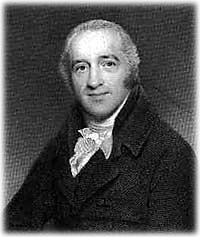 Centuries before anyone thought of making sermons available on the web, Charles Simeon produced his Horae Homileticae, which was essentially a set of sermon outlines which covered the whole of Scripture. Over on Wikipedia, the accusation is made that this publication was an “invitation to plagiarism”, which seems crazy to me. All SermonCentral.com enthusiasts should rejoice to hear that the people at Logos Bible Software are publishing an electronic edition of this amazing work.
The truth is, the advice I was given by a wise man when I was just beginning to preach as a teenager is as applicable to the age of the Internet and Bible software as it was when these things hadn’t been conceived. My mentor encouraged me to work on a passage myself, trying to understand it as best as I could, and then check my conclusions and expand my understanding by reading others. Such advice has been repeated by every preacher who I respect and have spoken to about this issue. Another of my mentors told me that he didn’t think he had ever preached a sermon without first checking what Charles Spurgeon had to say on the relevant passage.
There is no such thing as a copyright on ideas. Plagiarism is not an issue when we begin to extract ideas, reword them, and combine them with other ideas we have found elsewhere or thought of ourselves. Actually, I have learned over the years that if I come up with an interpretation of Scripture that seems new and fresh to me, the majority of the time I will discover, if I read enough commentaries or sermons, an almost identical idea has been expressed before by someone else. It is when I don’t find my thoughts reflected previously that I worry, since I suspect that at least half of such truly original ideas are probably heretical! It is technology that allows me to check myself against the collective thought of others, and incorporate some of the ideas of others as appropriate.
 It can be amusing to see how unknowingly dependent on others we sometimes find ourselves. I remember a few years ago preparing a sermon on a subject and then turning to one of Spurgeon’s sermons to see what he had written on the passage at hand. I was shocked when I realized that I had come up with a set of headings that were so similar to his and in such a similar order that someone would have thought I had copied them. I never decided whether I should be pleased that I had spontaneously come to the same conclusions as the prince of preachers, or conclude that I had obviously read that sermon at some point in the past and had somehow regurgitated the headings. I am fairly certain that the second conclusion was, in fact, the case.
Both my early mentors and my fear of getting it wrong gave me a desire to check my conclusions before I preached. When I was first learning to prepare sermons, I traveled into London to the Evangelical Library, w
hich was also much loved by one of my other heroes—Dr. Martyn Lloyd-Jones. I would find the largest table I could and gradually fill it with commentaries and sermon collections open to the relevant passage I was studying. I quickly realized this was not a very efficient way to study since I only needed a few pages at most of the large volumes I was lugging around the library—indeed, often I was only really interested in a sentence or two which encapsulated a thought that I had not yet considered.
It was around that time that I decided I needed to have the Spurgeon volumes at home. When I saw the cost and size of the paper collection, I knew it wasn’t possible for me. I found instead an electronic edition at a much cheaper price, and my electronic book collection began.
I mentioned earlier that I had preached a sermon today. Let me tell you a bit about the different forms of technology I used to help me in this talk, and how I use them generally. Firstly, I am an avid believer in the power of this new form of communication known as the Internet. Historians are unequivocal that the Reformation was only possible because of the invention of the printing press. This enabled Luther to communicate with large numbers of people at once through printed tracts. Luther was able to transform Europe theologically, unlike men like the martyr Huss, who had prophesied 100 years previously that the Reformers were coming. Today we are living through a revolution in communication that is at least as significant. Christians need to grab the opportunities this presents. Technology is a gift to be received—and seized!
 The Internet has enabled me to connect with many people and benefit from their wisdom. My blog in particular has led me to form good relationships with people I would never have otherwise met. At all stages of the composition of my sermon notes, I made heavy use of e-mail and chat programs to share my ideas and ask for help from a few people—some of whom live on another continent to me. It seems I am in good company as Josh Harris recently blogged that he e-mails his manuscript for comments to C.J. Mahaney and others every Saturday night wherever they may be in the world.
Also, on the Internet I found SermonCentral to be particularly useful in finding cross-references for the theme of my passage. This was more difficult than is sometimes the case since this was one of those biblical subjects which is frequently described using different words. Thus, I decided to search for other sermons with a particular key word in their title. As well as giving me material to read, this helped me to identify some key passages in the Bible I had not considered. I love being able to read the product of the labors of other preachers around the world.
I was also able to discover material from a collection of over 100 handpicked Christian websites and blogs by using a search box I include on my blog’s homepage. Utilizing the Google search engine, this simple, but helpful, tool enables me to limit my search to the specific Christian sites I want to study. These include desiringgod.org, spurgeon.org, ccel.org, bible.org, sermoncentral.com, and many others. Within a split-second, everything my favorite Christian sites have to say on a Bible verse or subject appears on my screen.
I also used the ESV.org website to help me quickly copy and paste passages into my notes, as well as to listen to the text. (The same can be done for other Bible versions with the Search-the-Bible feature on SermonCentral.com.) I even downloaded some mp3 sermons on my theme. I wrote a set of long notes, then decided to convert them into a PowerPoint show, and then changed my mind about having slides, so needed to export it back to the word processor for yet another edit. As you can see, the preparation of my notes is heavily technology-dependent. If I had to go back to a pen and paper to produce the notes from which I will preach, it would certainly feel very odd!
 But for me, the most helpful source of assistance of all in my sermon preparation is my Bible software. The reason why I like it the most is that it is a direct connect with the Bible itself—the sole infallible source of preaching material. Most software packages will allow you to easily compare different English translations and explore the Bible in its original languages. My favorite is Logos Bible Software, which does all this and much more. It’s great to see the former Microsoft employees who founded Logos now using their talents to strengthen my study of Scripture.
For many years now, if I want to check out the meaning of a Bible passage, do a word study in the original Greek, or, indeed, check out the latest theological thinking on a certain subject—I almost always turn to my Bible software application—which now feels to me like my own full-time personal digital assistant.
I also sometimes call my growing collection of electronic commentaries, lexicons, Bibles, interlinear Bibles, commentaries, reference books, and theological journals my personal “Theological Seminary in a Box.” Logos has served up a feast of resources in a one-stop platform. For me, at least, this software goes some way towards covering up my lack of any theological degrees. For sure, I’ve needed to learn from others in real life, and have done some theological training courses, but with Logos Bible Software I can instantly benefit from the pooled expertise of thousands of scholars.
The sheer volume of what is available electronically still amazes me. Just as an example, it is possible to obtain the majority of John MacArthur’s life works on a single disk! “What will I use as a doorstop now without those piles of books?” you ask. There are, in fact, literally thousands of books and products that can be stored on your hard drive.
 Over the years I’ve found my Bible software to be an invaluable resource in sermon preparation. I simply enter a passage on the home screen, press “go,” and watch as my whole electronic library is searched for information about that Bible reference. I hope you can grasp how having all these resources available electronically saves me countless hours of time. It would simply not be possible to search that many books and journal articles manually each week without an army of research assistants.
Are there any drawbacks to all of this technology? In a way, the very strength of this software is its weakness. A thorough use of technology and the Logos Bible Software in particular—especially if you have an extensive library—will greatly increase your confidence in preparing sermons. This could lead to an increase in pride and to a desire to over-display that knowledge whilst preaching. After spending hours chasing rabbit trails and wrestling with the text, we sometimes want others to see the fruits of our labors. In fact, we have to bury most of it. A good sermon, however, is like a
n iceberg. The mountain of ice—which represents the message itself—is dwarfed by the vast amount of preparation underpinning it beneath the surface.
I have sometimes spent hours studying a particular issue merely to come across with greater conviction as I preach a single sentence. It reminds me of something a manager at Apple said about preparation for Steve Job’s keynote presentations, “The team and I spent hundreds of hours preparing for a segment that lasted about five minutes.”
The good news for those of us with a large electronic library is that the reference materials represent the results of millions of hours of study by some of the sharpest theological minds among current and previous church scholars. I can simply open my software, type a Bible passage into the passage guide, and set my own personal team of thousands of scholars to work. Imagine being able to simultaneously e-mail the authors of 500 years’ worth of theological journal articles, asking if they had ever written on that obscure Bible verse you are struggling with—and getting an answer in seconds!
If we take our preaching seriously, I don’t see any alternative resource that can do everything that my Bible software library does – packages from other companies do exist, but none I have found have as many resources available as Logos. I am so grateful for it, along with the sermons that are available online at places like SermonCentral. (These days the two even work together seamlessly as SermonCentral results are incorporated into Logos Bible Software’s passage guide.)
With all this knowledge at our fingertips—how do we prevent the pride referred to in the statement “knowledge puffs up, but love builds up” (1 Corinthians 8:1)? I think that access to all of that knowledge can be turned—if our hearts are right—to stimulate humility. We ought to realize very quickly that wiser scholars than us have much to teach us and still disagree with each other on points we thought were “obvious”. This should make us humble. We can even imagine ourselves in a dialogue with the authors of all this material, and who knows, they might even persuade us of a new opinion. We must be more committed to the Bible than we are to the theological system to which we hold. This conviction was a major trait of Charles Simeon, who I mentioned at the beginning of this article.
Another possible drawback of the overuse of technology is this: When preparing to preach, we might feel that our task is complete when we have studied well. Rather, we must also build a bridge from this world to the world of the Bible. Only part of that bridge-building is done by studying the Bible and what others have said concerning it. A good sermon will also have a foot in this world. Thus, we must know something about this world so we can apply the Scriptures.
This is one reason why I like reading and hearing other people’s sermons; hopefully, at least some of them will have considered the applications and illustrations that connect with their congregations. Spurgeon was a master at this. We cannot merely copy his work, however, as we live in a very different context to him. We must learn to apply God’s unchanging Word to our changing culture. The importance of fresh, personal illustrations cannot be overemphasized.
But producing a connection is not merely an intellectual task. We need God’s help. I realize that an over-reliance on technology and the resources I utilize can detract and take away from spending time in prayer over the message. We should not presume that God will bless our laziness, nor should we forget to ask Him to bless the messages we have prepared with all that technology.
I do pray in front of my PC as I study and read, but just as at the beginning of my preparation it should be me, my God, and my Bible, at the end of my preparation, I need to switch off the computer, put aside the notes, get away from all distractions, and simply pray. I am ashamed to admit how often I have to remind myself to do this. For it is really only as I connect with God personally—because of or in spite of technology—that I will find He takes my preparation and turns it into an anointed sermon that will impact the lives of my hearers—and that, after all, is why we all preach. There is no better advice ever given to preachers than to follow the advice of the early Apostles who said:
“We will devote ourselves to prayer and to the ministry of the word.”
(Acts 6:4.)
Previous Post

March 12, 2007
IRAQ - A Clash of Worldviews
Next Post
March 14, 2007 Spurgeon and Millennial Mud Slinging
Recent Comments
Browse Our Archives
Select a Category 1 and 2 Corinthians 1 and 2 Thessalonians 1 and 2 Timothy 1 John 300 Leaders A Life of Joy Abortion Acts of the Apostles Adrian on radio Adrian on TV Adrian's Story Albert Mohler Amazing Grace Arminocalvinist Spectrum Assurance Atonement Atonement Series Attributes of God Barnabas Best of the Blog Bible Bible Software Bible Translation Biblical Inerrancy Billy Graham Bob Roberts Books C. J. Mahaney Calvinism Cessationism Charis Warnock Charismatic Spectrum Charles Simeon Charles Spurgeon Church Leadership Colossians Complementarian - Egalitarian Spectrum Complementarianism Conferences Culture Daniel Debates Deuteronomy DGM08 DGM13 Discernment Doctrine Don Carson Ed Stetzer Eddy Leo Ephesians ESV Bible Translators Interview Evangelism in a Post-Christian World evolution Exodus Expository Preaching Ezekial Faith and Feelings Family Florida Galatians General Genesis Get Wisdom - Proverbs sermons Gifts of The Holy Spirit Gifts of the Holy Spirit 2006 Global Faith Forum Godly Attitudes Gospel Gospels Grace Greg Haslam Grudem vs Piper: The Baptism Debate Healing Heaven Hell and Rob Bell Hebrews Henry Tyler Henry Warnock Holy Spirit Holy Spirit Baptism Hope Reborn Hugh Palmer Irresistable Grace Isaiah J. I. Packer Jack Hayford Joel Joel Warnock John John Lanferman John MacArthur John Newton John Owen John Piper John Smyth Jonathan Edwards Josh Harris Justification Justin Taylor Kenneth Ulmer Leadership Leadership Lessons from 1 & 2 Samuel Lex Loizides Liam Goligher Lig Duncan Limited Atonement Lou Fellingham Mark Dever Mark Driscoll Martyn Lloyd-Jones Matt Chandler Mental Health Missionary Methods: St Paul’s or Ours? My Story N. T. Wright Nehemiah NWA08 NWA09 NWA10 Opinion OT History Books Pentateuch Personal Personal Revival Philippians PJ Smyth Podcast Politics Preaching Prophecy Proverbs Psalms Raised With Christ Reformed Charismatic Regeneration Relationships Resurrection Resurrection & Salvation Revival Rice Broocks Rich Man and Lazarus Rick Warren Rob Rufus Roland Allen Romans Sam Storms Sanctification Series Sermons Sermons on Philippians Serving Jesus at Work Sexuality Sin St Paul Steve Chalke Strange Fire Suffering T4G T4G Statement TAB09 Tamasin Warnock Teamwork Terry Virgo The Atonement Debate - Chalke book The Soulwinner The Spirit-Filled Church The Traitor Within Theologcial Spectrums Theosis Tim Challies Tim Keller Titus TOAM06 TOAM07 TOAM08 TOAM09 TOAM10 TOAM11 Todd Bentley Tope Koleoso Total Depravity Video Water Baptism Wayne Grudem Worship
Select a Month October 2026 September 2026 August 2026 July 2026 June 2026 May 2026 April 2026 March 2026 February 2026 January 2026 December 2025 November 2025 October 2025 September 2025 May 2025 April 2025 January 2025 November 2024 October 2024 August 2024 July 2024 June 2024 May 2024 April 2024 March 2024 February 2024 January 2024 December 2023 August 2023 May 2023 April 2023 February 2023 October 2022 September 2022 August 2022 July 2022 June 2022 May 2022 April 2022 March 2022 February 2022 August 2021 May 2021 April 2021 February 2021 January 2021 December 2020 October 2020 September 2020 August 2020 July 2020 June 2020 May 2020 April 2020 March 2020 February 2020 January 2020 December 2019 November 2019 October 2019 September 2019 June 2019 May 2019 April 2019 March 2019 January 2019 December 2018 October 2018 September 2018 August 2018 July 2018 June 2018 May 2018 April 2018 March 2018 February 2018 January 2018 December 2017 November 2017 October 2017 September 2017 June 2017 April 2017 March 2017 February 2017 January 2017 December 2016 November 2016 October 2016 June 2016 March 2016 February 2016 January 2016 December 2015 November 2015 September 2015 August 2015 July 2015 June 2015 May 2015 April 2015 March 2015 February 2015 January 2015 December 2014 November 2014 October 2014 September 2014 August 2014 July 2014 June 2014 May 2014 April 2014 March 2014 February 2014 January 2014 December 2013 November 2013 October 2013 September 2013 August 2013 July 2013 June 2013 May 2013 April 2013 March 2013 February 2013 January 2013 December 2012 November 2012 October 2012 September 2012 August 2012 July 2012 June 2012 May 2012 April 2012 March 2012 February 2012 January 2012 December 2011 November 2011 October 2011 September 2011 August 2011 July 2011 June 2011 May 2011 April 2011 March 2011 February 2011 January 2011 December 2010 November 2010 October 2010 September 2010 August 2010 July 2010 June 2010 May 2010 April 2010 March 2010 February 2010 January 2010 December 2009 November 2009 October 2009 September 2009 August 2009 July 2009 June 2009 May 2009 April 2009 March 2009 February 2009 January 2009 December 2008 November 2008 October 2008 September 2008 August 2008 July 2008 June 2008 May 2008 April 2008 March 2008 February 2008 January 2008 December 2007 November 2007 October 2007 September 2007 August 2007 July 2007 June 2007 May 2007 April 2007 March 2007 February 2007 January 2007 December 2006 November 2006 October 2006 September 2006 August 2006 July 2006 June 2006 May 2006 April 2006 March 2006 February 2006 January 2006 December 2005 November 2005 October 2005 September 2005 August 2005 July 2005 June 2005 May 2005 April 2005 March 2005 February 2005 January 2005 December 2004 November 2004 October 2004 September 2004 August 2004 July 2004 June 2004 May 2004 April 2004 March 2004 February 2004 January 2004 December 2003 November 2003 October 2003 September 2003 August 2003 July 2003 June 2003 May 2003 April 2003
Follow Us!
TAKE THE
Religious Wisdom Quiz
What does Paul say in Philemon he would have liked to keep Onesimus to do?
Select your answer to see how you score.
Help him while he is in chains for the gospel Serve in the church Preach the word Care for the poor
Books by This Author Books by Adrian Warnock
Related posts from Adrian Warnock

John Newton's Amazing Grace: I once was blind...
PREACH THE RESURRECTION THIS EASTER SUNDAY! Don't forget!

Logos Closing Sale: Last chance to buy before...
God knows about your suffering: Spurgeon on God's...
TRENDING AT PATHEOS Evangelical

How the author of the world's best hymn...
I've been working with John Newton for a while now. This makes...

Long before this Lectio Divina, Psalm 130 - the song - started...

What About the Trees? Another Living Parable
After I finished writing the last article about falling leaves as a...

Why Classical Education Is a Conversation, Not a...
Come and Read: Joy in Classical Education When I was a little...

Falling Leaves: A Living Parable on Letting Go
I’ve spent the vast majority of my life in the southeast corner...

Cornell University has received a great deal of negative publicity and intense...
view all Evangelical blogs
What Are Your Thoughts?leave a comment
Comments are closed.
Ad-Free & Subscriber Log-In Subscription Support
- About Us
- 2026 Calendar
- Videos
- Podcasts
- Library of World Religions
- Faith In Media Tracker
- Advertise With Us
- Write for Us
- Privacy Policy
- Terms of Service
- Do Not Sell My Data
- Contact Us
- Radiant Digital
- Manage Newsletter Subscriptions
- Unsubscribe From Notifications
- Sitemap
Copyright 2008-2026, Patheos. All rights reserved.
Subscription Support Ad-Free & Subscriber Log-In
Follow Patheos