
BuddhistCatholicContemplativeEvangelicalGeneral ChristianHinduJewishLatter-day SaintMuslimNew VisionsProgressive Christian
Beliefs
- Buddhist
- Catholic
- Contemplative
- Evangelical
- General Christian
- Hindu
- Jewish
- Latter-day Saint
- More Voices
- Muslim
- New Visions
- Pagan
- Progressive Christian
Topics
- Religion News
- Food and Religion
- Sports and Religion
- Religious Art
- Religious Music and Entertainment
- Religious Events
- History and Religion
- Style and Religion
- Politics and Religion
- Women in Religion
- Recreation Outdoors and Religion
- Business Finance and Religion
- Careers Workplace and Religion
- Education and Religion
- Family Parenting and Religion
- Health Fitness and Religion
- Home and Religion
- Relationships and Religion
- Technology and Religion
- Travel and Religion
Columnists
- Buddhist Columnists
- Business Finance and Religion Columnists
- Careers Workplace and Religion Columnists
- Catholic Columnists
- Contemplative Columnists
- Education and Religion Columnists
- Evangelists Columnists
- Family Parenting and Religion Columnists
- General Christian Columnists
- Health Fitness and Religion Columnists
- Hindu Columnists
- History and Religion Columnists
- Home and Religion Columnists
- Jewish Columnists
- More Voices Columnists
- Latter Day Columnists
- Muslim Columnists
- New Visions Columnists
- Nonreligious Columnists
- Pagan Columnists
- Politics and Religion Columnists
- Progressive Columnists
- Recreation Outdoors and Religion Columnists
- Relationships and Religion Columnists
- Religion News Columnists
- Religious Art Columnists
- Religious Events Columnists
- Religious Music and Entertainment Columnists
- Sports and Religion Columnists
- Style and Religion Columnists
- Technology and Religion Columnists
- Travel and Religion Columnists
- Women in Religion Columnists
Resource Library
- 2026 Calendar
- Library of World Religions
- The 100 Most Holy Places on Earth
- Patheos Answers
- Podcasts
- Videos
- Faith Leaders Database
- Anglican Episcopalian
- Bahai
- Baptist
- Buddhism
- Christianity
- Confucianism
- Eastern Orthodoxy
- Hinduism
- Holiness and Pentecostal
- ISKCON
- Islam
- Judaism
- Lutheran
- Methodist
- The Church of Jesus Christ of Latter-day Saints
- New Age
- Paganism
- Presbytarian and Reformed
- Protestantism
- Religion Behind the Scenes
- Roman Catholic
- Scientology
- Shia Islam
- Sikhism
- Sufism
- Sunni Islam
- Taoism
- Zen
- See all religions
Research Tools
 Ad-Free & Subscriber Log-In Subscription Support
Ad-Free & Subscriber Log-In Subscription Support
Follow Patheos 

- Trending:
- Forgiveness
- |
- Marriage
- |
- Consciousness
- |
- Death Penalty
- |
- Election
- |
- Halloween

- Home
- Evangelical
- SERMON – Reviving Prayer – 1 Kings 17:1 to 2 Kings 2:14
SERMON – Reviving Prayer – 1 Kings 17:1 to 2 Kings 2:14
Last updated on: May 3, 2024 at 5:03 pm by Adrian Warnock
SERMON – Reviving Prayer – 1 Kings 17:1 to 2 Kings 2:14 2024-05-03T17:03:27+01:00 Adrian Warnock
Patheos Explore the world's faith through different perspectives on religion and spirituality! Patheos has the views of the prevalent religions and spiritualities of the world.

UPDATE: This post also forms the basis of Reviving Prayer one of the chapters in my book Raised With Christ which can be read here:
The following is a full set of notes, including background information and quotes I used whilst preparing my sermon entitled, “Reviving Prayer,” which was preached at Jubilee Church on the 25th of February 2006. Much of this material was never designed to form part of the sermon — instead it is, if you like, part of the “iceberg” that lies beneath the surface supporting what I actually said. You can download the audio (you may need to right click and save the file onto your PC) or listen right here using the following embedded player:
A. INTRODUCTION
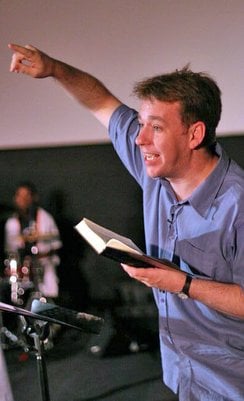 Last Sunday at Jubilee we heard about how we believe that God is calling us to be a people of faith — a people who trust in God to do the miraculous. One way in which we express our faith — and in which our faith can grow — is by prayer. I know that for me, as I look back on my life, there are many times when I have wrestled with God in prayer and seen Him answer me. Times when things have been hard, and I have prayed, and suddenly a corner was turned. The time when attempts at moving to a new house didn’t happen the way I wanted it, but I prayed and God worked it out so we had a far better house than we originally planned. Times when I have been sick, and prayer led to one of those miracles the doctors call “spontaneous remissions.” Times when I felt at the end of my tether, and God intervened and refreshed me, sometimes without even solving the problem.
Sometimes it’s not so much our situations that need changing — it’s us. Sometimes we might be struggling in a job or a relationship and God wants us to suddenly realize the reason He has put us there. Perhaps you face lots of problems at work and it’s getting you down. You might be praying to get out of a job. But God shows you in prayer that if it wasn’t for all those problems, they wouldn’t be paying your salary. It is often WE that need to be revived from our depressed state.
The kind of prayer I want to look at today is THAT kind of prayer — prayer that changes us. Prayer that revives. There are many great promises attached to prayer in the Bible. One of these is found in 2 Chronicles 7:14:
If my people, who are called by my name, will humble themselves and pray and seek my face and turn from their wicked ways, then will I hear from heaven and will forgive their sin and will heal their land.
This is a key verse — one you will have probably heard if you have been a Christian for awhile. It is often quoted when we are talking about prayer. In this verse God makes a glorious promise. It is essentially a promise that He will heal and revive us if we will turn and pray.
Last time I spoke we looked at revival and the example in Acts 2 — several points about that passage reflect the “typical” revival as seen in church history. One of these is prayer. This is a pattern that is repeated in Acts and throughout church history. Every revival I have ever read about in Church history started with a prayer meeting.
This quote from a journal which writes exclusively on revival supports the observation that no revival comes without prayer:
” … let us draw some general lessons from our consideration of the Second Great Awakening . . . It is quite evident that prayer was an essential element in this revival movement, as it is in all revivals. There is no revival without prayer. It would profit us to carefully go over the title of Edwards’ thesis on revival praying: “A Humble Attempt” — Every relationship to God must begin with humility, for God gives grace only to the humble (James 4:6; 2 Chronicles 7:14). “For Explicit Agreement and Visible Union of God’s People” — An essential condition for revival, as well as an evidence, is unity (Psalms 133; Acts 1:14; Acts 2:1; Acts 4:24ff; Acts 5:12). “For Extraordinary Prayer” — It was Leonard Ravenhill who said, “A church will never have a revival on one prayer meeting a week.” May God pour out a “spirit of grace and supplication” upon us! We need first a revival of prayer. (Reformation and Revival Volume 6, 1997)
Let me give a couple of examples of this in church history. During revivals, prayer becomes more intense, and all-night prayer meetings are not uncommon. It is often said of revival times: “You did not have to whip them up to prayer meetings; you could not keep them away.” (Martyn Lloyd-Jones).
In revival, even non-Christians come to the prayer meetings and get saved!
Some examples of this:
-
This was my experience at school.
-
Perhaps one of the most striking examples of the place of prayer in revival happened in Coleraine in 1859:
“A schoolboy in class became so troubled about his soul that the schoolmaster sent him home. An older boy, a Christian, went with him, and before they had gone far, led him to Christ. Returning at once to school, this new convert testified to his teacher, ‘Oh, I am so happy. I have the Lord Jesus in my heart.’ These artless words had an astonishing effect; boy after boy rose and silently left the room. Going outside, the teacher found these boys all on their knees, ranged along the wall of the playground. Very soon their silent prayer became a bitter cry; it was heard by another class inside and pierced their hearts. They fell on their knees, and their cry for mercy was heard in turn by a girls’ class above. In a few moments, the whole school was on their knees! Neighbors and passers-by came flocking in, and all as they crossed the threshold came under the same convicting power. Every room was filled with men, women and children seeking God.”
-
Something similar happened that year in New York where a prayer meeting which began with just six people the first week swelled to fill theatres and led directly to 1 million out of 30 million Americans being saved in a year.
This clear link be
tween revival and prayer has led some to think this is an automatic process — that if you do certain things a massive revival is always the result. These words, however, do not remove the sovereignty of God — there is mystery, and the truth is we cannot force God’s hand like that. Nor should we stop everything and just pray! Booth said “work as if everything depends on you. Pray as if everything depends on God.”
BUT, if people turn and pray, in a certain way I do believe it is almost irresistible to God and He will revive them — even if this does not lead to a widespread “revival.” Last time I made the point that I believe that what happens on a global or national scale in revival can be mirrored in an individual church or group of Christians, or even in a single life. God is in the business of reviving those who fear they are almost dead.
So if prayer is what triggers the people of God to be healed and revived, it is also what triggers me personally to be revived as well. How strange it is that we all struggle so much to pray as we ought!
If we were really convinced that prayer changes the way God acts, and that God does bring about remarkable changes in the world in response to prayer, as Scripture repeatedly teaches that He does, then we would pray much more than we do. If we pray little, it is probably because we do not really believe that prayer accomplishes much at all. (Wayne A. Grudem, Systematic Theology: An Introduction to Biblical Doctrine, p. 377.)
I wish I was more of an expert at prayer. I am not; but I am learning. I wish I knew more about reviving prayer. If there was ever a man who the Bible holds up as an example of fervent reviving prayer, it is Elijah. I would like to introduce us today to a man who certainly knew how to pray. I want to look at the prayer life of Elijah, since the dramatic events of his life are often seen as representing revival — we pray “send the fire” or “send the rain” — he saw both literally. Intriguingly, Solomon, to whom God is speaking in the above promise, had also seen literal fire, as did, of course, the early church in the book of Acts. Fire is very instructive to us about how God the Holy Spirit works.
The New Testament honors Elijah in the book of James:
James 5:16-18. The prayer of a righteous person has great power as it is working. Elijah was a man with a nature like ours, and he prayed fervently that it might not rain, and for three years and six months it did not rain on the earth. Then he prayed again, and heaven gave rain, and the earth bore its fruit.
So what IS effective prayer? We will look at every recorded prayer of Elijah beginning in 1 Kings 17 where we find the first recorded prayer of Elijah. But before we launch into it, I want you to know that there is no doubt this was not the first prayer of Elijah. We know this for certain because the verse in James we just read tells us that Elijah prayed for the rain to stop. That prayer is not recorded in Scripture, which I think tells us that we must learn to pray in the secret place — I am very sure that Elijah will have prayed for all kinds of small things before he began to pray his “big prayers.”
B. WHAT IS REVIVING PRAYER LIKE?
If there is one prayer in the whole Bible that is an example of reviving prayer it is that first recorded prayer of Elijah found in 1 Kings 17. The widow who has been looking after the prophet Elijah during the great drought probably expected some kind of reward from God for doing so. What happened instead? Her son died. This prayer is a prayer that quite literally brought a corpse back to life — it revived the boy. This should be enough to make us sit up and take notice and say, “So what can we learn about prayer from this?” Sometimes we have to be brought into a desperate situation in which we have no “clever” answer in order for us to be driven to prayer.
“He gave no answer to her expostulation, but brought it to God, and laid the case before him, not knowing what to say to it himself.” (Matthew Henry)
A REVIVING PRAYER . . .
1 Kings 17:20-21. And he cried to the Lord, “0 Lord my God, have you brought calamity even upon the widow with whom I sojourn, by killing her son?” Then he stretched himself upon the child three times and cried to the Lord, “0 Lord my God, let this child’s life come into him again.”
-
Recognises the situation — doesn’t deny it. For example, Abraham (in Romans 4:19)
“. . . did not weaken in faith when he considered his own body, which was as good as dead (since he was about a hundred years old), or when he considered the barrenness of Sarah’s womb” (or as the NIV puts it) he “faced the facts … ” Essentially, both Elijah and Abraham had one eye on the situation and were being honest and real about it, but also had one eye on God. They both knew that “where God is present, there is nothing that lies outside the realm of possibility.”
“Abraham was fully aware that his own body was as good as dead (“utterly worn out,” TCNT). He was, at that time, about one hundred years old (cf. Gen 17:1). Furthermore, Sarah was “past the age of childbearing” (Genesis 18:11). From a common sense standpoint, there was not the slightest possibility that she would bear a child. This, however, did not cause Abraham to weaken in his faith. Faith goes beyond human potentiality. It acknowledges the existence of one who is not bound by the limitations of the created order. ‘Conscious of his own utter impotence, Abraham relied simply and completely on the all-sufficient power of God.’ Where God is present, there is nothing that lies outside the realm of possibility. The church of Jesus Christ is in desperate need of those who will insist that God is able to bring to pass anything that is consistent with his nature and in concert with his redemptive purposes. Your God Is too small is a sad epitaph inscribed on all too many ecclesiastical groups who, strange as it may seem, claim to worship the Almighty.” (Robert H. Mounce, vol. 27, Romans (electronic edition, Logos Library System; The New American Commentary, Nashville: Broadman & Holman Publishers, 2001, (c1995), p. 129.)
-
Cries to God — has a strength about it — challenging God, which almost reminds me of Genesis 32 (Jacob wrestling with God). The great thing is that as Elijah cries out to God passionately, his prayer is answered. The boy lives. But something happened here to Elijah — it was one more lesson in the university of prayer. Elijah learnt something, so much so that by the time we get to the very next chapter, we find a bold Elijah, not now hidden in his room, but before the whole nation, standing next to an altar that is soaking wet and a bunch of religious fanatics who have been cutting themsel
ves with swords, trying to persuade Baal to send fire. To make matters worse, he has been mocking them – in clear proof that there ARE jokes in the Bible! So is he nervous? Not a bit of it! Listen to his clear, bold, prayer: 1 Kings 18:36-39. “0 Lord, God of Abraham, Isaac, and Israel, let it be known this day that you are God in Israel, and that I am your servant, and that I have done all these things at your word. Answer me, 0 Lord, answer me, that this people may know that you, 0 Lord, are God, and that you have turned their hearts back.” Then the fire of the Lord fell and consumed the burnt offering and the wood and the stones and the dust, and licked up the water that was in the trench. And when all the people saw it, they fell on their faces and said, “The Lord, he is God; the Lord, he is God.” -
Calls on the God of history. When we read about what God has done in the past — both in church history and in the Bible — it should make us conclude that the God who acted then can to do the same today; more than that, He wants to do the same today. All we need do is ask. God seems to delight in the kinds of prayers we see often in the Bible which say “do it again, Lord.” Habbakuk 3:2. “0 Lord, I have heard the report of you, and your work, 0 Lord, do I fear. In the midst of the years revive it; in the midst of the years make it known;” (ESV) The NIV paraphrases this nicely here: “Lord, I have heard of your fame; I stand in awe of your deeds, 0 Lord. Renew them in our day, in our time make them known.”
-
Desires that God be honoured. When we pray we must examine our hearts and say — “Why am I asking for this?” Is it that I can be more comfortable? Or is it that God can be glorified? How will God be glorified in that new Ferrari you are yearning for?
-
Recognises that repentance is God’s work. Some of us have prayed for years for a child who has wandered far away from God, or a friend or relative that never knew Him. Knowing that it is GOD who turns the heart around to follow Him should inspire us to not give up. If we were relying on our friend or family member seeing sense on their own suddenly, how could we believe for that? No, for as 2 Corinthians 4 puts it: “The god of this world has blinded the minds of the unbelievers, to keep them from seeing the light of the gospel of the glory of Christ” (v4) — we were all like that once. BUT God didn’t leave us like that “For God, who said, ‘Let light shine out of darkness,’ has shone in our hearts to give the light of the knowledge of the glory of God in the face of Jesus Christ” (v6). If you don’t know Jesus, you must ask him to do the same — only HE can make you a Christian.
-
Asks God to act “answer me.” Too often prayer is simply worrying out loud. We rehearse our woes to God, then feel a bit better for having done so. Like the early church praying for the release of Peter, we are often shocked when our prayers are answered! Peter standing there knocking at the door whilst intense prayer is going on inside has always seemed humorous to me. “No, don’t be silly it must be his ghost!” We must actually ASK God to do something and then not be surprised when He does it! Elijah wasn’t surprised. Nor did he stop there. He had another prayer to pray … almost the next verse: 1 Kings 18:41-46. “And Elijah said to Ahab, ‘Go up, eat and drink, for there is a sound of the rushing of rain.’ So Ahab went up to eat and to drink. And Elijah went up to the top of Mount Carmel. And he bowed himself down on the earth and put his face between his knees. And he said to his servant, ‘Go up now, look toward the sea.’ And he went up and looked and said, ‘There is nothing.’ And he said, ‘Go again,’ seven times. And at the seventh time he said, ‘Behold, a little cloud like a man’s hand is rising from the sea.’ And he said, ‘Go up, say to Ahab, Prepare your chariot and go down, lest the rain stop you.’ And in a little while the heavens grew black with clouds and wind, and there was a great rain. And Ahab rode and went to Jezreel. And the hand of the Lord was on Elijah, and he gathered up his garment and ran before Ahab to the entrance of Jezreel.
-
Gets perspective by going high. “No one will ever live higher than their view of God and their view of Jesus Christ.”
-
Silent recognition of God’s superiority. Bowing before God — in almost every culture, bowing is seen as being subservient — Elijah is recognising God is his king. Of course, any one particular posture in prayer is not critical. It is just as foolish to think we must ALWAYS pray on our knees as it is to NEVER bow our knees before God. When things go well for us — that is the time to make sure we humble ourselves before God once more.
There was no one posture required for the exercise of prayer. Most often prayer was made standing *(*e.g., I Samuel 1 :26); the great prayer of the Jewish synagogue was to be called the “standing prayer” (Amidah). On occasion, however, one might pray kneeling (I Kings 8:54), or prostrate (I Kings 18:42), with hands spread out (I Kings 8:22,54; Isaiah 1:15), or lifted up.” (Psalm 63:4; 1 Timothy 2:8). (Wycliffe Bible Encyclopedia).
-
Is persistent in waiting on God. He doesn’t give up!
-
Has the faith that sees a small sign as settling it. Sometimes there comes a point in prayer where we almost feel we need not pray any more. We don’t stop praying, but a confidence comes that we know God has settled it. In fact, we sometimes even start to thank Him before we have received! Elijah now knew the rain was coming. But even Elijah didn’t live on the mountain top — on a high with God — forever. In the next few words, he is right down in the valley of despair. But even in that despair, he prays. We see two prayers that are very different – not entirely for us to copy, but let’s not forget that God honored these prayers with a very rare OT manifestation of his presence – in the “still small voice.” He cannot have been totally disapproving of them. Thus, I do believe we have something to learn from them. 1 Kings 19:4. “It is enough; now, 0 Lord, take away my life, for I am no better than my fathers.” 1 Kings 19:10. “I have been very jealous for the Lord, the God of hosts. For the people of Israel have forsaken your covenant, thrown down your altars, and killed your prophets with the sword, and I, even I only, am left, and they seek my life, to take it away.”
-
When at the end of tether, is at least honest before God and engages with Him. However this is an exaggeration — a “me” centered prayer. Look, the point is this — God does not mind if you get to the end of your own strength and cry out to Him in despair. But He certainly doesn’t want to leave you there in your despair. Now, for Elijah, suddenly it isn’t a dead boy that needs reviving, or a wet sacrifice that needs the fire to fall on it, or the rain clouds that must be summoned. We see here that God is still interested in the man Elijah – who, in this story more than any other, shows us that he was just a weak man like us. When a weak man or woman comes to God, then God is eager to REVIVE them, which is exactly what happened to Elijah. We must remember that it is not merely a matter of what words we use when we pray, or even what emotion we feel. It is more a question of who we are coming to. Elijah comes to the living God. And when the living God meets a man who wants to die, what is the result? Life from death. A new start. A new commission. As I was preparing this, I believe God dropped into my heart that there would be some here who had been this desperate, who like Elijah felt they had been faithful, but like Elijah they believed they had reached the end of the road. Perhaps you even had a “ministry” that is now “over” in your mind. Perhaps you feel you disqualified yourself. God is in the business of restoring and reviving us and wants to do just that to you. 2 Kings 1:9 “If I am a man of God, let fire come down from heaven and consume you and your fifty. ”
-
Declarative prayer. (NB this is an Old Testament prayer – but it did happen to Ananias and Sapphira!)
As I have said earlier, it is NOT a case of “follow this list and you’ll get a global revival” because revival comes through a sovereign act of God. I do believe, however, this kind of prayer connects you as an individual with the reviving Spirit of God – and ANYTHING can be the result!
C. TWO MORE THINGS TO LEARN FROM ELlJAH’S LIFE OF PRAYER
- The invitation to others. 2 Kings 2:9-10. Elijah said to Elisha, “Ask what I shall do for you, before I am taken from you. ” And Elisha said, “Please let there be a double portion of your spirit on me.” And he said, “You have asked a hard thing; yet, if you see me as I am being taken from you, it shall be so for you, but if you do not see me, it shall not be so.”
- The successor’s prayer. 2 Kings 2:14. “Where is the Lord, the God of Elijah?”
Elisha asked, “Where now is the God of Elijah?” We can sometimes ask that same thing today — Where are the miracles? Where are the salvations? Where are the dramatic acts? — Where is God?! The answer is — He is right here in this room! And as we pray, if we are praying in the centre of His will, we can be confident that He will answer. Our God really is the One who answers by fire.
We worship a God who hears our prayers and revives us. I could tell you many stories from my own life. But the one I want to tell you is perhaps close to my mind at the moment because it concerns the first few months of my soon-to-be second youngest son. In my wife’s family, there is a tendency towards deafness. his mum has a 30 per cent loss herself, but manages to hear something and covers it up quite well. When our son was born, it was soon clear that he was deaf. A screening test confirmed that there was no response to sound. We observed that, unlike our other babies, he never startled to sound. Suddenly it wasn’t just our relatives. It was us! Dreams were shattered. We were clinging onto God, but it was not an easy time. One day I read in the Scriptures a verse that simply said “In that day the deaf shall hear the words of a book” (Isaiah 29:18). I shared this with my wife and she said, “We know he will hear one day” – meaning, of course, the final day. This is comforting, but something within me cried out, “Why not now!” So we prayed. This church prayed. Then after just a few days, I had a phone call. My wife said “I think he just startled to noise.” I was shocked. To be honest, I didn’t believe it. But, sure enough, a few days after that, when we had more detailed tests carried out, his hearing was perfect! Not only that, but all our children’s hearing was also perfect, and from that day to this, none of them have shown any signs of being hard of hearing. We serve a God who heals. We serve a God who revives. Let’s stand and pray.
If you are looking for another example of a prayer for revival, why not read Psalms 85:
Lord, you were favourable to your land; you restored the fortunes of Jacob.
You forgave the iniquity of your people; you covered all their sin. Selah.
You withdrew all your wrath; you turned from your hot anger.
Restore us again, 0 God of our salvation, and put away your indignation toward us!
Will you be angry with us forever? Will you prolong your anger to all generations?
Will you not revive us again, that your people may rejoice in you?
Show us your steadfast love, 0 Lord, and grant us your salvation.
D. WHAT DO YOU NEED REVIVED IN YOUR LIFE?
- Restoring of fortunes – e.g. work and/or relationships.
- Forgiveness of sins? For the first time, or because you have drifted away?
- Renewal of relationship with the God you feel is angry with you?
- Renewal of JOY in God – knowing God brings happiness.
- Demonstration of God’s love to your hearts?
Previous Post

February 26, 2007
T4G Article 4 - Martyn Lloyd-Jones on Expository Preaching
Next Post
February 28, 2007 Jesus Tomb Found? I Think Not!
Recent Comments
217 Comments | Leave a Comment
Browse Our Archives
Select a Category 1 and 2 Corinthians 1 and 2 Thessalonians 1 and 2 Timothy 1 John 300 Leaders A Life of Joy Abortion Acts of the Apostles Adrian on radio Adrian on TV Adrian's Story Albert Mohler Amazing Grace Arminocalvinist Spectrum Assurance Atonement Atonement Series Attributes of God Barnabas Best of the Blog Bible Bible Software Bible Translation Biblical Inerrancy Billy Graham Bob Roberts Books C. J. Mahaney Calvinism Cessationism Charis Warnock Charismatic Spectrum Charles Simeon Charles Spurgeon Church Leadership Colossians Complementarian - Egalitarian Spectrum Complementarianism Conferences Culture Daniel Debates Deuteronomy DGM08 DGM13 Discernment Doctrine Don Carson Ed Stetzer Eddy Leo Ephesians ESV Bible Translators Interview Evangelism in a Post-Christian World evolution Exodus Expository Preaching Ezekial Faith and Feelings Family Florida Galatians General Genesis Get Wisdom - Proverbs sermons Gifts of The Holy Spirit Gifts of the Holy Spirit 2006 Global Faith Forum Godly Attitudes Gospel Gospels Grace Greg Haslam Grudem vs Piper: The Baptism Debate Healing Heaven Hell and Rob Bell Hebrews Henry Tyler Henry Warnock Holy Spirit Holy Spirit Baptism Hope Reborn Hugh Palmer Irresistable Grace Isaiah J. I. Packer Jack Hayford Joel Joel Warnock John John Lanferman John MacArthur John Newton John Owen John Piper John Smyth Jonathan Edwards Josh Harris Justification Justin Taylor Kenneth Ulmer Leadership Leadership Lessons from 1 & 2 Samuel Lex Loizides Liam Goligher Lig Duncan Limited Atonement Lou Fellingham Mark Dever Mark Driscoll Martyn Lloyd-Jones Matt Chandler Mental Health Missionary Methods: St Paul’s or Ours? My Story N. T. Wright Nehemiah NWA08 NWA09 NWA10 Opinion OT History Books Pentateuch Personal Personal Revival Philippians PJ Smyth Podcast Politics Preaching Prophecy Proverbs Psalms Raised With Christ Reformed Charismatic Regeneration Relationships Resurrection Resurrection & Salvation Revival Rice Broocks Rich Man and Lazarus Rick Warren Rob Rufus Roland Allen Romans Sam Storms Sanctification Series Sermons Sermons on Philippians Serving Jesus at Work Sexuality Sin St Paul Steve Chalke Strange Fire Suffering T4G T4G Statement TAB09 Tamasin Warnock Teamwork Terry Virgo The Atonement Debate - Chalke book The Soulwinner The Spirit-Filled Church The Traitor Within Theologcial Spectrums Theosis Tim Challies Tim Keller Titus TOAM06 TOAM07 TOAM08 TOAM09 TOAM10 TOAM11 Todd Bentley Tope Koleoso Total Depravity Video Water Baptism Wayne Grudem Worship
Select a Month October 2026 September 2026 August 2026 July 2026 June 2026 May 2026 April 2026 March 2026 February 2026 January 2026 December 2025 November 2025 October 2025 September 2025 May 2025 April 2025 January 2025 November 2024 October 2024 August 2024 July 2024 June 2024 May 2024 April 2024 March 2024 February 2024 January 2024 December 2023 August 2023 May 2023 April 2023 February 2023 October 2022 September 2022 August 2022 July 2022 June 2022 May 2022 April 2022 March 2022 February 2022 August 2021 May 2021 April 2021 February 2021 January 2021 December 2020 October 2020 September 2020 August 2020 July 2020 June 2020 May 2020 April 2020 March 2020 February 2020 January 2020 December 2019 November 2019 October 2019 September 2019 June 2019 May 2019 April 2019 March 2019 January 2019 December 2018 October 2018 September 2018 August 2018 July 2018 June 2018 May 2018 April 2018 March 2018 February 2018 January 2018 December 2017 November 2017 October 2017 September 2017 June 2017 April 2017 March 2017 February 2017 January 2017 December 2016 November 2016 October 2016 June 2016 March 2016 February 2016 January 2016 December 2015 November 2015 September 2015 August 2015 July 2015 June 2015 May 2015 April 2015 March 2015 February 2015 January 2015 December 2014 November 2014 October 2014 September 2014 August 2014 July 2014 June 2014 May 2014 April 2014 March 2014 February 2014 January 2014 December 2013 November 2013 October 2013 September 2013 August 2013 July 2013 June 2013 May 2013 April 2013 March 2013 February 2013 January 2013 December 2012 November 2012 October 2012 September 2012 August 2012 July 2012 June 2012 May 2012 April 2012 March 2012 February 2012 January 2012 December 2011 November 2011 October 2011 September 2011 August 2011 July 2011 June 2011 May 2011 April 2011 March 2011 February 2011 January 2011 December 2010 November 2010 October 2010 September 2010 August 2010 July 2010 June 2010 May 2010 April 2010 March 2010 February 2010 January 2010 December 2009 November 2009 October 2009 September 2009 August 2009 July 2009 June 2009 May 2009 April 2009 March 2009 February 2009 January 2009 December 2008 November 2008 October 2008 September 2008 August 2008 July 2008 June 2008 May 2008 April 2008 March 2008 February 2008 January 2008 December 2007 November 2007 October 2007 September 2007 August 2007 July 2007 June 2007 May 2007 April 2007 March 2007 February 2007 January 2007 December 2006 November 2006 October 2006 September 2006 August 2006 July 2006 June 2006 May 2006 April 2006 March 2006 February 2006 January 2006 December 2005 November 2005 October 2005 September 2005 August 2005 July 2005 June 2005 May 2005 April 2005 March 2005 February 2005 January 2005 December 2004 November 2004 October 2004 September 2004 August 2004 July 2004 June 2004 May 2004 April 2004 March 2004 February 2004 January 2004 December 2003 November 2003 October 2003 September 2003 August 2003 July 2003 June 2003 May 2003 April 2003
Follow Us!
TAKE THE
Religious Wisdom Quiz
Like a sheep led to slaughter, silent before shearers, this servant was pierced for our transgressions. What chapter foretells this suffering?
Select your answer to see how you score.
Isaiah 53 Isaiah 61 Isaiah 9 Isaiah 7
Books by This Author Books by Adrian Warnock
Related posts from Adrian Warnock

How the author of the world's best hymn...

Ten Reasons Christians Don't Know Jesus Like in...

Revive a hymn: How Sweet the Name of...
"As I read John Newton, he reminds me...
TRENDING AT PATHEOS Evangelical

How the author of the world's best hymn...
I've been working with John Newton for a while now. This makes...

Long before this Lectio Divina, Psalm 130 - the song - started...

What About the Trees? Another Living Parable
After I finished writing the last article about falling leaves as a...

Why Classical Education Is a Conversation, Not a...
Come and Read: Joy in Classical Education When I was a little...

Falling Leaves: A Living Parable on Letting Go
I’ve spent the vast majority of my life in the southeast corner...

Cornell University has received a great deal of negative publicity and intense...
view all Evangelical blogs
What Are Your Thoughts?leave a comment
Comments are closed.
Ad-Free & Subscriber Log-In Subscription Support
- About Us
- 2026 Calendar
- Videos
- Podcasts
- Library of World Religions
- Faith In Media Tracker
- Advertise With Us
- Write for Us
- Privacy Policy
- Terms of Service
- Do Not Sell My Data
- Contact Us
- Radiant Digital
- Manage Newsletter Subscriptions
- Unsubscribe From Notifications
- Sitemap
Copyright 2008-2026, Patheos. All rights reserved.
Subscription Support Ad-Free & Subscriber Log-In
Follow Patheos