
BuddhistCatholicContemplativeEvangelicalGeneral ChristianHinduJewishLatter-day SaintMuslimNew VisionsProgressive Christian
Beliefs
- Buddhist
- Catholic
- Contemplative
- Evangelical
- General Christian
- Hindu
- Jewish
- Latter-day Saint
- More Voices
- Muslim
- New Visions
- Pagan
- Progressive Christian
Topics
- Religion News
- Food and Religion
- Sports and Religion
- Religious Art
- Religious Music and Entertainment
- Religious Events
- History and Religion
- Style and Religion
- Politics and Religion
- Women in Religion
- Recreation Outdoors and Religion
- Business Finance and Religion
- Careers Workplace and Religion
- Education and Religion
- Family Parenting and Religion
- Health Fitness and Religion
- Home and Religion
- Relationships and Religion
- Technology and Religion
- Travel and Religion
Columnists
- Buddhist Columnists
- Business Finance and Religion Columnists
- Careers Workplace and Religion Columnists
- Catholic Columnists
- Contemplative Columnists
- Education and Religion Columnists
- Evangelists Columnists
- Family Parenting and Religion Columnists
- General Christian Columnists
- Health Fitness and Religion Columnists
- Hindu Columnists
- History and Religion Columnists
- Home and Religion Columnists
- Jewish Columnists
- More Voices Columnists
- Latter Day Columnists
- Muslim Columnists
- New Visions Columnists
- Nonreligious Columnists
- Pagan Columnists
- Politics and Religion Columnists
- Progressive Columnists
- Recreation Outdoors and Religion Columnists
- Relationships and Religion Columnists
- Religion News Columnists
- Religious Art Columnists
- Religious Events Columnists
- Religious Music and Entertainment Columnists
- Sports and Religion Columnists
- Style and Religion Columnists
- Technology and Religion Columnists
- Travel and Religion Columnists
- Women in Religion Columnists
Resource Library
- 2026 Calendar
- Library of World Religions
- The 100 Most Holy Places on Earth
- Patheos Answers
- Podcasts
- Videos
- Faith Leaders Database
- Anglican Episcopalian
- Bahai
- Baptist
- Buddhism
- Christianity
- Confucianism
- Eastern Orthodoxy
- Hinduism
- Holiness and Pentecostal
- ISKCON
- Islam
- Judaism
- Lutheran
- Methodist
- The Church of Jesus Christ of Latter-day Saints
- New Age
- Paganism
- Presbytarian and Reformed
- Protestantism
- Religion Behind the Scenes
- Roman Catholic
- Scientology
- Shia Islam
- Sikhism
- Sufism
- Sunni Islam
- Taoism
- Zen
- See all religions
Research Tools
 Ad-Free & Subscriber Log-In Subscription Support
Ad-Free & Subscriber Log-In Subscription Support
Follow Patheos 

- Trending:
- Forgiveness
- |
- Marriage
- |
- Consciousness
- |
- Death Penalty
- |
- Election
- |
- Halloween

- Home
- Evangelical
- Sufficient and Efficient Grace – Spurgeon, Tongues, and the Toronto Blessing
Sufficient and Efficient Grace – Spurgeon, Tongues, and the Toronto Blessing
Last updated on: July 6, 2018 at 10:56 am by Adrian Warnock
Sufficient and Efficient Grace – Spurgeon, Tongues, and the Toronto Blessing 2018-07-06T10:56:40+01:00 Adrian Warnock
Patheos Explore the world's faith through different perspectives on religion and spirituality! Patheos has the views of the prevalent religions and spiritualities of the world.
There you go . . .that got your attention, didn’t it! This is a post written in response to two great posts that appeared over at my good friends’ blog—the Pyromaniacs. (I don’t have to agree with a post in order to think it’s great!)
Earlier in the week my relations with the guys at TeamPyro were at an all time high. They were exhilarated by the receipt of the Warnie Award. I even began to understand their graphical jokes about link trolls, and all-in-all, we were all happy. I even got this email from a reader they sent my way:
“I’ve just been introduced to your site via the most recent post at Pyromaniacs. As is my custom, I always like to see the background of those who peruse and participate in this and other blogs I happen to [read]. In looking over your site, I could not help but notice the term reformed charismatic. Quite frankly, this term would probably generate a few awkward stares from many of the folks I know . . . . [The writer then explains how most of his reformed friends refuse to believe that reformed charismatics exist.]
Now, as a result of reviewing your site, I come to find out there really is such a thing. And I rejoice to know that . . .
It is indeed nice to know that there are others given over to such doctrines of grace; and that no denomination has such a lock on the truth. And thanks for tearing down yet another stereotype.”
 In the midst of this sudden détente and the beginning of the summer silly season, suddently two posts over at TeamPyro threaten to throw wide open the charismatic chasm that, despite our bridge-building efforts, still divides us.
Interestingly, the first post was not intended by them to in any way be about the charismatic issue — but open it nonetheless it does!
If I were to re-title their first post, it would be “Grace Fully Sufficient, Spurgeon, and the Toronto Blessing.”
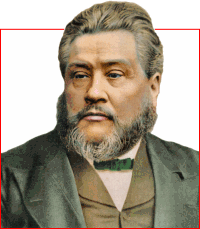
Two things struck me about this post. The first is the wonder of the doctrine contained in the verse Spurgeon exposits. Spurgeon speaks about the extent of God’s grace, which we cannot exhaust any more than a single man could breathe all the oxygen in the world! It is essential reading for every Christian wherever you stand on the charismatic issue.
The second thing that struck me was that Spurgeon’s response to the revelation of this doctrine—holy laughter—reminded me of the experiences some of us had on the more rational end of the so-called Toronto Blessing, and which continue in an attenuated form in charismatic circles even today.
Here is the beginning of what the Prince of Preachers had to say, and don’t let my stuff about Toronto put you off reading the rest of this fantastic post:
“My grace is sufficient for thee: for my strength is made perfect in weakness.”
I have often read in Scripture of the holy laughter of Abraham, when he fell upon his face and laughed; but I do not know that I ever experienced that laughter till a few evenings ago, when this text came home to me with such sacred power as literally to cause me to laugh . . . continues over at Pyromaniacs.
This practical belief in the experiential efficient power of the truth of the Gospel is something I fear is lacking in many cessationist, and for that matter many charismatic, circles.
I would love to challenge the TeamPyro guys . . . and the rest of us (including myself) — When was the last time you experienced such an impact of the Word of God brought to life by the Spirit of God?
Have you ever experienced the weight, and at the same time the lightness, of the presence of God when a truth comes to life that you feel you might (or indeed you actually do!) fall down laughing?
This experience of being overwhelmed by the vastness of the grace and love of God is one I believe is right to seek and to cry out to God for. Do you agree with that? Is it unfair of me to make the accusation that far too many of us — including those of us who claim to be charismatics — fail to seek experiences of God with sufficient passion? Could the weakness of our passions explain the weakness of our Christianity?
Certainly Lloyd-Jones seemed to think so. So much so, that some today would — probably incorrectly — identify him as being a charismatic. But charismatic or not, he was certainly not a classical cessationist. He was clear in his call for experiential Christianity, as a series of posts I ran on the Doctor and the Spirit here on the blog would demonstrate. (Another post on the Sealing with the Spirit didn’t end up in that list of posts, and is also worth a look.)
The passion John Piper demonstrated at the Together for the Gospel conference
comes from a remarkably similar view of the Spirit to that which Lloyd-Jones held. Piper and Lloyd-Jones would argue for the vital place of a passionate experience like Spurgeon describ
es. The very description of being so struck by God’s truth is intoxicating, is it not?
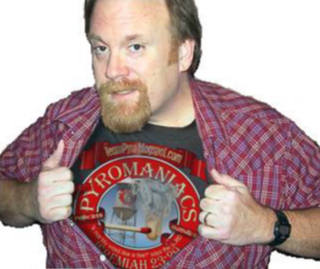 The second post over at TeamPyro that threatens the new-found pax blogica hit at what is perceived by many cessationists to be the charismatics’ weak spot. In my view, the post Red Herrings Tongues of Angels contains a link to some of the most reactionary views on this subject I have ever seen.
Although it is never stated, the clear implication is that if we tear down the tongues issue, the whole charismatic house of cards comes tumbling down. It is almost as if they realised what excesses the post from Spurgeon potentially opens up!
So, now, to respond to the second post . . .
Firstly, I want to reply to the notion that modern tongues are always “gibberish.” There are in fact stories circulating of specific cases where modern tongues were understood by someone in the meeting as literal human languages. I have never witnessed this, but have certainly heard from those who have. If there are any well-documented cases of this phenomena out there, I would be glad to hear of them. Dan makes the bold accusation that there have been no recorded cases of human languages being supernaturally given since the apostolic era — charismatics out there, now is your chance to demonstrate that Dan is wrong in this assertion!
But even if Dan isn’t wrong, it is quite possible that we are in a period of time when only the beginnings of supernatural gifts are currently being given. These things seem, in my experience, to come in waves, and somehow the outpouring of God’s Spirit does not seem to be constant. There are “times of refreshing” (Acts 3:20). Couldn’t the tongues we often hear today be almost like precursors to those which are more recognisable linguistically? I have certainly heard some that sound to an English-speaker’s ear more like human languages than others.
Remember that the historical facts do not in themselves prove theological arguments one way or the other. When my African friends speak of seeing dramatic miracles, are we to disbelieve them because we haven’t seen them ourselves? Or are we going to be somewhat disingenuous and preach a kind of partial cessationism? Certainly some of that kind of idea is about — John MacArthur, for example, the arch-cessationist, was quite happy to talk approvingly of Huss having prophesied the coming of Luther. For some, cessationism doesn’t apply on the mission field or in the history books, only in the here and now!
I am still waiting for the cessationists to demonstrate from Scripture that all the miraculous gifts (with the exception of authoritative doctrinal revelation) have indeed stopped permanently and forever. I have also not seen them give good explanations regarding the experiences so many of us describe or the benefits that those who speak in tongues receive from them. If the cessationist is correct, then the charismatic is, by definition, either deluded or demonised!.
More importantly, if tongues were never intended biblically to be a prayer language and all the gifts were meant to stop, then I have a number of questions for my cessationist friends about what the Bible says about them:
- Why does Mark 16 (even if it isn’t in the original autographs, but is instead an early addition to the text) say that those who believe will speak in new tongues; why is there no sense in these words that this experience is limited to the disciples?
- Why, in Acts 2 when some heard the first outpouring of tongues did they say, “They are filled with new wine.” What was it about the disciples that made them seem drunk?
- Why does the passage Peter then quotes speak of the Spirit being poured out on “all flesh” in the “last days” if we cannot experience this? Are we now living in the days after the last days? If the gifts were only to authenticate the Apostles, why the wide extent detailed here?
- How do you explain it when Peter says at the end of his speech that the promise “is for you and for your children and for all who are far off, everyone whom the Lord our God calls to himself” He is clearly referring to the same thing that they had experienced that day? Peter says (to quote the KJV) “this is that,” and yet we are not allowed to experience “that” according to the cessationist and in direct contradiction to Peter’s universal promise.
- What exactly is it about 1 Corinthians 13 that leads some to assume that the cessation of gifts is tied to the completion of Scripture rather than to the return of Christ?
- Why does Paul clearly state in 1 Corinthians 4:5 that he wants them all to speak in tongues? Why, if tongues is only ever intended as a proof to the unbeliever would he want them all to do it? Why would he need them all to do it? At most, one or two would suffice to get the point across, and given the moral state of the church in Corinth, desiring still more people to speak in tongues seems almost irresponsible!
- Why, on the one han
d, are we at liberty to ignore Paul’s clear commands to the Corinthians to “eagerly desire spiritual gifts” and to “not forbid speaking in tongues” (1 Corinthians 14:39) when, on the other hand, we are expected to accept all of his other commands to local churches as applying to us today? If these two commands do not apply to us, which other of Paul’s commands also do not apply? How are we then meant to decide which of Paul’s commands we are going to obey and which we are going to ignore?
- If tongues are always human languages and never unintelligible, what function did they serve in the churches and why would God use them to communicate a message to His people in some way? (1 Corinthians 14:5)
- If tongues is not ever a private prayer language, why did Paul say, “I thank God that I speak in tongues more than all of you.” (1 Corinthians 14:18), and for that matter, why does he say, “The one who speaks in a tongue builds up himself” (1 Corinthians 14:4)? What possible good would a tongue—meant solely for an unbeliever whose language is different to that of the speaker—provide for the one speaking in the tongue?
-
Why is it assumed when Paul condemns the disorderly speaking in tongues (which sounds like it was a competition for several different people to be heard at the same time) that his instruction prevents the congregation from, in an orderly manner, praying together at once, either in their own language or in tongues? If this is prevented by Paul’s instructions about tongues “in the church,” then we should also surely prohibit the whole church raising its voice to pray together, as is described in Acts 4:24 where “they lifted their voices together to God.” If nothing else, if tongues is a prayer language, and lifting your voices together to God is ok, then why not praying in tongues? The commands of Paul do not relate to praying to God, but rather to speaking to the church. In addition, Paul’s instructions relate to when unbelievers are present, so surely as a minimum is it not reasonable for the charismatic to apply them to the church’s prayer meeting?
If Romans 8:26 is not referring to praying in tongues, then to what exactly is it referring? “Likewise the Spirit helps us in our weakness. For we do not know what to pray for as we ought, but the Spirit himself intercedes for us with groanings too deep for words.”
- What exactly does 1 Corinthians 14:9 mean if it doesn’t mean what it appears to mean — “So with yourselves, if with your tongue you utter speech that is not intelligible, how will anyone know what is said? For you will be speaking into the air.” It sure sounds like something unintelligible to me!
- Why does Paul speak specifically about praying in a tongue—“For if I pray in a tongue, my spirit prays, but my mind is unfruitful.” (1 Corinthians 14:4)—if tongues are only ever human languages for the purpose of unbelievers hearing a message?
- Why does 1 Corinthians 14:26 make clear that tongues are one of the gifts for building up the church if they are only ever real languages for evangelism?
- Why do so many cessationists actually argue for the exact opposite of what Jesus Himself says in Luke 11 (see the whole context). Jesus ends the parable by saying, “If you then, who are evil, know how to give good gifts to your children, how much more will the heavenly Father give the Holy Spirit to those who ask him!” The cessationist has to deal with the fact that millions of people today have asked God for an experience of the Holy Spirit, and that in direct contrast to what Jesus Himself said, by definition, if cessationism is true, they have not received the Spirit, but rather something else. Where they have asked for the bread of tongues, they have been given the stone of foolish gibberish. Where they have asked for the fish of prophecy, they have been given the serpent of hallucinatory delusions worthy of a madman. This cannot be right, in my humble opinion, as it makes Jesus Himself into a trickster. At the very least, God should have given us clearer directions in the Bible to manage our expectations and help us ALL to realise that cessationism is the biblical teaching. This issue has clear implications for the doctrine of the clarity of Scripture. If Jesus Himself appears to tantalise these people with an offer to give the Spirit to those who ask and really means something very different to the gift of the Spirit we see in Acts, then surely He would have told us!
- Most importantly of all, if the Bible never intended that we get the impression that gifts are for today, why are there not any real “killer verses” to make it clear to us that this is not the case?
Well, that might put the cat among the pidgeons! Please read it in the spirit in which it is intended. I long for a time when the recognition of the need for a real experience of the Spirit drives us away from both sterile formal religion and an excessive emphasis on tongues – which is, after all, only one of the gifts of the Spirit. I am eager to destroy the myth that I am sure some believe – that charismatics do not have any real biblical basis for their positon. I remain open to being convinced I am wrong from the Bible. So, that’s all I have to say right now. The ball is firmly in your court!
Previous Post

July 24, 2006
Links for July 24, 2006
Next Post
July 25, 2006 Links for July 25, 2006
Browse Our Archives
Select a Category 1 and 2 Corinthians 1 and 2 Thessalonians 1 and 2 Timothy 1 John 300 Leaders A Life of Joy Abortion Acts of the Apostles Adrian on radio Adrian on TV Adrian's Story Albert Mohler Amazing Grace Arminocalvinist Spectrum Assurance Atonement Atonement Series Attributes of God Barnabas Best of the Blog Bible Bible Software Bible Translation Biblical Inerrancy Billy Graham Bob Roberts Books C. J. Mahaney Calvinism Cessationism Charis Warnock Charismatic Spectrum Charles Simeon Charles Spurgeon Church Leadership Colossians Complementarian - Egalitarian Spectrum Complementarianism Conferences Culture Daniel Debates Deuteronomy DGM08 DGM13 Discernment Doctrine Don Carson Ed Stetzer Eddy Leo Ephesians ESV Bible Translators Interview Evangelism in a Post-Christian World evolution Exodus Expository Preaching Ezekial Faith and Feelings Family Florida Galatians General Genesis Get Wisdom - Proverbs sermons Gifts of The Holy Spirit Gifts of the Holy Spirit 2006 Global Faith Forum Godly Attitudes Gospel Gospels Grace Greg Haslam Grudem vs Piper: The Baptism Debate Healing Heaven Hell and Rob Bell Hebrews Henry Tyler Henry Warnock Holy Spirit Holy Spirit Baptism Hope Reborn Hugh Palmer Irresistable Grace Isaiah J. I. Packer Jack Hayford Joel Joel Warnock John John Lanferman John MacArthur John Newton John Owen John Piper John Smyth Jonathan Edwards Josh Harris Justification Justin Taylor Kenneth Ulmer Leadership Leadership Lessons from 1 & 2 Samuel Lex Loizides Liam Goligher Lig Duncan Limited Atonement Lou Fellingham Mark Dever Mark Driscoll Martyn Lloyd-Jones Matt Chandler Mental Health Missionary Methods: St Paul’s or Ours? My Story N. T. Wright Nehemiah NWA08 NWA09 NWA10 Opinion OT History Books Pentateuch Personal Personal Revival Philippians PJ Smyth Podcast Politics Preaching Prophecy Proverbs Psalms Raised With Christ Reformed Charismatic Regeneration Relationships Resurrection Resurrection & Salvation Revival Rice Broocks Rich Man and Lazarus Rick Warren Rob Rufus Roland Allen Romans Sam Storms Sanctification Series Sermons Sermons on Philippians Serving Jesus at Work Sexuality Sin St Paul Steve Chalke Strange Fire Suffering T4G T4G Statement TAB09 Tamasin Warnock Teamwork Terry Virgo The Atonement Debate - Chalke book The Soulwinner The Spirit-Filled Church The Traitor Within Theologcial Spectrums Theosis Tim Challies Tim Keller Titus TOAM06 TOAM07 TOAM08 TOAM09 TOAM10 TOAM11 Todd Bentley Tope Koleoso Total Depravity Video Water Baptism Wayne Grudem Worship
Select a Month October 2026 September 2026 August 2026 July 2026 June 2026 May 2026 April 2026 March 2026 February 2026 January 2026 December 2025 November 2025 October 2025 September 2025 May 2025 April 2025 January 2025 November 2024 October 2024 August 2024 July 2024 June 2024 May 2024 April 2024 March 2024 February 2024 January 2024 December 2023 August 2023 May 2023 April 2023 February 2023 October 2022 September 2022 August 2022 July 2022 June 2022 May 2022 April 2022 March 2022 February 2022 August 2021 May 2021 April 2021 February 2021 January 2021 December 2020 October 2020 September 2020 August 2020 July 2020 June 2020 May 2020 April 2020 March 2020 February 2020 January 2020 December 2019 November 2019 October 2019 September 2019 June 2019 May 2019 April 2019 March 2019 January 2019 December 2018 October 2018 September 2018 August 2018 July 2018 June 2018 May 2018 April 2018 March 2018 February 2018 January 2018 December 2017 November 2017 October 2017 September 2017 June 2017 April 2017 March 2017 February 2017 January 2017 December 2016 November 2016 October 2016 June 2016 March 2016 February 2016 January 2016 December 2015 November 2015 September 2015 August 2015 July 2015 June 2015 May 2015 April 2015 March 2015 February 2015 January 2015 December 2014 November 2014 October 2014 September 2014 August 2014 July 2014 June 2014 May 2014 April 2014 March 2014 February 2014 January 2014 December 2013 November 2013 October 2013 September 2013 August 2013 July 2013 June 2013 May 2013 April 2013 March 2013 February 2013 January 2013 December 2012 November 2012 October 2012 September 2012 August 2012 July 2012 June 2012 May 2012 April 2012 March 2012 February 2012 January 2012 December 2011 November 2011 October 2011 September 2011 August 2011 July 2011 June 2011 May 2011 April 2011 March 2011 February 2011 January 2011 December 2010 November 2010 October 2010 September 2010 August 2010 July 2010 June 2010 May 2010 April 2010 March 2010 February 2010 January 2010 December 2009 November 2009 October 2009 September 2009 August 2009 July 2009 June 2009 May 2009 April 2009 March 2009 February 2009 January 2009 December 2008 November 2008 October 2008 September 2008 August 2008 July 2008 June 2008 May 2008 April 2008 March 2008 February 2008 January 2008 December 2007 November 2007 October 2007 September 2007 August 2007 July 2007 June 2007 May 2007 April 2007 March 2007 February 2007 January 2007 December 2006 November 2006 October 2006 September 2006 August 2006 July 2006 June 2006 May 2006 April 2006 March 2006 February 2006 January 2006 December 2005 November 2005 October 2005 September 2005 August 2005 July 2005 June 2005 May 2005 April 2005 March 2005 February 2005 January 2005 December 2004 November 2004 October 2004 September 2004 August 2004 July 2004 June 2004 May 2004 April 2004 March 2004 February 2004 January 2004 December 2003 November 2003 October 2003 September 2003 August 2003 July 2003 June 2003 May 2003 April 2003
Follow Us!
TAKE THE
Religious Wisdom Quiz
What does "Gad" mean in Hebrew?
Select your answer to see how you score.
Warrior Joyful Chosen One Fortune
Books by This Author Books by Adrian Warnock
Related posts from Adrian Warnock

How the author of the world's best hymn...

"Open" is not Biblical, "eagerly desire spiritual gifts"...

Ten Reasons Christians Don't Know Jesus Like in...

Revive a hymn: How Sweet the Name of...
TRENDING AT PATHEOS Evangelical

The REST of Your Life: A Creative Wrestles...
This week I had a conversation with a good friend from church....

How the author of the world's best hymn...
I've been working with John Newton for a while now. This makes...

Long before this Lectio Divina, Psalm 130 - the song - started...

What About the Trees? Another Living Parable
After I finished writing the last article about falling leaves as a...

Why Classical Education Is a Conversation, Not a...
Come and Read: Joy in Classical Education When I was a little...

Cornell University has received a great deal of negative publicity and intense...
view all Evangelical blogs
Ad-Free & Subscriber Log-In Subscription Support
- About Us
- 2026 Calendar
- Videos
- Podcasts
- Library of World Religions
- Faith In Media Tracker
- Advertise With Us
- Write for Us
- Privacy Policy
- Terms of Service
- Do Not Sell My Data
- Contact Us
- Radiant Digital
- Manage Newsletter Subscriptions
- Unsubscribe From Notifications
- Sitemap
Copyright 2008-2026, Patheos. All rights reserved.
Subscription Support Ad-Free & Subscriber Log-In
Follow Patheos