
BuddhistCatholicContemplativeEvangelicalGeneral ChristianHinduJewishLatter-day SaintMuslimNew VisionsProgressive Christian
Beliefs
- Buddhist
- Catholic
- Contemplative
- Evangelical
- General Christian
- Hindu
- Jewish
- Latter-day Saint
- More Voices
- Muslim
- New Visions
- Pagan
- Progressive Christian
Topics
- Religion News
- Food and Religion
- Sports and Religion
- Religious Art
- Religious Music and Entertainment
- Religious Events
- History and Religion
- Style and Religion
- Politics and Religion
- Women in Religion
- Recreation Outdoors and Religion
- Business Finance and Religion
- Careers Workplace and Religion
- Education and Religion
- Family Parenting and Religion
- Health Fitness and Religion
- Home and Religion
- Relationships and Religion
- Technology and Religion
- Travel and Religion
Columnists
- Buddhist Columnists
- Business Finance and Religion Columnists
- Careers Workplace and Religion Columnists
- Catholic Columnists
- Contemplative Columnists
- Education and Religion Columnists
- Evangelists Columnists
- Family Parenting and Religion Columnists
- General Christian Columnists
- Health Fitness and Religion Columnists
- Hindu Columnists
- History and Religion Columnists
- Home and Religion Columnists
- Jewish Columnists
- More Voices Columnists
- Latter Day Columnists
- Muslim Columnists
- New Visions Columnists
- Nonreligious Columnists
- Pagan Columnists
- Politics and Religion Columnists
- Progressive Columnists
- Recreation Outdoors and Religion Columnists
- Relationships and Religion Columnists
- Religion News Columnists
- Religious Art Columnists
- Religious Events Columnists
- Religious Music and Entertainment Columnists
- Sports and Religion Columnists
- Style and Religion Columnists
- Technology and Religion Columnists
- Travel and Religion Columnists
- Women in Religion Columnists
Resource Library
- 2026 Calendar
- Library of World Religions
- The 100 Most Holy Places on Earth
- Patheos Answers
- Podcasts
- Videos
- Faith Leaders Database
- Anglican Episcopalian
- Bahai
- Baptist
- Buddhism
- Christianity
- Confucianism
- Eastern Orthodoxy
- Hinduism
- Holiness and Pentecostal
- ISKCON
- Islam
- Judaism
- Lutheran
- Methodist
- The Church of Jesus Christ of Latter-day Saints
- New Age
- Paganism
- Presbytarian and Reformed
- Protestantism
- Religion Behind the Scenes
- Roman Catholic
- Scientology
- Shia Islam
- Sikhism
- Sufism
- Sunni Islam
- Taoism
- Zen
- See all religions
Research Tools
 Ad-Free & Subscriber Log-In Subscription Support
Ad-Free & Subscriber Log-In Subscription Support
Follow Patheos 

- Trending:
- Forgiveness
- |
- Marriage
- |
- Consciousness
- |
- Death Penalty
- |
- Election
- |
- Halloween

- Home
- Evangelical
- Adrian Interviews Justin Taylor
Adrian Interviews Justin Taylor
Last updated on: June 27, 2018 at 11:05 pm by Adrian Warnock
Adrian Interviews Justin Taylor 2018-06-27T23:05:26+01:00 Adrian Warnock
Patheos Explore the world's faith through different perspectives on religion and spirituality! Patheos has the views of the prevalent religions and spiritualities of the world.
UPDATE
In January 2008, the following post was identified as the 19th all-time most popular post with readers of this blog. The 20th most-read post was “Twelve Literary Features of the Bible.”
Few editors are as well known as Justin Taylor. He has expertise in editing others’ writings, highlighting interesting posts, and creating his own work. He is now an integral part of the Crossway Books team. He is also someone I am pleased to be able to call a friend.
***************
Adrian
It is a real pleasure to be able to welcome to the blog, Justin Taylor, who is known to some as John Piper’s right hand man. First off, Justin, perhaps you can tell us all a little bit about yourself and how you came to be working with John Piper.
Justin
Adrian, it’s a pleasure to chat with you. Before I answer, let me first express my gratitude for your work in the blogosphere in producing thoughtful edifying material, as well as your work in encouraging and connecting with other bloggers.
 About myself? At the risk of boring your readers, I was raised in a Christian family. I first prayed the sinner’s prayer at age 4. Then I prayed it again at ages 5, 6, 7, 8, etc. I consider my decisive conversion to be after my freshman year in high school, when I truly understood the nature of Christ’s finished work on my behalf.
When I went off to college four years later, I took a humanities course with a professor who would later become my advisor. I was captivated and frustrated with the first lecture—which was a passionate plea for the idea that a belief in moral absolutes was the source of great evil in the world!
I soon became a Study of Religion major, and almost lost my faith in the process. I had never really encountered intellectual arguments against Christianity, and they were now flying at me fast and furious. After one particularly vigorous discussion, based on the implications of Gordon Kaufman’s Theology for a Nuclear Age, I remember being pretty shaken. I had no interest in believing a Christianity that wasn’t true. Walking back from class, I sat down and leaned against a large tree, staring at the stars and expressing my doubts and confusion to God. God was very kind and merciful to me, and in that moment granted me a sense of peace and assurance. From that point on, I continued with my questions, but I knew that only a fool could deny his Creator.
Thus began an interest for me in apologetics and theology. During the summer break following my freshman year, my friend Matt Perman (now the Internet and radio director at Desiring God) was writing me long letters seeking to persuade me that Calvinism was biblical. In the mail he sent me a tape by John Piper on definite atonement. I was intrigued by the message because Piper was clear, winsome, and intellectually challenging. (My general view of pastors at that time was one of well-meaning anti-intellectuals.) I began listening to more and more Piper tapes.
Our public University of Northern Iowa had about 13,0000 students. By my junior year, 1,000 students a week were attending a weekly Christian meeting. And the interesting thing is that John Piper, along with corollaries like Calvinism and Christian hedonism, became one of the main topics of conversation among the Christian student body.
I made a couple of trips to Bethlehem Baptist Church (just a few hours drive away) to hear Piper preach. One Sunday I was there with my brother. I said to him at one point, “I’d love to just come here for a year or two and hear him preach—even if I had to clean toilets as an excuse to hear the sermons!” I inquired as to whether Bethlehem did apprenticeships, and it turned out that The Bethlehem Institute, a two-year, seminary-level apprenticeship program, was being planned at that time.
When I graduated from UNI in 1998, I applied for TBI. I was the first applicant. Not knowing if any more would apply, I was accepted! So I did an apprenticeship from 1998-2000. And one of my jobs during that time was as a janitor at Bethlehem—cleaning toilets! (I’ll let the debate rage in the comments section as to whether my previous utterance in this regard was prophetic!)
In 2000, I was planning to go to the Southern Baptist Theological Seminary in Louisville to complete my MDiv. Piper’s editor was asked to take over a church, and thus the job opened up. Desiring God prevailed upon me to stay for just one year. At the end of one year, we had a moving van lined up to take us to Southern. But DG prevailed again, and I’ve been at DG ever since. In mid-January, however, we’ll be moving to Wheaton, Illinois, where I will take a job at Crossway Books as the Managing Editor for the forthcoming ESV Study Bible.
Adrian
You may have seen some discussion about discipleship on my blog following a post by Tim Challies about being jealous of Josh Harris. That inspired my interview with Josh Harris, which focused on his relationship with C. J. Mahaney. I guess it was also part of my motivation behind asking you today. Do you get the impression that your relationship with John is similar to the relationship Josh has with C. J.?
Justin
I’m not sure there are very many people in the world who have a relationship like C. J. and Josh have! One of the differences is that C. J. was specifically grooming and mentoring Josh to step into C. J.’s pastoral role, whereas I was first a student of John’s, and then his employee. So our relationship of necessity has looked quite a bit different. John has been a wonderful mentor, friend, and counselor to me. No one has taught me more about the centrality of God in Christ and his supremacy over all things for his glory and the good of his people.
The question most people ask me about John is whether or not he’s the real deal. I can say with absolute confidence that he is. What you see is what you get. He lives modestly (he doesn’t personally receive a single penny from his book royalties), he is teachable, he is humble, and he goes hard after God. It has been such a privilege and joy to study under him and to work for him these past seven years.
Adrian
How important is such a relationship to someone’s development as a Christian leader, or for that matter as a Christian full-stop.
Justin
It’s crucial, I think, to have someone like this in your life. One of the simple, yet remarkable, benefits is to see a real person who truly and faithfully loves God whom you can imitate. We read about great heroes of the faith in books, but sometimes that can feel distant, and we never know for sure if the biographer is downplaying the warts or exaggerating the virtues. To interact on a regular basis with an older, sanctif
ied sinner saved by grace who can be imitated is a great privilege indeed.
I would add two caveats to this:
- Don’t think that you have to find C. J. Mahaney or John Piper in order to have an effective mentor. There is only one C. J. in the world and there is only one John. Don’t bypass the mentoring opportunity in your midst just because you are waiting for the perfect relationship to materialize somehow.
- Be careful not to see mentorship as only something that you receive. One of the goals of being mentored should be for the mentoree to become a mentor. The Navigators, who take discipleship very seriously, love to quote 2 Timothy 2:2: “And what you have heard from me in the presence of many witnesses entrust to faithful men who will be able to teach others also.” I sometimes see guys who are a bit more concerned with being mentored than with modeling maturity and godliness to younger men. I would encourage everyone—male or female, young or old—to be on the lookout for people to serve, and to develop the spiritual maturity such that others will want to learn from and to imitate you.
Adrian
My response to Tim’s post was to put the responsibility on the seeker to do whatever it takes to find such a relationship, if that is what they really want. I suggested that changing churches might even be necessary in some cases. Do you agree that it is so important that at times radical action is necessary?
Justin
Radical action is indeed needed at times. But I tend to think that believers should be generally hesitant to leave a church where they have covenanted to worship and serve. I do think that those who desire to be mentored need to be proactive. But there are some personality types that are overly ambitious who could create problems by seeking this too aggressively. I’d counsel someone in this position to be bold before God in prayer on this, and humble and meek before others in seeking such relationships.
Adrian
Moving onto a different subject, what makes you get up in the morning?
Justin
Either our 2-year-old daughter, our 7-month old son, or the alarm clock! On a more serious note—I know that despite my weaknesses and the slowness of my sanctification, God has called me to fulfill a role in his kingdom. I’m thankful that he has looked upon one as undeserving as me and given me work to do, whether that be as a husband, as a father, as a member of my church, as an editor, as a friend, or as a blogger. Those joyful responsibilities, along with God’s ever-fresh mercies, get me up in the morning.
Adrian
Many people today are somewhat despondent about the Church. Are you one of those people? What do you feel the future holds for the Church?
Justin
It’s hard to be despondent about the future of the Church when you know that the gates of hell shall not prevail against it (Matthew 16:18). Certainly there is great reason to be concerned. The Osteenification and Oprahization of evangelicalism—where the emphasis in on the therapeutic and on surface feelings and the trivial—is deeply troubling to me. Some, however, see evangelicalism as a monolithic mass sliding downward. I tend to have a different view. I think that the bad is getting worse and the good is getting better. On the one hand there are throngs of people that are attracted to anything new, but nothing weighty. On the other hand we see a growth in reformed theology and ministries dedicated to strengthening the Church. For example, all of the following ministries are led by pastors dedicated to reformational theology and committed to the local church:
- 9 Marks (Mark Dever)
- Grace to You (John MacArthur)
- Desiring God (John Piper)
- Sovereign Grace (C. J. Mahaney)
- Ligonier Ministries (R. C. Sproul)
- Truth for Life (Alistair Begg)
- The Alliance of Confessing Evangelicals, among others.
Just as the mainstream media can become addicted to highlighting only what’s wrong with the world, so those of us in the blogosphere can sometimes get too caught up with all that’s wrong with the Church. Criticism and correction has its place—I engage in it myself—but we also need to do a better job of pointing people to the edifying evidences of grace in the Church today. I get tired of people saying that they love Jesus, but they don’t like his bride.
Adrian
Looking at the Church in the 21st century, what do you feel are the biggest challenges it faces? What are the biggest dangers for us?
Justin
The biggest challenge for the Church in the 21st century is the same challenge of the first century, and all centuries in-between. I believe it’s the issue of belief versus unbelief. Will we lose sight of the grace and beauty of God’s grandeur and glory in the face of Jesus Christ? Will we trust God’s precious promises? Will we bow to the authority of King Jesus, and obey his Word? Will we base the imperatives of our ethics upon the indicatives of the gospel? The temptations for unbelief take different forms throughout the ages, but they are essentially manifestations of the question Satan asked in the Garden, “Did God really say . . .?”
Adrian
How important do you feel the charismatic issue is? I was beginning to feel that it was a dead issue that no one cared about any more. What I now realize is that we have become so separated that no one even seems to know what people on the other side of this particular fence even think any more. Do you think that the controversy will ever go away? Can we ever actually understand each other?
Justin
It’s been hard for me to get too worked up about it, and frankly I don’t follow the discussion in the blogosphere all that much. I think the entire controversy would go away and we would all get along if only everyone would read and heed Vern Poythress article! Obviously I believe there are real differences, but I do wish more folks would follow Poythress’ lead in examining and rejoicing in the common ground that both sides share.
Adrian
Thanks for that link by the way, I do agree that Vern’s article should be read by everyone involved in this particular discussion. I do think it’s possible that charismatics and non-charismatics can have some degree of rapprochement. I’m not quite so sure about the emergents, however. What do you think about the emergent church?
Justin
Ah, there’s so much to say! Just a few thoughts for you:
-
I think we should distinguish between “Emergent” and “emerging.” All that is Emergent (U.S. organization) is emerging (loosely connected, international, ecclesiastical movement). But not all that is emerging is Emergent. For example, there are those like Mark Driscoll of Mars Hill Church in Seattle who would be described as emerging or missional, but who have distanced themselves from Emergent as an organization.
-
I believe, with Mortimer Adler [see How to Read a Book] that one is not entitled to critique until he has demonstrated understanding. I think we should first try hard to restate the Emergent arguments and self-identification in such a way that they would say, “Yes, you’ve got it.” I don’t see that reciprocated very often. Which of the major Emergent proponents could one point to and say, “Ah, that person knows and is restating the best of evangelicalism in such a way that I agree.”
As a couple of examples—has anyone ever seen an Emergent proponent describe Calvinism or complementarianism in such a way that Calvinists and complementarians would be happy with it? (Obviously I haven’t read all the literature or blogs out there, but I haven’t come across any examples thus far.) I also hasten to add that some evangelicals need to do a better job of understanding before critiquing (as the former invariably affects the latter).
-
I wonder if Emergent folks have made “conversation” and “tone” into a virtual idol. It almost seems to be treated as an end in itself. If you were to do a poll among Emergent folks (leaders, bloggers, commenters, etc.) and ask them what they dislike so intensely about Don Carson’s Becoming Conversant with Emergent, at the top of the list would be the fact that he didn’t talk to them first. Now I think conversing is wise and can help, but I don’t think it’s a necessary or sufficient condition for understanding someone’s thought, especially if they’ve put it in print.
I find that many of the critiques and reviews of Emergent stuff are dismissed because it is supposed they are written in such a way that is “not helpful” or “won’t win an audience” or a hearing. I think that all Christians should have high standards with regard to accuracy and civility, speaking the truth in love.
But it is possible to elevate tone and manner in such a way that any critique or concern must be couched in such nuance and qualification that it loses all of its prophetic edge. Compare how Paul wrote to the Galatians and the Philippians. To the churches at Galatia he was justifiably angry and condemnatory due to the introduction of a false gospel. But we don’t find that same attitude when he writes to the Philippians. There are people there who are preaching in order that Paul would be persecuted. (More gospel preaching meant more persecution.) But Paul rejoices! What’s the difference? In the one situation the tone and attitude is ungodly, and yet Paul is overjoyed because the truth is nonetheless being proclaimed. In the other situation the motives may have been sincere, but the content of the no-gospel led Paul to speak in the harshest of terms. I think this example should be instructive for us not to put tone out of its biblical perspective.
-
I’m always suspicious of movements where there are continual complaints that critics misunderstand or just don’t get it. Now it’s always going to be the case that some critics won’t get it right or will miss some nuance. But if you make that response too often, it’s probably the case that the proponents either have a lack of clarity or are hypersensitive. In this case, I think both explanations are at play.
-
I do think there is some value in the questions that Emergent is raising (although I’m much less impressed with the answers they have given). Carson has pointed out that in someone like Tim Keller, you have all the positives of Emergent, but none of the troubling negatives. I think that Keller’s writings are very provocative and gospel-centered. (The link will take you to a list of his online articles.)
Adrian
You have become quite well-known in the Christian blogopshere. What is your view of the God bloggers scene? How do you see it progressing?
Justin
I’m not sure I have much insight on the God blog scene. I’m delighted that there are an increasing number of Christian bloggers, and for the most part, I think that much of the interaction is thoughtful and fruitful. Honestly, I don’t read that many Christian blogs (maybe four or five), so others would have more insight than me. One thing I’d like to see more of is some sustained engagement with unbelievers on current cultural issues. That was one of the motivations behind the Ethics Symposium that Joe Carter and I pulled together.
Evangelicals often want to be part of the discussion and to have a seat at the table. But if we wait around to be invited, it’ll never happen. I’ve been trying to co-sponsor something similar with another ministry partner. I’d like to see more things like that. In each issue, Modern Reformation used to interview a non-Christian or someone outside of their tradition. I think that can be fruitful, engaging with those outside our camp, as well as modeling how to do so. There is a danger that we can become “of the world,” but there’s also a danger that we remain “outside” the world.
Adrian
Do you believe that blogging can have spiritually good effects in a blogger’s life? Might it even have positive effects for the Church as a whole?
Justin
Like almost everything, it has the potential for both good and bad. One of the most important benefits, I think, is that it requires thinking, reading, and writing. Most of our thinking is hazy and muddled until we attempt to express ourselves in writing. Good reading and good writing are important disciplines for Christians to cultivate, and blogging can help if done correctly. Another positive effect of blogging is a form of accountability for one’s thoughts and expressions. Bloggers have audiences, and careless words become part of the “permanent record” as it were. The same is true in a spiritual sense for everyone. But I think that the blogging enterprise helps to reinforce that, which is a good thing.
On the other side, the blogosphere can also become addictive, with people reading and writing and commenting on blogs obsessively. There is something amiss, I would suggest, when the majority of your communication throughout the day is electronic, and you don’t have very much face-to-face fellowship and interaction. There are also temptations to gossip and to respond with rudeness.
Bob Kauflin and Mark Roberts (at the World Mag sub-blog, Theologica) have done some helpful posts on how Christians should blog.
Adrian
We have seen some quite well-known Christians start blogs recently. Do you think that is a trend that will continue?
Justin
I hope so. Albert Mohler, president of the Southern Baptist Theological Seminary, has certainly led the way. Not only is he one of the most respected and influential evangelicals today, but he has also become a prolific blogger. I’m also happy to be a part of the Reformation 21 Blog, where Ligon Duncan, Philip Ryken, Rick Phillips, and Carl Trueman (who rarely posts under that name!) all contribute. And I’d love to see the Together for the Gospel guys get together to start a blog. Well-known New Testament scholars like Ben Witherington and Scot McKnight have started blogs and gained quite a following. Both are to the left of me theologically and politically, but they almost always have something interesting to say.
Adrian
What are your own plans for the future, Justin? Do you see your blog becoming an ever more important part of your ministry? Can you tell us anything about any new books you are working on?
Justin
We are in the process of a move to Wheaton, Illinois for my new job. The past seven years in Minneapolis at Desiring God and Bethlehem have been a wonderful season for us. But we’re also excited about this new chapter of our lives. After years of uncertainty of what I would like to do when I grew up, I now feel fairly confident that I would like to stay in the publishing industry long-term.
I’m not really sure what the future plans for my blog will be. (Perhaps someday I’ll get around to moving to a different location than Blogger.com.) I enjoy blogging, and I enjoy the interaction that goes on because of it. But it’s not my primary calling, and I have to be careful that I don’t let the tail wag the dog.
As for new books—I’m currently under contract with Crossway to edit a new edition of John Owen’s three main writings on sin: Mortification of Sin, Temptation of Sin, and Indwelling Sin. Kelly Kapic of Covenant College, who will be publishing an academic book on Owen’s Communion with God, will be my co-editor. We will be providing introductions, adding headings, footnotes, a glossary, etc.
I’ll also be editing Suffering and the Sovereignty of God, the follow-up book to Desiring God’s conference in 2005, with speakers like John Piper, Joni Eareckson Tada, Mark Talbot, David Powlison, Carl Ellis, and Steve Saint.
Adrian
Thanks very much for joining us here on the blog. That’s all we have time for, I am afraid!
Photo of Justin Taylor courtesy of Tony S. Reinke, The Shepherd’s Scrapbook. Used by permission.
Previous Post

January 17, 2006
Piper the continuationist
Next Post
January 17, 2006 Disney Mobile
Browse Our Archives
Select a Category 1 and 2 Corinthians 1 and 2 Thessalonians 1 and 2 Timothy 1 John 300 Leaders A Life of Joy Abortion Acts of the Apostles Adrian on radio Adrian on TV Adrian's Story Albert Mohler Amazing Grace Arminocalvinist Spectrum Assurance Atonement Atonement Series Attributes of God Barnabas Best of the Blog Bible Bible Software Bible Translation Biblical Inerrancy Billy Graham Bob Roberts Books C. J. Mahaney Calvinism Cessationism Charis Warnock Charismatic Spectrum Charles Simeon Charles Spurgeon Church Leadership Colossians Complementarian - Egalitarian Spectrum Complementarianism Conferences Culture Daniel Debates Deuteronomy DGM08 DGM13 Discernment Doctrine Don Carson Ed Stetzer Eddy Leo Ephesians ESV Bible Translators Interview Evangelism in a Post-Christian World evolution Exodus Expository Preaching Ezekial Faith and Feelings Family Florida Galatians General Genesis Get Wisdom - Proverbs sermons Gifts of The Holy Spirit Gifts of the Holy Spirit 2006 Global Faith Forum Godly Attitudes Gospel Gospels Grace Greg Haslam Grudem vs Piper: The Baptism Debate Healing Heaven Hell and Rob Bell Hebrews Henry Tyler Henry Warnock Holy Spirit Holy Spirit Baptism Hope Reborn Hugh Palmer Irresistable Grace Isaiah J. I. Packer Jack Hayford Joel Joel Warnock John John Lanferman John MacArthur John Newton John Owen John Piper John Smyth Jonathan Edwards Josh Harris Justification Justin Taylor Kenneth Ulmer Leadership Leadership Lessons from 1 & 2 Samuel Lex Loizides Liam Goligher Lig Duncan Limited Atonement Lou Fellingham Mark Dever Mark Driscoll Martyn Lloyd-Jones Matt Chandler Mental Health Missionary Methods: St Paul’s or Ours? My Story N. T. Wright Nehemiah NWA08 NWA09 NWA10 Opinion OT History Books Pentateuch Personal Personal Revival Philippians PJ Smyth Podcast Politics Preaching Prophecy Proverbs Psalms Raised With Christ Reformed Charismatic Regeneration Relationships Resurrection Resurrection & Salvation Revival Rice Broocks Rich Man and Lazarus Rick Warren Rob Rufus Roland Allen Romans Sam Storms Sanctification Series Sermons Sermons on Philippians Serving Jesus at Work Sexuality Sin St Paul Steve Chalke Strange Fire Suffering T4G T4G Statement TAB09 Tamasin Warnock Teamwork Terry Virgo The Atonement Debate - Chalke book The Soulwinner The Spirit-Filled Church The Traitor Within Theologcial Spectrums Theosis Tim Challies Tim Keller Titus TOAM06 TOAM07 TOAM08 TOAM09 TOAM10 TOAM11 Todd Bentley Tope Koleoso Total Depravity Video Water Baptism Wayne Grudem Worship
Select a Month October 2026 September 2026 August 2026 July 2026 June 2026 May 2026 April 2026 March 2026 February 2026 January 2026 December 2025 November 2025 October 2025 September 2025 May 2025 April 2025 January 2025 November 2024 October 2024 August 2024 July 2024 June 2024 May 2024 April 2024 March 2024 February 2024 January 2024 December 2023 August 2023 May 2023 April 2023 February 2023 October 2022 September 2022 August 2022 July 2022 June 2022 May 2022 April 2022 March 2022 February 2022 August 2021 May 2021 April 2021 February 2021 January 2021 December 2020 October 2020 September 2020 August 2020 July 2020 June 2020 May 2020 April 2020 March 2020 February 2020 January 2020 December 2019 November 2019 October 2019 September 2019 June 2019 May 2019 April 2019 March 2019 January 2019 December 2018 October 2018 September 2018 August 2018 July 2018 June 2018 May 2018 April 2018 March 2018 February 2018 January 2018 December 2017 November 2017 October 2017 September 2017 June 2017 April 2017 March 2017 February 2017 January 2017 December 2016 November 2016 October 2016 June 2016 March 2016 February 2016 January 2016 December 2015 November 2015 September 2015 August 2015 July 2015 June 2015 May 2015 April 2015 March 2015 February 2015 January 2015 December 2014 November 2014 October 2014 September 2014 August 2014 July 2014 June 2014 May 2014 April 2014 March 2014 February 2014 January 2014 December 2013 November 2013 October 2013 September 2013 August 2013 July 2013 June 2013 May 2013 April 2013 March 2013 February 2013 January 2013 December 2012 November 2012 October 2012 September 2012 August 2012 July 2012 June 2012 May 2012 April 2012 March 2012 February 2012 January 2012 December 2011 November 2011 October 2011 September 2011 August 2011 July 2011 June 2011 May 2011 April 2011 March 2011 February 2011 January 2011 December 2010 November 2010 October 2010 September 2010 August 2010 July 2010 June 2010 May 2010 April 2010 March 2010 February 2010 January 2010 December 2009 November 2009 October 2009 September 2009 August 2009 July 2009 June 2009 May 2009 April 2009 March 2009 February 2009 January 2009 December 2008 November 2008 October 2008 September 2008 August 2008 July 2008 June 2008 May 2008 April 2008 March 2008 February 2008 January 2008 December 2007 November 2007 October 2007 September 2007 August 2007 July 2007 June 2007 May 2007 April 2007 March 2007 February 2007 January 2007 December 2006 November 2006 October 2006 September 2006 August 2006 July 2006 June 2006 May 2006 April 2006 March 2006 February 2006 January 2006 December 2005 November 2005 October 2005 September 2005 August 2005 July 2005 June 2005 May 2005 April 2005 March 2005 February 2005 January 2005 December 2004 November 2004 October 2004 September 2004 August 2004 July 2004 June 2004 May 2004 April 2004 March 2004 February 2004 January 2004 December 2003 November 2003 October 2003 September 2003 August 2003 July 2003 June 2003 May 2003 April 2003
Follow Us!
TAKE THE
Religious Wisdom Quiz
What is the name for a Christian adult education class, especially for converts?
Select your answer to see how you score.
Ecumenism Martyrdom Catechism Exegesis
Books by This Author Books by Adrian Warnock
Related posts from Adrian Warnock
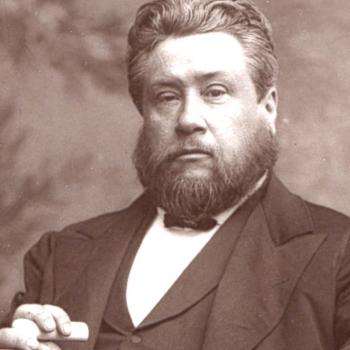
God knows about your suffering: Spurgeon on God's...

TRENDING AT PATHEOS Evangelical

The REST of Your Life: A Creative Wrestles...
This week I had a conversation with a good friend from church....

How the author of the world's best hymn...
I've been working with John Newton for a while now. This makes...

Long before this Lectio Divina, Psalm 130 - the song - started...

What About the Trees? Another Living Parable
After I finished writing the last article about falling leaves as a...

Why Classical Education Is a Conversation, Not a...
Come and Read: Joy in Classical Education When I was a little...

Cornell University has received a great deal of negative publicity and intense...
view all Evangelical blogs
Ad-Free & Subscriber Log-In Subscription Support
- About Us
- 2026 Calendar
- Videos
- Podcasts
- Library of World Religions
- Faith In Media Tracker
- Advertise With Us
- Write for Us
- Privacy Policy
- Terms of Service
- Do Not Sell My Data
- Contact Us
- Radiant Digital
- Manage Newsletter Subscriptions
- Unsubscribe From Notifications
- Sitemap
Copyright 2008-2026, Patheos. All rights reserved.
Subscription Support Ad-Free & Subscriber Log-In
Follow Patheos