
BuddhistCatholicContemplativeEvangelicalGeneral ChristianHinduJewishLatter-day SaintMuslimNew VisionsProgressive Christian
Beliefs
- Buddhist
- Catholic
- Contemplative
- Evangelical
- General Christian
- Hindu
- Jewish
- Latter-day Saint
- More Voices
- Muslim
- New Visions
- Pagan
- Progressive Christian
Topics
- Religion News
- Food and Religion
- Sports and Religion
- Religious Art
- Religious Music and Entertainment
- Religious Events
- History and Religion
- Style and Religion
- Politics and Religion
- Women in Religion
- Recreation Outdoors and Religion
- Business Finance and Religion
- Careers Workplace and Religion
- Education and Religion
- Family Parenting and Religion
- Health Fitness and Religion
- Home and Religion
- Relationships and Religion
- Technology and Religion
- Travel and Religion
Columnists
- Buddhist Columnists
- Business Finance and Religion Columnists
- Careers Workplace and Religion Columnists
- Catholic Columnists
- Contemplative Columnists
- Education and Religion Columnists
- Evangelists Columnists
- Family Parenting and Religion Columnists
- General Christian Columnists
- Health Fitness and Religion Columnists
- Hindu Columnists
- History and Religion Columnists
- Home and Religion Columnists
- Jewish Columnists
- More Voices Columnists
- Latter Day Columnists
- Muslim Columnists
- New Visions Columnists
- Nonreligious Columnists
- Pagan Columnists
- Politics and Religion Columnists
- Progressive Columnists
- Recreation Outdoors and Religion Columnists
- Relationships and Religion Columnists
- Religion News Columnists
- Religious Art Columnists
- Religious Events Columnists
- Religious Music and Entertainment Columnists
- Sports and Religion Columnists
- Style and Religion Columnists
- Technology and Religion Columnists
- Travel and Religion Columnists
- Women in Religion Columnists
Resource Library
- 2026 Calendar
- Library of World Religions
- The 100 Most Holy Places on Earth
- Patheos Answers
- Podcasts
- Videos
- Faith Leaders Database
- Anglican Episcopalian
- Bahai
- Baptist
- Buddhism
- Christianity
- Confucianism
- Eastern Orthodoxy
- Hinduism
- Holiness and Pentecostal
- ISKCON
- Islam
- Judaism
- Lutheran
- Methodist
- The Church of Jesus Christ of Latter-day Saints
- New Age
- Paganism
- Presbytarian and Reformed
- Protestantism
- Religion Behind the Scenes
- Roman Catholic
- Scientology
- Shia Islam
- Sikhism
- Sufism
- Sunni Islam
- Taoism
- Zen
- See all religions
Research Tools
 Ad-Free & Subscriber Log-In Subscription Support
Follow Patheos 

- Trending:
- Advent
- |
- Forgiveness
- |
- Thanksgiving
- |
- Election
- |
- Seasonal Holidays
- |
- Marriage
 Adamantine Muse
- Home
- Pagan
- The Horn of the Unicorn – Part 1
The Horn of the Unicorn – Part 1
Last updated on: November 17, 2020 at 1:24 pm by Sorita d'Este
The Horn of the Unicorn – Part 1 2020-11-17T13:24:44+01:00 Sorita d'Este
Patheos Explore the world's faith through different perspectives on religion and spirituality! Patheos has the views of the prevalent religions and spiritualities of the world.
Originally published as Alchemy, Innocence and Transformation – The Horn of the Unicorn by Sorita d’Este in SILKMILK, Jan 2010.
Read Part 2 HERE, Part 3 HERE.
“I am the good unicorn of the ancients.
Dissociate me into two,
And then bond us back together,
So that my mortal remains no longer decompose.
That is how to get the most powerful medicine.
Pay no attention to my wild and poisonous nature,
Because, God willing,
I cure all sickness and give long life.”[From: Canon 4 of Hermaphrodite Child of the Sun and Moon, 1752]
The historie of foure-footed beastes. : Describing the true and liuely figure of euery beast, with a discourse of their seuerall names, conditions, kindes, vertues (both naturall and medicinall) countries of their breed, their loue and hate to mankinde, and the wonderfull worke of God in theircreation, preseruation, and destruction. Necessary for all diuines and students, because the story of euery beast is amplified with narrations out of Scriptures, fathers, phylosophers, physitians, and poets: wherein are declared diuers hyerogliphicks, emblems, epigrams, and other good histories, collected out of all the volumes of Conradus Gesner, and all other writers to this present day / By Edward Topsell.. Credit: Wellcome Collection. Attribution 4.0 International (CC BY 4.0)

I love Unicorns. It feels like a confession in this age when the beautiful mighty and powerful Monoceros has become synonymous with the commercialist New Age and its plastic effigies which are made for those who prefer cuddly toys to the power and cruelty of
Nature. The Unicorn is a majestic and ferociously commanding beast, described as both cruel and dangerous. There are many different cultural depictions of this single horned beast, the most popular being that of a horse-like or goat-like creature with a large horn protruding from its forehead. It is this horn which has long been attributed with magical powers, to heal and to achieve the greatest of spiritual goals, divine union, and in alchemical terms, the attainment of the philosopher’s stone.
The horn of the unicorn symbolised many things to the alchemists, but perhaps most significantly to some, it represented Unity, a concept of utmost importance in Alchemy. Unity is the goal of Alchemy, it is the basis of everything and when achieved provides divine powers. But like the Sephiroth at the top of the Qabalistic Tree of Life, to understand unity it must be experienced through the polarity of opposites – the unity of Kether is manifested through the masculine and feminine forces of Chokmah (Wisdom) and Binah (Understanding), whose child is Beauty (Tiphereth).
Hence the anonymous alchemist who wrote the significantly named Hermaphrodite Child of the Sun and Moon in the mid-eighteenth century gave instructions to dissociate and bond back, or in alchemical terms, solve et coagula. This formula runs through the alchemical process, expressing the two opposing forces of love/attraction (Aphrodite) and hate/strife (Ares) which the ancient Greek philosopher and root magician Empedocles discussed in his philosophy of the four elements in the fifth century BCE. The formula of solve et coagula has gained modern notoriety through its inclusion on the arms of the nineteenth-century French occultist Eliphas Levi’s Baphometic Goat, which significantly is also a hermaphrodite. Likewise in the Emerald Tablet, another cypher for the process of creating the purity
and perfection of the Philosopher’s Stone, the initial unity is expressed through the dynamic polarity of opposites – above/below, sun/moon, wind/earth.
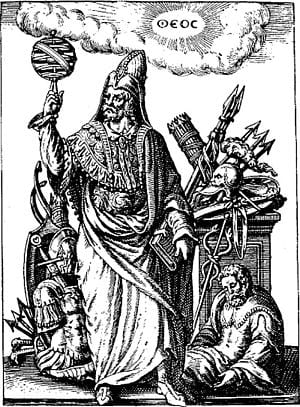
“True it is, without falsehood, certain and most true. That which is above is
like to that which is below, and that which is below is like to that which is
above, to accomplish the miracles of one thing.
And as all things were by contemplation of one, so all things arose from this
one thing by a single act of adaptation.
The father thereof is the Sun, the mother the Moon.
The wind carried it in its womb, the earth is the nurse thereof.
It is the father of all works of wonder throughout the whole world.
The power thereof is perfect.”
[From: A twelfth century Latin translation of an Arab version of the Emerald tablet]
Hermes Trismegistus

About sorita d'Este
Sorita d’Este has been experimenting with ways of walking on the liminal since she was a child, exploring along the way many pathways of experiencing magic, mysticism and religion. Her own personal practice integrates aspects of Hellenic (Greek), Egyptian and Hermetic practices with a lived Orphic inspired philosophy, and experience gained in Initiatory Craft, traditions preserved in Italian, French and British grimoires and other contemporary esoteric teachings of the East and West. You can read more about the author here.
Previous Post

October 23, 2020
Samhain, Faerie Birds & Cú Chulainn's birth
Next Post
November 17, 2020 The Horn of the Unicorn - Part 2
Browse Our Archives
Select a Category Adamantine Musings Book Celtic Children of Earth - Interviews Christianity Druidry Elemental Magic Events Glastonbury Goddesses greek god Hekate Hellenic Hermes Ireland Italy magic(k) Mermaids Nature Pilgrimage Psychic & Mediumship Qabalah Roman Scotland Uncategorized Unicorns Vodou Wicca & Witchcraft
Select a Month November 2020 October 2020 August 2020 April 2020 October 2019 September 2019 August 2019 July 2019 June 2019 May 2019 November 2018 October 2018 July 2018 April 2018 March 2018 January 2018 December 2017 November 2017 July 2017 June 2017 February 2017 January 2017 December 2016 August 2016 July 2016 June 2016
Follow Us!
TAKE THE
Religious Wisdom Quiz
Which Christian movement began with John Wesley in the 18th century?
Select your answer to see how you score.
Lutheranism Methodism Calvinism Presbyterianism
Related posts from Adamantine Muse
The Horn of the Unicorn - Part 3
The Horn of the Unicorn - Part 2

Development of the Wisdom Goddess
The Shekinah - She is the Serpent...
TRENDING AT PATHEOS Pagan

To help with the upcoming holiday season, I'm introducing the Holiday Helper...

10 years of the Power Sigil & Moving...
Last week while reorganizing my studio space, I found the sketchbook that...

Why are younger seekers drawn to Paganism and...
One of the things I've noticed the most is that I'm far...

When we talk about Greek religion, we often begin with the dodekatheion—the...

I was recently chatting with someone on Instagram. She asked me what...

On July 23, I saw Christopher Nolan's The Odyssey which is Homer’s...
view all Pagan blogs
Ad-Free & Subscriber Log-In Subscription Support
- About Us
- 2026 Calendar
- Videos
- Podcasts
- Library of World Religions
- Faith In Media Tracker
- Advertise With Us
- Write for Us
- Privacy Policy
- Terms of Service
- Do Not Sell My Data
- Contact Us
- Radiant Digital
- Manage Newsletter Subscriptions
- Unsubscribe From Notifications
- Sitemap
Copyright 2008-2026, Patheos, part of the Radiant Digital network of media brands. All rights reserved.
Subscription Support Ad-Free & Subscriber Log-In
Follow Patheos