
BuddhistCatholicContemplativeEvangelicalGeneral ChristianHinduJewishLatter-day SaintMuslimNew VisionsProgressive Christian
Beliefs
- Buddhist
- Catholic
- Contemplative
- Evangelical
- General Christian
- Hindu
- Jewish
- Latter-day Saint
- More Voices
- Muslim
- New Visions
- Pagan
- Progressive Christian
Topics
- Religion News
- Food and Religion
- Sports and Religion
- Religious Art
- Religious Music and Entertainment
- Religious Events
- History and Religion
- Style and Religion
- Politics and Religion
- Women in Religion
- Recreation Outdoors and Religion
- Business Finance and Religion
- Careers Workplace and Religion
- Education and Religion
- Family Parenting and Religion
- Health Fitness and Religion
- Home and Religion
- Relationships and Religion
- Technology and Religion
- Travel and Religion
Columnists
- Buddhist Columnists
- Business Finance and Religion Columnists
- Careers Workplace and Religion Columnists
- Catholic Columnists
- Contemplative Columnists
- Education and Religion Columnists
- Evangelists Columnists
- Family Parenting and Religion Columnists
- General Christian Columnists
- Health Fitness and Religion Columnists
- Hindu Columnists
- History and Religion Columnists
- Home and Religion Columnists
- Jewish Columnists
- More Voices Columnists
- Latter Day Columnists
- Muslim Columnists
- New Visions Columnists
- Nonreligious Columnists
- Pagan Columnists
- Politics and Religion Columnists
- Progressive Columnists
- Recreation Outdoors and Religion Columnists
- Relationships and Religion Columnists
- Religion News Columnists
- Religious Art Columnists
- Religious Events Columnists
- Religious Music and Entertainment Columnists
- Sports and Religion Columnists
- Style and Religion Columnists
- Technology and Religion Columnists
- Travel and Religion Columnists
- Women in Religion Columnists
Resource Library
- 2026 Calendar
- Library of World Religions
- The 100 Most Holy Places on Earth
- Patheos Answers
- Podcasts
- Videos
- Faith Leaders Database
- Anglican Episcopalian
- Bahai
- Baptist
- Buddhism
- Christianity
- Confucianism
- Eastern Orthodoxy
- Hinduism
- Holiness and Pentecostal
- ISKCON
- Islam
- Judaism
- Lutheran
- Methodist
- The Church of Jesus Christ of Latter-day Saints
- New Age
- Paganism
- Presbytarian and Reformed
- Protestantism
- Religion Behind the Scenes
- Roman Catholic
- Scientology
- Shia Islam
- Sikhism
- Sufism
- Sunni Islam
- Taoism
- Zen
- See all religions
Research Tools
 Ad-Free & Subscriber Log-In Subscription Support
Ad-Free & Subscriber Log-In Subscription Support
Follow Patheos 

- Trending:
- Forgiveness
- |
- Marriage
- |
- Consciousness
- |
- Death Penalty
- |
- Election
- |
- Halloween
 Adamantine Muse
- Home
- Pagan
- The Morrigan – Faerie Queen
The Morrigan – Faerie Queen
Last updated on: October 22, 2020 at 5:18 pm by Sorita d'Este
The Morrigan – Faerie Queen 2020-10-22T17:18:54+01:00 Sorita d'Este
Patheos Explore the world's faith through different perspectives on religion and spirituality! Patheos has the views of the prevalent religions and spiritualities of the world.
The Irish Morrigan and the Roman Diana are perhaps the best-known Faerie Queens in Britain and Ireland today. The stories of both these powerful female figures survived into myth and legend well beyond the height of their respective periods of worship in the past, allowing them to find their place again today in the hearts and hearths of Pagans all around the world today.
Stories of the Faerie Queens are often linked to the liminal times of Samhain and Beltane, Halloween and May Day. This is perhaps because their stories are linked to life and death, war and love, passing beyond the boundaries of the ordinary in every possible way.
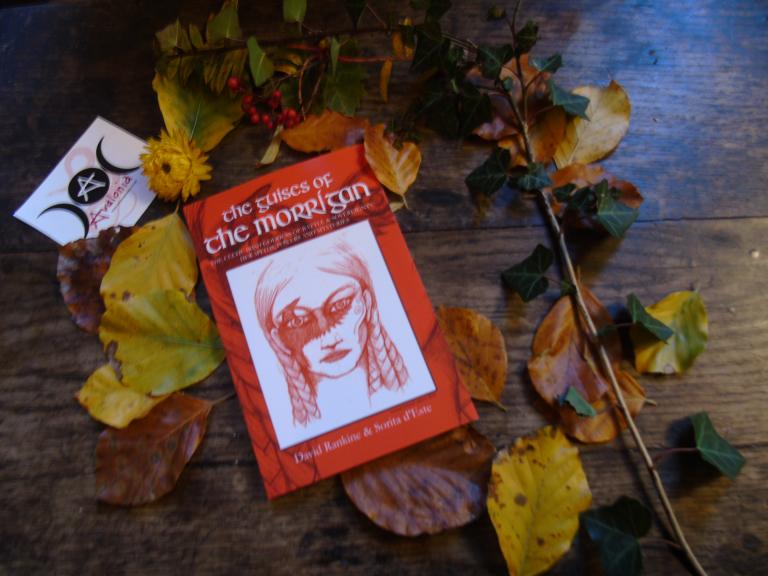
Guises of the Morrigan by David Rankine & Sorita d’Este. Cover art by Brian Andrews.
What follows is a short extract from the book The Guises of the Morrigan which I co-authored with David Rankine (2005).
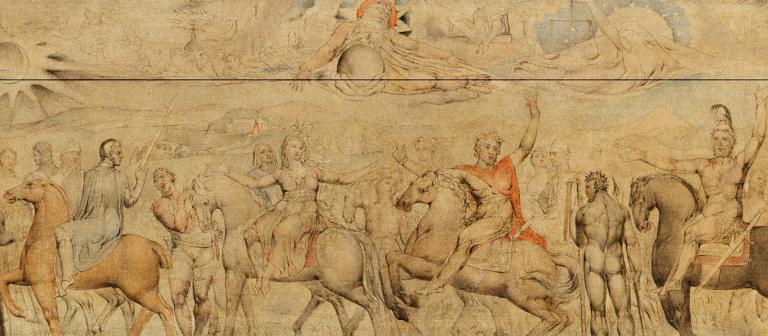
Characters from Spenser’s Faery Queen watercolour by William Blake at Petworth House and Park, West Sussex
The Faerie Queen
“Behold the chariot of the Fairy Queen!
Celestial coursers paw the unyielding air;
Their filmy pennons at her word they furl,
And stop obedient to the reins of light;
These the Queen of Spells drew in;
She spread a charm around the spot,
And, leaning graceful from the ethereal car,
Long did she gaze, and silently,
Upon the slumbering maid.” [1]
Rivers, fords, lakes, springs, and wells all play an essential part in Celtic myths. Votive offerings, in Celtic regions, were often deposited in bodies of water. Some of these offerings were carved and shaped to resemble body parts for healing (sympathetic magic), and at times such offerings would take the form of deliberately broken weapons or precious jewellery. The Morrígan is associated with a whole host of faerie beings across Britain and France. The best known of these faeries is probably the Banshee of Irish folklore. Sídh is often associated with the Morrígan in her various forms. It translates as faerie hill or faerie mound and is indicative of the connection between the goddess and the faerie beings. Landscape features such as mounds or burial chambers, and bodies of water, were considered to be entrances to the other worlds, including the worlds of faeries and the dead.
As Ireland became more Christianised, the old gods lost their public worshippers. Some of them were assimilated into the Christian pantheon becoming Saints (for example, the goddess Bride or Brigid became St Brigid) or they became demonised into malicious faerie and spirit beings. The term Túatha Dé Danann likewise became used as a generic term for the faerie folk, rather than as the name of a pantheon of deities. The Morrígan became the queen of the faerie Túatha Dé Danann, reinforcing the idea that Danu is another appearance of the Morrígan – or that these two goddesses became conflated.
Local folklore in Ireland asserts that the Morrígan leads the faerie court across the land at Samhain. This echoes traditions across Britain and Europe of the Wild Hunt being led across the land at this time of year by a significant god or spirit being. Other examples include the legends of Herne the Hunter and the Wild Hunt in Windsor and Gwyn ap Nudd and the Cwn Annwn (Hounds of the Underworld) between Wales and Glastonbury. Similar narratives can be seen in the germanic Dame Holda and the Wild Hunt; and in the legends of the Norse god Odin. The travelling faerie courts represent the power of the land shifting between summer and winter, and the powers of chaos being dominant at the times when the veils are thin. They are also able to traverse between the worlds of spirit and mankind.
As an aside, is worth noting that one of the Welsh terms for the faerie folk is Bendith y Mamau, meaning the Mother’s Blessing.
[1] From Queen Mab – Percy Blythe Shelley (1792–1822).

About Sorita d'Este
Sorita d’Este has been experimenting with ways of walking on the liminal since she was a child, exploring along the way many pathways of experiencing magic, mysticism and religion. Her own personal practice integrates aspects of Hellenic (Greek), Egyptian and Hermetic practices with a lived Orphic inspired philosophy, and experience gained in Initiatory Craft, traditions preserved in Italian, French and British grimoires and other contemporary esoteric teachings of the East and West. You can read more about the author here.
Previous Post
October 21, 2020
Cailleach - Winter Goddess
Next Post

October 23, 2020 Samhain, Faerie Birds & Cú Chulainn's birth
Browse Our Archives
Select a Category Adamantine Musings Book Celtic Children of Earth - Interviews Christianity Druidry Elemental Magic Events Glastonbury Goddesses greek god Hekate Hellenic Hermes Ireland Italy magic(k) Mermaids Nature Pilgrimage Psychic & Mediumship Qabalah Roman Scotland Uncategorized Unicorns Vodou Wicca & Witchcraft
Select a Month November 2020 October 2020 August 2020 April 2020 October 2019 September 2019 August 2019 July 2019 June 2019 May 2019 November 2018 October 2018 July 2018 April 2018 March 2018 January 2018 December 2017 November 2017 July 2017 June 2017 February 2017 January 2017 December 2016 August 2016 July 2016 June 2016
Follow Us!
TAKE THE
Religious Wisdom Quiz
Who said, "Can anything good come from Nazareth?"
Select your answer to see how you score.
Peter Pilate Nathanael John the Baptist
Related posts from Adamantine Muse
Payam Nabarz - Children of Earth Interviews
The Horn of the Unicorn - Part 3
The Horn of the Unicorn - Part 2
Samhain, Faerie Birds & Cú Chulainn's birth
TRENDING AT PATHEOS Pagan

I was recently chatting with someone on Instagram. She asked me what...

While there are many people who share their results, the end of...

On July 23, I saw Christopher Nolan's The Odyssey which is Homer’s...

As I write this two big events have just finished up. One...

Restoring the Watershed of Divine Love
Perhaps cooperation is not something we manufacture through legislation, ideology, or moral...

Many UUs don’t pray because of bad experiences in a previous religion,...
view all Pagan blogs
Ad-Free & Subscriber Log-In Subscription Support
- About Us
- 2026 Calendar
- Videos
- Podcasts
- Library of World Religions
- Faith In Media Tracker
- Advertise With Us
- Write for Us
- Privacy Policy
- Terms of Service
- Do Not Sell My Data
- Contact Us
- Radiant Digital
- Manage Newsletter Subscriptions
- Unsubscribe From Notifications
- Sitemap
Copyright 2008-2026, Patheos. All rights reserved.
Subscription Support Ad-Free & Subscriber Log-In
Follow Patheos