
BuddhistCatholicContemplativeEvangelicalGeneral ChristianHinduJewishLatter-day SaintMuslimNew VisionsProgressive Christian
Beliefs
- Buddhist
- Catholic
- Contemplative
- Evangelical
- General Christian
- Hindu
- Jewish
- Latter-day Saint
- More Voices
- Muslim
- New Visions
- Pagan
- Progressive Christian
Topics
- Religion News
- Food and Religion
- Sports and Religion
- Religious Art
- Religious Music and Entertainment
- Religious Events
- History and Religion
- Style and Religion
- Politics and Religion
- Women in Religion
- Recreation Outdoors and Religion
- Business Finance and Religion
- Careers Workplace and Religion
- Education and Religion
- Family Parenting and Religion
- Health Fitness and Religion
- Home and Religion
- Relationships and Religion
- Technology and Religion
- Travel and Religion
Columnists
- Buddhist Columnists
- Business Finance and Religion Columnists
- Careers Workplace and Religion Columnists
- Catholic Columnists
- Contemplative Columnists
- Education and Religion Columnists
- Evangelists Columnists
- Family Parenting and Religion Columnists
- General Christian Columnists
- Health Fitness and Religion Columnists
- Hindu Columnists
- History and Religion Columnists
- Home and Religion Columnists
- Jewish Columnists
- More Voices Columnists
- Latter Day Columnists
- Muslim Columnists
- New Visions Columnists
- Nonreligious Columnists
- Pagan Columnists
- Politics and Religion Columnists
- Progressive Columnists
- Recreation Outdoors and Religion Columnists
- Relationships and Religion Columnists
- Religion News Columnists
- Religious Art Columnists
- Religious Events Columnists
- Religious Music and Entertainment Columnists
- Sports and Religion Columnists
- Style and Religion Columnists
- Technology and Religion Columnists
- Travel and Religion Columnists
- Women in Religion Columnists
Resource Library
- 2026 Calendar
- Library of World Religions
- The 100 Most Holy Places on Earth
- Patheos Answers
- Podcasts
- Videos
- Faith Leaders Database
- Anglican Episcopalian
- Bahai
- Baptist
- Buddhism
- Christianity
- Confucianism
- Eastern Orthodoxy
- Hinduism
- Holiness and Pentecostal
- ISKCON
- Islam
- Judaism
- Lutheran
- Methodist
- The Church of Jesus Christ of Latter-day Saints
- New Age
- Paganism
- Presbytarian and Reformed
- Protestantism
- Religion Behind the Scenes
- Roman Catholic
- Scientology
- Shia Islam
- Sikhism
- Sufism
- Sunni Islam
- Taoism
- Zen
- See all religions
Research Tools
 Ad-Free & Subscriber Log-In Subscription Support
Ad-Free & Subscriber Log-In Subscription Support
Follow Patheos 

- Trending:
- Forgiveness
- |
- Marriage
- |
- Consciousness
- |
- Death Penalty
- |
- Election
- |
- Halloween
 Adamantine Muse
- Home
- Pagan
- Development of the Wisdom Goddess
Development of the Wisdom Goddess
Last updated on: March 22, 2018 at 8:20 pm by Sorita d'Este
Development of the Wisdom Goddess 2018-03-22T20:20:06+01:00 Sorita d'Este
Patheos Explore the world's faith through different perspectives on religion and spirituality! Patheos has the views of the prevalent religions and spiritualities of the world.
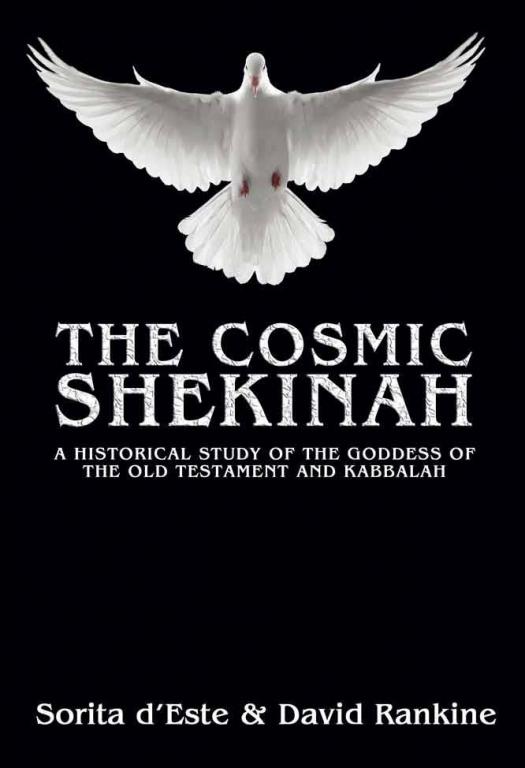
The Cosmic Shekinah by Rankine & d’Este.
This is an extract from the book The Cosmic Shekinah, which I co-authored with David Rankine (2010). I am sharing it here as an example of how cultures influenced each other, and how deities evolved and changed, stayed the same and continued throughout the ages. This is only tiny example, but hopefully an interesting one!
From the Chapter: Behind the Veils
“Her ways are ways of pleasantness,
and all her paths are peace.
She is a tree of life to those who lay hold of her;
those who hold her fast are called happy.”
~ Proverbs 3:17-18, C3rd BCE
Through considering the religions which influenced and were influenced by the development of Judaism and the Kabbalah we find not only the origins of the Shekinah, but also her subsequent manifestations. Millennia before the rise of the Shekinah, we see the earliest association between wisdom and feminine divinity in the form of Inanna, the Sumerian goddess of love and war. In the myths of Sumer, southern Mesopotamia, amongst the world’s first civilizations, it is Inanna who was said to have given civilization to mankind.
The Sumerian civilization was subsequently replaced by the Akkadians, Babylonians and Assyrians through conquest and cultural assimilation. A result of this process was the renaming of deities as cosmologies were syncretised and transformed through religious cross-fertilisation. The first dynasties of Ancient Egypt were contemporary with the civilization of Sumer. While Sumer underwent transformations through conquest and decline, the Egyptians continued to develop many of the inventions of the Sumerians, such as agriculture and writing.
In Egypt, as in Sumer, we see the feminine divine being associated with wisdom, in the form of the Egyptian goddess of truth and cosmic harmony Ma’at, whose name means ‘truth’. The primary symbol of Ma’at was the feather, which she was depicted wearing on her head. Through Ma’at’s feather we see wisdom being linked with airy concepts at a very early time, a syncretisation which would also be expressed very clearly later with the Shekinah.
These two great civilizations of ancient Egypt and Sumer with her successors significantly influenced the development of the Canaanites, who occupied the area which is roughly Israel, Lebanon and Palestine, as well as parts of the surrounding areas, today. As these civilizations influenced Canaan, so too did qualities of their gods become expressed as part of the Canaanite pantheon. The attributes of their mother goddess Asherah became conflated with some of the characteristics previously associated with both the Sumerian goddess Inanna and the Egyptian goddess Isis-Ma’at.
However we should also keep in mind that cross-fertilization is usually a two-way process. The Canaanite goddess Asherah was also imported back to Egypt and linked with the erotic Egyptian goddess Qudshu, as well as with the Syrian love and war goddess Astarte. From here other manifestations of the feminine divine would also occur, with the Syrian goddess Astarte giving rise to the Cyprian love goddess Aphrodite.
Further reading: The Cosmic Shekinah, d’Este & Rankine
Previous Post

March 21, 2018
A Visit to the Temple of Hekate, Lagina
Next Post

March 24, 2018 Identifying Symbols of Hekate
Browse Our Archives
Select a Category Adamantine Musings Book Celtic Children of Earth - Interviews Christianity Druidry Elemental Magic Events Glastonbury Goddesses greek god Hekate Hellenic Hermes Ireland Italy magic(k) Mermaids Nature Pilgrimage Psychic & Mediumship Qabalah Roman Scotland Uncategorized Unicorns Vodou Wicca & Witchcraft
Select a Month November 2020 October 2020 August 2020 April 2020 October 2019 September 2019 August 2019 July 2019 June 2019 May 2019 November 2018 October 2018 July 2018 April 2018 March 2018 January 2018 December 2017 November 2017 July 2017 June 2017 February 2017 January 2017 December 2016 August 2016 July 2016 June 2016
Follow Us!
TAKE THE
Religious Wisdom Quiz
Who was Jacob’s only daughter?
Select your answer to see how you score.
Tamar Rachel Leah Dinah
Related posts from Adamantine Muse

The Horn of the Unicorn - Part 2
The Horn of the Unicorn - Part 1


Hekate & Pop Culture : Liminal Fantasies, or...
TRENDING AT PATHEOS Pagan

I was recently chatting with someone on Instagram. She asked me what...

While there are many people who share their results, the end of...

On July 23, I saw Christopher Nolan's The Odyssey which is Homer’s...

As I write this two big events have just finished up. One...

Restoring the Watershed of Divine Love
Perhaps cooperation is not something we manufacture through legislation, ideology, or moral...

Many UUs don’t pray because of bad experiences in a previous religion,...
view all Pagan blogs
Ad-Free & Subscriber Log-In Subscription Support
- About Us
- 2026 Calendar
- Videos
- Podcasts
- Library of World Religions
- Faith In Media Tracker
- Advertise With Us
- Write for Us
- Privacy Policy
- Terms of Service
- Do Not Sell My Data
- Contact Us
- Radiant Digital
- Manage Newsletter Subscriptions
- Unsubscribe From Notifications
- Sitemap
Copyright 2008-2026, Patheos. All rights reserved.
Subscription Support Ad-Free & Subscriber Log-In
Follow Patheos