
BuddhistCatholicContemplativeEvangelicalGeneral ChristianHinduJewishLatter-day SaintMuslimNew VisionsProgressive Christian
Beliefs
- Buddhist
- Catholic
- Contemplative
- Evangelical
- General Christian
- Hindu
- Jewish
- Latter-day Saint
- More Voices
- Muslim
- New Visions
- Pagan
- Progressive Christian
Topics
- Religion News
- Food and Religion
- Sports and Religion
- Religious Art
- Religious Music and Entertainment
- Religious Events
- History and Religion
- Style and Religion
- Politics and Religion
- Women in Religion
- Recreation Outdoors and Religion
- Business Finance and Religion
- Careers Workplace and Religion
- Education and Religion
- Family Parenting and Religion
- Health Fitness and Religion
- Home and Religion
- Relationships and Religion
- Technology and Religion
- Travel and Religion
Columnists
- Buddhist Columnists
- Business Finance and Religion Columnists
- Careers Workplace and Religion Columnists
- Catholic Columnists
- Contemplative Columnists
- Education and Religion Columnists
- Evangelists Columnists
- Family Parenting and Religion Columnists
- General Christian Columnists
- Health Fitness and Religion Columnists
- Hindu Columnists
- History and Religion Columnists
- Home and Religion Columnists
- Jewish Columnists
- More Voices Columnists
- Latter Day Columnists
- Muslim Columnists
- New Visions Columnists
- Nonreligious Columnists
- Pagan Columnists
- Politics and Religion Columnists
- Progressive Columnists
- Recreation Outdoors and Religion Columnists
- Relationships and Religion Columnists
- Religion News Columnists
- Religious Art Columnists
- Religious Events Columnists
- Religious Music and Entertainment Columnists
- Sports and Religion Columnists
- Style and Religion Columnists
- Technology and Religion Columnists
- Travel and Religion Columnists
- Women in Religion Columnists
Resource Library
- 2026 Calendar
- Library of World Religions
- The 100 Most Holy Places on Earth
- Patheos Answers
- Podcasts
- Videos
- Faith Leaders Database
- Anglican Episcopalian
- Bahai
- Baptist
- Buddhism
- Christianity
- Confucianism
- Eastern Orthodoxy
- Hinduism
- Holiness and Pentecostal
- ISKCON
- Islam
- Judaism
- Lutheran
- Methodist
- The Church of Jesus Christ of Latter-day Saints
- New Age
- Paganism
- Presbytarian and Reformed
- Protestantism
- Religion Behind the Scenes
- Roman Catholic
- Scientology
- Shia Islam
- Sikhism
- Sufism
- Sunni Islam
- Taoism
- Zen
- See all religions
Research Tools
 Ad-Free & Subscriber Log-In Subscription Support
Ad-Free & Subscriber Log-In Subscription Support
Follow Patheos 

- Trending:
- Forgiveness
- |
- Marriage
- |
- Consciousness
- |
- Death Penalty
- |
- Election
- |
- Halloween
 Adamantine Muse
- Home
- Pagan
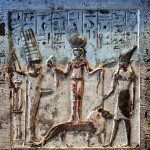
- The Birth of Artemis
The Birth of Artemis
Last updated on: February 27, 2017 at 1:39 am by Sorita d'Este
The Birth of Artemis 2017-02-27T01:39:01+01:00 Sorita d'Este
Patheos Explore the world's faith through different perspectives on religion and spirituality! Patheos has the views of the prevalent religions and spiritualities of the world.

A replica of Artemis of Ephesus’ Icon and myself at the Temple of Artemis of Ephesus in Turkey, 2015.
To Artemis
I sing of Artemis, whose shafts are of gold, who cheers on the hounds, the pure maiden, shooter of stags, who delights in archery, own sister to Apollo with the golden sword. Over the shadowy hills and windy peaks she draws her golden bow, rejoicing in the chase, and sends out grievous shafts. The tops of the high mountains tremble and the tangled wood echoes awesomely with the outcry of beasts: earth quakes and the sea also where fishes shoal. But the goddess with a bold heart [10] turns every way destroying the race of wild beasts: and when she is satisfied and has cheered her heart, this huntress who delights in arrows slackens her supple bow and goes to the great house of her dear brother Phoebus Apollo, to the rich land of Delphi, there to order the lovely dance of the Muses and Graces. There she hangs up her curved bow and her arrows, and heads and leads the dances, gracefully arrayed, while all they utter their heavenly voice, singing how neat-ankled Leto bare children supreme among the immortals both in thought and in deed.Hail to you, children of Zeus and rich-haired Leto!
And now I will remember you and another song also.
[ The Homeric Hymns, English Translation Hugh G. Evelyn-White. ]
A replica of Artemis of Ephesus’ Icon and myself at the Temple of Artemis of Ephesus in Turkey, 2015. Photo by Lokabandhu.
Alongside my love of the goddess Hekate, I have an intrinsic love of Artemis, the Huntress and the Mountain-wanderer. In 2006 I published “Artemis” which is a collection of historic snippets about this fascinating Goddess, and with all the amazing work which has been produced by others since then, combined with wonderful visits to some of her most notable temples over the last few years, I am again spending time fostering a closer interest in her. This extract, telling the story of her birth, is from an article I wrote in 2008.
The Birth of Artemis
This is one version of the story of the birth of the goddess Artemis.
It is a story that sets the scene for many later adventures and also gives a clear explanation for the associations Artemis has with the trails and tribulations of pregnancy and childbirth. The twins were conceived of a union between the Titan Goddess Leto and the Olympian King of the Gods, Zeus, who was known from his many amorous conquests. Zeus was married to the Goddess of marriage, Hera, who was both angry and extremely jealous of Zeus’ affair with Leto.
As a result Hera forced the pregnant Leto in the wilds to give birth to her children. She also sent the Python of Delphi, a giant serpent, to chase Leto across the land, forcing the rulers of all the kingdoms to refuse Leto sanctuary, cursing her so that she would be unable to give birth on solid land. Leto fled escaping the wrath of Hera, tired and exhausted she was unable to find sanctuary, except in Zoster in Attica where she managed to get a little rest.
Eventually, at the very last hour, Zeus came to Leto’s rescue by commanding the North Wind, Boreas, to bear her safely away from the Python to the floating island of Delos. Here Leto was finally able to give birth to the divine twins under an old palm tree. The myths tells us that Artemis’ birth was quick, easy and painless for Leto, but that Apollo’s was a difficult birth. Some of the myths tells us that this was because Eileithyia, the Goddess of childbirth, was being kept busy on Olympus by Hera to prevent her from attending the birth and that it wasn’t until some of the other Goddesses intervened, sending Iris the messenger Goddess to fetch Eileithyia [Hekate] to the birth, that Apollo was finally born. It is here that Artemis first takes the role of divine midwife, helping Eileithyia in the delivery of her own twin brother.
Previous Post
February 23, 2017
The Shekinah - She is the Serpent...
Next Post

June 14, 2017 The Rite of Her Sacred Fires 2017
Browse Our Archives
Select a Category Adamantine Musings Book Celtic Children of Earth - Interviews Christianity Druidry Elemental Magic Events Glastonbury Goddesses greek god Hekate Hellenic Hermes Ireland Italy magic(k) Mermaids Nature Pilgrimage Psychic & Mediumship Qabalah Roman Scotland Uncategorized Unicorns Vodou Wicca & Witchcraft
Select a Month November 2020 October 2020 August 2020 April 2020 October 2019 September 2019 August 2019 July 2019 June 2019 May 2019 November 2018 October 2018 July 2018 April 2018 March 2018 January 2018 December 2017 November 2017 July 2017 June 2017 February 2017 January 2017 December 2016 August 2016 July 2016 June 2016
Follow Us!
TAKE THE
Religious Wisdom Quiz
What does "Bartholomew" mean in Aramaic?
Select your answer to see how you score.
The Lord is my Shepherd Fisher of Men Servant of God Son of Talmai
Related posts from Adamantine Muse


Hekate & Pop Culture : Liminal Fantasies, or...

Hekate's Wheel & the Iynx Wheel

TRENDING AT PATHEOS Pagan

I was recently chatting with someone on Instagram. She asked me what...

While there are many people who share their results, the end of...

On July 23, I saw Christopher Nolan's The Odyssey which is Homer’s...

As I write this two big events have just finished up. One...

Restoring the Watershed of Divine Love
Perhaps cooperation is not something we manufacture through legislation, ideology, or moral...

Many UUs don’t pray because of bad experiences in a previous religion,...
view all Pagan blogs
Ad-Free & Subscriber Log-In Subscription Support
- About Us
- 2026 Calendar
- Videos
- Podcasts
- Library of World Religions
- Faith In Media Tracker
- Advertise With Us
- Write for Us
- Privacy Policy
- Terms of Service
- Do Not Sell My Data
- Contact Us
- Radiant Digital
- Manage Newsletter Subscriptions
- Unsubscribe From Notifications
- Sitemap
Copyright 2008-2026, Patheos. All rights reserved.
Subscription Support Ad-Free & Subscriber Log-In
Follow Patheos