
BuddhistCatholicContemplativeEvangelicalGeneral ChristianHinduJewishLatter-day SaintMuslimNew VisionsProgressive Christian
Beliefs
- Buddhist
- Catholic
- Contemplative
- Evangelical
- General Christian
- Hindu
- Jewish
- Latter-day Saint
- More Voices
- Muslim
- New Visions
- Pagan
- Progressive Christian
Topics
- Religion News
- Food and Religion
- Sports and Religion
- Religious Art
- Religious Music and Entertainment
- Religious Events
- History and Religion
- Style and Religion
- Politics and Religion
- Women in Religion
- Recreation Outdoors and Religion
- Business Finance and Religion
- Careers Workplace and Religion
- Education and Religion
- Family Parenting and Religion
- Health Fitness and Religion
- Home and Religion
- Relationships and Religion
- Technology and Religion
- Travel and Religion
Columnists
- Buddhist Columnists
- Business Finance and Religion Columnists
- Careers Workplace and Religion Columnists
- Catholic Columnists
- Contemplative Columnists
- Education and Religion Columnists
- Evangelists Columnists
- Family Parenting and Religion Columnists
- General Christian Columnists
- Health Fitness and Religion Columnists
- Hindu Columnists
- History and Religion Columnists
- Home and Religion Columnists
- Jewish Columnists
- More Voices Columnists
- Latter Day Columnists
- Muslim Columnists
- New Visions Columnists
- Nonreligious Columnists
- Pagan Columnists
- Politics and Religion Columnists
- Progressive Columnists
- Recreation Outdoors and Religion Columnists
- Relationships and Religion Columnists
- Religion News Columnists
- Religious Art Columnists
- Religious Events Columnists
- Religious Music and Entertainment Columnists
- Sports and Religion Columnists
- Style and Religion Columnists
- Technology and Religion Columnists
- Travel and Religion Columnists
- Women in Religion Columnists
Resource Library
- 2026 Calendar
- Library of World Religions
- The 100 Most Holy Places on Earth
- Patheos Answers
- Podcasts
- Videos
- Faith Leaders Database
- Anglican Episcopalian
- Bahai
- Baptist
- Buddhism
- Christianity
- Confucianism
- Eastern Orthodoxy
- Hinduism
- Holiness and Pentecostal
- ISKCON
- Islam
- Judaism
- Lutheran
- Methodist
- The Church of Jesus Christ of Latter-day Saints
- New Age
- Paganism
- Presbytarian and Reformed
- Protestantism
- Religion Behind the Scenes
- Roman Catholic
- Scientology
- Shia Islam
- Sikhism
- Sufism
- Sunni Islam
- Taoism
- Zen
- See all religions
Research Tools
 Ad-Free & Subscriber Log-In Subscription Support
Ad-Free & Subscriber Log-In Subscription Support
Follow Patheos 

- Trending:
- Forgiveness
- |
- Marriage
- |
- Consciousness
- |
- Death Penalty
- |
- Election
- |
- Halloween
 A Catholic Thinker
- Home
- Catholic
- Why the Little Sisters of the Poor Matter
Why the Little Sisters of the Poor Matter
Last updated on: March 24, 2016 at 1:17 am by Tod Worner
Why the Little Sisters of the Poor Matter 2016-03-24T01:17:48-06:00 Tod Worner
Patheos Explore the world's faith through different perspectives on religion and spirituality! Patheos has the views of the prevalent religions and spiritualities of the world.
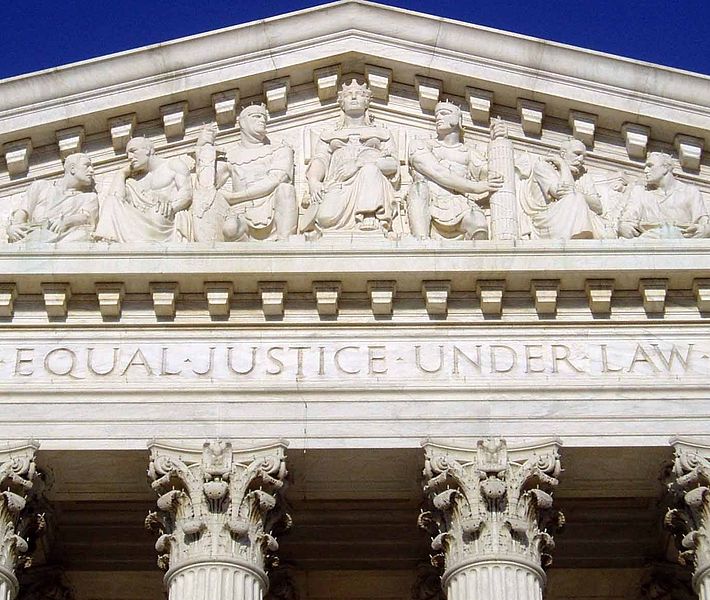
They are not accustomed to fanfare. Nor do they prefer it.
But the Little Sisters of the Poor (along with several co-petitioners) found themselves thrust into the limelight of the Supreme Court. Why were they there?
To preserve their Conscience.
March 23rd was the day that the incomparable attorney Paul Clement and his fellow attorney Noel Francisco would present their cases opposite United States Solicitor General Donald Verrilli, Jr. The forum to whom they presented was an eight justice Supreme Court with a profoundly empty ninth seat.
The question at hand? Does the Affordable Care Act (aka Obamacare) Health and Human Services Mandate (requiring employers to provide insurance coverage for employee contraceptives, sterilizations and abortifacients) violate the religious liberties of the Little Sisters of the Poor (and their co-petitioners)?
The genesis of this conflict originates from a clause in the ACA law deeming that all private plans must provide preventive services free of co-payments, deductibles and cost-sharing. The list of preventive measures to be included came from the recommendations of the U.S. Preventive Services Task Force (USPSTF), the Advisory Committee on Immunization Practices (ACIP), the Health Resources and Services Administration’s (HRSA’s) Bright Futures Project, and the Institute of Medicine (IOM) committee on women’s clinical preventive services. The delivery of these services would be enforced by the federal bureaucracy, namely the Department of Health and Human Services.
Exemptions were granted to churches (proper) and grandfathered entities whose plan originated before March, 2010. Covered items included immunizations, screening tests for diabetes and high cholesterol, dietary and nutrition counseling and screening for breast and colon cancer.
But what gave the Little Sisters pause was the mandated coverage of birth control medicines/devices, sterilization and abortifacients. Being self-insured, the Little Sisters believe that to assent to the HHS Mandate and pay their insurer to cover what they felt was sinful, was simply wrong.
So they objected.
In turn, the federal government was not pleased. In short order, the threat of penalties amounting to $100 per employee per day ($70 million per year) risked initially consuming one third of Little Sisters operating budget. This would assuredly lead their 27 homes serving the elderly poor in America to financial ruin. On December 31, 2013 Supreme Court Justice Sonia Sotomayor granted a stay on any penalties pending review. An “accommodation” was offered by the federal government which, after several iterations, landed on the duty of the objector to notify the federal government of its objection. After this notification, the government would notify the objector’s insurer who would then cover the objectionable services through a “parallel, but unaffiliated” mechanism. This accommodation was thought inadequate, especially to the Little Sisters who are self-insured and reasoned that to notify the government of their objection and trigger another entity to provide services in their stead makes them sin by proxy. This is even more since it would come through the very insurance with whom they had contracted. While the government soothed by saying, “You’re not complicit”, the Little Sisters disagreed.
And so today, the Little Sisters of the Poor et al. squared away against Syliva Burwell, Secretary of Health and Human Services et al.
The legal battle pitted the government’s interpretation and enforcement of the Affordable Care Act’s HHS Mandate against the Constitution’s Free Exercise (of religion) Clause of the First Amendment and the 1993 Religious Freedom and Restoration Act (RFRA). If this all sounds strangely familiar, it is because it was similarly contested in 2014’s Burwell vs. Hobby Lobby in which by a 5-4 decision the HHS Mandate was in violation of the Religious Freedom and Restoration Act.
Tonight, I read the arguments made by attorneys Clement, Francisco and Verrilli before the Supreme Court. And here are some thoughts.
The Little Sisters of the Poor’s case rests on religious freedom. Religious freedom is one of the first freedoms of our democracy. It is hard to deny this when the First Amendment to the Constitution decisively states,
Congress shall make no law respecting an establishment of religion, or prohibiting the free exercise thereof…
That said, there has been a pattern in time for laws to be passed which could inadvertently infringe on a citizen’s right to freely exercise their faith. Mindful of striking a balance between protecting the right to exercise faith and preventing the frivolous invocation of “religious freedom” for any selfishly manufactured pet issue, Congress overwhelmingly (unanimous in House, 97-3 in Senate) passed the Religious Freedom and Restoration Act (RFRA) in 1993. This law declares that religious freedom is paramount and that any federal law that should violate this first freedom must prove that it is done in the name of a compelling governmental interest, does not impose a substantial burden on the religious practitioner and is the least restrictive means to achieve the desired ends. This seems to make sense.
The federal government’s case, however, rests on the narrowly-passed (60-39 Senate, 219-212 House) Affordable Care Act’s provision to cover preventive measures, the details of which were determined by (if not outsourced to) entities enmeshed in the federal bureaucracy. And the Hobby Lobby case was decided in favor of Hobby Lobby and the RFRA only one year ago.
What is curious in listening to the oral arguments is how Clement and Francisco return again and again to the questions raised by RFRA: Is there a compelling government interest? Is there a substantial burden on the Little Sisters of the Poor if they do or don’t comply? Is there a less restrictive means? The answers, from the government’s Solicitor General Verrilli, are striking.
Is there a compelling government interest?
Solicitor General Verrilli: “[To provide the Little Sisters of the Poor an exemption similar to that provided to a church] presents the same problem of creating the obstacle which creates the inertia problem [that is, if there is an obstacle, the individual may simply not go to the trouble of getting the contraceptive/sterilization/abortifacient], which undermines the compelling interest of the Institute of Medicine and HHS, but of Congress itself [to make sure contraceptives/sterilizations/abortifacients are paid for everybody by their employer]” (italics mine)
Chief Justice Roberts (later in the case): “It seems to me that the balance is pretty clear. You want the coverage for contraceptive services to be provided, I think as you – as it said, seamlessly. You want it to be in the one insurance package. That’s done. That is the compelling government interest. And on the other side, the question is whether people who have sincere religious objections to being complicit in that through the hiring of the insurance company, the third party administrator on terms where they provided [contraceptives, sterilizations, abortifacients], whether the government’s compelling interest outweighs those sincere religious objections. Is that a fair understanding of the case?”
Is there a substantial burden if the Little Sisters do or do not comply?
Justice Kennedy: “Do you concede that there’s a substantial burden?
Solicitor General Verrilli: “We do not concede there’s a substantial burden, Justice Kennedy. We – we concede that the religious belief is sincere. We’re not questioning sincerity of the belief, but we don’t think that in a case in which the – an – when a question is this, when a religious objection is made to the independent arrangements the government makes with third parties to fill a regulatory gap created by granting an exemption from a – a generally applicable rule, that that qualifies as —”
Justice Kennedy: “Well, do – do you question their belief that they’re complicit in the moral wrong?
Solicitor General Verrilli: “No, we do not.”
Justice Kennedy: “Well, then – then it seems to me that that’s a substantial burden.”
Is there a less restrictive means (to achieve the government’s goal without violating religious freedom)?
Attorney Francisco (for the petitioners): “We then turn to less restrictive means…It’s quite clear that the government has alternatives because it’s the same alternatives it uses for everybody else (grandfathered plans, churches, religious orders). And if all those alternatives are fine with them, they at least need evidence explaining why they’re not fine for us as well.”
In conclusion, consider this from the government’s Solicitor General Verrilli,
“The whole point here, Justice Alito, is that Congress wanted to eliminate – even what were perceived by most of the small barriers, like a $5 or $10 co-pay, because the medical experts said that even though small barriers – even when you’re getting it as part of your regular coverage, even those small barriers work as a sufficient disincentive that many fewer people use contraception than would otherwise…”
Where the federal government has offered exemptions to “houses of worship” and has grandfathered in massive companies immune to the Mandate (Chevron, Visa Inc., PepsiCo, ExxonMobil – does the government not worry about their employees access to paid contraceptives, sterilizations and abortifacients?), it has decided to go to the mat against the Little Sisters of the Poor. We have come to a point in modern jurisprudence where the Free Exercise of Religion is pitted against the “small barriers, like a $5 or $10 co-pay” and the “inertia problem” of someone who simply isn’t motivated to seek these services when they aren’t simply given to them.
The Little Sisters of the Poor are not accustomed to fanfare. Nor do they prefer it.
But they came to Court to preserve their Conscience.
Will that be allowed?
—————————–
Photo credit: Wikimedia Commons
Previous Post

March 19, 2016
The Church of Second Chances: Christ & the Wretchedness of Peter


Browse Our Archives
Select a Category A Catholic Thinker's Story Uncategorized
Select a Month March 2017 February 2017 December 2016 November 2016 October 2016 September 2016 August 2016 July 2016 June 2016 May 2016 April 2016 March 2016 February 2016 January 2016 December 2015 November 2015 October 2015 September 2015 August 2015 July 2015 June 2015 May 2015 April 2015 March 2015 February 2015 January 2015 December 2014 November 2014 October 2014 September 2014 August 2014 July 2014 June 2014 May 2014 April 2014 March 2014 February 2014 January 2014 December 2013 November 2013 October 2013 September 2013 July 2013 June 2013 May 2013 April 2013 March 2013 February 2013 January 2013 December 2012 November 2012 October 2012 September 2012 August 2012 July 2012
Follow Us!
TAKE THE
Religious Wisdom Quiz
Which city is known as the "City of Palms" in the Bible?
Select your answer to see how you score.
Jericho Damascus Bethany Jerusalem
Related posts from A Catholic Thinker

"Something Absolutely Modern" - The Insincere Convert from...

Textualism vs. The Living Constitution: Justice Scalia, Judge...

Memento Mori: Hope In a Year Heavy With...

Advent: The Greatest Resistance Story of All Time
TRENDING AT PATHEOS Catholic

Rejecting Doom: Christian Hope And Human Action
Christianity is a religion of hope. We are to have hope and...

It’s What Comes From Within Which Matters
One of the most difficult things for us to understand is why...

Why I Choose the Eucharist Over the Sermon
Choose the Eucharist, Not the Sermon What are we supposed to get...

5 Design Elements Found in Spiritually Rooted Homes
Putting Spirituality Into Home Decor Our homes are more than our living...

Credo: A Story of God Told with the...
About 10 years ago, I began to imagine a personal "Credo" that...

The Anatomy of Divine Revelation in Catholic Thought
The claim that God has made Himself known to human beings is...
view all Catholic blogs
Ad-Free & Subscriber Log-In Subscription Support
- About Us
- 2026 Calendar
- Videos
- Podcasts
- Library of World Religions
- Faith In Media Tracker
- Advertise With Us
- Write for Us
- Privacy Policy
- Terms of Service
- Do Not Sell My Data
- Contact Us
- Radiant Digital
- Manage Newsletter Subscriptions
- Unsubscribe From Notifications
- Sitemap
Copyright 2008-2026, Patheos. All rights reserved.
Subscription Support Ad-Free & Subscriber Log-In
Follow Patheos