
BuddhistCatholicContemplativeEvangelicalGeneral ChristianHinduJewishLatter-day SaintMuslimNew VisionsProgressive Christian
Beliefs
- Buddhist
- Catholic
- Contemplative
- Evangelical
- General Christian
- Hindu
- Jewish
- Latter-day Saint
- More Voices
- Muslim
- New Visions
- Pagan
- Progressive Christian
Topics
- Religion News
- Food and Religion
- Sports and Religion
- Religious Art
- Religious Music and Entertainment
- Religious Events
- History and Religion
- Style and Religion
- Politics and Religion
- Women in Religion
- Recreation Outdoors and Religion
- Business Finance and Religion
- Careers Workplace and Religion
- Education and Religion
- Family Parenting and Religion
- Health Fitness and Religion
- Home and Religion
- Relationships and Religion
- Technology and Religion
- Travel and Religion
Columnists
- Buddhist Columnists
- Business Finance and Religion Columnists
- Careers Workplace and Religion Columnists
- Catholic Columnists
- Contemplative Columnists
- Education and Religion Columnists
- Evangelists Columnists
- Family Parenting and Religion Columnists
- General Christian Columnists
- Health Fitness and Religion Columnists
- Hindu Columnists
- History and Religion Columnists
- Home and Religion Columnists
- Jewish Columnists
- More Voices Columnists
- Latter Day Columnists
- Muslim Columnists
- New Visions Columnists
- Nonreligious Columnists
- Pagan Columnists
- Politics and Religion Columnists
- Progressive Columnists
- Recreation Outdoors and Religion Columnists
- Relationships and Religion Columnists
- Religion News Columnists
- Religious Art Columnists
- Religious Events Columnists
- Religious Music and Entertainment Columnists
- Sports and Religion Columnists
- Style and Religion Columnists
- Technology and Religion Columnists
- Travel and Religion Columnists
- Women in Religion Columnists
Resource Library
- 2026 Calendar
- Library of World Religions
- The 100 Most Holy Places on Earth
- Patheos Answers
- Podcasts
- Videos
- Faith Leaders Database
- Anglican Episcopalian
- Bahai
- Baptist
- Buddhism
- Christianity
- Confucianism
- Eastern Orthodoxy
- Hinduism
- Holiness and Pentecostal
- ISKCON
- Islam
- Judaism
- Lutheran
- Methodist
- The Church of Jesus Christ of Latter-day Saints
- New Age
- Paganism
- Presbytarian and Reformed
- Protestantism
- Religion Behind the Scenes
- Roman Catholic
- Scientology
- Shia Islam
- Sikhism
- Sufism
- Sunni Islam
- Taoism
- Zen
- See all religions
Research Tools
 Ad-Free & Subscriber Log-In Subscription Support
Ad-Free & Subscriber Log-In Subscription Support
Follow Patheos 

- Trending:
- Forgiveness
- |
- Marriage
- |
- Consciousness
- |
- Death Penalty
- |
- Election
- |
- Halloween
 A Catholic Thinker
- Home
- Catholic
- Pope Francis & the Answer to “Radical Loneliness”
Pope Francis & the Answer to “Radical Loneliness”
Last updated on: October 1, 2015 at 11:52 pm by Tod Worner
Pope Francis & the Answer to “Radical Loneliness” 2015-10-01T23:52:16-06:00 Tod Worner
Patheos Explore the world's faith through different perspectives on religion and spirituality! Patheos has the views of the prevalent religions and spiritualities of the world.
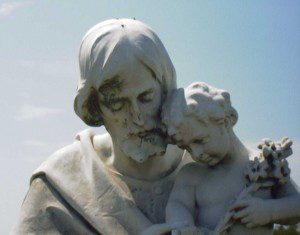
They were young, but inspired.
How could they not be?
After all, this priest was on fire. He was young, charismatic and passionate for the Lord. And he thrived in being with them.
So, likewise, these college students were eager to spend time with him.
“We felt completely free with him, without any burden. His presence led us to express ourselves. While he was among us, we felt that everything was all right…We felt we could discuss any problem with him; he could talk about absolutely anything.”
And they did. But why? Why did these bright, young things – with their futures hopeful and their appetites large – why were they drawn to this man of God?
Because no one was talking to them like this.
The overarching narrative of society they lived in disdained the Faith for which he stood and offered deceptive, selfish, sensual pleasures as tempting alternatives. And some of the students had, indeed, been tempted. But they found only emptiness in these alternative promises. The young priest offered something more. He offered Truth. And hope.
He knew them well. He would travel with them, camp with them, eat with them. And he loved to engage them in conversation. The priest had as much facility with scientific research, jazz music and popular books as he did with the Creed, Sacraments and Saints. And though he could enthusiastically speak for hours, he hungered to know the students. They recalled,
“He had mastered the art of listening…he was always interested.”
But it was when he delved deeply into faith and its indispensable role in their lives that the students were most moved. We are called to be holy, he constantly reminded. We are designed to be a part of a community of faith. Don’t be seduced by a world that degrades you and devalues your dignity. Understand your faith through study and prayer. Value marriage. Partake in the Sacraments. Walk the faithful walk. Be not afraid.
As they met and traveled together, the young priest would recite poems, teach about St. Thomas Aquinas, and explore literature. The priest and the students would dissect moral dilemmas, consider the faithful application of Catholic social teaching and wrestle with their personal problems. As the students took tests, helped the afflicted, married and ultimately had children, prayer, Mass and the Sacraments would inform the rhythm of their life. And the priest was always there. As one student recalled in awe,
“He always had time.”
No one was talking to them like this. Or walking with them.
Except for this young priest.
And while he was capable of knowing them intimately, he was not truly “of them”. As the priest would say,
“The duty of a priest is to live with people, everywhere they are, to be with them in everything but sin.”
His ability to simultaneously be familiar and yet remain a respected authority on matters of infinite importance was extraordinary. And it had a deep impact on the college students. As one student recalled,
“Today many priests try to be like the kids. We were trying to be like him.”
Indeed.
But why? Why would they want to be like him?
Because he was wise, trusted and present. The priest’s biographer said this,
“[He] thought of his [role] as a ministry of ‘accompaniment’, a way to ‘accompany’ these students in their lives. [His] presence couldn’t be limited to the sanctuary and the confessional. [He] had to be present to these young lives in the world as well as in the church.”
He had to be wise, trusted and present. And in being that person for these young college students, he modeled faith-filled living and fostered the bonds of deep, Catholic community – a community open to the joys of friendship, marriage and parenting. A community open to God.
Isn’t this what Pope Francis implored his Bishops to be in his speech to them at St. Charles Borromeo Seminary last week? First, he articulated the problem.
“There are no longer close personal relationships. Today’s culture seems to encourage people not to bond with anything or anyone, not to trust. The most important thing nowadays seems to be follow the latest trend or activity.”
—
“Social bonds are a mere “means” for the satisfaction of “my needs”. The important thing is no longer our neighbor, with his or her familiar face, story and personality. The result is a culture which discards everything that is no longer “useful” or “satisfying” for the tastes of the consumer.”
—
“This causes great harm; it greatly wounds our culture. I dare say that at the root of so many contemporary situations is a kind of impoverishment born of a widespread and radical sense of loneliness. Running after the latest fad, accumulating “friends” on one of the social networks, we get caught up in what contemporary society has to offer. Loneliness with fear of commitment in a limitless effort to feel recognized.”
And then the Pope offered a solution.
“A pastor watches over the dreams, the lives and the growth of his flock. This “watchfulness” is not the result of talking but of shepherding. Only one capable of standing “in the midst of” the flock can be watchful, not someone who is afraid of questions, afraid of contact and accompaniment. A pastor keeps watch first and foremost with prayer, supporting the faith of his people and instilling confidence in the Lord, in his presence. A pastor remains vigilant by helping people to lift their gaze at times of discouragement, frustration and failure.”
Pope Francis recognizes the modern malaise which has devolved into hopelessness and nihilism. We are disconnected from God and we are disconnected from each other. In this extreme form of estrangement, we become, as French Catholic novelist Georges Bernanos would describe, “stumps of men”. The Pope astutely recognizes this as the crisis of our our age. “Radical loneliness” in the age of excess and the age of connectivity. And the young priest, St. John Paul II, recognized a similar crisis in a different age…it was “radical loneliness” in the age of ideology and the age of “answers”.
So what is the answer? What is the cure to hopelessness, nihilism and radical loneliness?
It is this: God experienced in prayer. God experienced in the sacraments. And God experienced in community, in our participation in The Body of Christ. It begins with the simplest of prayers. “Help me. Guide me. Forgive me. Thank you.” It continues with moments in a Confessional or receiving the Eucharist. And it grows further in our community exploring Scripture, bearing another’s burden and seeking dignity, growth and accountability.
Two Pontiffs. Two priests. Two ages. One answer.
May we always seek God. And may our shepherds walk with us in our efforts to consistently find him.
—————————————
Image Credit: http://www.warrensburg-mo.com/departments/public-works/cemetery-history-g-z/
Previous Post
September 30, 2015
On Being Fair to Pope Francis
Next Post

October 5, 2015 My Midnight Monastery
Browse Our Archives
Select a Category A Catholic Thinker's Story Uncategorized
Select a Month March 2017 February 2017 December 2016 November 2016 October 2016 September 2016 August 2016 July 2016 June 2016 May 2016 April 2016 March 2016 February 2016 January 2016 December 2015 November 2015 October 2015 September 2015 August 2015 July 2015 June 2015 May 2015 April 2015 March 2015 February 2015 January 2015 December 2014 November 2014 October 2014 September 2014 August 2014 July 2014 June 2014 May 2014 April 2014 March 2014 February 2014 January 2014 December 2013 November 2013 October 2013 September 2013 July 2013 June 2013 May 2013 April 2013 March 2013 February 2013 January 2013 December 2012 November 2012 October 2012 September 2012 August 2012 July 2012
Follow Us!
TAKE THE
Religious Wisdom Quiz
What prophet challenged King Ahab and Queen Jezebel over Naboth's vineyard?
Select your answer to see how you score.
Elisha Nathan Amos Elijah
Related posts from A Catholic Thinker

"Be Not Afraid" - Suffering & St. John...
Hope & "The Pope of Surprises"
What Pope Francis' Visit Means to Me
TRENDING AT PATHEOS Catholic

Rejecting Doom: Christian Hope And Human Action
Christianity is a religion of hope. We are to have hope and...

It’s What Comes From Within Which Matters
One of the most difficult things for us to understand is why...

Why I Choose the Eucharist Over the Sermon
Choose the Eucharist, Not the Sermon What are we supposed to get...

5 Design Elements Found in Spiritually Rooted Homes
Putting Spirituality Into Home Decor Our homes are more than our living...

Credo: A Story of God Told with the...
About 10 years ago, I began to imagine a personal "Credo" that...

The Anatomy of Divine Revelation in Catholic Thought
The claim that God has made Himself known to human beings is...
view all Catholic blogs
Ad-Free & Subscriber Log-In Subscription Support
- About Us
- 2026 Calendar
- Videos
- Podcasts
- Library of World Religions
- Faith In Media Tracker
- Advertise With Us
- Write for Us
- Privacy Policy
- Terms of Service
- Do Not Sell My Data
- Contact Us
- Radiant Digital
- Manage Newsletter Subscriptions
- Unsubscribe From Notifications
- Sitemap
Copyright 2008-2026, Patheos. All rights reserved.
Subscription Support Ad-Free & Subscriber Log-In
Follow Patheos