
BuddhistCatholicContemplativeEvangelicalGeneral ChristianHinduJewishLatter-day SaintMuslimNew VisionsProgressive Christian
Beliefs
- Buddhist
- Catholic
- Contemplative
- Evangelical
- General Christian
- Hindu
- Jewish
- Latter-day Saint
- More Voices
- Muslim
- New Visions
- Pagan
- Progressive Christian
Topics
- Religion News
- Food and Religion
- Sports and Religion
- Religious Art
- Religious Music and Entertainment
- Religious Events
- History and Religion
- Style and Religion
- Politics and Religion
- Women in Religion
- Recreation Outdoors and Religion
- Business Finance and Religion
- Careers Workplace and Religion
- Education and Religion
- Family Parenting and Religion
- Health Fitness and Religion
- Home and Religion
- Relationships and Religion
- Technology and Religion
- Travel and Religion
Columnists
- Buddhist Columnists
- Business Finance and Religion Columnists
- Careers Workplace and Religion Columnists
- Catholic Columnists
- Contemplative Columnists
- Education and Religion Columnists
- Evangelists Columnists
- Family Parenting and Religion Columnists
- General Christian Columnists
- Health Fitness and Religion Columnists
- Hindu Columnists
- History and Religion Columnists
- Home and Religion Columnists
- Jewish Columnists
- More Voices Columnists
- Latter Day Columnists
- Muslim Columnists
- New Visions Columnists
- Nonreligious Columnists
- Pagan Columnists
- Politics and Religion Columnists
- Progressive Columnists
- Recreation Outdoors and Religion Columnists
- Relationships and Religion Columnists
- Religion News Columnists
- Religious Art Columnists
- Religious Events Columnists
- Religious Music and Entertainment Columnists
- Sports and Religion Columnists
- Style and Religion Columnists
- Technology and Religion Columnists
- Travel and Religion Columnists
- Women in Religion Columnists
Resource Library
- 2026 Calendar
- Library of World Religions
- The 100 Most Holy Places on Earth
- Patheos Answers
- Podcasts
- Videos
- Faith Leaders Database
- Anglican Episcopalian
- Bahai
- Baptist
- Buddhism
- Christianity
- Confucianism
- Eastern Orthodoxy
- Hinduism
- Holiness and Pentecostal
- ISKCON
- Islam
- Judaism
- Lutheran
- Methodist
- The Church of Jesus Christ of Latter-day Saints
- New Age
- Paganism
- Presbytarian and Reformed
- Protestantism
- Religion Behind the Scenes
- Roman Catholic
- Scientology
- Shia Islam
- Sikhism
- Sufism
- Sunni Islam
- Taoism
- Zen
- See all religions
Research Tools
 Ad-Free & Subscriber Log-In Subscription Support
Ad-Free & Subscriber Log-In Subscription Support
Follow Patheos 

- Trending:
- Forgiveness
- |
- Marriage
- |
- Consciousness
- |
- Death Penalty
- |
- Election
- |
- Halloween
 A Catholic Thinker
- Home
- Catholic
- Law, Mercy & Controversy at the Synod on the Family
Law, Mercy & Controversy at the Synod on the Family
Last updated on: October 12, 2015 at 10:29 pm by Tod Worner
Law, Mercy & Controversy at the Synod on the Family 2015-10-12T22:29:30-06:00 Tod Worner
Patheos Explore the world's faith through different perspectives on religion and spirituality! Patheos has the views of the prevalent religions and spiritualities of the world.
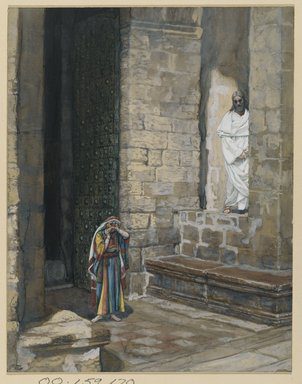
The Adulterous Woman Alone with Jesus by James Tissot
In case you hadn’t heard, there is a meeting being held at the Vatican right now.
Yep.
It has a daunting title. The “14th Ordinary General Assembly of the Synod of the Bishops on the Family” which is the follow up meeting to the equally daunting “3rd Extraordinary General Assembly of the Synod of Bishops on the Family” held in October of 2014.
Zzzzzzzzzzzzzzzzzzzzzzzzzzzzzzzzzzzzzzzzzzzzzzz
Okay, WAKE UP!
Let me give you this brief and approachable primer to what this meeting is and why it matters. The Synod of Bishops is a fifty year old idea in which a representatives of the worldwide assembly of Bishops act in a collegial fashion to advise the Pope “on important questions facing the Church in a manner that preserves the Church’s teaching and strengthens her internal discipline.” The Pope calls an “Extraordinary Assembly” (like in 2014) to deal with an issue of extreme importance that requires expeditious attention and action for the good of the Church. He calls an “Ordinary Assembly” simply when the issue would benefit from the wisdom of the world’s Bishops (like what is occurring now between October 5-25). The “Extraordinary Assembly” is a bit more spontaneous and with less preparation due to its urgency, while the “Ordinary Assembly” has more preparation, organization and thoughtful execution. There have only been three “Extraordinary Assemblies” while there have been fourteen “Ordinary Assemblies“.
Now in the day and age of social media with Facebook, Instagram, Twitter and blogging mixed in with traditional media, it is of little surprise that there is increasing scrutiny, analysis and, yes, conjecture surrounding the proceedings of these Assemblies. Furthermore, when dealing with issues of the family that affects over one billion Catholics and concerns that squarely address favorite modern hot button issues of marriage, divorce, annulments, cohabitation and parenting, it is easy to reason that coverage will be considerable. The “Extraordinary Assembly” in 2014 was asked to “thoroughly examine and analyze the information, testimonies and recommendations received from the particular Churches in order to respond to the new challenges of the family.” While the “Ordinary Assembly” currently underway is intent on “continuing the work of the Extraordinary General Assembly by reflect[ing] further on the points discussed so as to formulate appropriate pastoral guidelines for the pastoral care of the person and the family.” Or to better summarize, the 2014 Assembly was called to think about the challenges to the family and the 2015 Assembly is called to do something about the challenges to the family. First think, then guide. When all is said and done, it is anticipated that Pope Francis will issue an Apostolic Exhortation which is not binding as doctrine, but intended to encourage Catholics along a certain line of thinking.
Zzzzzzzzzzzzzzzzzzzzzzzzzzzzz *snort, snuff* zzzzzzzzzzzzzzzzzzzzzz
OKAY, OKAY! So here’s the thing…
Rather than following perfectly along the “collegial” line of discussions and collaboration, last year’s and this year’s Assemblies have served up delicious morsels to the Papist-razzi who like to highlight dissent and dissonance among the Bishops of the Church. Different stances have emerged on partaking in Sacraments for the divorced and remarried, cohabitating or same-sex partners. Disagreements have been lodged about “the law of graduality” which suggests a gradation of virtues and vices as opposed to the binary worldview of absolute virtue and vice.
And with these not-so-internal debates, a Narrative seems to have emerged. And it goes like this: Theological scuffles have arisen between Bishops advocating for the Law over Mercy and those who advocate for Mercy over the Law. Those advocating a respect for the Law say that jettisoning the Truth leads to warped guidance for lost souls which, in turn, proves merciless by perpetuating damnable error. Those championing a respect for Mercy say that the “Spirit” of the Law is lost if the Law seems unbending and unsympathetic in the face of the plight of fallen humankind. And yet no single Bishop could reasonably be accused of failing to recognize the complementary need for an edifice of Law to house an ethic of Mercy. The tension, therefore, lies in the matter of degree.
Now, let’s be clear. I am a simple man. I don’t have the answer to this fine, if not precarious, balance.
But Christ does. Consider this wisdom. When Jesus was challenged on the tension between the Law and Mercy and when the calculated intent was to balance Christ on morality’s knife edge to see which way he would tip, here is what he did:
But early in the morning he arrived again in the temple area, and all the people started coming to him, and he sat down and taught them. Then the scribes and the Pharisees brought a woman who had been caught in adultery and made her stand in the middle. They said to him, “Teacher, this woman was caught in the very act of committing adultery. Now in the law, Moses commanded us to stone such women. So what do you say?” They said this to test him, so that they could have some charge to bring against him. Jesus bent down and began to write on the ground with his finger. But when they continued asking him, he straightened up and said to them, “Let the one among you who is without sin be the first to throw a stone at her.” Again he bent down and wrote on the ground. And in response, they went away one by one, beginning with the elders. So he was left alone with the woman before him. Then Jesus straightened up and said to her, “Woman, where are they? Has no one condemned you?” She replied, “No one, sir.” Then Jesus said, “Neither do I condemn you. Go, [and] from now on do not sin any more.”
– John 8: 2-11
Christ showed that the Law provided an edifice to house the ethic of Mercy and afford it room to be practiced. “Neither do I condemn you”… Mercy. “Go and from now on do not sin any more”… Law.
How will the Synod Fathers – the Bishops at the 14th Ordinary General Assembly of the Synod of the Bishops on the Family – guide us? Lawfully? Mercifully? With Christ-like wisdom?
Let us hope. Let us pray.
Come, Holy Spirit.
Come.
——————————————
Image Credit: Brooklyn Museum
Previous Post
October 8, 2015
"Never Give In" - What We Can Still Learn From Winston Churchill
Next Post

October 22, 2015 "Be Not Afraid" - Suffering & St. John Paul II
Browse Our Archives
Select a Category A Catholic Thinker's Story Uncategorized
Select a Month March 2017 February 2017 December 2016 November 2016 October 2016 September 2016 August 2016 July 2016 June 2016 May 2016 April 2016 March 2016 February 2016 January 2016 December 2015 November 2015 October 2015 September 2015 August 2015 July 2015 June 2015 May 2015 April 2015 March 2015 February 2015 January 2015 December 2014 November 2014 October 2014 September 2014 August 2014 July 2014 June 2014 May 2014 April 2014 March 2014 February 2014 January 2014 December 2013 November 2013 October 2013 September 2013 July 2013 June 2013 May 2013 April 2013 March 2013 February 2013 January 2013 December 2012 November 2012 October 2012 September 2012 August 2012 July 2012
Follow Us!
TAKE THE
Religious Wisdom Quiz
What caused the kingdom to split after Solomon's death?
Select your answer to see how you score.
Famine Rehoboam's harsh policies Idol worship Prophet's curse
Related posts from A Catholic Thinker

"Something Absolutely Modern" - The Insincere Convert from...

Textualism vs. The Living Constitution: Justice Scalia, Judge...

Memento Mori: Hope In a Year Heavy With...

Advent: The Greatest Resistance Story of All Time
TRENDING AT PATHEOS Catholic

Creation, Preservation, and Teleology in Catholic Theology
As I write this, it is very early Monday morning. Like millions...

The Parable Of The Sower And The Word...
One of Christ’s most famous parables is that of the sower who...

Rejecting Doom: Christian Hope And Human Action
Christianity is a religion of hope. We are to have hope and...

Why I Choose the Eucharist Over the Sermon
Choose the Eucharist, Not the Sermon What are we supposed to get...

5 Design Elements Found in Spiritually Rooted Homes
Putting Spirituality Into Home Decor Our homes are more than our living...

Credo: A Story of God Told with the...
About 10 years ago, I began to imagine a personal "Credo" that...
view all Catholic blogs
Ad-Free & Subscriber Log-In Subscription Support
- About Us
- 2026 Calendar
- Videos
- Podcasts
- Library of World Religions
- Faith In Media Tracker
- Advertise With Us
- Write for Us
- Privacy Policy
- Terms of Service
- Do Not Sell My Data
- Contact Us
- Radiant Digital
- Manage Newsletter Subscriptions
- Unsubscribe From Notifications
- Sitemap
Copyright 2008-2026, Patheos. All rights reserved.
Subscription Support Ad-Free & Subscriber Log-In
Follow Patheos