
BuddhistCatholicContemplativeEvangelicalGeneral ChristianHinduJewishLatter-day SaintMuslimNew VisionsProgressive Christian
Beliefs
- Buddhist
- Catholic
- Contemplative
- Evangelical
- General Christian
- Hindu
- Jewish
- Latter-day Saint
- More Voices
- Muslim
- New Visions
- Pagan
- Progressive Christian
Topics
- Religion News
- Food and Religion
- Sports and Religion
- Religious Art
- Religious Music and Entertainment
- Religious Events
- History and Religion
- Style and Religion
- Politics and Religion
- Women in Religion
- Recreation Outdoors and Religion
- Business Finance and Religion
- Careers Workplace and Religion
- Education and Religion
- Family Parenting and Religion
- Health Fitness and Religion
- Home and Religion
- Relationships and Religion
- Technology and Religion
- Travel and Religion
Columnists
- Buddhist Columnists
- Business Finance and Religion Columnists
- Careers Workplace and Religion Columnists
- Catholic Columnists
- Contemplative Columnists
- Education and Religion Columnists
- Evangelists Columnists
- Family Parenting and Religion Columnists
- General Christian Columnists
- Health Fitness and Religion Columnists
- Hindu Columnists
- History and Religion Columnists
- Home and Religion Columnists
- Jewish Columnists
- More Voices Columnists
- Latter Day Columnists
- Muslim Columnists
- New Visions Columnists
- Nonreligious Columnists
- Pagan Columnists
- Politics and Religion Columnists
- Progressive Columnists
- Recreation Outdoors and Religion Columnists
- Relationships and Religion Columnists
- Religion News Columnists
- Religious Art Columnists
- Religious Events Columnists
- Religious Music and Entertainment Columnists
- Sports and Religion Columnists
- Style and Religion Columnists
- Technology and Religion Columnists
- Travel and Religion Columnists
- Women in Religion Columnists
Resource Library
- 2026 Calendar
- Library of World Religions
- The 100 Most Holy Places on Earth
- Patheos Answers
- Podcasts
- Videos
- Faith Leaders Database
- Anglican Episcopalian
- Bahai
- Baptist
- Buddhism
- Christianity
- Confucianism
- Eastern Orthodoxy
- Hinduism
- Holiness and Pentecostal
- ISKCON
- Islam
- Judaism
- Lutheran
- Methodist
- The Church of Jesus Christ of Latter-day Saints
- New Age
- Paganism
- Presbytarian and Reformed
- Protestantism
- Religion Behind the Scenes
- Roman Catholic
- Scientology
- Shia Islam
- Sikhism
- Sufism
- Sunni Islam
- Taoism
- Zen
- See all religions
Research Tools
 Ad-Free & Subscriber Log-In Subscription Support
Ad-Free & Subscriber Log-In Subscription Support
Follow Patheos 

- Trending:
- Forgiveness
- |
- Marriage
- |
- Consciousness
- |
- Death Penalty
- |
- Election
- |
- Halloween
 A Catholic Thinker
- Home
- Catholic
- The Catholicism of Bill Murray’s “St. Vincent”
The Catholicism of Bill Murray’s “St. Vincent”
Last updated on: August 19, 2015 at 11:23 pm by Tod Worner
The Catholicism of Bill Murray’s “St. Vincent” 2015-08-19T23:23:54-06:00 Tod Worner
Patheos Explore the world's faith through different perspectives on religion and spirituality! Patheos has the views of the prevalent religions and spiritualities of the world.
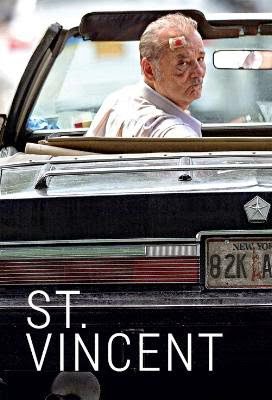
Warning: This piece may contain spoilers for the movie, St. Vincent.
He was something out of a Flannery O’Connor novel.
Disheveled, semi-drunk and shuffling around a dilapidated Brooklyn house with a broken fence and dirt yard, Vincent “Vince” MacKenna (played by Bill Murray) was no one’s idea of a saint. No one’s. His regular company included a pregnant Russian prostitute. His familiar haunts were the bar and the racetrack.
And his least likely vocation?
Saint.
And yet, that is the position in which he found himself in Theodore Melfi’s 2014 film, St. Vincent.
Vince didn’t like them from the start. A single mother, Maggie Bronstein (played by Melissa McCarthy), and her twelve year-old son, Oliver (played by Jaeden Lieberher), made their inauspicious new neighbor introduction to Vince when their movers inadvertently damaged Vince’s tree and car in an unfortunate accident. Stressed over an unfamiliar neighborhood, recent marital separation and growing financial strains, Maggie hoped her relationship with her neighbor could be civil, if not warm. Vince, ever the curmudgeon, proved less than civil. He simply wanted his money. And to be left alone.
But that was not to be.
Maggie’s son, Oliver, was the new kid at a Brooklyn Catholic school and soon found himself bullied. Within days of starting school, he was robbed of his school uniform and forced to spend the day in school-issued gym attire. To compound his misery, he arrived home only to find a locked door and empty house. Mom was working late. With few options, he anxiously knocked on the door of his neighbor, Vince. Exasperated, Vince allows Oliver into his home to call his mother who reluctantly implores Vince to watch Oliver until she gets home. Vince agrees…for a price. His constant refrain seems to be What’s in it for me?
But that would soon change.
With Maggie’s increasingly demanding job, Oliver finds himself at Vince’s house every day after school where his true education would begin forthwith. While self-disciplined to finish his homework without any prodding, Vince would soon provide Oliver with a street education including the fine art of breaking a bully’s nose, a nuanced approach to gambling on horse races and the adult way to toss back a Coca-Cola from a vodka tumbler. Oliver, deprived of a steady father and a present mother, finds himself warming to this rough guide. Though he shows himself a willing student of the raw side of life, Oliver never fails to punctuate his sentences with ‘sir’ or ‘ma’am’. His civility is unhampered by his growing confidence.
Now, one might be tempted to call this storyline a tired formula of the unlikely mentor, a construct well-rehearsed in Finding Forrester, Scent of a Woman or Gran Torino. But I would offer this rebuttal. Vincent MacKenna’s character achieves a complexity that may speak a bit more eloquently to the notion of sainthood. You see, amidst the seedy haunts that Vince frequents with Oliver is an unlikely upscale long term care facility. Vince, for once uncharacteristically charming and affable, is on a first name basis with employees, picks up a bag of clothes which he will routinely launder and mysteriously dons a physician’s coat and stethoscope. Before long, sitting before a beautiful woman in her sixties, Vince is impersonating a doctor. He examines this woman. And he smiles naturally. So naturally. And then. And then, he gently and gingerly concludes with dancing eyes,
“Well, as near as I can tell, you’re still beautiful.”
She smiles, she blushes, she leans in and then pulls away – uncertain. In Vince, we see…a softness. A sincerity. A sweetness that utterly stops you short. It is so out of character. So unexpected. And yet, here it is.
Who is..? Why would…?
It soon becomes clear.
His wife. This is his wife. Afflicted with dementia.
And the playful sweetness – the profound love he still clutches – is so completely told by the deeply anguished lines that emerge on Vince’s face. A grievous wince, a straining brow and a held breath all keep the welled tears in place when his wife – warming up to him for the slightest moment – withdraws again. She pulls away her hand. She averts her gaze. Who is this stranger, her reaction says. He is a stranger.
I’m not, his eyes say – his eyes implore. I’m the man who loves you. Endlessly.
Away he walks, with a sack of his wife’s laundry (a weekly honor to wash). And before he leaves, he makes one last remembered request of the aide. It is the smallest detail yet so, so vital…because it came from his wife: “She don’t like green beans.” It will be taken care of, he is assured. It needs to be taken care of. After all, it is the most important request of his week.
This is where I saw the deep Catholic narrative of St. Vincent.
There on the screen I saw a rough, crude failure juxtaposed with a soft, sensitive and desperately hopeful man. It was a stark contrast of seemingly irretrievable fallibility with ineradicable dignity. All in the same man.
You see, without question, Vince MacKenna, was fallen. Deeply, deeply flawed. Married, but comforted by a prostitute. An inebriate and a gambler. Crude and self-centered. Could there be anything redeemable in this man?
The World says no.
But God says yes.
And the director and writers of St. Vincent get this.
Because this disheveled, semi-drunk, shuffling failure was present for a kid at risk, loved a woman who no longer remembered him, supported (emotionally and financially) a pregnant cast-off prostitute, spoke necessary (if sometimes, harsh) truths to a struggling mother, and (we learn) served his country and fellow soldiers nobly and courageously in an long forgotten war. Was Vince a sinner? Without question. Was he in need of reform and repentance? Yes. But was he redeemable? Absolutely.
In watching St. Vincent, I started to wonder. What was St. Peter like when confronted with Christ’s call to be better than he was? And then I realized: There’s no need to wonder. We know.
When Simon Peter saw [the strained nets from the Christ’s miraculous catch of fish], he fell at the knees of Jesus and said, “Depart from me, Lord, for I am a sinful man.”
– Luke 5:8
And yet, the Lord never departs. He takes us by the hand and shows us a better way. It is the story of all saints. They are not perfect. They just find a way to answer the call to be better. A saint never stops being a sinner. They just try harder not to be one.
The broken man, Vince – broken still – tries a bit harder to be less broken.
Wow.
Now understandably, Vince MacKenna doesn’t fit the perfect example of a Catholic saint. Nor would I reason otherwise.
But as the credits rolled, I saw the slovenly Vince sitting in a half broken lawn chair, leaning against his house, fishing in the soil of a flower pot for a cigarette. And as he lights it, he absently (and tunelessly) sings Bob Dylan’s Shelter From the Storm. From its first stanza,
‘Twas in another lifetime, one of toil and blood
When blackness was a virtue the road was full of mud
I came in from the wilderness, a creature void of form
Come in, she said
I’ll give ya shelter from the storm
to its last,
Well, I’m livin’ in a foreign country but I’m bound to cross the line
Beauty walks a razor’s edge, someday I’ll make it mine
If I could only turn back the clock to when God and her were born
Come in, she said
I’ll give ya shelter from the storm
He sang a song about seeking shelter from the storm. And in some ways, paradoxically, this unlikely figure in turn gave a little shelter too. As he sang Dylan’s song, he was off key. Quite off-key.
But do you know something?
Though he was off-key, he still knew the tune.
——————————–
Image Credit: Official Movie Poster of St. Vincent
Previous Post

August 10, 2015
All of Chesterton's Children
Next Post
August 23, 2015 "There Is A God, and, I'm Not Him." - Thoughts On God & Anxiety
Browse Our Archives
Select a Category A Catholic Thinker's Story Uncategorized
Select a Month March 2017 February 2017 December 2016 November 2016 October 2016 September 2016 August 2016 July 2016 June 2016 May 2016 April 2016 March 2016 February 2016 January 2016 December 2015 November 2015 October 2015 September 2015 August 2015 July 2015 June 2015 May 2015 April 2015 March 2015 February 2015 January 2015 December 2014 November 2014 October 2014 September 2014 August 2014 July 2014 June 2014 May 2014 April 2014 March 2014 February 2014 January 2014 December 2013 November 2013 October 2013 September 2013 July 2013 June 2013 May 2013 April 2013 March 2013 February 2013 January 2013 December 2012 November 2012 October 2012 September 2012 August 2012 July 2012
Follow Us!
TAKE THE
Religious Wisdom Quiz
Who doubted Jesus' resurrection until he saw His wounds?
Select your answer to see how you score.
Peter James Thomas Philip
Related posts from A Catholic Thinker

"Something Absolutely Modern" - The Insincere Convert from...

Textualism vs. The Living Constitution: Justice Scalia, Judge...

Memento Mori: Hope In a Year Heavy With...

Advent: The Greatest Resistance Story of All Time
TRENDING AT PATHEOS Catholic

Rejecting Doom: Christian Hope And Human Action
Christianity is a religion of hope. We are to have hope and...

It’s What Comes From Within Which Matters
One of the most difficult things for us to understand is why...

Why I Choose the Eucharist Over the Sermon
Choose the Eucharist, Not the Sermon What are we supposed to get...

5 Design Elements Found in Spiritually Rooted Homes
Putting Spirituality Into Home Decor Our homes are more than our living...

Credo: A Story of God Told with the...
About 10 years ago, I began to imagine a personal "Credo" that...

The Anatomy of Divine Revelation in Catholic Thought
The claim that God has made Himself known to human beings is...
view all Catholic blogs
Ad-Free & Subscriber Log-In Subscription Support
- About Us
- 2026 Calendar
- Videos
- Podcasts
- Library of World Religions
- Faith In Media Tracker
- Advertise With Us
- Write for Us
- Privacy Policy
- Terms of Service
- Do Not Sell My Data
- Contact Us
- Radiant Digital
- Manage Newsletter Subscriptions
- Unsubscribe From Notifications
- Sitemap
Copyright 2008-2026, Patheos. All rights reserved.
Subscription Support Ad-Free & Subscriber Log-In
Follow Patheos