
BuddhistCatholicContemplativeEvangelicalGeneral ChristianHinduJewishLatter-day SaintMuslimNew VisionsProgressive Christian
Beliefs
- Buddhist
- Catholic
- Contemplative
- Evangelical
- General Christian
- Hindu
- Jewish
- Latter-day Saint
- More Voices
- Muslim
- New Visions
- Pagan
- Progressive Christian
Topics
- Religion News
- Food and Religion
- Sports and Religion
- Religious Art
- Religious Music and Entertainment
- Religious Events
- History and Religion
- Style and Religion
- Politics and Religion
- Women in Religion
- Recreation Outdoors and Religion
- Business Finance and Religion
- Careers Workplace and Religion
- Education and Religion
- Family Parenting and Religion
- Health Fitness and Religion
- Home and Religion
- Relationships and Religion
- Technology and Religion
- Travel and Religion
Columnists
- Buddhist Columnists
- Business Finance and Religion Columnists
- Careers Workplace and Religion Columnists
- Catholic Columnists
- Contemplative Columnists
- Education and Religion Columnists
- Evangelists Columnists
- Family Parenting and Religion Columnists
- General Christian Columnists
- Health Fitness and Religion Columnists
- Hindu Columnists
- History and Religion Columnists
- Home and Religion Columnists
- Jewish Columnists
- More Voices Columnists
- Latter Day Columnists
- Muslim Columnists
- New Visions Columnists
- Nonreligious Columnists
- Pagan Columnists
- Politics and Religion Columnists
- Progressive Columnists
- Recreation Outdoors and Religion Columnists
- Relationships and Religion Columnists
- Religion News Columnists
- Religious Art Columnists
- Religious Events Columnists
- Religious Music and Entertainment Columnists
- Sports and Religion Columnists
- Style and Religion Columnists
- Technology and Religion Columnists
- Travel and Religion Columnists
- Women in Religion Columnists
Resource Library
- 2026 Calendar
- Library of World Religions
- The 100 Most Holy Places on Earth
- Patheos Answers
- Podcasts
- Videos
- Faith Leaders Database
- Anglican Episcopalian
- Bahai
- Baptist
- Buddhism
- Christianity
- Confucianism
- Eastern Orthodoxy
- Hinduism
- Holiness and Pentecostal
- ISKCON
- Islam
- Judaism
- Lutheran
- Methodist
- The Church of Jesus Christ of Latter-day Saints
- New Age
- Paganism
- Presbytarian and Reformed
- Protestantism
- Religion Behind the Scenes
- Roman Catholic
- Scientology
- Shia Islam
- Sikhism
- Sufism
- Sunni Islam
- Taoism
- Zen
- See all religions
Research Tools
 Ad-Free & Subscriber Log-In Subscription Support
Ad-Free & Subscriber Log-In Subscription Support
Follow Patheos 

- Trending:
- Forgiveness
- |
- Marriage
- |
- Consciousness
- |
- Death Penalty
- |
- Election
- |
- Halloween
 A Catholic Thinker
- Home
- Catholic
- I Am a Vulgar Man
I Am a Vulgar Man
Last updated on: February 14, 2015 at 11:27 pm by Tod Worner
I Am a Vulgar Man 2015-02-14T23:27:26-06:00 Tod Worner
Patheos Explore the world's faith through different perspectives on religion and spirituality! Patheos has the views of the prevalent religions and spiritualities of the world.
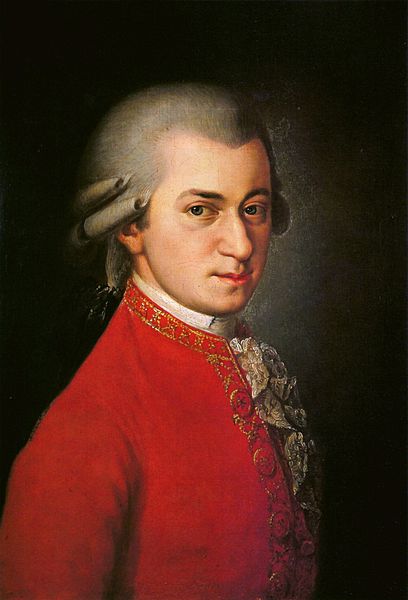
It was a masterpiece and it was his secret. Until this moment. In the 1984 film Amadeus, Wolfgang Amadeus Mozart found himself suddenly and unexpectedly in the presence of the Holy Roman Emperor Joseph II and his court. The Emperor leveled his eyes at the young composer and the following exchange ensued,
EMPEROR JOSEPH II
Mozart, are you aware I have declared
the French play of Figaro unsuitable
for our theatre?MOZART
Yes, Sire.EMPEROR JOSEPH II
Yet we hear you are making an opera
from it. Is this true?MOZART
Who told you this, Majesty?
Mozart was frantic…and irate. This opera – perhaps the greatest opera he would ever devise – had been leaked maliciously by an enemy. And this treachery was further compounded since it was the Emperor who revealed it to him. The French comedy, The Marriage of Figaro, had been banned for fear that it would incite class hatred. Under the glaring eyes of the Emperor and the haughty smirks of his court, Mozart stumbled and stammered working quickly to defend this work of beauty against royal dictate and devious sabotage. In spite of Mozart’s earnest assurances that the opera was apolitical and a “frolic”, the Emperor and his court grew impatient. As did Mozart.
MOZART (testily responding to a court member)
Come on
now, be honest. Wouldn’t you all
rather listen to your hairdressers
than Hercules? Or Horatius? Or
Orpheus? All those old bores! people
so lofty they sound as if they shit
marble!VON SWIETEN (court member)
What?VON STRACK (court member)
Govern your tongue, sir! How dare
you?Beat. All look at the Emperor.
MOZART
Forgive me, Majesty. I’m a vulgar
man. But I assure you, my music is
not.
I’m a vulgar man. But I assure you, my music is not. When watching Amadeus, the cackling, impudent and oversexed Mozart seems strikingly unfit to be capable of creating such utterly sublime music. And yet he did.
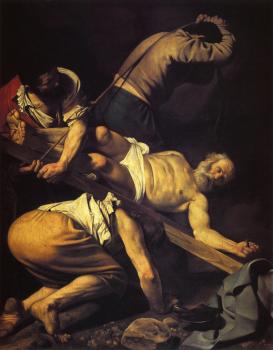
St. Peter was called from his fishing nets and the briny sea to follow Christ through the hills of Israel. One can only imagine the innumerable truths Peter heard and miracles he witnessed that escape record in the four Gospels. He was called the Rock, told that the Church to be built upon him would never be overcome and that whatever he bound and loosed on earth would be likewise bound and loosed in heaven. And yet, Peter was also called Satan, corrected for his short-sightedness and indiscipline and accused of betraying his Christ not once, but three times in one night. Assuredly, mercy and grace would wash away Peter’s sins and he would live faithfully and die heroically. As it were, Peter was a vulgar man in the original form of the word – common, unrefined, belonging to the masses – , but his message was not.
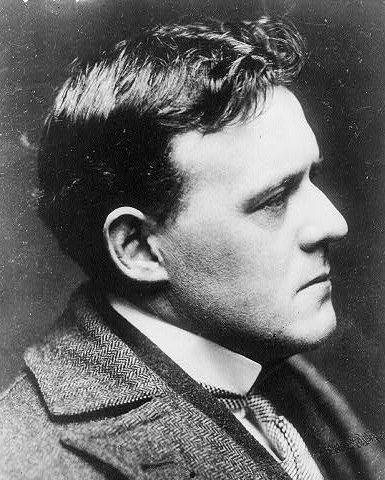
Hilaire Belloc rarely minced words. French by birth, this passionate English Catholic was deeply faithful and notably without guile. In trying to grapple with the human administration of a divine Church, Belloc spouted,
“The Catholic Church is an institution I am bound to hold divine — but for unbelievers a proof of its divinity might be found in the fact that no merely human institution conducted with such knavish imbecility would have lasted a fortnight.”
And yet when his closest friend G.K. Chesterton was received into the Church, Belloc unreservedly declared,
“The thing I have to say is this…The Catholic Church is the exponent of REALITY. It is true. Its doctrines in matters large and small are statements of what is… My conclusion – and that of all men who have ever once SEEN it – is the faith.”
The Church is filled with popes, priests and parishioners who daily seek repentance and rely wholly on the steadfast Grace of God. And while it has become a delicious pastime to relish the doctrinal disputes and rank hypocrisies, the synod squabbles and the scandalous statements, this should come as no surprise. After all, like Mozart, St. Peter, Belloc and the entirety of the Church, we are all vulgar (in the larger sense of the word) – common and unrefined, sinners and hypocrites…but our Faith is not. Weak practitioners do not make an imperfect Faith. It simply means we are imperfect. Vulgar.
There are three truths (among many) that I have considered again and again since entering the Church. First, that man is fallible. Second, that man is redeemable. And, third, that man is dependent on the Grace of God to be lifted from the first state to the second. So often it seems we wallow in the first truth and sadly forget about the other two.
So I have a confession to make.
I am a vulgar man. Yes. Yes I am.
But I assure you – I assure you – my Faith is not.
—————————–
Photo Credits: Wolfgang Amadeus Mozart, Caravaggio’s Crucifixion of St. Peter, Hilaire Belloc


Previous Post

February 5, 2015
"So Very Precious": How I Rediscovered the Eucharist
Next Post
February 26, 2015 All I Aspire To This Lent I Learned From a Saint & a Twelve-Year Old
Browse Our Archives
Select a Category A Catholic Thinker's Story Uncategorized
Select a Month March 2017 February 2017 December 2016 November 2016 October 2016 September 2016 August 2016 July 2016 June 2016 May 2016 April 2016 March 2016 February 2016 January 2016 December 2015 November 2015 October 2015 September 2015 August 2015 July 2015 June 2015 May 2015 April 2015 March 2015 February 2015 January 2015 December 2014 November 2014 October 2014 September 2014 August 2014 July 2014 June 2014 May 2014 April 2014 March 2014 February 2014 January 2014 December 2013 November 2013 October 2013 September 2013 July 2013 June 2013 May 2013 April 2013 March 2013 February 2013 January 2013 December 2012 November 2012 October 2012 September 2012 August 2012 July 2012
Follow Us!
TAKE THE
Religious Wisdom Quiz
Which woman was the judge and prophetess who led Israel?
Select your answer to see how you score.
Miriam Esther Jael Deborah
Related posts from A Catholic Thinker

"Something Absolutely Modern" - The Insincere Convert from...

Textualism vs. The Living Constitution: Justice Scalia, Judge...

Memento Mori: Hope In a Year Heavy With...

Advent: The Greatest Resistance Story of All Time
TRENDING AT PATHEOS Catholic

Rejecting Doom: Christian Hope And Human Action
Christianity is a religion of hope. We are to have hope and...

It’s What Comes From Within Which Matters
One of the most difficult things for us to understand is why...

Why I Choose the Eucharist Over the Sermon
Choose the Eucharist, Not the Sermon What are we supposed to get...

5 Design Elements Found in Spiritually Rooted Homes
Putting Spirituality Into Home Decor Our homes are more than our living...

Credo: A Story of God Told with the...
About 10 years ago, I began to imagine a personal "Credo" that...

The Anatomy of Divine Revelation in Catholic Thought
The claim that God has made Himself known to human beings is...
view all Catholic blogs
Ad-Free & Subscriber Log-In Subscription Support
- About Us
- 2026 Calendar
- Videos
- Podcasts
- Library of World Religions
- Faith In Media Tracker
- Advertise With Us
- Write for Us
- Privacy Policy
- Terms of Service
- Do Not Sell My Data
- Contact Us
- Radiant Digital
- Manage Newsletter Subscriptions
- Unsubscribe From Notifications
- Sitemap
Copyright 2008-2026, Patheos. All rights reserved.
Subscription Support Ad-Free & Subscriber Log-In
Follow Patheos