
BuddhistCatholicContemplativeEvangelicalGeneral ChristianHinduJewishLatter-day SaintMuslimNew VisionsProgressive Christian
Beliefs
- Buddhist
- Catholic
- Contemplative
- Evangelical
- General Christian
- Hindu
- Jewish
- Latter-day Saint
- More Voices
- Muslim
- New Visions
- Pagan
- Progressive Christian
Topics
- Religion News
- Food and Religion
- Sports and Religion
- Religious Art
- Religious Music and Entertainment
- Religious Events
- History and Religion
- Style and Religion
- Politics and Religion
- Women in Religion
- Recreation Outdoors and Religion
- Business Finance and Religion
- Careers Workplace and Religion
- Education and Religion
- Family Parenting and Religion
- Health Fitness and Religion
- Home and Religion
- Relationships and Religion
- Technology and Religion
- Travel and Religion
Columnists
- Buddhist Columnists
- Business Finance and Religion Columnists
- Careers Workplace and Religion Columnists
- Catholic Columnists
- Contemplative Columnists
- Education and Religion Columnists
- Evangelists Columnists
- Family Parenting and Religion Columnists
- General Christian Columnists
- Health Fitness and Religion Columnists
- Hindu Columnists
- History and Religion Columnists
- Home and Religion Columnists
- Jewish Columnists
- More Voices Columnists
- Latter Day Columnists
- Muslim Columnists
- New Visions Columnists
- Nonreligious Columnists
- Pagan Columnists
- Politics and Religion Columnists
- Progressive Columnists
- Recreation Outdoors and Religion Columnists
- Relationships and Religion Columnists
- Religion News Columnists
- Religious Art Columnists
- Religious Events Columnists
- Religious Music and Entertainment Columnists
- Sports and Religion Columnists
- Style and Religion Columnists
- Technology and Religion Columnists
- Travel and Religion Columnists
- Women in Religion Columnists
Resource Library
- 2026 Calendar
- Library of World Religions
- The 100 Most Holy Places on Earth
- Patheos Answers
- Podcasts
- Videos
- Faith Leaders Database
- Anglican Episcopalian
- Bahai
- Baptist
- Buddhism
- Christianity
- Confucianism
- Eastern Orthodoxy
- Hinduism
- Holiness and Pentecostal
- ISKCON
- Islam
- Judaism
- Lutheran
- Methodist
- The Church of Jesus Christ of Latter-day Saints
- New Age
- Paganism
- Presbytarian and Reformed
- Protestantism
- Religion Behind the Scenes
- Roman Catholic
- Scientology
- Shia Islam
- Sikhism
- Sufism
- Sunni Islam
- Taoism
- Zen
- See all religions
Research Tools
 Ad-Free & Subscriber Log-In Subscription Support
Ad-Free & Subscriber Log-In Subscription Support
Follow Patheos 

- Trending:
- Forgiveness
- |
- Marriage
- |
- Consciousness
- |
- Death Penalty
- |
- Election
- |
- Halloween
 A Catholic Thinker
- Home
- Catholic
- I Have a Confession to Make
I Have a Confession to Make
Last updated on: December 31, 2014 at 8:38 am by Tod Worner
I Have a Confession to Make 2014-12-31T08:38:09-06:00 Tod Worner
Patheos Explore the world's faith through different perspectives on religion and spirituality! Patheos has the views of the prevalent religions and spiritualities of the world.
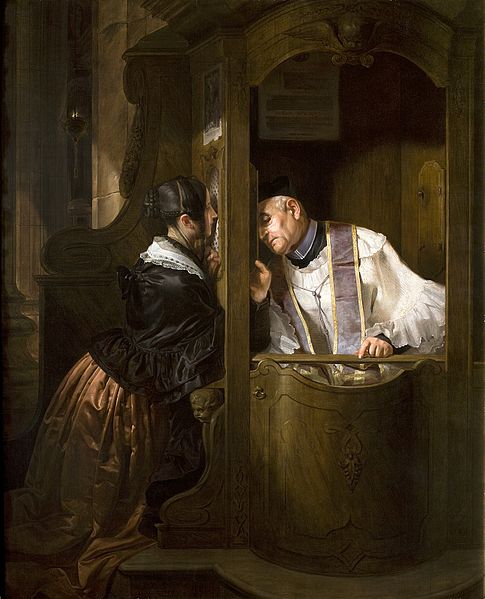

I have a confession to make.
Years ago, before I converted to Catholicism, I harbored suspicion about the Catholic Sacrament of Confession (also known as the Sacrament of Reconciliation). Now, let me be clear. As a Lutheran, I always believed in the importance of praying to God and asking for the forgiveness of my sins. That was simply “part of the Christian deal”. God created us, loves us and passionately wants a relationship with us. Unfortunately, we screwed up that relationship in the beginning and continue to screw it up. As a result, we separated ourselves from God and are dependent on his loving Grace to be reconciled to him. Yet, to achieve that reconciliation, we needed to approach him, admit our sin, demonstrate our contrition and ask for forgiveness. In sum, to heal the rift between God and us, we must repent. This seems simple enough. So why, I sniffed, do we need priests, confessionals, examinations of conscience, terms like venial and mortal sins, and the horrific penance? Is this a “power thing”? Is it an empty attempt at bureaucratization of my relationship with God? Is it an effort to impose that infamous Catholic guilt over a process that should bring release and joy?
Over many years, these self-satisfied musings kept me warm and smug in my debates with my Catholic wife. I was right, I insisted. Why couldn’t she see that? *Sigh* But time would pass and slowly, imperceptibly something changed. I began to think about how I confess my sins. And ,to be honest, here’s the bombshell: I’m not very good at it. I’m lazy. I’m imprecise. I’m rationalizing. I’m irregular.
So here is what I learned from the Catholic Church about the Sacrament of Confession.
1) We must understand WHY we need to confess:
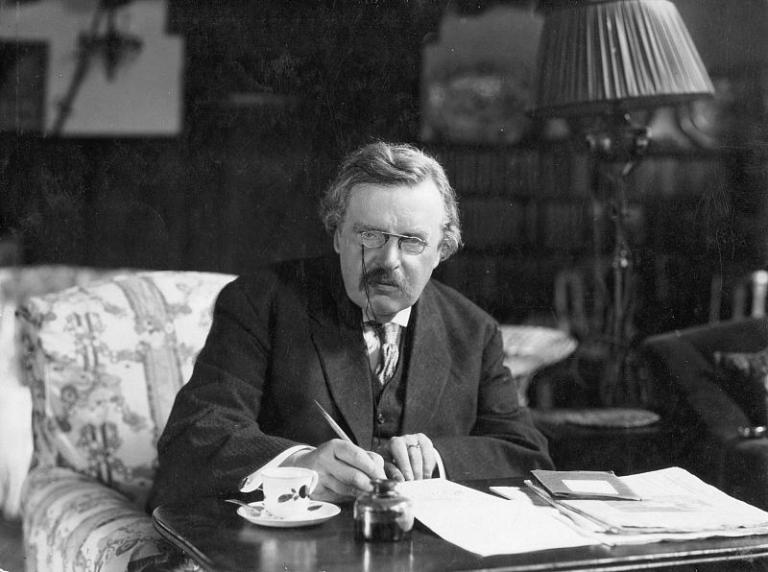

G.K. Chesterton, the incomparable British journalist, author and Catholic apologist, helped me think anew about Confession. After his long road to Catholic conversion, Chesterton quite simply responded to the haughty opinion makers who scolded that Confession was morbid.
“The morbid thing is NOT to confess [your sins]. The morbid thing is to conceal your sins and let them eat away at your soul, which is exactly the state of most people in today’s highly civilized communities.”
To be brief, we need Confession to be made whole again.
—————–
2) We must understand WHAT we are confessing:
When I first encountered the Examination of Conscience, I was shocked. I realized what an amateur I was at seriously and honestly considering my sin. For years, I would perform a cursory survey of my actions over the recent days and then ask God to forgive me. However, the effort was half-hearted because my sins were conveniently vague and increasingly lost in the ether of time and lazy memory. The Examination of Conscience based on the Ten Commandments, the Beatitudes or Catholic Social Teaching seriously called me to account with pointed questions that closed loopholes, illuminated dark corners and rebutted my best excuses. The distinction between mortal and venial sins helped me to consider the depths of offense to God and the gravity with which I must choose aright in my daily decisions. And to confess to a priest asked me to be accountable, to be precise and to be prepared for words of much-needed correction along with words of absolution. The key, I have learned, is that we all need to be brutally honest about our sin so that we can empty ourselves, be open to God’s Grace and strive to correct our future course with God’s deep and abiding mercy.
In Fyodor Dostoevsky’s The Brothers Karamazov, the wisdom that the elder monk, Zosima, would impart to two supplicants speaks eloquently to the spirit necessary for the Examination of Conscience prior to the Sacrament of Confession,
“Above all, stop lying…The important thing is to stop lying to yourself. A man who lies to himself, and believes his own lies, becomes unable to recognize truth, either in himself or in anyone else, and he ends up losing respect for himself as well as for others.”
—————–
3) We must understand HOW we are changed by confessing.
In the Robert Bolt’s play (and subsequent movie), The Mission, Rodrigo Mendozo (played by Robert De Niro) is a malicious slave-trader and mercenary who finds himself in the blackest depression. Having spent his life ruthlessly kidnapping and enslaving South American native tribesmen and ultimately killing his half-brother in a jealousy-inspired duel, Mendozo confesses his sin to a Jesuit priest/missionary, Fr. Gabriel. Fr. Gabriel encourages Mendozo to adopt an appropriate penance. In one of the most stirring scenes from the film, Mendozo has wrapped himself with coarse, thick rope enabling him to drag a netted mass of swords and armor – the very instruments of his sin – through the unforgiving South American jungle. Bloodied, exhausted and emotionally broken after brutal jungle distances, Mendozo collapses and weeps with bitterness. But his bitter tears soon give way to joy as the very natives he had hunted so viciously cut his rope off and shower him with incomprehensible kindness and mercy. A grace of sorts, if you will.
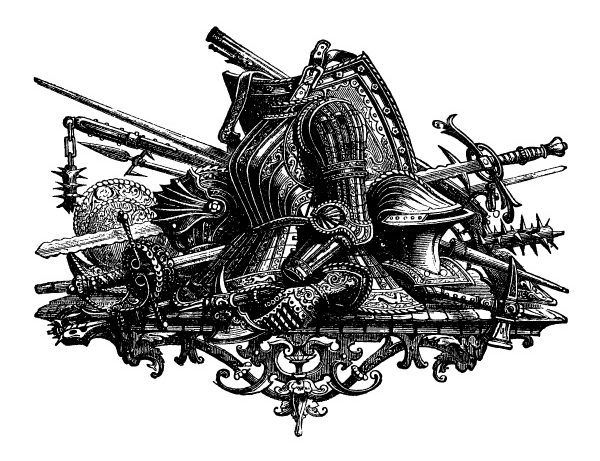
By naming our sin, but moreover recognizing the bitter offense it has inflicted upon our all-loving Father and our neighbors, we must honestly grapple with the gravity of our act and hunger – yearn – to make amends. By confessing our sins, we empty ourselves of darkness and open ourselves to light. God’s Grace absolves us. But our penance is our insufficient, but mindful attempt to honor this absolution and hold fast to a lesson that hopefully will correct our future ways.
—————–
4) We must be GRATEFUL for what confessing brings us.
In the 1930s and 40s, Pastor Dietrich Bonhoeffer courageously defied Adolf Hitler and the wickedness of National Socialism. At the root of his rebellion was his Christian Faith. While Bonhoeffer would die a martyr in a concentration camp, it was not without imparting deep wisdom to those hungering for truth. We are saved not by our own efforts, he reminded us, but by God’s magnificent Grace manifested by his bloody death on a cross. And while we cannot earn Grace, we can live a life spirited by unending gratitude for a debt we can never repay. Honest Confession embraces and lives in awe of “costly grace”. We should beware, Bonhoeffer warned, the siren song of “cheap grace”.
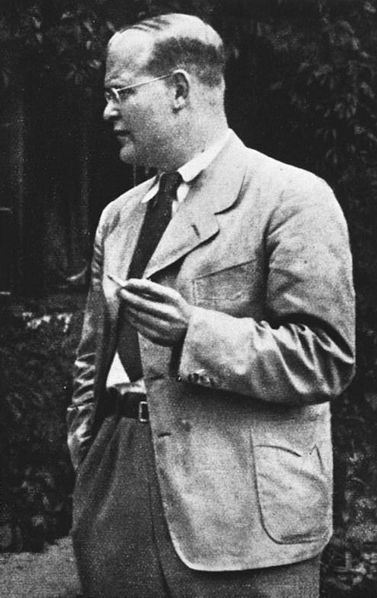
“Cheap grace is the grace we bestow on ourselves. Cheap grace is the preaching of forgiveness without requiring repentance, baptism without church discipline, Communion without confession…Cheap grace is grace without discipleship, grace without the cross, grace without Jesus Christ, living and incarnate.”

Why should I go to Confession? What, truly, are my sins? How will Confession change me? How can I show my thanks? Well, what do you know? I guess the Catholic Church offered good answers to these questions after all…
Now, if you’ll excuse me.
I have a Confession to make.
Previous Post
December 24, 2014
Christ Child (A Poem for Christmas)
Next Post

January 15, 2015 What I Learned from Romano Guardini & Jesus Christ Superstar
Browse Our Archives
Select a Category A Catholic Thinker's Story Uncategorized
Select a Month March 2017 February 2017 December 2016 November 2016 October 2016 September 2016 August 2016 July 2016 June 2016 May 2016 April 2016 March 2016 February 2016 January 2016 December 2015 November 2015 October 2015 September 2015 August 2015 July 2015 June 2015 May 2015 April 2015 March 2015 February 2015 January 2015 December 2014 November 2014 October 2014 September 2014 August 2014 July 2014 June 2014 May 2014 April 2014 March 2014 February 2014 January 2014 December 2013 November 2013 October 2013 September 2013 July 2013 June 2013 May 2013 April 2013 March 2013 February 2013 January 2013 December 2012 November 2012 October 2012 September 2012 August 2012 July 2012
Follow Us!
TAKE THE
Religious Wisdom Quiz
In the Parable of the Prodigal Son, what did the younger son demand?
Select your answer to see how you score.
The best robe A feast Forgiveness His inheritance
Related posts from A Catholic Thinker

"Something Absolutely Modern" - The Insincere Convert from...

Textualism vs. The Living Constitution: Justice Scalia, Judge...

Memento Mori: Hope In a Year Heavy With...

Advent: The Greatest Resistance Story of All Time
TRENDING AT PATHEOS Catholic

Rejecting Doom: Christian Hope And Human Action
Christianity is a religion of hope. We are to have hope and...

It’s What Comes From Within Which Matters
One of the most difficult things for us to understand is why...

Why I Choose the Eucharist Over the Sermon
Choose the Eucharist, Not the Sermon What are we supposed to get...

5 Design Elements Found in Spiritually Rooted Homes
Putting Spirituality Into Home Decor Our homes are more than our living...

Credo: A Story of God Told with the...
About 10 years ago, I began to imagine a personal "Credo" that...

The Anatomy of Divine Revelation in Catholic Thought
The claim that God has made Himself known to human beings is...
view all Catholic blogs
Ad-Free & Subscriber Log-In Subscription Support
- About Us
- 2026 Calendar
- Videos
- Podcasts
- Library of World Religions
- Faith In Media Tracker
- Advertise With Us
- Write for Us
- Privacy Policy
- Terms of Service
- Do Not Sell My Data
- Contact Us
- Radiant Digital
- Manage Newsletter Subscriptions
- Unsubscribe From Notifications
- Sitemap
Copyright 2008-2026, Patheos. All rights reserved.
Subscription Support Ad-Free & Subscriber Log-In
Follow Patheos