
BuddhistCatholicContemplativeEvangelicalGeneral ChristianHinduJewishLatter-day SaintMuslimNew VisionsProgressive Christian
Beliefs
- Buddhist
- Catholic
- Contemplative
- Evangelical
- General Christian
- Hindu
- Jewish
- Latter-day Saint
- More Voices
- Muslim
- New Visions
- Pagan
- Progressive Christian
Topics
- Religion News
- Food and Religion
- Sports and Religion
- Religious Art
- Religious Music and Entertainment
- Religious Events
- History and Religion
- Style and Religion
- Politics and Religion
- Women in Religion
- Recreation Outdoors and Religion
- Business Finance and Religion
- Careers Workplace and Religion
- Education and Religion
- Family Parenting and Religion
- Health Fitness and Religion
- Home and Religion
- Relationships and Religion
- Technology and Religion
- Travel and Religion
Columnists
- Buddhist Columnists
- Business Finance and Religion Columnists
- Careers Workplace and Religion Columnists
- Catholic Columnists
- Contemplative Columnists
- Education and Religion Columnists
- Evangelists Columnists
- Family Parenting and Religion Columnists
- General Christian Columnists
- Health Fitness and Religion Columnists
- Hindu Columnists
- History and Religion Columnists
- Home and Religion Columnists
- Jewish Columnists
- More Voices Columnists
- Latter Day Columnists
- Muslim Columnists
- New Visions Columnists
- Nonreligious Columnists
- Pagan Columnists
- Politics and Religion Columnists
- Progressive Columnists
- Recreation Outdoors and Religion Columnists
- Relationships and Religion Columnists
- Religion News Columnists
- Religious Art Columnists
- Religious Events Columnists
- Religious Music and Entertainment Columnists
- Sports and Religion Columnists
- Style and Religion Columnists
- Technology and Religion Columnists
- Travel and Religion Columnists
- Women in Religion Columnists
Resource Library
- 2026 Calendar
- Library of World Religions
- The 100 Most Holy Places on Earth
- Patheos Answers
- Podcasts
- Videos
- Faith Leaders Database
- Anglican Episcopalian
- Bahai
- Baptist
- Buddhism
- Christianity
- Confucianism
- Eastern Orthodoxy
- Hinduism
- Holiness and Pentecostal
- ISKCON
- Islam
- Judaism
- Lutheran
- Methodist
- The Church of Jesus Christ of Latter-day Saints
- New Age
- Paganism
- Presbytarian and Reformed
- Protestantism
- Religion Behind the Scenes
- Roman Catholic
- Scientology
- Shia Islam
- Sikhism
- Sufism
- Sunni Islam
- Taoism
- Zen
- See all religions
Research Tools
 Ad-Free & Subscriber Log-In Subscription Support
Ad-Free & Subscriber Log-In Subscription Support
Follow Patheos 

- Trending:
- Forgiveness
- |
- Marriage
- |
- Consciousness
- |
- Death Penalty
- |
- Election
- |
- Halloween
 3 Pagans and a Cat
- Home
- Pagan
- Green Witch Plant Profile: Rosemary For Food, Health, And Magick
Green Witch Plant Profile: Rosemary For Food, Health, And Magick
Last updated on: April 20, 2020 at 1:28 pm by Gwyn
Green Witch Plant Profile: Rosemary For Food, Health, And Magick 2020-04-20T13:28:49-04:00 Gwyn
Patheos Explore the world's faith through different perspectives on religion and spirituality! Patheos has the views of the prevalent religions and spiritualities of the world.
Rosemary is one of my favorite plants to grow and with which to work. Years ago, it is the first plant I chose when venturing into growing herbs. And because of continued success experienced with rosemary, I recommend this plant for beginning container gardeners because it is hardy when treated well. So, allow me to share some information with you about rosemary and how you can partner with this beautiful plant.
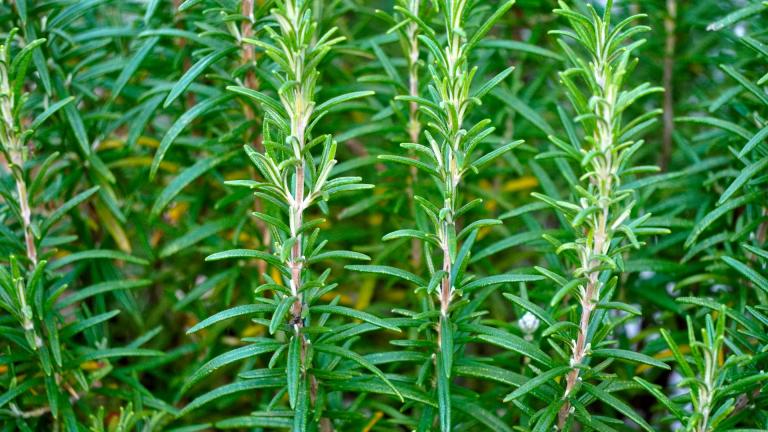
Image by MatthiasBoeckel via pixabay.com
Rosemary: What You Need To Know To Grow
Known as Salvia rosmarinus*,* this plant is recognized as an herbaceous evergreen. The plant has leaves that are needle-shaped with a white band underneath and can have white, blue, or pink blossoms when it flowers. Rosemary is part of the Lamiaceae family of plants which includes oregano, thyme, basil, and lavender.
Rosemary is perennial which means it can live for more than one season. While its place of origin is the Mediterranean, it can grow well in colder places such as the Mid-Western United States. And while it can grow outside in places like Michigan (where I live), growing rosemary in a container makes it easier to bring the plant indoors when it gets cold.
You can grow rosemary from seed but, it is challenging. It’s better to grow additional plants from established cuttings. Here is how you do it:
- With a pair of scissors, cut a two or three-inch stem from soft or new growth, removing the leaves from the bottom two-thirds of the stem.
- Place the stem in a container with potting soil such as Miracle-Gro. Be sure the pot drains well.
- Cover the pot with a plastic bag and place it in a shady spot with indirect sunlight.
- When you see new growth, transplant the rosemary into a new location (either outdoors or a larger pot) with full sun.
Other growing instructions include:
Rosemary needs to have full sun for at least 6-8 hours a day. Be sure to keep it in a pot that can drain well. This plant does not like “wet feet.” When brought indoors for Winter, rosemary prefers a cooler spot with plenty of sunshine.
If the leaf tips turn brown, mist the plant and avoid over-watering. Rather, keep the soil on the drier side and water once a week. Don’t be alarmed if it doesn’t grow much. That’s normal when rosemary is “wintering.”
If you plant outdoors, keep rosemary in a sunny garden or hedge-row, where it will grow 4 – 6 feet tall. The plants can be pruned into shapes as with any decorative shrub. The beauty is that while it is woody in the way of most fir-like evergreens, its earthy scent (with a camphor element) discourages pests and its leaves can be used for culinary, medicinal, and magickal purposes.
Harvesting
Leaves and sprigs can be cut from the plant with scissors throughout the growing season.
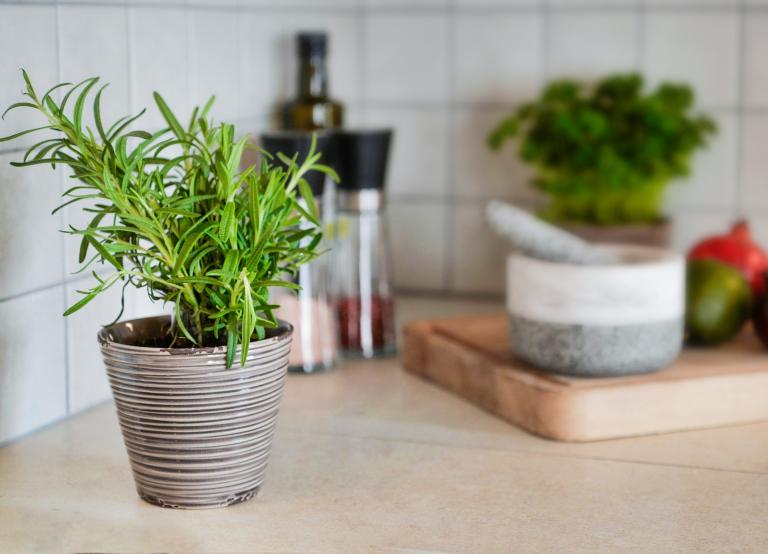
Image by monicore via pixabay.com
Rosemary: A Brief History Lesson
As stated, the plant originates from the Mediterranean, with its first mention around 5000 B.C.E. on cuneiform tablets. While it’s known the Egyptians used rosemary in their funeral rites, other information is vague.
In fact, rosemary is absent in ancient text until Roman historian Pliny the Elder (23-79 C.E) writes about the plant in Natural History. Later, Dioscorides (40-90 C.E.), the Greek physician and botanist, includes rosemary in his great work De materia medica, which is a five-volume work on herbal medicine. The herb is also known to have made its way to China during the late Han Dynasty (220 C.E).
While records are quiet, there is an assumption the Romans may have introduced rosemary to England during their occupation of the country in the 1st-century C.E. However, records of the plant do not appear until the 8th-century C.E. In fact, rosemary’s “official introduction” to English gardening is 1338 when Queen Phillipa (wife of Edward II) received cuttings as a gift from the Countess of Hainault with a description of the herb’s properties.
The herb came to America in the 17th century. From there, rosemary spread to South America and then to other parts of the world to the global presence it enjoys today.

Image by Foto-Rabe via pixabay.com
Rosemary: Use As A Culinary Herb
Much like other herbs within the Lamiaceae family, rosemary has a multitude of practical uses. As a culinary herb, you will find it pairs with parsley, sage, and thyme as a blend (and featured in a catchy tune!) to complement various types of meat (beef, chicken, lamb) and a multitude of vegetables.
Rosemary can be used as the whole dried leaf or ground into a fine powder. Entire sprigs can be placed over meat while cooking in the oven, on the stove, or in a crock-pot. One of my favorite ways to use the herb is on roasted potatoes:
Gwyn’s Rosemary Roasted Potatoes Recipe
*This is great to use on carrots, onions, mushrooms, zucchini, etc. I tend to do them all at the same time for a great mélange.
Ingredients:
- Potatoes (russet, gold, or some other variety) – cleaned and sliced
- Rosemary (fresh or dried) – if using fresh, remove from stem
- Extra-virgin Olive Oil
- Sea Salt (fine ground)
- Pepper (fine ground)
Instruction:
- Lay the slices of potato on a baking sheet that has been prepared with extra-virgin olive oil.
- Sprinkle the potato slices with sea salt and pepper.
- Sprinkle rosemary over the potatoes. If using dried, crush the leaves before sprinkling in hand or with a mortar and pestle.
- Bake in the oven at 400 degrees, until the potatoes are golden brown and tender.

Image by Monfocus via pixabay.com
Rosemary: Use As A Medicinal Herb
As an herb (whole leaf or essential oil), rosemary is recognized as a valuable medicinal ingredient. While those who are pregnant, suffer from epilepsy or hypertension should avoid using it, this herb is great for assisting the body when dealing with asthma, cold/flu symptoms, fatigue, headache, mild depression (as it lifts mood and clears the mind), and sinus/allergy troubles.
Rosemary can be enjoyed as a tea that you can purchase or steep from what you grow. Legend has it that Queen Elizabeth of Hungary enjoyed the beverage as a “youth tonic.” The essential oil can be used in shampoo for a healthy scalp or added to a diffuser to lift mood, freshen the air, or assist with breathing.
I enjoy running my fingers very gently over the leaves of my plants and breathing in the invigorating scent. Rosemary is excellent for helping one remain alert and clearing the mind.
If you’d like to make a tea from fresh rosemary leaves, here is how you do it:
Fresh Rosemary Infusion
*You can use this infusion as a tea to drink or as an herbal wash. Rosemary has astringent properties as well.
Ingredients:
- 1 sprig of rosemary (enough to make 1 or 2 teaspoons of fresh leaves).
- 8 ounces of boiling water
- A heat conserving container (mug, travel mug, etc)
- A loose tea strainer
Instructions:
- Remove the leaves from the sprig, rubbing gently to release the scent.
- Place the loose leaves into the tea strainer
- Place the tea strainer into the mug.
- Pour the boiling water over the tea strainer into the mug.
- Let the brew steep for 5 to 10 minutes.
- Remove the strainer.
- Sweeten the infusion if desired and enjoy.
*Be aware that while rosemary is considered a safe herb, there are considerations and contraindications. If consumed in large quantities there can be serious side-effects. As with any herb, make responsible choices when using rosemary for medicinal purposes. Always do the research and understand best practices.
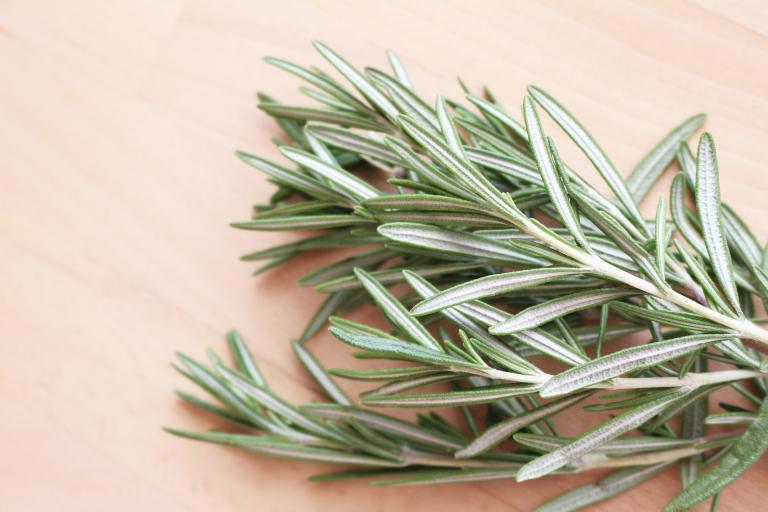
Image by Nika_Akin via pixabay.com
Rosemary: How To Work With The Plant As A Magickal Ally
Also known as Elf Leaf and Old Man, this plant has a variety of correspondences within witchcraft. As an evergreen, you can include rosemary as part of Yule or Walpurgis celebrations. It is also associated with the element of fire and “Yang” energy. In planetary magick, Mercury, the Sun, and the Moon work well with Rosemary. And the plant has associations with the Good Neighbors.
Intentions with which rosemary can assist include the afterlife, banishing, binding, comfort, communication, clarity, concentration. You can also use rosemary in ritual and magickal workings for cleansing, defense, empowerment, loyalty, luck, marriage, memory, and psychic ability. And let’s not forget to partner with this plant for intuition, spirit work, well-being, wisdom, and youth.
And what I’ve listed is the tip of the ice-berg. While I do not work with the Good Neighbors (Fae folk), I am devoted to Hekate. As an herb with associations to the underworld and the moon, I have learned that rosemary complements work with this goddess, even if not “traditionally” associated with Her. And that is why I use a bundle of dried rosemary as incense during chanting/meditation, devotional prayer, and rites focused on Hekate. And it’s very simple to create a dried rosemary bundle dedicated to this purpose. Here’s what I do:
Using Dried Rosemary Bundle In Ritual And Magick
Needed:
- Rosemary plant
- Scissors
- String or yarn
- A dark, cool place where you can hang things.
- A cauldron or fire-safe vessel
- Matches or lighter
Instructions for Drying the Bundle:
- Ask permission and tell the plant spirit your intention. I do this any time I harvest from my plants.
- Cut several long stems. If you can, glean 4- 6 sprigs from your rosemary.
- Remove the leaves from the bottom of the stem, enough to easily form a bundle from the sprigs.
- Tie the string around the stems of the bundle.
- Hang the bundle in a dark, cool place for at least a week or until the leaves are dry.
- Be gentle when you touch the dried bundle so that the leaves do not fall off.
Instructions For Using the Rosemary Bundle
- Carefully remove one sprig from your rosemary bundle. Don’t worry if you lose a few leaves.
- Hold the bundle over the cauldron or fire-safe vessel.
- Holding onto the stem, light the leaves at the top of the sprig and then blow out as flame flares on the dried leaves.
**Be careful when lighting the sprig. Be aware of your location and items on the altar, etc., so that nothing else can catch flame.**
Waft the smoke as incense during prayer or incantation while holding the sprig over cauldron or fire-safe vessel. You can leave it in the cauldron or fire-safe vessel to let the sprig smoke for a few minutes.
If you are careful, you can use one sprig for multiple burnings. During a week of prayer to Hekate, I used the same long sprig to burn as incense for each day. I have also used rosemary sprigs in this way during purification rituals, banishing spells, full moon rites, etc. You can also use loose, dried rosemary leaves over charcoal but I find the dried sprig is more effective as short-term incense.

About Gwyn
Gwyn is one of the hosts of 3 Pagans and a Cat, a podcast about the questions and discussions between three pagan family members, each exploring different pagan paths and how their various traditions can intersect. The most practiced pagan on the path, Gwyn is a Green Witch devoted to Hekate, Brighid, and Frigga. She is a Clairsentient Medium, Tarot Reader, loves writing and, spending time with her family, as well as working with herbs, essential oils, and plants. You can read more about the author here.
Previous Post

April 13, 2020
When The Cat Interrupts Meditation, You Learn To Go With The Flow
Next Post

April 22, 2020 Walpurgisnacht: Fertility Rite. Witches Night. And All That Jazz.
Browse Our Archives
Select a Category Uncategorized
Select a Month January 2024 November 2023 October 2023 September 2023 February 2023 September 2022 June 2022 April 2022 March 2022 February 2022 January 2022 October 2021 September 2021 July 2021 June 2021 May 2021 April 2021 March 2021 February 2021 January 2021 December 2020 November 2020 October 2020 September 2020 August 2020 July 2020 June 2020 May 2020 April 2020 March 2020 February 2020 January 2020 December 2019 November 2019 October 2019 September 2019 August 2019 July 2019
Follow Us!
TAKE THE
Religious Wisdom Quiz
Who interpreted Peter's vision about clean and unclean animals?
Select your answer to see how you score.
Barnabas Philip Paul God
Related posts from 3 Pagans and a Cat

Brighid's Celebration: Looking Toward Spring

Celebrating Hekate: My Journey with the Goddess
Celebrating My Loved Ones on Samhain
TRENDING AT PATHEOS Pagan

I was recently chatting with someone on Instagram. She asked me what...

While there are many people who share their results, the end of...

On July 23, I saw Christopher Nolan's The Odyssey which is Homer’s...

As I write this two big events have just finished up. One...

Restoring the Watershed of Divine Love
Perhaps cooperation is not something we manufacture through legislation, ideology, or moral...

Many UUs don’t pray because of bad experiences in a previous religion,...
view all Pagan blogs
Ad-Free & Subscriber Log-In Subscription Support
- About Us
- 2026 Calendar
- Videos
- Podcasts
- Library of World Religions
- Faith In Media Tracker
- Advertise With Us
- Write for Us
- Privacy Policy
- Terms of Service
- Do Not Sell My Data
- Contact Us
- Radiant Digital
- Manage Newsletter Subscriptions
- Unsubscribe From Notifications
- Sitemap
Copyright 2008-2026, Patheos. All rights reserved.
Subscription Support Ad-Free & Subscriber Log-In
Follow Patheos