
BuddhistCatholicContemplativeEvangelicalGeneral ChristianHinduJewishLatter-day SaintMuslimNew VisionsProgressive Christian
Beliefs
- Buddhist
- Catholic
- Contemplative
- Evangelical
- General Christian
- Hindu
- Jewish
- Latter-day Saint
- More Voices
- Muslim
- New Visions
- Pagan
- Progressive Christian
Topics
- Religion News
- Food and Religion
- Sports and Religion
- Religious Art
- Religious Music and Entertainment
- Religious Events
- History and Religion
- Style and Religion
- Politics and Religion
- Women in Religion
- Recreation Outdoors and Religion
- Business Finance and Religion
- Careers Workplace and Religion
- Education and Religion
- Family Parenting and Religion
- Health Fitness and Religion
- Home and Religion
- Relationships and Religion
- Technology and Religion
- Travel and Religion
Columnists
- Buddhist Columnists
- Business Finance and Religion Columnists
- Careers Workplace and Religion Columnists
- Catholic Columnists
- Contemplative Columnists
- Education and Religion Columnists
- Evangelists Columnists
- Family Parenting and Religion Columnists
- General Christian Columnists
- Health Fitness and Religion Columnists
- Hindu Columnists
- History and Religion Columnists
- Home and Religion Columnists
- Jewish Columnists
- More Voices Columnists
- Latter Day Columnists
- Muslim Columnists
- New Visions Columnists
- Nonreligious Columnists
- Pagan Columnists
- Politics and Religion Columnists
- Progressive Columnists
- Recreation Outdoors and Religion Columnists
- Relationships and Religion Columnists
- Religion News Columnists
- Religious Art Columnists
- Religious Events Columnists
- Religious Music and Entertainment Columnists
- Sports and Religion Columnists
- Style and Religion Columnists
- Technology and Religion Columnists
- Travel and Religion Columnists
- Women in Religion Columnists
Resource Library
- 2026 Calendar
- Library of World Religions
- The 100 Most Holy Places on Earth
- Patheos Answers
- Podcasts
- Videos
- Faith Leaders Database
- Anglican Episcopalian
- Bahai
- Baptist
- Buddhism
- Christianity
- Confucianism
- Eastern Orthodoxy
- Hinduism
- Holiness and Pentecostal
- ISKCON
- Islam
- Judaism
- Lutheran
- Methodist
- The Church of Jesus Christ of Latter-day Saints
- New Age
- Paganism
- Presbytarian and Reformed
- Protestantism
- Religion Behind the Scenes
- Roman Catholic
- Scientology
- Shia Islam
- Sikhism
- Sufism
- Sunni Islam
- Taoism
- Zen
- See all religions
Research Tools
 Ad-Free & Subscriber Log-In Subscription Support
Ad-Free & Subscriber Log-In Subscription Support
Follow Patheos 

- Trending:
- Forgiveness
- |
- Marriage
- |
- Consciousness
- |
- Death Penalty
- |
- Election
- |
- Halloween
 3 Pagans and a Cat
- Home
- Pagan
- Re-Thinking Chakras, Kirtan, And Other Borrowed Practices
Re-Thinking Chakras, Kirtan, And Other Borrowed Practices
Last updated on: March 9, 2020 at 5:15 pm by Gwyn
Re-Thinking Chakras, Kirtan, And Other Borrowed Practices 2020-03-09T17:15:00-04:00 Gwyn
Patheos Explore the world's faith through different perspectives on religion and spirituality! Patheos has the views of the prevalent religions and spiritualities of the world.
In recent years, I have been examining my use of borrowed practices as a Witch. Should I continue to use them or not? The process began when I learned the use of white sage while “smudging” belongs to a specific ritual. My family and I discussed cultural appropriation vs appreciation. Taking the time to learn the ritual’s origins, I now incorporate the cleansing smoke of many plant allies into my witchcraft with better understanding, intention, and respect. But this perspective brought to light other borrowed practices to be reconsidered.
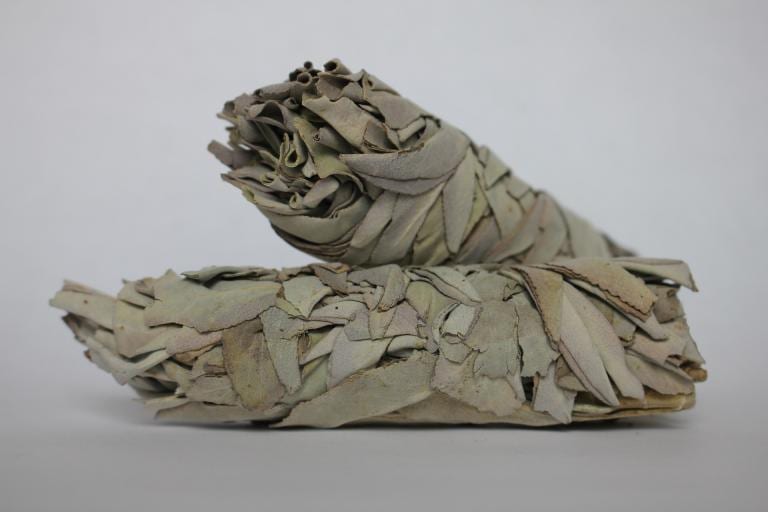
White Sage. Image by Laura2310 via pixabay.com
Borrowed Practices: Have You Heard Of Kirtan?
So, let me share another story on how borrowing practices can be problematic. Nineteen years ago, a friend invited me to her favorite yoga studio to experience a chanting practice called Kirtan. She told me it was a kind of meditation. And that’s all the information I received about the event. It sounded cool, so I decided to go.
Upon arrival, we were directed to sit on floor mats in a comfortable manner, close our eyes, and listen to a recording. Printed sheets were handed out so we could silently read the Sanskrit words being chorused. Singing along was optional. I remember no explanation other than the practice would induce a meditative state. Based on some of the words, I recognized that some Hindu deities were probably being called.
In spite of the ambiguity, I had a meaningful experience and began attending the monthly sessions with my friend for over a year. However, I remained in ignorance as to the overall intention. I had no idea what the chants were meant to invoke or the origins of the practice, only that I felt peaceful in the end and that was enough for me.
Herein lies the problem. I never asked or bothered to investigate the roots of kirtan or how it is employed in Indian religions. I have since learned that “kirtan” is a call-and-response style song or chant set to music (a practice dating back 500 years) that may tell a legend, discuss spiritual ideas, or express devotion to a deity. And that’s the simple explanation. My shallow experience pales in the reality that is Kirtan.

Chakra colors. Image by phpmaster80917 via pixabay.com
Borrowed Practices: Chakras
Indian Gurus brought beautiful practices with them to the West. However, the information became lost in translation to the point many Westerners miss what makes these practices significant in favor of “feel good” vibes (or let’s be honest– to make a buck).
Upon reflection, my use of chakras is superficial at best. This is not true for all. Even so, I’m sure there are others who will recognize this in their own spiritual path. But that fact for me is why I have been learning more about the origin of practices such as chakras. Am I adding the concept because it brings value to my spiritual path or because it’s “the thing to do?” Do I honor the rich tradition from which it came by inclusion or not?
What I’ve learned is chakras are more complex than what books, classes, or yoga teachers have revealed over the years. Instead, the concept has been watered-down to a more “palatable” form. Ideas, teachings, or beliefs adapted without reflecting its source. Leaving people to accept what has been fitted into a “neat package” without question, curiosity, or context.
Borrowed Practices: What Is Shared? What Is Unique Expression?
For me, the decision to include borrowed practices comes down to answering a few questions:
- Is the practice based on a shared or universal belief?
- Are multiple applications applied to the concept, belief, or practice?
- Is the practice unique to religion or culture?
This is what I recommend to anyone who is wrestling with these questions. There are some concepts that are universal or shared through human experience. The ethereal or energetic body is one of those common concepts. But what of the concepts created by specific religions? Chakras are unique to the philosophy and religions of India. If I were to spend the time and energy studying how to apply the concept to my life then I’d say I use chakras but I do not.
My experience is better expressed as “energy centers” (for lack of a better term) with a focus on connecting to universal energy through the head, maintaining the Mind’s or Witch’s Eye, and grounding to the Earth Mother through my feet. Should I change my mind, I will endeavor to study and understand chakras as defined by thousands of years of practitioners and gurus, rather than the Western training to which I have been privy. The same might be said of yoga, as what I have experienced has little to do with anything other than exercise. My pursuit of yoga will be more mindful of its spiritual roots and intention.

Bali Temple Dancer. Image by Givjsvanbilson via pixabay.com
In the end, the point is to be respectful.
My opinion (for what it’s worth) is that someone who feels called to a tradition, religion, or spiritual practice which may be closed, should ask those in the culture from which the practice originates. Seek out a practitioner or mentor of that culture who is willing to advise, teach, or initiate. If the way is closed to you, then perhaps that tradition, religion, or spiritual practice is not for you and it’s time to move on.
Or, if there is something about your path raising internal questions, then do some self-reflection. Find another way to express or practice what is a common or shared concept. Release what doesn’t feel appropriate.
I’m all for shared cultural experiences and expressions of worship. I love learning about cultures, traditions, and religions different from my own. And I’ve had enriching experiences by observing temple dances or participating in the public rituals of other traditions.
But as a matter of course, I do not wish to take what is sacred to someone else and incorporate it into my spiritual practice, life, or habits without first understanding the context of its origin or having respect for the people for whom it is heritage.
About Gwyn
Gwyn is one of the hosts of 3 Pagans and a Cat, a podcast about the questions and discussions between three pagan family members, each exploring different pagan paths and how their various traditions can intersect. The most practiced pagan on the path, Gwyn is a Green Witch devoted to Hekate, Brighid, and Frigga. She is a Clairsentient Medium, Tarot Reader, loves writing and, spending time with her family, as well as working with herbs, essential oils, and plants. You can read more about the author here.
Previous Post

March 6, 2020
Green Witch Guide To Herbal Shields: Natural Cleansers
Next Post

March 13, 2020 Green Witch Guide To Easing Flu Symptoms
Browse Our Archives
Select a Category Uncategorized
Select a Month January 2024 November 2023 October 2023 September 2023 February 2023 September 2022 June 2022 April 2022 March 2022 February 2022 January 2022 October 2021 September 2021 July 2021 June 2021 May 2021 April 2021 March 2021 February 2021 January 2021 December 2020 November 2020 October 2020 September 2020 August 2020 July 2020 June 2020 May 2020 April 2020 March 2020 February 2020 January 2020 December 2019 November 2019 October 2019 September 2019 August 2019 July 2019
Follow Us!
TAKE THE
Religious Wisdom Quiz
Who was Timothy's mother?
Select your answer to see how you score.
Lois Mary Priscilla Eunice
Related posts from 3 Pagans and a Cat

Brighid's Celebration: Looking Toward Spring

Celebrating Hekate: My Journey with the Goddess

Celebrating My Loved Ones on Samhain

TRENDING AT PATHEOS Pagan

I was recently chatting with someone on Instagram. She asked me what...

While there are many people who share their results, the end of...

On July 23, I saw Christopher Nolan's The Odyssey which is Homer’s...

As I write this two big events have just finished up. One...

Restoring the Watershed of Divine Love
Perhaps cooperation is not something we manufacture through legislation, ideology, or moral...

Many UUs don’t pray because of bad experiences in a previous religion,...
view all Pagan blogs
Ad-Free & Subscriber Log-In Subscription Support
- About Us
- 2026 Calendar
- Videos
- Podcasts
- Library of World Religions
- Faith In Media Tracker
- Advertise With Us
- Write for Us
- Privacy Policy
- Terms of Service
- Do Not Sell My Data
- Contact Us
- Radiant Digital
- Manage Newsletter Subscriptions
- Unsubscribe From Notifications
- Sitemap
Copyright 2008-2026, Patheos. All rights reserved.
Subscription Support Ad-Free & Subscriber Log-In
Follow Patheos