
BuddhistCatholicContemplativeEvangelicalGeneral ChristianHinduJewishLatter-day SaintMuslimNew VisionsProgressive Christian
Beliefs
- Buddhist
- Catholic
- Contemplative
- Evangelical
- General Christian
- Hindu
- Jewish
- Latter-day Saint
- More Voices
- Muslim
- New Visions
- Pagan
- Progressive Christian
Topics
- Religion News
- Food and Religion
- Sports and Religion
- Religious Art
- Religious Music and Entertainment
- Religious Events
- History and Religion
- Style and Religion
- Politics and Religion
- Women in Religion
- Recreation Outdoors and Religion
- Business Finance and Religion
- Careers Workplace and Religion
- Education and Religion
- Family Parenting and Religion
- Health Fitness and Religion
- Home and Religion
- Relationships and Religion
- Technology and Religion
- Travel and Religion
Columnists
- Buddhist Columnists
- Business Finance and Religion Columnists
- Careers Workplace and Religion Columnists
- Catholic Columnists
- Contemplative Columnists
- Education and Religion Columnists
- Evangelists Columnists
- Family Parenting and Religion Columnists
- General Christian Columnists
- Health Fitness and Religion Columnists
- Hindu Columnists
- History and Religion Columnists
- Home and Religion Columnists
- Jewish Columnists
- More Voices Columnists
- Latter Day Columnists
- Muslim Columnists
- New Visions Columnists
- Nonreligious Columnists
- Pagan Columnists
- Politics and Religion Columnists
- Progressive Columnists
- Recreation Outdoors and Religion Columnists
- Relationships and Religion Columnists
- Religion News Columnists
- Religious Art Columnists
- Religious Events Columnists
- Religious Music and Entertainment Columnists
- Sports and Religion Columnists
- Style and Religion Columnists
- Technology and Religion Columnists
- Travel and Religion Columnists
- Women in Religion Columnists
Resource Library
- 2026 Calendar
- Library of World Religions
- The 100 Most Holy Places on Earth
- Patheos Answers
- Podcasts
- Videos
- Faith Leaders Database
- Anglican Episcopalian
- Bahai
- Baptist
- Buddhism
- Christianity
- Confucianism
- Eastern Orthodoxy
- Hinduism
- Holiness and Pentecostal
- ISKCON
- Islam
- Judaism
- Lutheran
- Methodist
- The Church of Jesus Christ of Latter-day Saints
- New Age
- Paganism
- Presbytarian and Reformed
- Protestantism
- Religion Behind the Scenes
- Roman Catholic
- Scientology
- Shia Islam
- Sikhism
- Sufism
- Sunni Islam
- Taoism
- Zen
- See all religions
Research Tools
 Ad-Free & Subscriber Log-In Subscription Support
Ad-Free & Subscriber Log-In Subscription Support
Follow Patheos 

- Trending:
- Forgiveness
- |
- Marriage
- |
- Consciousness
- |
- Death Penalty
- |
- Election
- |
- Halloween
 3 Pagans and a Cat
- Home
- Pagan
- How Do You Work With Multiple Goddesses?
How Do You Work With Multiple Goddesses?
Last updated on: January 20, 2020 at 5:05 pm by Gwyn
How Do You Work With Multiple Goddesses? 2020-01-20T17:05:25-04:00 Gwyn
Patheos Explore the world's faith through different perspectives on religion and spirituality! Patheos has the views of the prevalent religions and spiritualities of the world.
Two weeks ago, Ode and I recorded an episode detailing Hekataen Witchcraft and how that works in my life. In the course of the discussion, we also mentioned my devotion to Brighid and Frigga, which sparked a question. How do I work with multiple deities such as these three goddesses? Afterall, each one is from a different pantheon. Do they compete or work together? In light of the question, I thought I’d share how honoring three goddesses (and possibly more in the future) works for me.
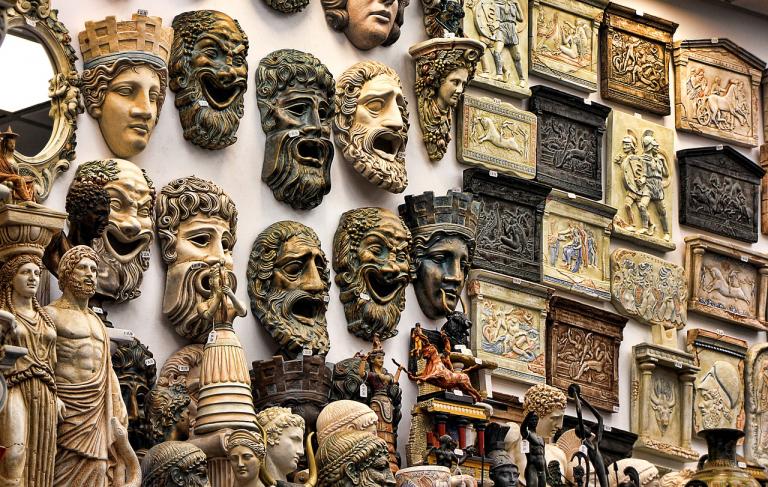
Many gods and goddesses? One deity with many faces? It’s all polytheism. Image by Greg Montani via pixabay.com
Goddesses: What Kind Of Polytheist Are You?
Polytheism is the belief and worship of more than one deity, usually grouped into pantheons (all of the gods/goddesses of a people group or religion). However, there are many ways to practice one’s belief. We need to define some terms in regard to types of polytheism and how a person may express the concept in their devotion, rituals and/or magickal practice. Here are the basics:
Hard Polytheism — Belief and devotion to multiple deities, each whom are regarded as distinct, independent individuals.
Soft Polytheism — Belief in one deity who is known to devotees through aspects as represented by the gods and goddesses of the various pantheons. Basically, all deities are part of one greater infinite being. In other words, the masculine and feminine divine.
Henotheism — Devotion to one deity while accepting the existence of other deities as worthy of worship by other people.
Monolatrism — The belief that multiple deities exist but that only one is worthy of worship or devotion.
Ditheism — AKA: Duotheism. The belief in two equally powerful deities but who may not always be in a complementary relationship (depending on the religion or tradition). Examples include: Wicca (Lord and Lady), Zoroastrianism (Good and Evil), etc.
Kathenotheism — A belief in many gods and goddesses but that only one may be worshiped or held in devotion at a time.
Dystheism — A belief that multiple deities exist but they may not all be wholly good and some may be evil.
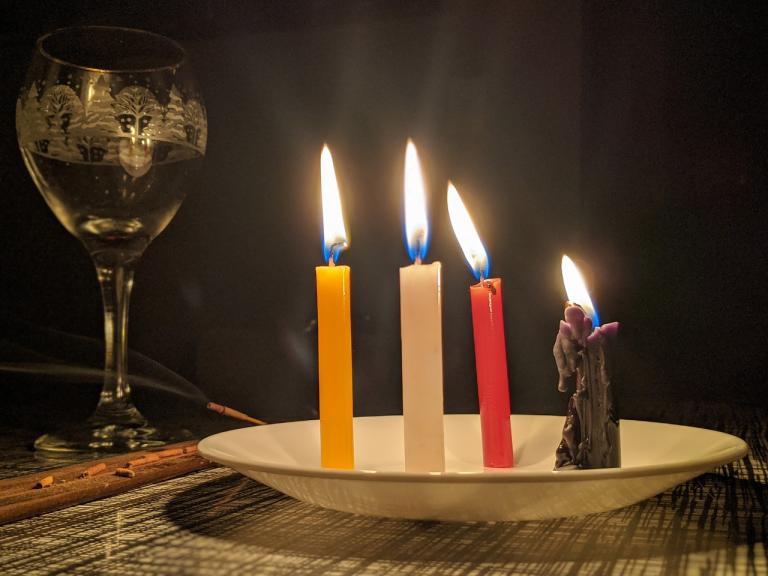
Image by Angela_Yuriko_Smith via pixabay.com
Goddesses: My Devotion As A Polytheist
When I began my journey into witchcraft, my belief structure could be termed as soft polytheist. For me, there was a divine force which I came to know through various deities including Brighid, Artemis, Hekate and Aphrodite among others. Each one had different aspects to which I’d call while doing spellwork or ritual. My approach to goddess was not unlike that found in Your Goddess Year, a book review from a month ago. Connecting to a variety of female deities from various pantheons but with the understanding that the Feminine Divine flowed within and without each one.
However, as time has passed in the last year while coming to understand Hekate through devotion, I realize my understanding of my goddesses (and all deities) is now better defined as hard polytheism. I suppose it might have happened regardless, as I do live with two hard polytheists as well. But it seems the more I’ve come to know Hekate, Brighid and Frigga on a deeper level, the more they have become individuals in my understanding rather than an aspect of the whole. And while they may share jobs, areas of power or authority, etc., and are in different pantheons, each one has a unique and recognizable energy.
How It Works For Me
In my experience, these goddesses are caring, fierce, protective and sometimes demanding but I would never mistake one for the other. They are equals among one another. Therefore each one has an altar in my home. I’ve set aside specific times of day to spend (even if only a few minutes to light a candle and breathe a prayer) focused on each one. So far, this has worked quite well. I have found that they have different expectations and ways of interacting with me. And all of this is part of my unverified personal gnosis.
For instance, meditation focusing on Hekate includes chanting Her name and/or epithets, which for me is most often Enodia (Guide). However, Brighid prefers me to go to the space in my mind’s eye reserved for Her. Sometimes She is there, and sometimes not, but I feel recognized and loved there, regardless. Frigga’s altar is above my sink in the kitchen. She prefers to be the first for whom candles and “hails” are offered in the morning. In fact, there have been times Her statue has turned toward the candle, as if to stare at it, when the candle has not been lit first thing. Sounds crazy but it is true. They all want offerings but it varies as to how much, what kind or for what reason.
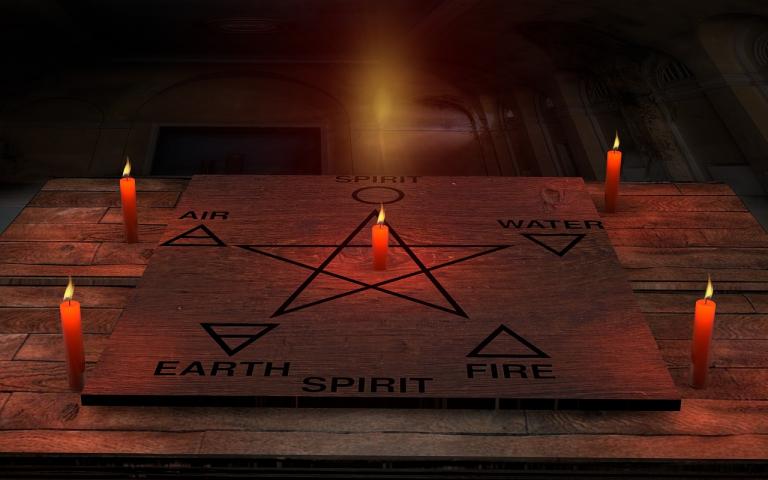
We are all autonomous beings. Including Gods and Goddesses. Image by kalhh via pixabay.com
Ritual and Spellcraft: How Does It Work?
When it comes to witchcraft I tend to do a lot of work on my own, but there are times when I do seek out my goddesses:
- Frigga is the one whom I seek when dealing with home/hearth/family issues. She is the one whom I have asked to help me know when to speak or keep my mouth shut in regard to a psychic feeling or vision.
- Brighid is the goddess I reach out to for creative endeavors, divination work, wisdom, just to name a few things.
- Hekate is my Dark Mother and Witch Queen. So, I will go to Her as a psychopomp, moon goddess, for healing, and guidance. She is a light when the world seems dim.
- Then there is the Earth Mother, whose altar is the table where all of my house plants live. She is a part of everything I do, through the Green Witchcraft that suffuses my path.
Which goddess depends on the reason for the spell, if they have authority in that or a related area, etc. There are times if one or more goddesses share a quality, aspect or influence then I will ask one, both or all to be present. As an example, I cast a healing spell per a friend’s request. Knowing I could go to both Brighid and Hekate in this matter for an assist, I did. And they responded with their own energies. The items representing both goddesses were kept on separate sides of the altar and I made offerings to both before casting the spell.
In ritual, I approach my goddesses in a similar way. If there is a corresponding reason to invite more than one deity into a ritual, then I do so. They choose whether to appear or not (although none have decided to be absent so far). Then there are rituals I perform which focus on one deity alone.
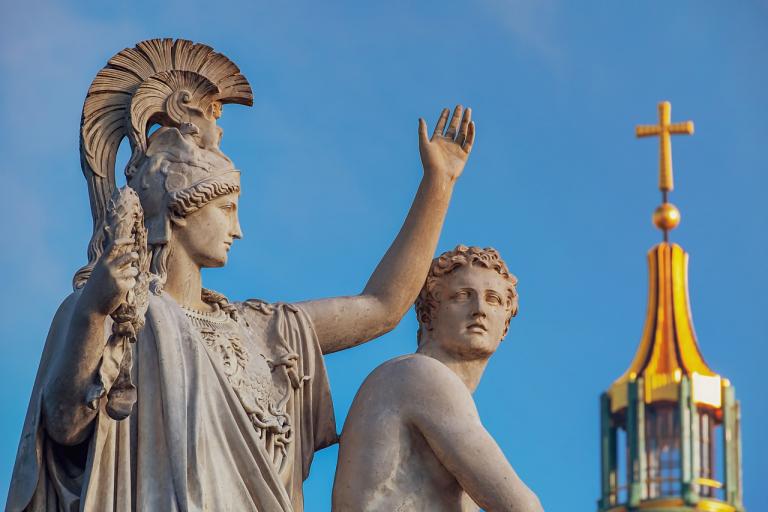
“So, there is this person who wants to meet you… “. Image by Geralt via pixabay.com
Introductions Required
Now, some may be thinking my approach is not much different from soft polytheism. Here’s what makes the difference for me. Each of the goddesses I honor are unique unto themselves. I do not view them as part of the “divine feminine” as an overall force. They are divine, they are feminine but as their own persons. While I have been to many public rituals which invoke deities who are not known to me, as well as participated in family rituals with a similar situation, I do not personally seek to work with deities whom I do not know without an introduction.
As an example, in Your Goddess Year there are multiple goddesses from many pantheons represented including Greek, Roman, Egyptian, Indian, Celtic, Mayan, etc. If you have a particular need then you can “reach out” and introduce yourself to whatever goddess and ask them to help. And that is because the author comes from a soft polytheist perspective. There is one Divine Feminine, so it doesn’t matter which individual deity you go to as they are all part of the same whole.
But as a hard polytheist, that’s like ringing up some stranger and asking them to do me a favor. I’d rather ask the deities I know if they are willing to provide an introduction, then take time getting to know the deity in question before asking for assistance or working with them in some way.
Meeting The Cailleach
Not long ago, I participated in a ritual honoring the Cailleach with my online coven. I’d been asked to act as the oracle for the ritual which included aspecting this deity. As I did not know this Ancient Celtic Stone Mother, I went to Brighid with offerings and asked if She would be willing to provide an introduction. Brighid helped me out and what an experience that was!
I spent the next few days getting to know the Cailleach by reading about Her, meditating and making offerings. As a result, the Cailleach showed up for that ritual in what turned out to be a very intense and beautiful way. Needless to say, the Stone Mother has a place of honor in my house now. But I do not believe the experience would have been as powerful if I’d not asked for that introduction first. And I’m not saying doing it the Your Goddess Year (or soft polytheist way) is wrong, it’s just no longer right for me.
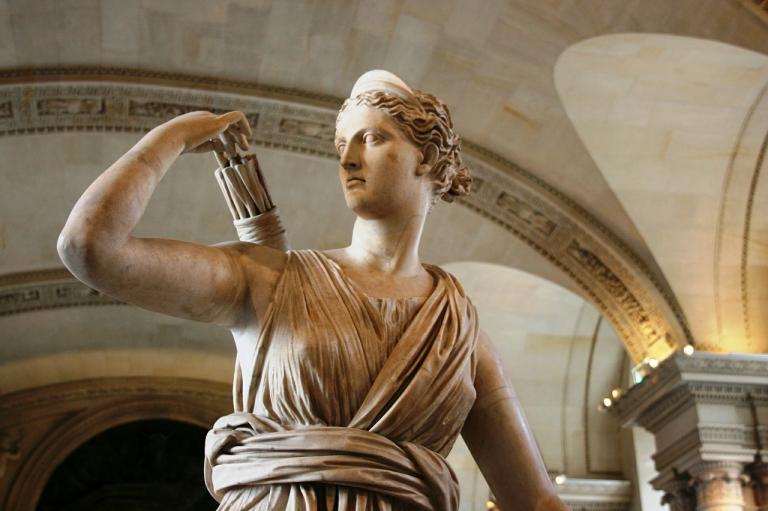
Respect. Time. Relationship. Image by 139904 via pixabay.com
So, How Do You Work With Multiple Goddesses?
I’ve learned it takes time, energy and devotion (unless worship of deities is not your thing. It’s okay if it’s not). Each goddess (or god) is deserving of respect and honor. Each one deserves to have their own sacred space, offerings, acts of devotion and time when you make it a point to focus on them alone.
I suppose it is easier if you are working with multiple deities from one pantheon. They are used to working together (although they do not always get along!). When you are in a situation such as mine, where each goddess is from a different pantheon, then you need to be creative.
Which is why I’ve found it easier to ask if they are willing to work in the same circle when they have similar attributes. Frigga and Hekate are both Queens in their realms and Key Holders. Brighid and Hekate are both healers. All three of them are influential in psychic gifts or divination in some way or other, not to mention protection of mothers and children. So long as all deities are respected individually, then they can come together in a ritual or spell bringing that much more to the occasion. And I find that to be a very special part of my relationship with all of them.
About Gwyn
Gwyn is one of the hosts of 3 Pagans and a Cat, a podcast about the questions and discussions between three pagan family members, each exploring different pagan paths and how their various traditions can intersect. The most practiced pagan on the path, Gwyn is an Eclectic Green Witch and Clairsentient Medium. She loves working with herbs, essential oils and plants. In the past, she has been a teacher, musician and published writer. Now, she just wants to be a free spirit and talk about life. You can read more about the author here.
Previous Post

January 17, 2020
Imbolc: Honoring Brighid. Welcoming Spring. Cleaning House.
Next Post

January 27, 2020 Middle Winter: Working With Hermit Energy
Browse Our Archives
Select a Category Uncategorized
Select a Month January 2024 November 2023 October 2023 September 2023 February 2023 September 2022 June 2022 April 2022 March 2022 February 2022 January 2022 October 2021 September 2021 July 2021 June 2021 May 2021 April 2021 March 2021 February 2021 January 2021 December 2020 November 2020 October 2020 September 2020 August 2020 July 2020 June 2020 May 2020 April 2020 March 2020 February 2020 January 2020 December 2019 November 2019 October 2019 September 2019 August 2019 July 2019
Follow Us!
TAKE THE
Religious Wisdom Quiz
What city did Jesus grow up in?
Select your answer to see how you score.
Jericho Nazareth Bethlehem Jerusalem
Related posts from 3 Pagans and a Cat
Brighid's Celebration: Looking Toward Spring
Celebrating Hekate: My Journey with the Goddess
Celebrating My Loved Ones on Samhain
TRENDING AT PATHEOS Pagan

I was recently chatting with someone on Instagram. She asked me what...

While there are many people who share their results, the end of...

On July 23, I saw Christopher Nolan's The Odyssey which is Homer’s...

As I write this two big events have just finished up. One...

Restoring the Watershed of Divine Love
Perhaps cooperation is not something we manufacture through legislation, ideology, or moral...

Many UUs don’t pray because of bad experiences in a previous religion,...
view all Pagan blogs
Ad-Free & Subscriber Log-In Subscription Support
- About Us
- 2026 Calendar
- Videos
- Podcasts
- Library of World Religions
- Faith In Media Tracker
- Advertise With Us
- Write for Us
- Privacy Policy
- Terms of Service
- Do Not Sell My Data
- Contact Us
- Radiant Digital
- Manage Newsletter Subscriptions
- Unsubscribe From Notifications
- Sitemap
Copyright 2008-2026, Patheos. All rights reserved.
Subscription Support Ad-Free & Subscriber Log-In
Follow Patheos