
BuddhistCatholicContemplativeEvangelicalGeneral ChristianHinduJewishLatter-day SaintMuslimNew VisionsProgressive Christian
Beliefs
- Buddhist
- Catholic
- Contemplative
- Evangelical
- General Christian
- Hindu
- Jewish
- Latter-day Saint
- More Voices
- Muslim
- New Visions
- Pagan
- Progressive Christian
Topics
- Religion News
- Food and Religion
- Sports and Religion
- Religious Art
- Religious Music and Entertainment
- Religious Events
- History and Religion
- Style and Religion
- Politics and Religion
- Women in Religion
- Recreation Outdoors and Religion
- Business Finance and Religion
- Careers Workplace and Religion
- Education and Religion
- Family Parenting and Religion
- Health Fitness and Religion
- Home and Religion
- Relationships and Religion
- Technology and Religion
- Travel and Religion
Columnists
- Buddhist Columnists
- Business Finance and Religion Columnists
- Careers Workplace and Religion Columnists
- Catholic Columnists
- Contemplative Columnists
- Education and Religion Columnists
- Evangelists Columnists
- Family Parenting and Religion Columnists
- General Christian Columnists
- Health Fitness and Religion Columnists
- Hindu Columnists
- History and Religion Columnists
- Home and Religion Columnists
- Jewish Columnists
- More Voices Columnists
- Latter Day Columnists
- Muslim Columnists
- New Visions Columnists
- Nonreligious Columnists
- Pagan Columnists
- Politics and Religion Columnists
- Progressive Columnists
- Recreation Outdoors and Religion Columnists
- Relationships and Religion Columnists
- Religion News Columnists
- Religious Art Columnists
- Religious Events Columnists
- Religious Music and Entertainment Columnists
- Sports and Religion Columnists
- Style and Religion Columnists
- Technology and Religion Columnists
- Travel and Religion Columnists
- Women in Religion Columnists
Resource Library
- 2026 Calendar
- Library of World Religions
- The 100 Most Holy Places on Earth
- Patheos Answers
- Podcasts
- Videos
- Faith Leaders Database
- Anglican Episcopalian
- Bahai
- Baptist
- Buddhism
- Christianity
- Confucianism
- Eastern Orthodoxy
- Hinduism
- Holiness and Pentecostal
- ISKCON
- Islam
- Judaism
- Lutheran
- Methodist
- The Church of Jesus Christ of Latter-day Saints
- New Age
- Paganism
- Presbytarian and Reformed
- Protestantism
- Religion Behind the Scenes
- Roman Catholic
- Scientology
- Shia Islam
- Sikhism
- Sufism
- Sunni Islam
- Taoism
- Zen
- See all religions
Research Tools
 Ad-Free & Subscriber Log-In Subscription Support
Ad-Free & Subscriber Log-In Subscription Support
Follow Patheos 

- Trending:
- Forgiveness
- |
- Marriage
- |
- Consciousness
- |
- Death Penalty
- |
- Election
- |
- Halloween
 3 Pagans and a Cat
- Home
- Pagan
- Witch: Origins, Definitions and Using The Word Today
Witch: Origins, Definitions and Using The Word Today
Last updated on: September 26, 2019 at 10:36 pm by Gwyn
Witch: Origins, Definitions and Using The Word Today 2019-09-26T22:36:11-04:00 Gwyn
Patheos Explore the world's faith through different perspectives on religion and spirituality! Patheos has the views of the prevalent religions and spiritualities of the world.
Earlier this week, I had a short encounter with a Wiccan who prefers not to use “witch” when describing his path or practice. Fair enough. However, he made this proclamation after I introduced myself as a Hekataen Green Witch. Then, the man launched into a short speech on the word’s origins, seeming to expect me to agree with his reasoning. Perhaps he was just excited to share his observations. Regardless, I found the topic to be very interesting.
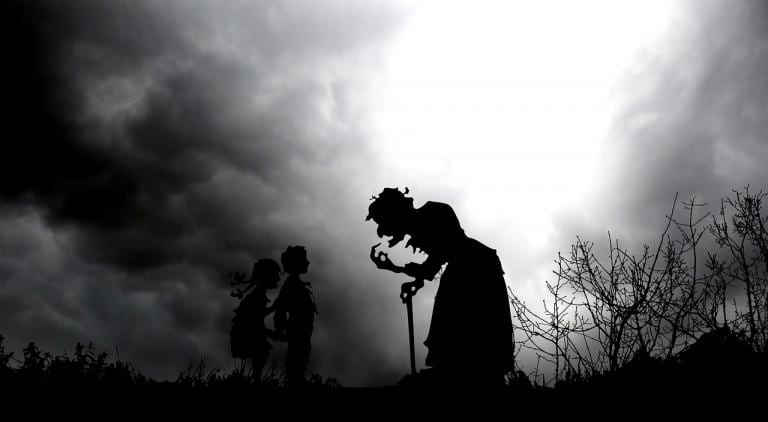
The origins of “Witch” do not suggest an “evil hag”, but the notion persists. Image by rauschenberger via pixabay.com
Witch Origins
According to Merriam-Websters, a “witch” can be defined as “one that is credited with (usually) malignant supernatural powers. Especially a woman practicing (usually) black witchcraft, often with the aid of a devil or familiar.” Additional entries include “an ugly woman or hag”, an “alluring girl/woman”, and an “adherent of “Wicca” (listed in that order). Hmmm. There’s some stereotypes for you. Even the one about an “alluring” girl or woman might play into certain (patriarchal) patterns when you consider the synonyms include tempting, seductive, and beguiling. I’m glad to see Wicca got a mention at least. However, there is a reason the top three answers lean toward a troubling view of women (including trans women).
From what I gather, “witch” comes from a combination of Old English and Low German words. According to Etymonline, Old English “wicce” (the “cc” pronounced as a “tch”) described a “female magician, sorceress.” In other words, a woman who practiced local folk magick/witchcraft, healing arts and/or mid-wifery. The Old English “wicca” defined a man (sorceror/magician) who practiced folk magick/witchcraft. The Old English verb “wiccian” meant “to practice witchcraft.” In Low German, wikken/wicken (hard “k”) meant “to use witchcraft.” You can see how the terms may have melded into our modern variation, although scholars seem to disagree on how the transformation occurred. And from these definitions, there seems to be no connotation of “evil” associated with these words as far as I read into it. Such people were Wise Women and Cunning Men to whom people could go to for whatever reason.
Here’s the thing. Witchcraft has been present in multiple cultures, in a variety of forms and practices, since before recorded history. There were cultures which revered magick workers as advisors and healers. And there were societies where occult practices were condemned (for instance, Hebrew, as recorded in Christianity’s Biblical Old Testament). Skipping ahead in time, as early as 500 C.E. Christian teaching began associating witchcraft with the work of “the Devil”. And by the Middle Ages, “witch” would be used almost exclusively to describe a woman who had purportedly “aligned with evil spirits and/or “the Devil” to attain supernatural power.” And the well-known stereotypes (thank you Milton and Shakespeare, among others) persist to this day.

Modern Practitioners are reclaiming the true nature of “Witch. Image by Allinoch via pixabay.com
“Witch”: Reclaiming Origins For Modern Use
So, where does that leave us in the Modern era? An era which has seen the traditional image of the ugly “evil Witch” challenged by popular culture (thanks in part to the introduction of characters such as the beautiful 1960’s “Samantha Stevens”) and the increasing popularity of Wicca and Paganism as religious/spiritual belief. Wiccans in particular have worked hard to promote the “harm none” aspect of their religion. And while some may dispute this, I believe Gerald Gardner may have included that teaching as a way to oversome societal fears. Afterall, the anti-witchcraft laws in England were not repealed until 1951. Gardner had a lot of bias to overcome when he unveiled his “witchcraft religion” to the world.
And believe it or not, according to an article on Learn Religions by Patti Wiggington, there are laws in some states against practices such as fortune telling, Tarot card reading and other forms of divination. While these are not specifically anti-witchcraft laws, Wiccans/Witches/Pagans and other magickal practitioners are affected by them. We need to know our rights. And let’s not forget, despite our growing numbers, there are many people in the broom closet because the Christian overculture’s understanding of witchcraft and Witches still holds sway. Some people really do have to be concerned about the reaction they may receive if others learn they are a Witch.
Is it possible to overturn thousands of years of negative thinking when it comes to the cultural perception of the Witch? Yes, I believe it is. Why? Because while there are plenty who rail against “the works of the Devil”, there are others who seek to understand. I can’t tell you how many Christians come into our local Pagan store. They come for Tarot readings, healing from a Reiki practitioner, herbal remedies and magickal advice from the owners. Perhaps they seek out Witches because they don’t always get what they need from their church. Whatever the case, there is a chance for dialogue and understanding with these people. One day, they may be able to effect a change in their religion and how they treat others. Including Witches.

The World needs her Witches” – Phyllis Curott. Image by Victoria Borodinova via pixabay.com
Witch: The Future Is Now
This past Summer, a columnist from the New York Times wrote an op ed piece about the growth of Paganism in America, which was a bit dismissive and showed a real lack of understanding. I’m not surprised. Pagans outnumber Presbyterians now. Those numbers either freak people out or have them scratching their heads. In response, Phyllis Curott wrote an article declaring “The World Needs Her Witches.”
Phyllis is right. Our planet is crying out for Witches to restore the relationship of humanity to our Earth Mother. Not one of lording over nature from above but rather recognizing how we share an accord from within.
Many teachers in the Witchcraft/Wiccan/Pagan communities are repeating a similar message. Calling us to step back into our roles as Wise Women, Cunning Men, Shamans, Priests and Priestesses. The time has come to wrest control of the language which has been defining “Witch” for thousands of years through the narrow lens of Christian doctrine and re-write who we truly are in the world.
About Gwyn
Gwyn is one of the hosts of 3 Pagans and a Cat, a podcast about the questions and discussions between three pagan family members, each exploring different pagan paths and how their various traditions can intersect. The most practiced pagan on the path, Gwyn is a Modern Hekataen-Green Witch, Devotee of the Covenant of Hekate, and Clairsentient Medium. She loves working with herbs, essential oils and plants. In the past, she has been a musician, teacher, and published author. Now, together with Car and Ode, Gwyn is a teacher/presenter at multiple Pagan events, and loves to chat about witchcraft, spiritual things, and life in general. You can read more about the author here.
Previous Post
September 23, 2019
Do Witches Curse Halloween Candy? No!
Next Post

September 30, 2019 Green Witchcraft: Using Magick With Teeth
Browse Our Archives
Select a Category Uncategorized
Select a Month January 2024 November 2023 October 2023 September 2023 February 2023 September 2022 June 2022 April 2022 March 2022 February 2022 January 2022 October 2021 September 2021 July 2021 June 2021 May 2021 April 2021 March 2021 February 2021 January 2021 December 2020 November 2020 October 2020 September 2020 August 2020 July 2020 June 2020 May 2020 April 2020 March 2020 February 2020 January 2020 December 2019 November 2019 October 2019 September 2019 August 2019 July 2019
Follow Us!
TAKE THE
Religious Wisdom Quiz
What was the first miracle Jesus performed according to John's Gospel?
Select your answer to see how you score.
Walking on water Feeding the 5000 Turning water into wine Raising Lazarus
Related posts from 3 Pagans and a Cat
Brighid's Celebration: Looking Toward Spring
Celebrating Hekate: My Journey with the Goddess
Celebrating My Loved Ones on Samhain

TRENDING AT PATHEOS Pagan

I was recently chatting with someone on Instagram. She asked me what...

While there are many people who share their results, the end of...

On July 23, I saw Christopher Nolan's The Odyssey which is Homer’s...

As I write this two big events have just finished up. One...

Restoring the Watershed of Divine Love
Perhaps cooperation is not something we manufacture through legislation, ideology, or moral...

Many UUs don’t pray because of bad experiences in a previous religion,...
view all Pagan blogs
Ad-Free & Subscriber Log-In Subscription Support
- About Us
- 2026 Calendar
- Videos
- Podcasts
- Library of World Religions
- Faith In Media Tracker
- Advertise With Us
- Write for Us
- Privacy Policy
- Terms of Service
- Do Not Sell My Data
- Contact Us
- Radiant Digital
- Manage Newsletter Subscriptions
- Unsubscribe From Notifications
- Sitemap
Copyright 2008-2026, Patheos. All rights reserved.
Subscription Support Ad-Free & Subscriber Log-In
Follow Patheos