
BuddhistCatholicContemplativeEvangelicalGeneral ChristianHinduJewishLatter-day SaintMuslimNew VisionsProgressive Christian
Beliefs
- Buddhist
- Catholic
- Contemplative
- Evangelical
- General Christian
- Hindu
- Jewish
- Latter-day Saint
- More Voices
- Muslim
- New Visions
- Pagan
- Progressive Christian
Topics
- Religion News
- Food and Religion
- Sports and Religion
- Religious Art
- Religious Music and Entertainment
- Religious Events
- History and Religion
- Style and Religion
- Politics and Religion
- Women in Religion
- Recreation Outdoors and Religion
- Business Finance and Religion
- Careers Workplace and Religion
- Education and Religion
- Family Parenting and Religion
- Health Fitness and Religion
- Home and Religion
- Relationships and Religion
- Technology and Religion
- Travel and Religion
Columnists
- Buddhist Columnists
- Business Finance and Religion Columnists
- Careers Workplace and Religion Columnists
- Catholic Columnists
- Contemplative Columnists
- Education and Religion Columnists
- Evangelists Columnists
- Family Parenting and Religion Columnists
- General Christian Columnists
- Health Fitness and Religion Columnists
- Hindu Columnists
- History and Religion Columnists
- Home and Religion Columnists
- Jewish Columnists
- More Voices Columnists
- Latter Day Columnists
- Muslim Columnists
- New Visions Columnists
- Nonreligious Columnists
- Pagan Columnists
- Politics and Religion Columnists
- Progressive Columnists
- Recreation Outdoors and Religion Columnists
- Relationships and Religion Columnists
- Religion News Columnists
- Religious Art Columnists
- Religious Events Columnists
- Religious Music and Entertainment Columnists
- Sports and Religion Columnists
- Style and Religion Columnists
- Technology and Religion Columnists
- Travel and Religion Columnists
- Women in Religion Columnists
Resource Library
- 2026 Calendar
- Library of World Religions
- The 100 Most Holy Places on Earth
- Patheos Answers
- Podcasts
- Videos
- Faith Leaders Database
- Anglican Episcopalian
- Bahai
- Baptist
- Buddhism
- Christianity
- Confucianism
- Eastern Orthodoxy
- Hinduism
- Holiness and Pentecostal
- ISKCON
- Islam
- Judaism
- Lutheran
- Methodist
- The Church of Jesus Christ of Latter-day Saints
- New Age
- Paganism
- Presbytarian and Reformed
- Protestantism
- Religion Behind the Scenes
- Roman Catholic
- Scientology
- Shia Islam
- Sikhism
- Sufism
- Sunni Islam
- Taoism
- Zen
- See all religions
Research Tools
 Ad-Free & Subscriber Log-In Subscription Support
Ad-Free & Subscriber Log-In Subscription Support
Follow Patheos 

- Trending:
- Forgiveness
- |
- Marriage
- |
- Consciousness
- |
- Death Penalty
- |
- Election
- |
- Halloween
 1More Film Blog
- Home
- Religious Music & Entertainment
- The Most Neglected Verse in Christian Culture Wars…
The Most Neglected Verse in Christian Culture Wars…
Last updated on: August 3, 2014 at 11:17 am by Kenneth R. Morefield
The Most Neglected Verse in Christian Culture Wars… 2014-08-03T11:17:00-05:00 Kenneth R. Morefield
Patheos Explore the world's faith through different perspectives on religion and spirituality! Patheos has the views of the prevalent religions and spiritualities of the world.

I turned off a film that I was screening for potential review purposes last month.
I had been looking forward to seeing it for a while, and I had heard good things about it from other other critics who had watched it. Pretty early on there was a scene that made me fairly uncomfortable. That’s not all that rare. As a teacher, I’ve often encouraged students not to flee at the first feelings of discomfort lest they forfeit the opportunity to profit from legitimate works of art that might have good reasons for asking you to face uncomfortable ideas or feelings. That scene was followed soon after with another that seemed to push the same button without doing much to advance the story. After a third scene that bothered me, I shut it off convinced that the style was not going to change and that whatever insights I might glean from the film were simply not worth the effort it was going to take to watch it productively.
That doesn’t happen often, but it is not unprecedented. What was strange was not that a Christian, even one who reviews films and teaches literature for a living ,would make such a mental calculation. We all have areas of our memory and imagination that based on past traumas or experiences we may need to protect a bit more actively than do others. In my mind, that’s what discernment really is. What did strike me as different about this particular experience is that I felt a strong urge to tell everyone–to get on social media and use every platform I had to let friends and strangers alike know about my decision. That desire puzzled me.
First let me say what I don’t think that desire was all about. I don’t think it had much of anything to do with the film. It was a relatively obscure film, and I don’t think the sorts of readers who want or need explicit trigger warnings would be likely to watch it anyway. If anything, the response may have been exasperation or cynicism: “You thought that movie had some stuff in it you didn’t want to see? Duh, we could have told you that!” Alternately there may been condescension masquerading as polite sympathy from other quarters: “Too bad, you couldn’t get through it. I watched that film; it was great!” Honestly I was probably more worried about the potential responses of my friends who were moviegoers and sometimes, in their zeal to protect their own God-granted freedom to make choices from censorship or implied censure, can tend to treat anyone’s exercise of their own discretion as a passive-aggressive form of judging them. Do you think you are holier than we are because you abstained from something we didn’t? Isn’t that the tyranny of the weaker brother?
I don’t think I’m holier than anyone who watches what I don’t. Heaven knows I watch enough–and get enough grief for watching it–to not make that a reliable metric of one’s spiritual maturity. Again, one’s discernment and maturity is not determined by what he or she watches or refrains from but by how perceptively he or she is able to follow the guidance of his or her own promptings rather than to succumb to peer pressure on either side.
Really then, the reason I wanted to share was as a kind of boast. “See, all you people who think I’ll watch anything and am a slave to the hipsters and to the secular crowd…I am capable of partaking without surrendering my discernment!” Well, that’s a good thing, right? So why not boast? If for no other reason, it’s good to model for those who might be influenced by you (students/readers) that it is okay, even as a professional, to occasionally say “no.” (I would add that in doing so one ought to be careful to try to not demonize the art object or artist[s] that created it.)
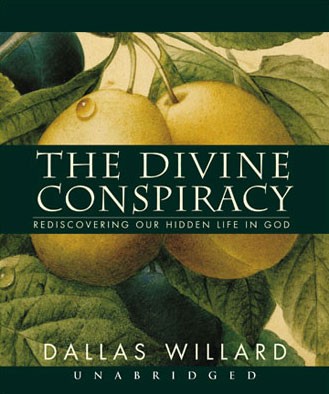 Fortuitously, a friend and colleague had been revisiting Dallas Willard’s The Divine Conspiracy when I shared some of these thoughts with her. (One of the ways I have most directly seen the hand of God in my life has been how frequently it seems that those I converse with–casually or intimately–seem to have just read or heard a teaching that bears directly on whatever I am thinking about at the moment.) In Chapter Six, Willard discusses “Escaping the Deceptions of Reputation and Wealth.” The key verse here, the one which he claims “gives us [Jesus’s] guiding principle” is Matthew 6:1: “Be careful not to practice your righteousness in front of others to be seen by them. If you do, you will have no reward from your Father in heaven.”
I appreciate that Willard almost immediately warns that “the teaching is not that we should hide our good deeds.” Throughout the book, as I understood it, Willard cautions that Christians love to take principles and turn them into rules. There may indeed be times when it is appropriate to hide the good that one is doing. It may be okay, at other times, to let people know of the good that one is doing. (I’ve already mentioned one hypothetical reason for sharing–as an example or encouragement to others.) Where the public proclamations are troublesome is when they are seen as the end of the good deed. Willard again, “not are we seen doing a good deed, but are we doing a good deed in order to be seen” (190).
Principles are a lot harder to apply, even for ourselves, than are rules. The reason for that–and this is my observation, not Willard’s, although he may have said something similar–is most of our actions are ambiguous when it comes to discerning motives. The same action can be motivated by a desire to please God and follow his promptings for your life or by a desire to win praise from (secular or, yes, religious) men. Willard, as usual, summarizes “The Respectability Trap” elegantly: “When we do good deeds to be seen by human beings, that is because what we are looking for is something that comes from human beings. God responds to our expectations accordingly. When we want human approval and esteem, and do what we do for the sake of it, God courteously stands aside because, by our wish, it does not concern him” (190).
I want to emphasize that in Christian circles we tend to equate The Respectability Trap exclusively with those who have an unhealthy concern with their reputation in secular society. I’m not sure that Matthew 6:1, as Willard unpacks it, makes such a distinction. In fact, I’m reasonably confident it doesn’t. The contrast is not being made either between what God thinks and what the secular world thinks nor between what other Christians think and what non-Christians think. The contrast is being made between what God thinks of you and what men think of you. I’ve known Christians every bit as much in bondage to The Respectability Trap as those whom they scorn for chasing after the world’s good opinion. Often such people are blind to their own hunger for reputation simply because the opinions they care about are those of other Christians. That may be better (though not by much) than caring about about what non-Christians think, but it is still being motivated by a desire to improve your own reputation rather than to be content with the audience of one.
I know of few fields where people care as much about reputation as education and film journalism. And those are the two fields I happen to work in. People invest massive amounts of time and energy trying to bolster their opinions and judgements against inevitable criticism from those who disagree. We do so by citing credentials (did I mention I have a Ph.D.?) and citing others who are on our side (hey, Dallas Willard agrees with me!). As in many other areas, though, the difficulty of staying out of The Respectability Trap is that we live our lives and do our jobs in public. The point, as summarized above, is not to hide our good deeds. That would be turning a principle into a rule. The point is to try to get to the point where one is motivated more by the benefits of the action than by the praise one anticipates for undertaking it.
I wonder, though, if in our concern not to hide our good deeds, we (Christians) haven’t gone too far in the other direction? When it comes to exercising personal discernment, I don’t see a whole lot of people hiding their good deeds. (Nor am I impervious to the irony of having just written 1500 words in support of not announcing your good deeds prompted by an example of my doing just that.) What I do, perhaps, think I see is a lot of is Christians using the “don’t hide your light under a bushel” excuse to trumpet their own exercise of discernment and suggesting it as a model for everyone. That’s why even though I am a big fan of exercising personal discernment, announcements of doing so raise all sorts of red flags. These announcements rarely come across as descriptions of one’s own respect for one’s own limitations but rather as attempts to set the boundaries for others. There’s a spiritual arrogance in doing so that we should all be cautious of, both those of us who forgo the opportunity to view particularly difficult films and those of us who continue to partake in good conscience.
Previous Post
August 1, 2014
Levitated Mass (Pray, 2013)
Next Post

August 4, 2014 Masters of Sex Episode 2.4 Recap: Dirty Jobs
Browse Our Archives
Select a Category 10 Years Later 1999 Top 5 2007 Top 10 2008 Favorite Discoveries 2008 Top 10 2009 Favorite Discoveries 2009 Top 10 2010 Favorite Discoveries 2010 Top 10 2011 Top 10 2012 Top Ten 2013 Top Ten 2014 Top Ten Best Picture Winners Christian Spotlight on Entertainment Christianity Today Coming Soon Disclosure Disclosure--AS Disclosure--Book Disclosure--DVDS Disclosure--SEOL Disclosure--Travel Dissenting Opinion Elsewhere Emergenetics Essays Featured Film Fest DC--2014 Film Festivals Full Frame Documentary Film Festival 2010 Full Frame Documentary Film Festival 2011 Full Frame Documentary Film Festival 2012 Full Frame Documentary Film Festival 2013 Full Frame Documentary Film Festival 2014 Headline Interviews Laura on the Oscar Winners Podcasts Quick Impressions Reviews RiverRun Film Festival 2014 Television The Criterion Collection The Thin Place To Stream or Not to Stream? Top 10s and Other Lists Toronto International Film Festival 2009 Toronto International Film Festival 2010 Toronto International Film Festival 2011 Toronto International Film Festival 2012 Toronto International Film Festival 2013 Toronto International Film Festival 2014 Uncategorized Video Virginia Film Festival 2011 Virginia Film Festival 2013 Women's Film Festival 2012
Select a Month February 2016 January 2016 December 2015 November 2015 October 2015 September 2015 August 2015 July 2015 June 2015 May 2015 April 2015 March 2015 February 2015 January 2015 December 2014 November 2014 October 2014 September 2014 August 2014 July 2014 June 2014 May 2014 April 2014 March 2014 February 2014 January 2014 December 2013 November 2013 October 2013 September 2013 August 2013 July 2013 June 2013 May 2013 April 2013 March 2013 February 2013 January 2013 December 2012 November 2012 October 2012 September 2012 August 2012 July 2012 June 2012 May 2012 April 2012 March 2012 February 2012 January 2012 December 2011 November 2011 October 2011 September 2011 August 2011 July 2011 June 2011 May 2011 April 2011 March 2011 February 2011 January 2011 December 2010 November 2010 October 2010 September 2010 August 2010 July 2010 June 2010 May 2010 April 2010 March 2010 February 2010 January 2010 December 2009 November 2009 September 2009 August 2009 July 2009 June 2009 May 2009 April 2009
Follow Us!
TAKE THE
Religious Wisdom Quiz
What does "meek" mean in the Beatitudes?
Select your answer to see how you score.
Gentle and humble Angry and harsh Funny Very rich
Related posts from 1More Film Blog

An Inconvenient Truth (Guggenheim, 2006) -- 10 Years...

The Devil Wears Prada (Frankel, 2006) -- 10...


My Best Picture Choice: Mad Max: Fury Road
TRENDING AT PATHEOS Religious Music & Entertainment

"Les Diabolique" and Transgression
Alongside something like Arrival, Vertigo, or Charade, Les Diaboliques is a...

"The Plague Dogs" and Mortality
So, flashback to the late 70s, early 80s. Walt Disney Studios is...

With the recent and highly successful release of Christopher Nolan’s epic film,...

"L'avventura" and Human Weakness
Today's piece is going to be a little different for a few...

I first want to apologize for not posting or writing anything. I'm...

I've engaged in the multi-year project of reading through the Church Fathers,...
view all Religious Music & Entertainment blogs
Ad-Free & Subscriber Log-In Subscription Support
- About Us
- 2026 Calendar
- Videos
- Podcasts
- Library of World Religions
- Faith In Media Tracker
- Advertise With Us
- Write for Us
- Privacy Policy
- Terms of Service
- Do Not Sell My Data
- Contact Us
- Radiant Digital
- Manage Newsletter Subscriptions
- Unsubscribe From Notifications
- Sitemap
Copyright 2008-2026, Patheos. All rights reserved.
Subscription Support Ad-Free & Subscriber Log-In
Follow Patheos