
BuddhistCatholicContemplativeEvangelicalGeneral ChristianHinduJewishLatter-day SaintMuslimNew VisionsProgressive Christian
Beliefs
- Buddhist
- Catholic
- Contemplative
- Evangelical
- General Christian
- Hindu
- Jewish
- Latter-day Saint
- More Voices
- Muslim
- New Visions
- Pagan
- Progressive Christian
Topics
- Religion News
- Food and Religion
- Sports and Religion
- Religious Art
- Religious Music and Entertainment
- Religious Events
- History and Religion
- Style and Religion
- Politics and Religion
- Women in Religion
- Recreation Outdoors and Religion
- Business Finance and Religion
- Careers Workplace and Religion
- Education and Religion
- Family Parenting and Religion
- Health Fitness and Religion
- Home and Religion
- Relationships and Religion
- Technology and Religion
- Travel and Religion
Columnists
- Buddhist Columnists
- Business Finance and Religion Columnists
- Careers Workplace and Religion Columnists
- Catholic Columnists
- Contemplative Columnists
- Education and Religion Columnists
- Evangelists Columnists
- Family Parenting and Religion Columnists
- General Christian Columnists
- Health Fitness and Religion Columnists
- Hindu Columnists
- History and Religion Columnists
- Home and Religion Columnists
- Jewish Columnists
- More Voices Columnists
- Latter Day Columnists
- Muslim Columnists
- New Visions Columnists
- Nonreligious Columnists
- Pagan Columnists
- Politics and Religion Columnists
- Progressive Columnists
- Recreation Outdoors and Religion Columnists
- Relationships and Religion Columnists
- Religion News Columnists
- Religious Art Columnists
- Religious Events Columnists
- Religious Music and Entertainment Columnists
- Sports and Religion Columnists
- Style and Religion Columnists
- Technology and Religion Columnists
- Travel and Religion Columnists
- Women in Religion Columnists
Resource Library
- 2026 Calendar
- Library of World Religions
- The 100 Most Holy Places on Earth
- Patheos Answers
- Podcasts
- Videos
- Faith Leaders Database
- Anglican Episcopalian
- Bahai
- Baptist
- Buddhism
- Christianity
- Confucianism
- Eastern Orthodoxy
- Hinduism
- Holiness and Pentecostal
- ISKCON
- Islam
- Judaism
- Lutheran
- Methodist
- The Church of Jesus Christ of Latter-day Saints
- New Age
- Paganism
- Presbytarian and Reformed
- Protestantism
- Religion Behind the Scenes
- Roman Catholic
- Scientology
- Shia Islam
- Sikhism
- Sufism
- Sunni Islam
- Taoism
- Zen
- See all religions
Research Tools
 Ad-Free & Subscriber Log-In Subscription Support
Ad-Free & Subscriber Log-In Subscription Support
Follow Patheos 

- Trending:
- Forgiveness
- |
- Marriage
- |
- Consciousness
- |
- Death Penalty
- |
- Election
- |
- Halloween
 1More Film Blog
- Home
- Religious Music & Entertainment
- The Life of David Gale (Parker, 2003) — 10 Years Later
The Life of David Gale (Parker, 2003) — 10 Years Later
Last updated on: April 3, 2015 at 9:36 pm by Kenneth R. Morefield
The Life of David Gale (Parker, 2003) — 10 Years Later 2015-04-03T21:36:55-05:00 Kenneth R. Morefield
Patheos Explore the world's faith through different perspectives on religion and spirituality! Patheos has the views of the prevalent religions and spiritualities of the world.
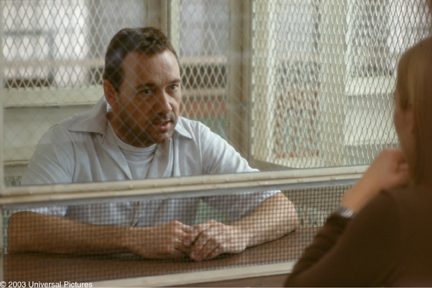
The Life of David Gale
Film critics get asked what movie they hate the most almost as much as what movie they love the most. Such superlatives are more about defining your tastes than objectively separating the bad from the abysmal. The Life of David Gale has served as my go to answer for that question for the last few years, so revisiting it had its own trepidation. It couldn’t possibly be that bad, could it? And if it wasn’t, would I have to find a new whipping boy?
Turns out I needn’t have worried. It was, in fact, that bad.
What I Said Then
I did not review The Life of David Gale in 2003, which surprised me a little. I always assumed I had dubbed it the worst film of 2003 in my end-of-year retrospective, but I didn’t. That honor went to The Matrix Reloaded.
What I Say Now
As an undergraduate, one of the first movies I had to write a review for was a mediocre comedy about affirmative-action called Soul Man. I disliked the movie intensely, but when I tried to analyze it dispassionately I could not align the film’s faults with my own level of disdain. Eventually, I pondered the question of whether or not films about serious subjects warranted a higher standard. At the time I said ‘yes,’ and I’ve more or less kept to that opinion.
The Life of David Gale is about a serious topic: the death penalty. Some great films have wrestled with this topic, including Dead Man Walking and At The Death House Door. Neither is the problem that I dislike the film’s politics. I am more or less against the death penalty. There is a problem with the film’s central conceit, though, that “almost martyrs” don’t count but one executed innocent would be enough to generate outrage and topple the system. About central issues, about most issues, people are a lot less elastic than the movie portrays and their political stances are less built on arguments than their arguments are retrofitted to accommodate their positions. This fact alone makes the problems with David Gale fundamental rather than ones of execution (no pun intended). The film is intended, I think, to persuade us about a a real issue, but the world of the film is not recognizable as our own. It resembles our own only superficially.
The odd thing about the film’s politics is that it is offensively condescending to not only pro-death penalty advocates but to those who are against capital punishment as well. In one of the activists’ speeches, she argues the death penalty condemns the families of victims to hate. The implication is that nobody could have first hand associations with violent crime and be against the death penalty as a matter of principle. The moral superiority of Gale and his colleagues is established not just by virtue of the fact that they have the right position but that they are capable of having it. This of course renders the whole point of making an argument moot; if you claim people are not capable of principled, reasoned decisions, what’s the point of educating them?
There is a fair amount of caricature that passes for argument, with the southern setting providing quirky local color. There’s a nice little bit between the two reporters when one says that you know you are in the Bible Belt when there are more churches than Starbucks and the other retorts that there are more prisons than Starbucks. That’s about as penetrating as the analysis gets. We get the requisite complaint that minorities are executed more than whites, that the poor have inferior lawyers to the rich. Any attempts to understand, on a broader level, why these things are so is left for better movies. They are talking points as much as the faux debate between Gale and the Texas politician who is tricked into agreeing with Hitler and disassociating from Gandhi.
I drift from my central complaint against The Life of David Gale, however. My dislike has more to do with sensibility than sense. A snuff video plays a central role in the plot of the film, one involving a naked, bound woman, slowly and painfully dying. We get to watch it repeatedly. Perhaps there is a larger point to be made about the desensitizing aspects of video, though I doubt it, given Kate Winslet’s instructional emoting cuing us to be horrified. There may even be an irony that is supposed to relate back to the death penalty–why does this horrify us but watching a person get executed does not? Really it just feels tawdry, and I can’t believe that is what they are going for. For a film that wants us to value life and rise above our more prurient interests, it sure panders to the latter an awful lot.
The Verdict
I’ve spend a few days in the wake of screening the film wondering why certain actors or directors survive bad movies and others don’t. For Kevin Spacey, The Life of David Gale looks and feels like a tipping point. He was already eight years removed from The Usual Suspect and Se7en, six from L.A. Confidential. The difference between a long-standing great actor and a good actor who had a particularly good run of films is much easier to make in retrospect. Kate Winslet, in contrast, already had three Academy Award nominations by 2003, but she followed up David Gale with Eternal Sunshine of the Spotless Mind and is still, I would think, considered a top-tier actress.
Alan Paker has not directed another film since The Life of David Gale. His career filmography is filled with films that garner strong reactions, and ones that often polarize. Mississippi Burning takes a serious topic and similarly overlays it with some emotive scenery chewing, yet it has more respectable reviews overall. Midnight Express is esteemed by critics, and even Angel Heart, Fame, and Pink Floyd–The Wall have defenders. I am personally quite fond of Birdy.
In fact, if one looks at Parker’s Rotten Tomatoes page, one sees an interesting trend. His first ten films all garnered “fresh” ratings (meaning at least 60% of critics rated a film positively). By contrast three of his last five films failed to meet that threshold, with The Road to Wellville and Angela’s Ashes also getting the cold shoulder. Did his talents decline? Is his style more suitable to the the 70s and 80s? Was his selection of collaborators off? (In retrospect, how many people now think of Midnight Express as being an Oliver Stone film?)
Whatever the answer, it is surprising how much the last film casts a shadow over all that goes before. Ultimately, I would argue that given enough time Parker, like most artists, will be judged by his best work, not necessarily his most recent. That may take more than ten years, though. It may take a new generation of consumers who don’t necessarily experience the films in the order they were created.
Previous Post

December 28, 2012
2012 Top Ten
Next Post

January 10, 2013 2012 NCFCA Awards
Browse Our Archives
Select a Category 10 Years Later 1999 Top 5 2007 Top 10 2008 Favorite Discoveries 2008 Top 10 2009 Favorite Discoveries 2009 Top 10 2010 Favorite Discoveries 2010 Top 10 2011 Top 10 2012 Top Ten 2013 Top Ten 2014 Top Ten Best Picture Winners Christian Spotlight on Entertainment Christianity Today Coming Soon Disclosure Disclosure--AS Disclosure--Book Disclosure--DVDS Disclosure--SEOL Disclosure--Travel Dissenting Opinion Elsewhere Emergenetics Essays Featured Film Fest DC--2014 Film Festivals Full Frame Documentary Film Festival 2010 Full Frame Documentary Film Festival 2011 Full Frame Documentary Film Festival 2012 Full Frame Documentary Film Festival 2013 Full Frame Documentary Film Festival 2014 Headline Interviews Laura on the Oscar Winners Podcasts Quick Impressions Reviews RiverRun Film Festival 2014 Television The Criterion Collection The Thin Place To Stream or Not to Stream? Top 10s and Other Lists Toronto International Film Festival 2009 Toronto International Film Festival 2010 Toronto International Film Festival 2011 Toronto International Film Festival 2012 Toronto International Film Festival 2013 Toronto International Film Festival 2014 Uncategorized Video Virginia Film Festival 2011 Virginia Film Festival 2013 Women's Film Festival 2012
Select a Month February 2016 January 2016 December 2015 November 2015 October 2015 September 2015 August 2015 July 2015 June 2015 May 2015 April 2015 March 2015 February 2015 January 2015 December 2014 November 2014 October 2014 September 2014 August 2014 July 2014 June 2014 May 2014 April 2014 March 2014 February 2014 January 2014 December 2013 November 2013 October 2013 September 2013 August 2013 July 2013 June 2013 May 2013 April 2013 March 2013 February 2013 January 2013 December 2012 November 2012 October 2012 September 2012 August 2012 July 2012 June 2012 May 2012 April 2012 March 2012 February 2012 January 2012 December 2011 November 2011 October 2011 September 2011 August 2011 July 2011 June 2011 May 2011 April 2011 March 2011 February 2011 January 2011 December 2010 November 2010 October 2010 September 2010 August 2010 July 2010 June 2010 May 2010 April 2010 March 2010 February 2010 January 2010 December 2009 November 2009 September 2009 August 2009 July 2009 June 2009 May 2009 April 2009
Follow Us!
TAKE THE
Religious Wisdom Quiz
Who said, "Speak, Lord, for your servant is listening"?
Select your answer to see how you score.
David Solomon Eli Samuel
Related posts from 1More Film Blog

An Inconvenient Truth (Guggenheim, 2006) -- 10 Years...

The Devil Wears Prada (Frankel, 2006) -- 10...

"Telling a Great Story" -- An Interview with...

Is Snow White Still Essential?
TRENDING AT PATHEOS Religious Music & Entertainment

"Les Diabolique" and Transgression
Alongside something like Arrival, Vertigo, or Charade, Les Diaboliques is a...

"The Plague Dogs" and Mortality
So, flashback to the late 70s, early 80s. Walt Disney Studios is...

With the recent and highly successful release of Christopher Nolan’s epic film,...

"L'avventura" and Human Weakness
Today's piece is going to be a little different for a few...

I first want to apologize for not posting or writing anything. I'm...

I've engaged in the multi-year project of reading through the Church Fathers,...
view all Religious Music & Entertainment blogs
Ad-Free & Subscriber Log-In Subscription Support
- About Us
- 2026 Calendar
- Videos
- Podcasts
- Library of World Religions
- Faith In Media Tracker
- Advertise With Us
- Write for Us
- Privacy Policy
- Terms of Service
- Do Not Sell My Data
- Contact Us
- Radiant Digital
- Manage Newsletter Subscriptions
- Unsubscribe From Notifications
- Sitemap
Copyright 2008-2026, Patheos. All rights reserved.
Subscription Support Ad-Free & Subscriber Log-In
Follow Patheos