
BuddhistCatholicContemplativeEvangelicalGeneral ChristianHinduJewishLatter-day SaintMuslimNew VisionsProgressive Christian
Beliefs
- Buddhist
- Catholic
- Contemplative
- Evangelical
- General Christian
- Hindu
- Jewish
- Latter-day Saint
- More Voices
- Muslim
- New Visions
- Pagan
- Progressive Christian
Topics
- Religion News
- Food and Religion
- Sports and Religion
- Religious Art
- Religious Music and Entertainment
- Religious Events
- History and Religion
- Style and Religion
- Politics and Religion
- Women in Religion
- Recreation Outdoors and Religion
- Business Finance and Religion
- Careers Workplace and Religion
- Education and Religion
- Family Parenting and Religion
- Health Fitness and Religion
- Home and Religion
- Relationships and Religion
- Technology and Religion
- Travel and Religion
Columnists
- Buddhist Columnists
- Business Finance and Religion Columnists
- Careers Workplace and Religion Columnists
- Catholic Columnists
- Contemplative Columnists
- Education and Religion Columnists
- Evangelists Columnists
- Family Parenting and Religion Columnists
- General Christian Columnists
- Health Fitness and Religion Columnists
- Hindu Columnists
- History and Religion Columnists
- Home and Religion Columnists
- Jewish Columnists
- More Voices Columnists
- Latter Day Columnists
- Muslim Columnists
- New Visions Columnists
- Nonreligious Columnists
- Pagan Columnists
- Politics and Religion Columnists
- Progressive Columnists
- Recreation Outdoors and Religion Columnists
- Relationships and Religion Columnists
- Religion News Columnists
- Religious Art Columnists
- Religious Events Columnists
- Religious Music and Entertainment Columnists
- Sports and Religion Columnists
- Style and Religion Columnists
- Technology and Religion Columnists
- Travel and Religion Columnists
- Women in Religion Columnists
Resource Library
- 2026 Calendar
- Library of World Religions
- The 100 Most Holy Places on Earth
- Patheos Answers
- Podcasts
- Videos
- Faith Leaders Database
- Anglican Episcopalian
- Bahai
- Baptist
- Buddhism
- Christianity
- Confucianism
- Eastern Orthodoxy
- Hinduism
- Holiness and Pentecostal
- ISKCON
- Islam
- Judaism
- Lutheran
- Methodist
- The Church of Jesus Christ of Latter-day Saints
- New Age
- Paganism
- Presbytarian and Reformed
- Protestantism
- Religion Behind the Scenes
- Roman Catholic
- Scientology
- Shia Islam
- Sikhism
- Sufism
- Sunni Islam
- Taoism
- Zen
- See all religions
Research Tools
 Ad-Free & Subscriber Log-In Subscription Support
Ad-Free & Subscriber Log-In Subscription Support
Follow Patheos 

- Trending:
- Forgiveness
- |
- Marriage
- |
- Consciousness
- |
- Death Penalty
- |
- Election
- |
- Halloween
 1More Film Blog
- Home
- Religious Music & Entertainment
- The Lesson (Grozeva and Valchanov, 2014)
The Lesson (Grozeva and Valchanov, 2014)
Last updated on: June 11, 2015 at 7:53 am by Evan Cogswell
The Lesson (Grozeva and Valchanov, 2014) 2015-06-11T07:53:46-05:00 Evan Cogswell
Patheos Explore the world's faith through different perspectives on religion and spirituality! Patheos has the views of the prevalent religions and spiritualities of the world.
When I was a freshman in college, one of my professors told me I should check out a famous piece of organ repertoire that was notoriously difficult and extremely virtuosic. I promptly found the score at the music library, and as I looked over the first few pages, I said to myself, “This is almost sight-readable, nothing that difficult about it at all.” I then turned another page, and the piece quickly turned into a virtuosic tour de force.
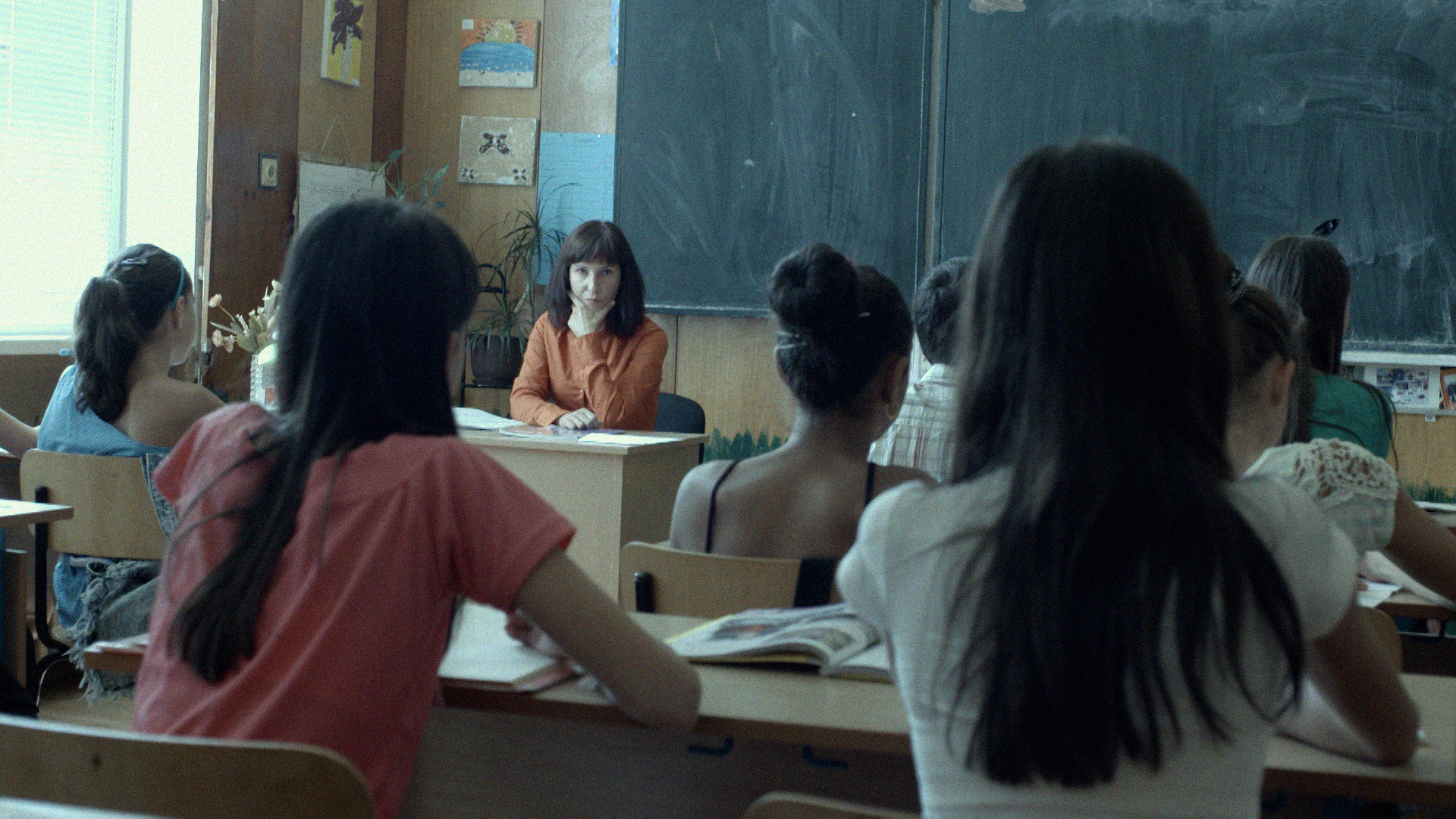
Watching The Lesson, (★★★) I was reminded of that incident, specifically by the trajectory of Nade’s (Margita Gosheva) character arc. Like the piece of music my professor recommended, Nade undergoes a drastic change in character which happens just as quickly as that piece’s increase in difficulty. However, unlike that piece of organ music which had a transition to connect its contrasting sections, The Lesson hurls the viewer from one end of Nade’s arc to the other.
The premise of The Lesson is that Nade, an English teacher at a Bulgarian elementary school as well as a part time translator, is highly principled, deeply ethical, hard working and something of a deontologist, but when she is pushed to her breaking point by the worst luck imaginable, in order to survive she will choose to do things she would otherwise abhor. The idea that everyone has a breaking point is not exactly new, and unfortunately, I did not find its presentation here particularly satisfying.
 I was much more interested in the failure of community responsibility that enabled Nade to fall upon such dire straits, a theme which the film left mostly unexplored. The opening scene sets up that idea very nicely, as Nade addresses her class in regards to an unknown thief who stole another student’s wallet. Nade informs the students that each one of them will contribute ten stotinki (six cents) to make up for the stolen money, and the thief now owes the entire class money. Later Nade leaves a marked bill on her desk as a trap. When that disappears, she is nearly unable to afford bus fare, pay her mortgage, and get home. If the film wanted to show how seemingly harmless misdemeanors affect entire communities, the setup is perfect, but there is no follow through. Nade makes vague threats that the perpetrator will be caught and punished, but there is no suggestion anything will come of that either.
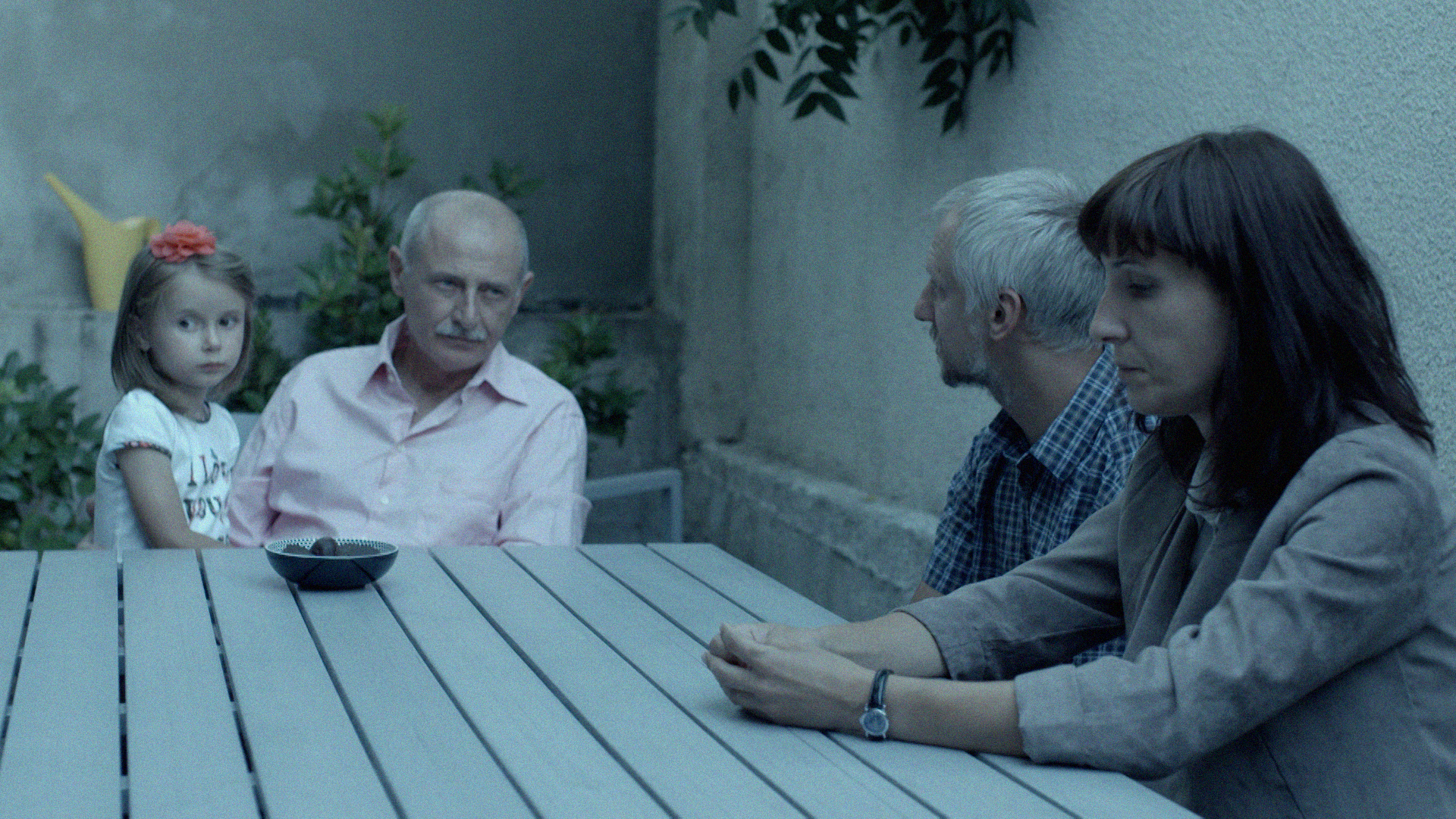
Meanwhile, the firm for which Nade has been translating has been refusing to pay her for months, at home Nade’s husband has been squandering the money for their mortgage payments, and the bank is going to auction off their house in three days unless all the money is paid with interest. In her quest to acquire the funds to save their home, just about every imaginable difficulty befalls Nade: a nasty fight with a rich estranged family member, empty promises of being paid by her boss, accepting a loan from a shady source, and her car breaking down almost making her late for a crucial appointment. There are other clichés as well, but to mention them would be a spoiler.
Nade has four roles: teacher, employee, wife, and mother. In all of those roles, people who should help and support her fail to do so. And eventually, she fails in her duties as well. The problem is we see small violations of her duties, such as making a reckless judgment call which might endanger her family or telling a white lie to her boss to get out of work, and the next thing we see is so extreme in comparison that it actually made me wonder whether The Lesson was supposed to be a dark comedy, because that is the only genre in which the climactic action would make dramatic sense.
Reading the press kit for The Lesson I see that the film’s climax is based upon an actual occurrence. That is believable, but if the film wanted that incident to believable in the film, then it needed to have a better progression to that incident. As it is, the film contains several good ideas, but comes across like a lesson from a teacher who only prepared a few good bullet points instead of an entire lecture.
Evan Cogswell blogs about film at Catholic Cinephile.
Next Post

June 11, 2015 Jurassic World (Trevorrow, 2015)
Browse Our Archives
Select a Category 10 Years Later 1999 Top 5 2007 Top 10 2008 Favorite Discoveries 2008 Top 10 2009 Favorite Discoveries 2009 Top 10 2010 Favorite Discoveries 2010 Top 10 2011 Top 10 2012 Top Ten 2013 Top Ten 2014 Top Ten Best Picture Winners Christian Spotlight on Entertainment Christianity Today Coming Soon Disclosure Disclosure--AS Disclosure--Book Disclosure--DVDS Disclosure--SEOL Disclosure--Travel Dissenting Opinion Elsewhere Emergenetics Essays Featured Film Fest DC--2014 Film Festivals Full Frame Documentary Film Festival 2010 Full Frame Documentary Film Festival 2011 Full Frame Documentary Film Festival 2012 Full Frame Documentary Film Festival 2013 Full Frame Documentary Film Festival 2014 Headline Interviews Laura on the Oscar Winners Podcasts Quick Impressions Reviews RiverRun Film Festival 2014 Television The Criterion Collection The Thin Place To Stream or Not to Stream? Top 10s and Other Lists Toronto International Film Festival 2009 Toronto International Film Festival 2010 Toronto International Film Festival 2011 Toronto International Film Festival 2012 Toronto International Film Festival 2013 Toronto International Film Festival 2014 Uncategorized Video Virginia Film Festival 2011 Virginia Film Festival 2013 Women's Film Festival 2012
Select a Month February 2016 January 2016 December 2015 November 2015 October 2015 September 2015 August 2015 July 2015 June 2015 May 2015 April 2015 March 2015 February 2015 January 2015 December 2014 November 2014 October 2014 September 2014 August 2014 July 2014 June 2014 May 2014 April 2014 March 2014 February 2014 January 2014 December 2013 November 2013 October 2013 September 2013 August 2013 July 2013 June 2013 May 2013 April 2013 March 2013 February 2013 January 2013 December 2012 November 2012 October 2012 September 2012 August 2012 July 2012 June 2012 May 2012 April 2012 March 2012 February 2012 January 2012 December 2011 November 2011 October 2011 September 2011 August 2011 July 2011 June 2011 May 2011 April 2011 March 2011 February 2011 January 2011 December 2010 November 2010 October 2010 September 2010 August 2010 July 2010 June 2010 May 2010 April 2010 March 2010 February 2010 January 2010 December 2009 November 2009 September 2009 August 2009 July 2009 June 2009 May 2009 April 2009
Follow Us!
TAKE THE
Religious Wisdom Quiz
Who said, "All things work together for good"?
Select your answer to see how you score.
John Peter Paul James
Related posts from 1More Film Blog

An Inconvenient Truth (Guggenheim, 2006) -- 10 Years...

The Devil Wears Prada (Frankel, 2006) -- 10...

"Telling a Great Story" -- An Interview with...

Is Snow White Still Essential?
TRENDING AT PATHEOS Religious Music & Entertainment

"Les Diabolique" and Transgression
Alongside something like Arrival, Vertigo, or Charade, Les Diaboliques is a...

"The Plague Dogs" and Mortality
So, flashback to the late 70s, early 80s. Walt Disney Studios is...

With the recent and highly successful release of Christopher Nolan’s epic film,...

"L'avventura" and Human Weakness
Today's piece is going to be a little different for a few...

I first want to apologize for not posting or writing anything. I'm...

I've engaged in the multi-year project of reading through the Church Fathers,...
view all Religious Music & Entertainment blogs
Ad-Free & Subscriber Log-In Subscription Support
- About Us
- 2026 Calendar
- Videos
- Podcasts
- Library of World Religions
- Faith In Media Tracker
- Advertise With Us
- Write for Us
- Privacy Policy
- Terms of Service
- Do Not Sell My Data
- Contact Us
- Radiant Digital
- Manage Newsletter Subscriptions
- Unsubscribe From Notifications
- Sitemap
Copyright 2008-2026, Patheos. All rights reserved.
Subscription Support Ad-Free & Subscriber Log-In
Follow Patheos