
BuddhistCatholicContemplativeEvangelicalGeneral ChristianHinduJewishLatter-day SaintMuslimNew VisionsProgressive Christian
Beliefs
- Buddhist
- Catholic
- Contemplative
- Evangelical
- General Christian
- Hindu
- Jewish
- Latter-day Saint
- More Voices
- Muslim
- New Visions
- Pagan
- Progressive Christian
Topics
- Religion News
- Food and Religion
- Sports and Religion
- Religious Art
- Religious Music and Entertainment
- Religious Events
- History and Religion
- Style and Religion
- Politics and Religion
- Women in Religion
- Recreation Outdoors and Religion
- Business Finance and Religion
- Careers Workplace and Religion
- Education and Religion
- Family Parenting and Religion
- Health Fitness and Religion
- Home and Religion
- Relationships and Religion
- Technology and Religion
- Travel and Religion
Columnists
- Buddhist Columnists
- Business Finance and Religion Columnists
- Careers Workplace and Religion Columnists
- Catholic Columnists
- Contemplative Columnists
- Education and Religion Columnists
- Evangelists Columnists
- Family Parenting and Religion Columnists
- General Christian Columnists
- Health Fitness and Religion Columnists
- Hindu Columnists
- History and Religion Columnists
- Home and Religion Columnists
- Jewish Columnists
- More Voices Columnists
- Latter Day Columnists
- Muslim Columnists
- New Visions Columnists
- Nonreligious Columnists
- Pagan Columnists
- Politics and Religion Columnists
- Progressive Columnists
- Recreation Outdoors and Religion Columnists
- Relationships and Religion Columnists
- Religion News Columnists
- Religious Art Columnists
- Religious Events Columnists
- Religious Music and Entertainment Columnists
- Sports and Religion Columnists
- Style and Religion Columnists
- Technology and Religion Columnists
- Travel and Religion Columnists
- Women in Religion Columnists
Resource Library
- 2026 Calendar
- Library of World Religions
- The 100 Most Holy Places on Earth
- Patheos Answers
- Podcasts
- Videos
- Faith Leaders Database
- Anglican Episcopalian
- Bahai
- Baptist
- Buddhism
- Christianity
- Confucianism
- Eastern Orthodoxy
- Hinduism
- Holiness and Pentecostal
- ISKCON
- Islam
- Judaism
- Lutheran
- Methodist
- The Church of Jesus Christ of Latter-day Saints
- New Age
- Paganism
- Presbytarian and Reformed
- Protestantism
- Religion Behind the Scenes
- Roman Catholic
- Scientology
- Shia Islam
- Sikhism
- Sufism
- Sunni Islam
- Taoism
- Zen
- See all religions
Research Tools
 Ad-Free & Subscriber Log-In Subscription Support
Ad-Free & Subscriber Log-In Subscription Support
Follow Patheos 

- Trending:
- Forgiveness
- |
- Marriage
- |
- Consciousness
- |
- Death Penalty
- |
- Election
- |
- Halloween
 1More Film Blog
- Home
- Religious Music & Entertainment
- The Churchmen — Season 1, Episode 5 Recap
The Churchmen — Season 1, Episode 5 Recap
Last updated on: August 23, 2015 at 8:07 pm by Kenneth R. Morefield
The Churchmen — Season 1, Episode 5 Recap 2015-08-23T20:07:55-05:00 Kenneth R. Morefield
Patheos Explore the world's faith through different perspectives on religion and spirituality! Patheos has the views of the prevalent religions and spiritualities of the world.
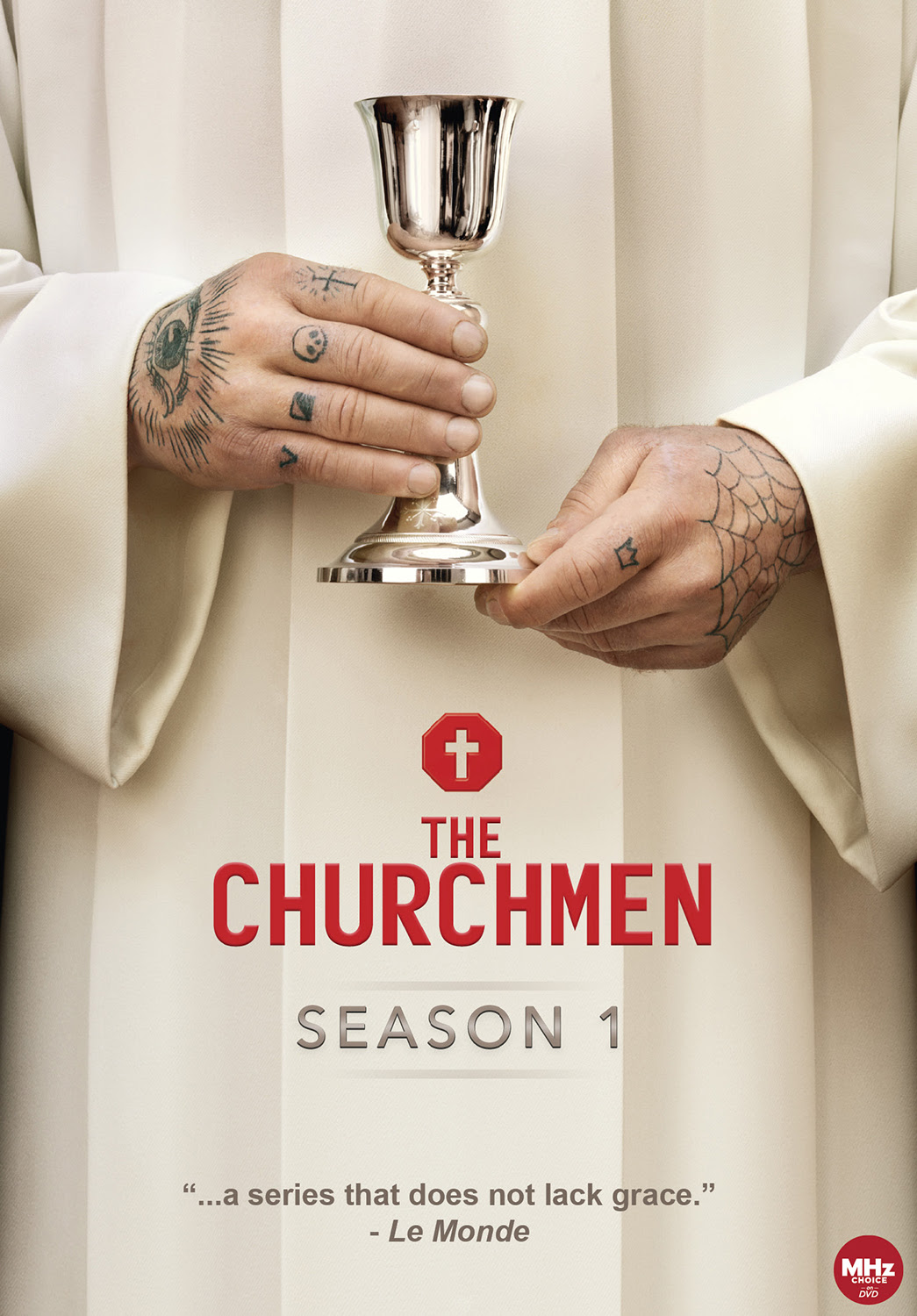 Season One of The Churchmen is eight episodes long, making episodes four and five the middle of season. How is content influenced by structure? What makes a melodrama different from a soap opera? This may be a good time to discuss form–not just the shape of the individual episodes, but that of the season as a whole.
Most American network shows have around twenty-five episodes per season. Cable shows, such as Major Crimes, Game of Thrones, or The Shield often have half that amount. The need to create double or even triple the content of some other shows makes it understandable why networks tend to love procedural shows. (Think Law & Order, E.R., or just about any reality show, such as Survivor or Project Runway.) Writing is hard, and unless you have a single show runner with a creative vision (David Simon in The Wire, J.J. Abrams in Lost, or Aaron Sorkin in some seasons of The West Wing), developing plot arcs over multiple episodes is particularly difficult. As someone who has tried at times to do weekly recaps of television shows, I can attest that it is hard to write efficiently, effectively, and consistently, on a weekly basis for twenty-four weeks in a row.Imagine how much harder it would be to not merely summarize and analyze content but also create it.
The procedural format allows a weekly episode to be self-contained, at least in the “A” story, while perhaps allowing character arcs or development to play out at a slower pace over multiple episodes. But in any project that is collaboratively written, subtly is hardly an option–hints or clues about characters need to be obvious enough that writers of other episodes don’t contradict them and viewers who tune in once a week (rather than binge watching or living with the characters daily) feel smart for picking up on them. Soap operas are built on cliffhangers and near constant change, so the pace is much quicker there, even if no one episode is self-contained.
Shorter series have a bit more freedom to tell a single story across multiple episodes (Prime Suspect, Luther). Or they may have plot-lines involving each character with different episodes focusing mostly on one story-line while advancing the others only slightly. Downton Abbey is written in this vein, and so too, I think, is The Churchmen. All eight episodes of Season 1 are written by David Elkaim and Vincent Poymiro, so one expects–and gets–a bit more continuity in the storytelling than one might get in an American show. It appears to be one story, that of the first year at seminary, split over eight episodes rather than eight different stories set in the same place. (It is worth noting that Rodolphe Tissot is credited with direction for episodes 1-4, while Elizabeth Marre and Olivier Pont are credited with directing episodes 5-8. Does the visual look of the show change? More on that, perhaps, in my next/last recap.)
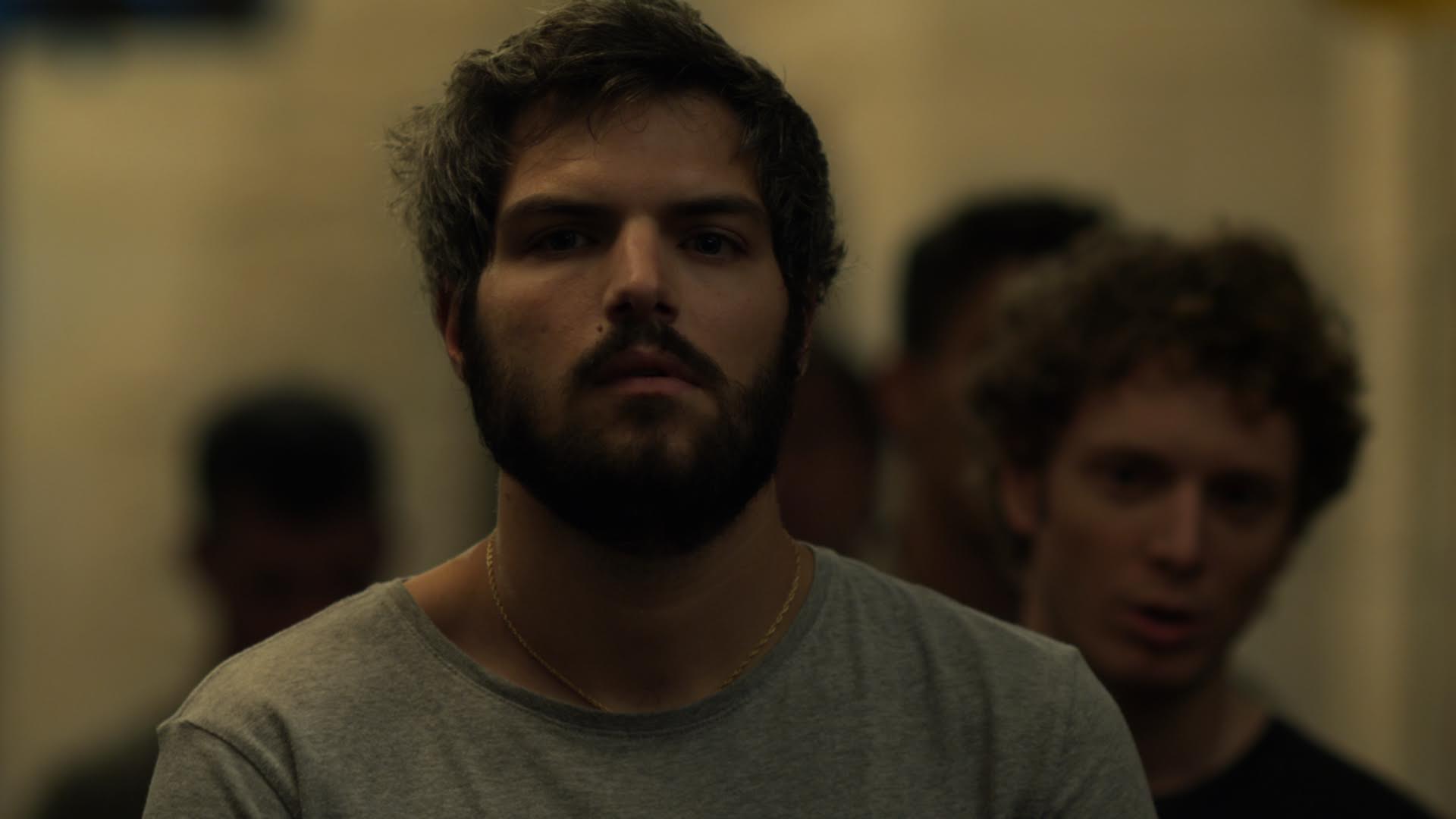 Of course, whether or not a story arc is six episodes or twenty-four, it still has to have its Aristotelian beginning, middle, and end. Middle episodes sometimes feel like filler–more often in television than in film–because the conflict has been established but the show is not ready to bring it to a resolution. The end of episode four and most of episode five has been the first time that The Churchmen felt dumbed-down to me, at least in one of its story arcs. After secreting off to the Vatican and charging, unwelcome, into a superior’s private chambers, Father Bosco returns to the Capuchins only to find a packet of cash in Fromenger’s desk. That this might prompt a crisis of faith in some characters is credible, but Bosco’s loyalty to Fromenger is one of his defining characteristics. Doubt? Possibly. But I had a hard time believing he wouldn’t go to Fromenger himself to seek an explanation.
The stories around the seminarians fare a little better, in part because they are more often individual episodes. Yes, Yann’s musical flirtation with the punk singer has covered multiple episodes as has Rapheal’s family business.(The latter coming off better than the Bosco story arc because it was allowed to climax and move to the next phase rather than remain unresolved so that each story line could peak at the end of the season.)
But if the plotting of the middle episodes are somewhat conventional, the characterization remains exemplary. Jose and Raphael are the most assertive of the seminarians, so it is right that they should both clash and bond. And it is nice the way the show does not ignore the inevitable class tensions arising from the different background of the candidates. Much of this episode revolves around the seminarians taking clothes to a squatters’ camp, leading to discussions about the merits of socio-political activism versus charity that is strictly religiously motivated.
I also like the easy familiarity between Fromenger and his female assistant. Religiously themed dramas too often don’t know how to depict a range of relationships between genders and so end up giving us the same-old-same-old, the “will they or won’t they” (succumb to sexual tension) one sees on just about any workplace romance. But in five episodes of The Churchmen, we’ve already seen Emmanuel’s confession regarding visiting a brothel, Yann’s struggle with jealousy (and budding realization that intimacy is as much an allure as sex), a chaste friendship between a priest and a nun, and one seminarian’s erotic dream hinting at a deeper struggle with chastity than we’ve yet seen externalized.
Finally, I really like the depiction of Fromenger as a teacher. When informed about the seminarians’ scheme to clothe the squatters, rather than being directive, he listens, highlights ways of looking at the situation that they might not have considered, affirms that they will eventually have to make and be responsible for their own decisions, and avoids giving them an order. There is, most probably, a bit of foreshadowing in his reminder that they won’t always have him to protect them, and one wonders if that prophecy might find fulfillment when it is revealed that Yann inadvertently consumed MDMA.
It remains to be seen whether or not The Churchmen can transition not just between one character’s arc and another’s but between a character’s arc and his next. How will Rapheal be affected by the news regarding his brother? Will Yann’s experience at the bar drive him deeper into a distrustful, monastic life or sow seeds of temptation that he struggles with further down the line? Will Bosco’s suspicions, once he knows the rest of the story, contribute to greater self-loathing or make him realize that he can’t continue to idolize Fromenger? That I am even asking these questions is a good sign, one that suggests The Churchmen has already become more about character than plot.
Reminder: You can watch MHz Network shows live on the web or purchase individual episodes to screen on Roku without a subscription. For more information, see MHz Network.
Previous Episodes:
Episode 2 (Catholic Cinephile)
Episode 4 (Catholic Cinephile)
Previous Post

August 20, 2015
Top Spin (Newens & Son, 2014)
Next Post

August 23, 2015 The Pardon (Anton, 2013)
Browse Our Archives
Select a Category 10 Years Later 1999 Top 5 2007 Top 10 2008 Favorite Discoveries 2008 Top 10 2009 Favorite Discoveries 2009 Top 10 2010 Favorite Discoveries 2010 Top 10 2011 Top 10 2012 Top Ten 2013 Top Ten 2014 Top Ten Best Picture Winners Christian Spotlight on Entertainment Christianity Today Coming Soon Disclosure Disclosure--AS Disclosure--Book Disclosure--DVDS Disclosure--SEOL Disclosure--Travel Dissenting Opinion Elsewhere Emergenetics Essays Featured Film Fest DC--2014 Film Festivals Full Frame Documentary Film Festival 2010 Full Frame Documentary Film Festival 2011 Full Frame Documentary Film Festival 2012 Full Frame Documentary Film Festival 2013 Full Frame Documentary Film Festival 2014 Headline Interviews Laura on the Oscar Winners Podcasts Quick Impressions Reviews RiverRun Film Festival 2014 Television The Criterion Collection The Thin Place To Stream or Not to Stream? Top 10s and Other Lists Toronto International Film Festival 2009 Toronto International Film Festival 2010 Toronto International Film Festival 2011 Toronto International Film Festival 2012 Toronto International Film Festival 2013 Toronto International Film Festival 2014 Uncategorized Video Virginia Film Festival 2011 Virginia Film Festival 2013 Women's Film Festival 2012
Select a Month February 2016 January 2016 December 2015 November 2015 October 2015 September 2015 August 2015 July 2015 June 2015 May 2015 April 2015 March 2015 February 2015 January 2015 December 2014 November 2014 October 2014 September 2014 August 2014 July 2014 June 2014 May 2014 April 2014 March 2014 February 2014 January 2014 December 2013 November 2013 October 2013 September 2013 August 2013 July 2013 June 2013 May 2013 April 2013 March 2013 February 2013 January 2013 December 2012 November 2012 October 2012 September 2012 August 2012 July 2012 June 2012 May 2012 April 2012 March 2012 February 2012 January 2012 December 2011 November 2011 October 2011 September 2011 August 2011 July 2011 June 2011 May 2011 April 2011 March 2011 February 2011 January 2011 December 2010 November 2010 October 2010 September 2010 August 2010 July 2010 June 2010 May 2010 April 2010 March 2010 February 2010 January 2010 December 2009 November 2009 September 2009 August 2009 July 2009 June 2009 May 2009 April 2009
Follow Us!
TAKE THE
Religious Wisdom Quiz
Who was the first Christian martyr mentioned in Acts?
Select your answer to see how you score.
James Philip Barnabas Stephen
Related posts from 1More Film Blog


The Looking Glass (Hancock, 2015)

In Jackson Heights (Wiseman, 2015)

TRENDING AT PATHEOS Religious Music & Entertainment

"Les Diabolique" and Transgression
Alongside something like Arrival, Vertigo, or Charade, Les Diaboliques is a...

"The Plague Dogs" and Mortality
So, flashback to the late 70s, early 80s. Walt Disney Studios is...

With the recent and highly successful release of Christopher Nolan’s epic film,...

"L'avventura" and Human Weakness
Today's piece is going to be a little different for a few...

I first want to apologize for not posting or writing anything. I'm...

I've engaged in the multi-year project of reading through the Church Fathers,...
view all Religious Music & Entertainment blogs
Ad-Free & Subscriber Log-In Subscription Support
- About Us
- 2026 Calendar
- Videos
- Podcasts
- Library of World Religions
- Faith In Media Tracker
- Advertise With Us
- Write for Us
- Privacy Policy
- Terms of Service
- Do Not Sell My Data
- Contact Us
- Radiant Digital
- Manage Newsletter Subscriptions
- Unsubscribe From Notifications
- Sitemap
Copyright 2008-2026, Patheos. All rights reserved.
Subscription Support Ad-Free & Subscriber Log-In
Follow Patheos