
BuddhistCatholicContemplativeEvangelicalGeneral ChristianHinduJewishLatter-day SaintMuslimNew VisionsProgressive Christian
Beliefs
- Buddhist
- Catholic
- Contemplative
- Evangelical
- General Christian
- Hindu
- Jewish
- Latter-day Saint
- More Voices
- Muslim
- New Visions
- Pagan
- Progressive Christian
Topics
- Religion News
- Food and Religion
- Sports and Religion
- Religious Art
- Religious Music and Entertainment
- Religious Events
- History and Religion
- Style and Religion
- Politics and Religion
- Women in Religion
- Recreation Outdoors and Religion
- Business Finance and Religion
- Careers Workplace and Religion
- Education and Religion
- Family Parenting and Religion
- Health Fitness and Religion
- Home and Religion
- Relationships and Religion
- Technology and Religion
- Travel and Religion
Columnists
- Buddhist Columnists
- Business Finance and Religion Columnists
- Careers Workplace and Religion Columnists
- Catholic Columnists
- Contemplative Columnists
- Education and Religion Columnists
- Evangelists Columnists
- Family Parenting and Religion Columnists
- General Christian Columnists
- Health Fitness and Religion Columnists
- Hindu Columnists
- History and Religion Columnists
- Home and Religion Columnists
- Jewish Columnists
- More Voices Columnists
- Latter Day Columnists
- Muslim Columnists
- New Visions Columnists
- Nonreligious Columnists
- Pagan Columnists
- Politics and Religion Columnists
- Progressive Columnists
- Recreation Outdoors and Religion Columnists
- Relationships and Religion Columnists
- Religion News Columnists
- Religious Art Columnists
- Religious Events Columnists
- Religious Music and Entertainment Columnists
- Sports and Religion Columnists
- Style and Religion Columnists
- Technology and Religion Columnists
- Travel and Religion Columnists
- Women in Religion Columnists
Resource Library
- 2026 Calendar
- Library of World Religions
- The 100 Most Holy Places on Earth
- Patheos Answers
- Podcasts
- Videos
- Faith Leaders Database
- Anglican Episcopalian
- Bahai
- Baptist
- Buddhism
- Christianity
- Confucianism
- Eastern Orthodoxy
- Hinduism
- Holiness and Pentecostal
- ISKCON
- Islam
- Judaism
- Lutheran
- Methodist
- The Church of Jesus Christ of Latter-day Saints
- New Age
- Paganism
- Presbytarian and Reformed
- Protestantism
- Religion Behind the Scenes
- Roman Catholic
- Scientology
- Shia Islam
- Sikhism
- Sufism
- Sunni Islam
- Taoism
- Zen
- See all religions
Research Tools
 Ad-Free & Subscriber Log-In Subscription Support
Ad-Free & Subscriber Log-In Subscription Support
Follow Patheos 

- Trending:
- Forgiveness
- |
- Marriage
- |
- Consciousness
- |
- Death Penalty
- |
- Election
- |
- Halloween
 1More Film Blog
- Home
- Religious Music & Entertainment
- Still Life (Pasolini, 2013)
Still Life (Pasolini, 2013)
Last updated on: January 26, 2015 at 1:54 pm by Josh Wartel
Still Life (Pasolini, 2013) 2015-01-26T13:54:57-05:00 Josh Wartel
Patheos Explore the world's faith through different perspectives on religion and spirituality! Patheos has the views of the prevalent religions and spiritualities of the world.
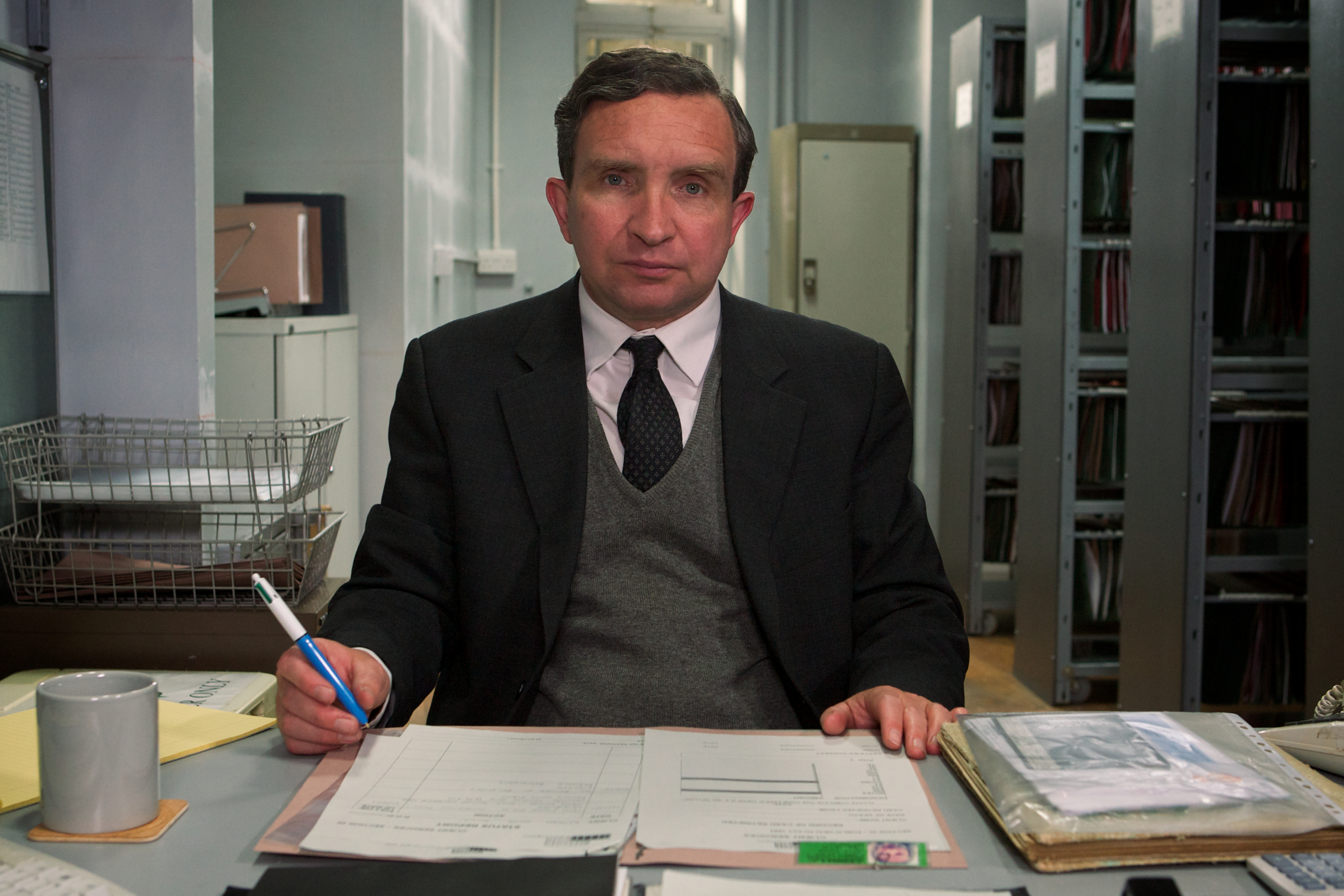
John May isn’t a man of strong convictions. Half way through Still Life (★★½), a film directed by Uberto Pasolini, May orders a black tea in a convenience store. “You should try our hot chocolate. The new machine is gorgeous,” the cashier hints. May takes an extended, one might say awkward, pause. “Alright, a hot chocolate please,” he replies without blinking.
May, played by British actor Eddie Marsan, is a curious character and Still Life is a curious film. A mostly ignored worker for the Kennington Borough Council, May handles funeral arrangements and writes obituaries for London’s forgotten deceased. These men and women frequently rot for weeks before they are discovered. May contacts any family members he can find, urging them to at the very least, claim the body. “It’s not too late,” he tells one disgruntled son who never cares to see his father again. Often times, it is May himself that takes the last look at family photos, record albums, and other possessions left behind.
No one quite understands what makes May tick, including his cost-cutting boss Mr. Pratchett (Andrew Buchan) who promptly fires him with only the promise of good references so he can get a “job with the living.” May begs to finish his last case: a man, Mr. Stoke, who died in the apartment flat across from him. Subsequently, finding the friends, family and history of Mr.Stoke becomes an obsession for John May and Still Life.
With its distinct Britishness and hard-working protagonist, Still Life brings to mind Kazuo Ishiguro’s famed book-turned-movie about an aging butler, The Remains of the Day. In Ishiguro’s tale, the butler, Stevens, uses a countryside car trip as an opportunity to grapple with his repressed emotions and failures. Stevens’s ego, quest for self-importance and imminent retirement looms large in the novel, particularly in contrast to Ishiguro’s muted and minimalistic style. At the conclusion of The Remains of the Day, it’s not just readers who are cognizant of Stevens’s mistakes; the butler himself is drowning in regrets.
 Pasolini’s May has the same precision as Stevens, (in one solitary scene, we watch May perfectly set his dinner table for one) but he lacks any of the challenging introspection that defines Stevens and solid character development. Throughout Still Life, May discovers a handful of Mr. Stoke’s personal tidbits; Stoke fought in the Falklands War, served a short prison term, and left behind a daughter, Kelly, who piques May’s romantic interests. As for May? We never learn about his parents, childhood, or any of his personal history at all.
Without a past for May, Pasolini’s film stalls within its thematic limitations. Ideas associated with memory and redemption, so prominent in Remains of the Day, never grab hold. May is such a mystery, such a blank slate, that even his attempts to honor the dead grow dull. It never becomes clear why May has chosen such a solitary existence. Did the rest of the world reject him? With Pasolini unwilling to show his hand, Still Life’s hour-and-a-half run-time feels much longer.
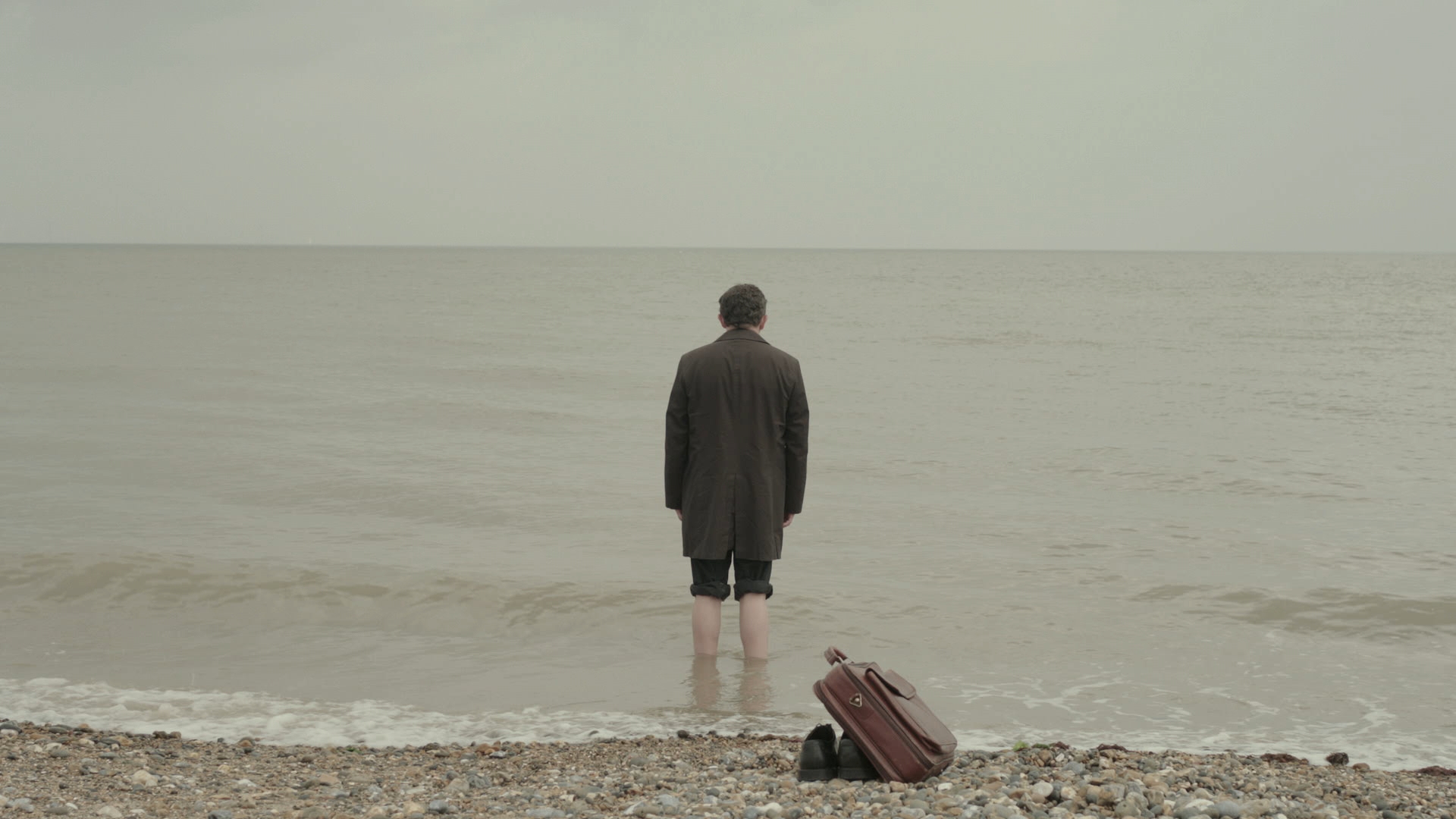 Pasolini, at the very least, makes some interesting aesthetic choices. The film is shot in various shades of gray and white that appear to signify the dullness and repetitiveness of labor in a post-industrialized society; Cinematographer Stefano Falivene really puts the white in white-collar worker. Filling May’s office with plenty of natural light ensures that the film never feels cramped or claustrophobic. Thus, May has the room he needs to explore the cases of the recently deceased. One scene of Still Life, in which May lies down outside and stares at the sky, is beautiful for its universalism and simplicity.
Editor’s Note: Beyond this point lie some potential plot spoilers.
Perhaps the most interesting part of Still Life is its ideological leanings. With Great Britain’s Conservative government cutting public spending and even the famed NHS, Pasolini’s film can be viewed as an implicit defense of the welfare state. May does little to improve business competitiveness, but goes above and beyond in his attempts to help people. A dutiful public servant is hardly the first thought that comes to mind for many citizens railing against big government;often times the government is perceived as distant and hostile. Pasolini’s vision of public institutions as watchful, family members unwilling to abandon the people may be awfully naive in an era of widespread governmental gridlock, but the sentiment is noble neverless.
With about 10 minutes left, Still Life is permanently altered by a jarring plot twist. After so many scenes that lull the audience to sleep, Pasolini brings the film to a neat ending that invokes Meyer Wolfsheim’s reply to Nick in The Great Gatsby: “Let us learn to show our friendship for a man when he is alive and not after he is dead.” May, who spends Still Life as a quiet acquaintance of the dead, never had any real friends; he was a hero only by being a ghost in his own life story.
Previous Post

January 22, 2015
Be the Message (Shook & Shook, 2014)
Next Post
January 25, 2015 Whiplash (Chazelle, 2014)
Browse Our Archives
Select a Category 10 Years Later 1999 Top 5 2007 Top 10 2008 Favorite Discoveries 2008 Top 10 2009 Favorite Discoveries 2009 Top 10 2010 Favorite Discoveries 2010 Top 10 2011 Top 10 2012 Top Ten 2013 Top Ten 2014 Top Ten Best Picture Winners Christian Spotlight on Entertainment Christianity Today Coming Soon Disclosure Disclosure--AS Disclosure--Book Disclosure--DVDS Disclosure--SEOL Disclosure--Travel Dissenting Opinion Elsewhere Emergenetics Essays Featured Film Fest DC--2014 Film Festivals Full Frame Documentary Film Festival 2010 Full Frame Documentary Film Festival 2011 Full Frame Documentary Film Festival 2012 Full Frame Documentary Film Festival 2013 Full Frame Documentary Film Festival 2014 Headline Interviews Laura on the Oscar Winners Podcasts Quick Impressions Reviews RiverRun Film Festival 2014 Television The Criterion Collection The Thin Place To Stream or Not to Stream? Top 10s and Other Lists Toronto International Film Festival 2009 Toronto International Film Festival 2010 Toronto International Film Festival 2011 Toronto International Film Festival 2012 Toronto International Film Festival 2013 Toronto International Film Festival 2014 Uncategorized Video Virginia Film Festival 2011 Virginia Film Festival 2013 Women's Film Festival 2012
Select a Month February 2016 January 2016 December 2015 November 2015 October 2015 September 2015 August 2015 July 2015 June 2015 May 2015 April 2015 March 2015 February 2015 January 2015 December 2014 November 2014 October 2014 September 2014 August 2014 July 2014 June 2014 May 2014 April 2014 March 2014 February 2014 January 2014 December 2013 November 2013 October 2013 September 2013 August 2013 July 2013 June 2013 May 2013 April 2013 March 2013 February 2013 January 2013 December 2012 November 2012 October 2012 September 2012 August 2012 July 2012 June 2012 May 2012 April 2012 March 2012 February 2012 January 2012 December 2011 November 2011 October 2011 September 2011 August 2011 July 2011 June 2011 May 2011 April 2011 March 2011 February 2011 January 2011 December 2010 November 2010 October 2010 September 2010 August 2010 July 2010 June 2010 May 2010 April 2010 March 2010 February 2010 January 2010 December 2009 November 2009 September 2009 August 2009 July 2009 June 2009 May 2009 April 2009
Follow Us!
TAKE THE
Religious Wisdom Quiz
What does "apostle" literally mean in Greek?
Select your answer to see how you score.
Leader Friend Sent one Writer
Related posts from 1More Film Blog

An Inconvenient Truth (Guggenheim, 2006) -- 10 Years...

The Devil Wears Prada (Frankel, 2006) -- 10...

"Telling a Great Story" -- An Interview with...

Is Snow White Still Essential?
TRENDING AT PATHEOS Religious Music & Entertainment

"Les Diabolique" and Transgression
Alongside something like Arrival, Vertigo, or Charade, Les Diaboliques is a...

"The Plague Dogs" and Mortality
So, flashback to the late 70s, early 80s. Walt Disney Studios is...

With the recent and highly successful release of Christopher Nolan’s epic film,...

"L'avventura" and Human Weakness
Today's piece is going to be a little different for a few...

I first want to apologize for not posting or writing anything. I'm...

I've engaged in the multi-year project of reading through the Church Fathers,...
view all Religious Music & Entertainment blogs
Ad-Free & Subscriber Log-In Subscription Support
- About Us
- 2026 Calendar
- Videos
- Podcasts
- Library of World Religions
- Faith In Media Tracker
- Advertise With Us
- Write for Us
- Privacy Policy
- Terms of Service
- Do Not Sell My Data
- Contact Us
- Radiant Digital
- Manage Newsletter Subscriptions
- Unsubscribe From Notifications
- Sitemap
Copyright 2008-2026, Patheos. All rights reserved.
Subscription Support Ad-Free & Subscriber Log-In
Follow Patheos