
BuddhistCatholicContemplativeEvangelicalGeneral ChristianHinduJewishLatter-day SaintMuslimNew VisionsProgressive Christian
Beliefs
- Buddhist
- Catholic
- Contemplative
- Evangelical
- General Christian
- Hindu
- Jewish
- Latter-day Saint
- More Voices
- Muslim
- New Visions
- Pagan
- Progressive Christian
Topics
- Religion News
- Food and Religion
- Sports and Religion
- Religious Art
- Religious Music and Entertainment
- Religious Events
- History and Religion
- Style and Religion
- Politics and Religion
- Women in Religion
- Recreation Outdoors and Religion
- Business Finance and Religion
- Careers Workplace and Religion
- Education and Religion
- Family Parenting and Religion
- Health Fitness and Religion
- Home and Religion
- Relationships and Religion
- Technology and Religion
- Travel and Religion
Columnists
- Buddhist Columnists
- Business Finance and Religion Columnists
- Careers Workplace and Religion Columnists
- Catholic Columnists
- Contemplative Columnists
- Education and Religion Columnists
- Evangelists Columnists
- Family Parenting and Religion Columnists
- General Christian Columnists
- Health Fitness and Religion Columnists
- Hindu Columnists
- History and Religion Columnists
- Home and Religion Columnists
- Jewish Columnists
- More Voices Columnists
- Latter Day Columnists
- Muslim Columnists
- New Visions Columnists
- Nonreligious Columnists
- Pagan Columnists
- Politics and Religion Columnists
- Progressive Columnists
- Recreation Outdoors and Religion Columnists
- Relationships and Religion Columnists
- Religion News Columnists
- Religious Art Columnists
- Religious Events Columnists
- Religious Music and Entertainment Columnists
- Sports and Religion Columnists
- Style and Religion Columnists
- Technology and Religion Columnists
- Travel and Religion Columnists
- Women in Religion Columnists
Resource Library
- 2026 Calendar
- Library of World Religions
- The 100 Most Holy Places on Earth
- Patheos Answers
- Podcasts
- Videos
- Faith Leaders Database
- Anglican Episcopalian
- Bahai
- Baptist
- Buddhism
- Christianity
- Confucianism
- Eastern Orthodoxy
- Hinduism
- Holiness and Pentecostal
- ISKCON
- Islam
- Judaism
- Lutheran
- Methodist
- The Church of Jesus Christ of Latter-day Saints
- New Age
- Paganism
- Presbytarian and Reformed
- Protestantism
- Religion Behind the Scenes
- Roman Catholic
- Scientology
- Shia Islam
- Sikhism
- Sufism
- Sunni Islam
- Taoism
- Zen
- See all religions
Research Tools
 Ad-Free & Subscriber Log-In Subscription Support
Ad-Free & Subscriber Log-In Subscription Support
Follow Patheos 

- Trending:
- Forgiveness
- |
- Marriage
- |
- Consciousness
- |
- Death Penalty
- |
- Election
- |
- Halloween
 1More Film Blog
- Home
- Religious Music & Entertainment
- Rosetta and The Wolf of Wall Street
Rosetta and The Wolf of Wall Street
Last updated on: May 19, 2015 at 9:17 pm by Kenneth R. Morefield
Rosetta and The Wolf of Wall Street 2015-05-19T21:17:07-05:00 Kenneth R. Morefield
Patheos Explore the world's faith through different perspectives on religion and spirituality! Patheos has the views of the prevalent religions and spiritualities of the world.
This essay contains plot spoilers.
It feels bitterly fitting that I revisited Rosetta the same week that my home town newspaper reported that my home state has one of the fastest growing poverty rates in the country. In North Carolina, despite a conservative definition of poverty (the News & Observer notes that a family of four living on $24,000 in Charlotte is not considered impoverished), eighteen percent of our states residents are living in poverty. For children, that rate rises to twenty-five percent. For children of color, forty-one.
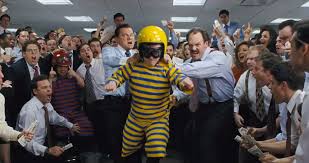 The movie du jour today is The Wolf of Wall Street, a (depending on who you ask) condemnation or celebration of the the American dream for wealth and those who pursue it to the detriment of their neighbors. I found the relentlessly chronicled excesses of Wolf less offensive than boring. For three hours it plays the same note over and over. Money is the ultimate drug of choice, its pursuit no less an addiction than that of cocaine or marijuana.
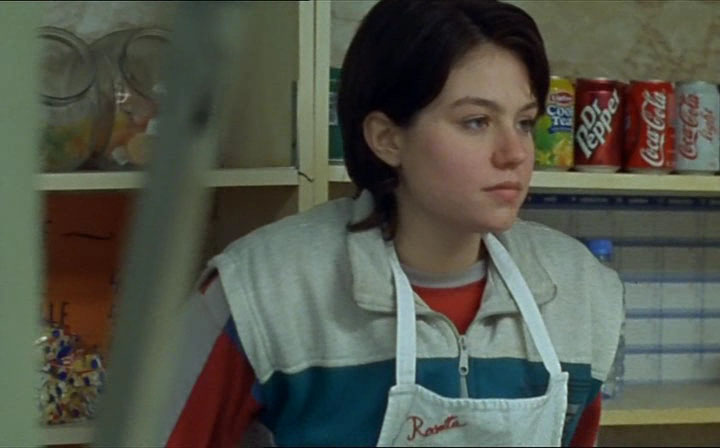
It may strike some as somewhat archaic then that Rosetta’s obsession is not with money but work. She wants a job. A job means more than money to Rosetta–she eschews the opportunity to make money illegally–it means normalcy. The wolves of Wall Street do not want a normal life; they feel entitled to an exceptional one. Rosetta’s aspirations do not extend to reaching the summit of society; she just wants to be a part of it.
The film opens en medias res, just after Rosetta has been dismissed from employment at an ice cream factory. No reason has been given to her except that she was there on a trial basis and her probationary period is over. She must be literally dragged off the premises, as she dashes from room to room in the absurd hope that somehow she can avoid dismissal if she can keep the security guards from laying hands on her to evict her.
The Dardenne brothers report in an interview included on the Criterion DVD that they received criticism from both sides of the political spectrum for Rosetta’s story. Some thought they idealized Rosetta, and through her the poor. It is easier to think of the poor as lazy, drug addicted, or irresponsible than as thoughtful individuals ready to work but met by an indifferent capitalist world. Others complained that they idealized work through Rosetta’s obsession. Work, in some quarters, is supposed to lead to alienation, is just a different form of poverty and oppression.
The year 1999, when Rosetta was released, also marked the publication in *Harper’*s magazine of an article by Barbara Ehrenreich that would be extended into her book Nickel and Dimed: On (Not) Getting By in America. That book chronicled Ehrenreich’s attempts to live on minimum wage, in part to test the ideas of whether necessity was truly the mother of invention and whether there were (are) secret economies of the poor.
Rosetta unlike the stereotypes of the poor perpetuated in the selling of welfare reform, is neither dumb nor slothful. She mends clothes and sells them to second-hand shops. She fashions fishing traps out of broken bottles and barbed wire. She scavenges abandoned boots to wear at home and hides her nicest pair of shoes in the woods, changing every time she leaves the house. When her mom is drunk, Rosetta carries the weight of the larger woman to get her into bed. When she suffers from severe menstrual cramps, she uses a hair dryer to apply topical heat.
The plot has neither the linear structure of a rise from adversity or decline from wealth film (such as Wolf of Wall Street or The Pursuit of Happyness) where each incident is meant to document a step up or down the economic ladder. Rosetta gets a job selling waffles at a food cart, then loses it when the owner’s son messes up and comes home. Rosetta is bewildered. Others mess up and are rewarded with her job; she works diligently and well and is peremptorily fired. Rather than take out her anger on the owner, she rats out the acquaintance, Ricquet, who recommended her to the boss in the first place. (He had been selling his own waffles under the table.) When asked why she turned on him, Rosetta replies simply, “I wanted a job.” This, too, is perhaps a lesson in cutthroat capitalism. Being valued by an employer is not about doing good work, it is about being willing to be ruthless towards other workers so that the boss doesn’t have to be.
One of the great triumphs of Rosetta is that poverty is conveyed viscerally and visually rather than narratively. In nearly every Dardenne film there is at least one scene in which a character thrashes about wildly, only to be physically restrained through a human embrace. In The Kid With a Bike, Lorna’s Silence, and The Son, that is an embrace of love that must still the desperation and despair and try to penetrate the armor of the wounded character. For Rosetta, however, touch happens rarely and is used to evict her from places of employment she wants to hold onto. Rosetta longs to be still, but the world needs her to move. She, and those like her, are in the way. The most memorable example is when she clings to a giant sack of flour so that she must be pulled out of the waffle cart. In a scene where a young man asks her to dance, his touch makes her uncomfortable. Visually, her physical thrashings subtly connect Rosetta to the fish in her bottle trap. She is blocked from moving forward or progressing, but hooked into the capitalist society that will also not let her escape.
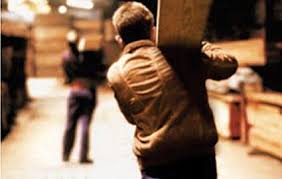 There is a scene in The Son in which the carpenter teaches his mentee how to carry a beam of wood, and it is hard to look at that shot and not see an intended association with Jesus carrying the cross. That association was certainly present in the final scene of Rosetta, in which the protagonist, having decided to commit suicide, struggles to carry the canister of gas back to the mobile home. She like so many of the working poor is forced to carry the instrument of her intended death, a burden too big for her frail body. Like Jesus, her march is witnessed by a jeering audience, in this case the fired Riquet, who circles her menacingly in his motorbike.
The Dardennes report that the sublime irony of Rosetta’s conclusion was intentional. She is in one sense “saved by her own poverty,” since had she and her mother had enough money to have gas on hand, her suicidal impulse could have been seen to its conclusion. They also report that there was at least one version of the script in which Rosetta’s suicide was completed. In that version, she turns on the gas at work rather than at home, and the final shots were of cars passing the waffle cart oblivious to the dead body inside it.
I like the ending they chose, with its glimmer of hope. Of course that hope–that things might not end tragically for the poor if even one person was not indifferent to their suffering–was filmed fifteen years ago. Since that time the United States has undertaken costly and lengthy military operations (I’m not even sure where the line between “war” and other military operations is any more) and global capitalism has been crippled by the wolves of Wall Street. Martin Scorsese’s film ends with an unnecessary reminder that we live in a world where everything, everything is for sale.Rosetta ends with a subtle but apparently still needed reminder that the one whom billions worship as the Son of God associated himself with the poor and was also forced to carry the instrument that a despising world would use to try to rid itself of him.
Perhaps the best reason to watch Rosetta after The Wolf of Wall Street might be to guard against spiritual pride. Jesus said “whatever you did not do for one of the least of these, you did not do for me.” Never been indicted for stock fraud, thrown a midget, snorted cocaine, or hired a prostitute? Congratulations, you are not Jordan Belfort.
But I end these musings back where I started. One in four children in North Carolina lives in poverty. Perhaps kindness, compassion, and respect would be wasted on them. Perhaps a drink of water, a kind hand, a face of human compassion may not lift them out of poverty, may not not give them the will to walk one more step or live one more day. Perhaps it will, though.
Or maybe miracles only ever happen any more in Dardenne movies.
Previous Post
January 1, 2014
Lovelace (Bellin, 2013)
Next Post
January 12, 2014 Left Behind as Evangelical Pornography
Browse Our Archives
Select a Category 10 Years Later 1999 Top 5 2007 Top 10 2008 Favorite Discoveries 2008 Top 10 2009 Favorite Discoveries 2009 Top 10 2010 Favorite Discoveries 2010 Top 10 2011 Top 10 2012 Top Ten 2013 Top Ten 2014 Top Ten Best Picture Winners Christian Spotlight on Entertainment Christianity Today Coming Soon Disclosure Disclosure--AS Disclosure--Book Disclosure--DVDS Disclosure--SEOL Disclosure--Travel Dissenting Opinion Elsewhere Emergenetics Essays Featured Film Fest DC--2014 Film Festivals Full Frame Documentary Film Festival 2010 Full Frame Documentary Film Festival 2011 Full Frame Documentary Film Festival 2012 Full Frame Documentary Film Festival 2013 Full Frame Documentary Film Festival 2014 Headline Interviews Laura on the Oscar Winners Podcasts Quick Impressions Reviews RiverRun Film Festival 2014 Television The Criterion Collection The Thin Place To Stream or Not to Stream? Top 10s and Other Lists Toronto International Film Festival 2009 Toronto International Film Festival 2010 Toronto International Film Festival 2011 Toronto International Film Festival 2012 Toronto International Film Festival 2013 Toronto International Film Festival 2014 Uncategorized Video Virginia Film Festival 2011 Virginia Film Festival 2013 Women's Film Festival 2012
Select a Month February 2016 January 2016 December 2015 November 2015 October 2015 September 2015 August 2015 July 2015 June 2015 May 2015 April 2015 March 2015 February 2015 January 2015 December 2014 November 2014 October 2014 September 2014 August 2014 July 2014 June 2014 May 2014 April 2014 March 2014 February 2014 January 2014 December 2013 November 2013 October 2013 September 2013 August 2013 July 2013 June 2013 May 2013 April 2013 March 2013 February 2013 January 2013 December 2012 November 2012 October 2012 September 2012 August 2012 July 2012 June 2012 May 2012 April 2012 March 2012 February 2012 January 2012 December 2011 November 2011 October 2011 September 2011 August 2011 July 2011 June 2011 May 2011 April 2011 March 2011 February 2011 January 2011 December 2010 November 2010 October 2010 September 2010 August 2010 July 2010 June 2010 May 2010 April 2010 March 2010 February 2010 January 2010 December 2009 November 2009 September 2009 August 2009 July 2009 June 2009 May 2009 April 2009
Follow Us!
TAKE THE
Religious Wisdom Quiz
What was rolled away from Jesus’ tomb?
Select your answer to see how you score.
A stone A door A wall A fence
Related posts from 1More Film Blog

An Inconvenient Truth (Guggenheim, 2006) -- 10 Years...

The Devil Wears Prada (Frankel, 2006) -- 10...


My Best Picture Choice: Mad Max: Fury Road
TRENDING AT PATHEOS Religious Music & Entertainment

"Les Diabolique" and Transgression
Alongside something like Arrival, Vertigo, or Charade, Les Diaboliques is a...

"The Plague Dogs" and Mortality
So, flashback to the late 70s, early 80s. Walt Disney Studios is...

With the recent and highly successful release of Christopher Nolan’s epic film,...

"L'avventura" and Human Weakness
Today's piece is going to be a little different for a few...

I first want to apologize for not posting or writing anything. I'm...

I've engaged in the multi-year project of reading through the Church Fathers,...
view all Religious Music & Entertainment blogs
Ad-Free & Subscriber Log-In Subscription Support
- About Us
- 2026 Calendar
- Videos
- Podcasts
- Library of World Religions
- Faith In Media Tracker
- Advertise With Us
- Write for Us
- Privacy Policy
- Terms of Service
- Do Not Sell My Data
- Contact Us
- Radiant Digital
- Manage Newsletter Subscriptions
- Unsubscribe From Notifications
- Sitemap
Copyright 2008-2026, Patheos. All rights reserved.
Subscription Support Ad-Free & Subscriber Log-In
Follow Patheos