
BuddhistCatholicContemplativeEvangelicalGeneral ChristianHinduJewishLatter-day SaintMuslimNew VisionsProgressive Christian
Beliefs
- Buddhist
- Catholic
- Contemplative
- Evangelical
- General Christian
- Hindu
- Jewish
- Latter-day Saint
- More Voices
- Muslim
- New Visions
- Pagan
- Progressive Christian
Topics
- Religion News
- Food and Religion
- Sports and Religion
- Religious Art
- Religious Music and Entertainment
- Religious Events
- History and Religion
- Style and Religion
- Politics and Religion
- Women in Religion
- Recreation Outdoors and Religion
- Business Finance and Religion
- Careers Workplace and Religion
- Education and Religion
- Family Parenting and Religion
- Health Fitness and Religion
- Home and Religion
- Relationships and Religion
- Technology and Religion
- Travel and Religion
Columnists
- Buddhist Columnists
- Business Finance and Religion Columnists
- Careers Workplace and Religion Columnists
- Catholic Columnists
- Contemplative Columnists
- Education and Religion Columnists
- Evangelists Columnists
- Family Parenting and Religion Columnists
- General Christian Columnists
- Health Fitness and Religion Columnists
- Hindu Columnists
- History and Religion Columnists
- Home and Religion Columnists
- Jewish Columnists
- More Voices Columnists
- Latter Day Columnists
- Muslim Columnists
- New Visions Columnists
- Nonreligious Columnists
- Pagan Columnists
- Politics and Religion Columnists
- Progressive Columnists
- Recreation Outdoors and Religion Columnists
- Relationships and Religion Columnists
- Religion News Columnists
- Religious Art Columnists
- Religious Events Columnists
- Religious Music and Entertainment Columnists
- Sports and Religion Columnists
- Style and Religion Columnists
- Technology and Religion Columnists
- Travel and Religion Columnists
- Women in Religion Columnists
Resource Library
- 2026 Calendar
- Library of World Religions
- The 100 Most Holy Places on Earth
- Patheos Answers
- Podcasts
- Videos
- Faith Leaders Database
- Anglican Episcopalian
- Bahai
- Baptist
- Buddhism
- Christianity
- Confucianism
- Eastern Orthodoxy
- Hinduism
- Holiness and Pentecostal
- ISKCON
- Islam
- Judaism
- Lutheran
- Methodist
- The Church of Jesus Christ of Latter-day Saints
- New Age
- Paganism
- Presbytarian and Reformed
- Protestantism
- Religion Behind the Scenes
- Roman Catholic
- Scientology
- Shia Islam
- Sikhism
- Sufism
- Sunni Islam
- Taoism
- Zen
- See all religions
Research Tools
 Ad-Free & Subscriber Log-In Subscription Support
Ad-Free & Subscriber Log-In Subscription Support
Follow Patheos 

- Trending:
- Forgiveness
- |
- Marriage
- |
- Consciousness
- |
- Death Penalty
- |
- Election
- |
- Halloween
 1More Film Blog
- Home
- Religious Music & Entertainment
- Revisiting Rohmer’s Six Moral Tales–Suzanne’s Career
Revisiting Rohmer’s Six Moral Tales–Suzanne’s Career
Last updated on: July 27, 2014 at 4:02 pm by Kenneth R. Morefield
Revisiting Rohmer’s Six Moral Tales–Suzanne’s Career 2014-07-27T16:02:51-05:00 Kenneth R. Morefield
Patheos Explore the world's faith through different perspectives on religion and spirituality! Patheos has the views of the prevalent religions and spiritualities of the world.
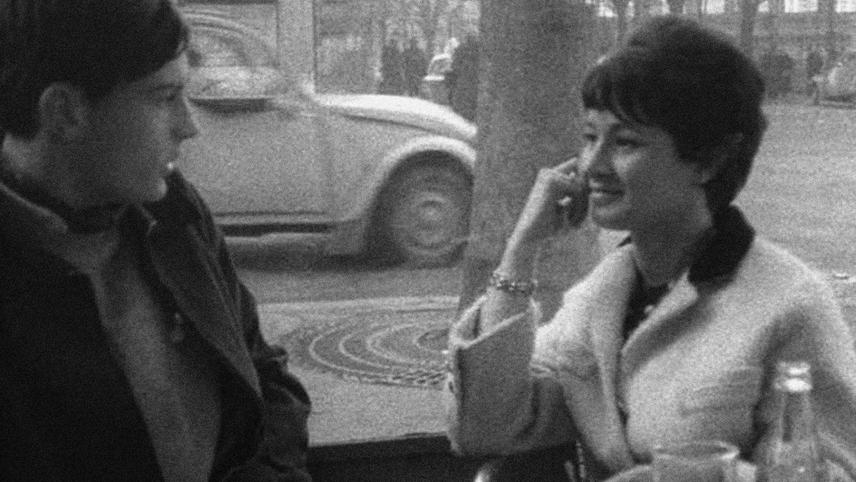
Suzanne’s Career has always been the hardest of the Six Moral Tales to warm up to.
Here the narrator is Bertrand (Philippe Beuzen), a shy and unaccomplished pharmaceutical student. Bertrand is nicer than the other guys in his circle, particularly Guillaume (Christian Charrière). At least that is the assessment of Guillaume’s much put-upon companion, Suzanne (Catherine Sée). That’s not a particularly high standard, though. Guillaume treats Suzanne shabbily, slapping her buttocks when she leans over, dismissing her complaints with feeble protestations that he was joking, and continuing to interact with her long after any pretense of genuine interest has been shattered. Guillaume is one of those men who justifies his boorishness by reminding the world–the aggrieved woman especially–that he never lied about who or what he is. “If my taste were good, I wouldn’t be attracted to you” (31), he says. A real prince.
Over and above the lack of gallantry shown by both men is a class snobbishness. Bertrand speaks of getting a weekly allowance from home. Suzanne works during the day to pay for her own evening classes. She is overanxious to please, and that means offering to pay–at cafes, movies, nightclubs. Bertrand is disgusted at the way Guillaume exploits Suzanne, but soon he finds himself falling into the same patterns. Similarly disgusted at himself, he finds himself blaming Suzanne for his own conduct. She should have more pride, more integrity! “Her complete lack of dignity justified the contempt that I had always felt for her…”
Towards the end of the film, Bertrand discovers some money missing from his apartment. Both Guillaume and Suzanne have been in the room where the money is hidden. Bertrand tells Sophie (the woman he really desires) that he “preferred” to think of Suzanne as the guilty party. Soon after, Sophie informs Bertrand that Suzanne has married the handsome Frank, and the film ends with Bertrand spitefully and mournfully claiming that Suzanne has extracted her “real revenge” on him by “depriving me of my right to feel sorry for her.”
In Rohmer’s written version, this summation is prompted by seeing Suzanne and Frank “strolling along the boulevard.” This ending more directly invites comparison to the end of The Bakery Girl of Monceau, where the male protagonist walks arm in arm with a new lover and imagines being spied by the girl with whom he has previously flirted. In that instance we have no evidence that the bakery girl has spied the new couple–the narrator says only that he is glad they are far enough away to avoid a “scene” if spotted. In the text of “Suzanne’s Career,” the addition of “from time to time” underscores that Bertrand saw Frank and Suzanne more than once. Bertrand also claims that “despite herself she couldn’t keep from glancing at me.”
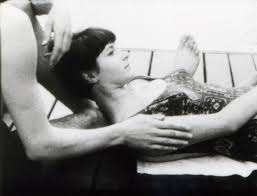 The film transfers this scene from boulevard to poolside, and Bertrand’s final voice-over is spoken as Frank massages Suzannes’s arms, legs, and buttocks. Suzanne doesn’t glance at Bertrand, Rohmer shows him standing apart from the other couple and his own date. Ginette Vincendeau claims that as each of Rohmer’s series unfolds, the agency of the female characters increases. She also suggests that Suzanne’s victory may simply be a Pyrrhic one. Is her “career” as Frank’s wife simply and extension of her willingness to buy the favors of Guillaume and Bertrand, only with a different form of currency–her body?
In the film Bertrand says that Suzanne is beating “us” to “the finish line” and “showing us up to be the children we were.” This is somewhat different from Rohmer’s story, where he says that she was “reducing us pitilessly to the level of boys that we unquestionably still were.” This alteration strikes me as not insignificant, but I am quick to remember Rohmer’s own claims (in the preface) that literature “belongs less to form than to content” and that “it is easier to compose images starting with a story than it is to make up a story on the basis of a series of images.”
The latter quote suggests to me that as a director, Rohmer was less interested in fidelity to the minute details of the text and more interested in finding visual means to communicate its meaning. He acknowledges that there were occasional improvisations by actors when particular greetings or words felt more natural, and adds that “there are places, too, where descriptive phrases that on paper are expressed indirectly on the the screen become direct descriptions.” At the end of the written story, Bertrand is conflating several incidents that take place over a period of time. At the end of the film, Bertrand is narrating an epiphany at a single, concrete event.
If the ending of the printed text makes Suzanne a little less oblivious to Bertrand’s gaze, the beginning underscores the communal nature of the story in a way that is sometimes lost in the film. The narrator of the text says “we” before he ever says “I.” Guillaume is integral to the story in a way the narrator’s friend is not in Bakery Girl. Although Guillaume is not present at the end of the story, the penultimate paragraph speaks to how Suzanne’s marriage has caused Bertrand to revise his own thinking. Previously he had thought of Suzanne (and, presumably, of girls like her) as Guillaume’s “victim.” Even towards the end of the story, Bertrand has trouble seeing Suzanne as an individual, commenting on her appearance and speculating about the “type” of girl that interested his former friend: “rather small and pleasantly plump.”
Some of these observations get carried over to the film, but there they come across as sudden insight rather than the conclusion of revised (and sustained) thought. The psychology behind the penultimate paragraph appears to be a realization that Guillaume was no more confident in his sexuality than Bertrand, pursuing only those women to whom he felt superior (whether socially or physically) to compensate for his own insecurity. In announcing Suzanne’s marriage, Sophie derisively refers to Bertrand as “Mr. Smart” and insists that whether he admits it about Suzanne or not, “men adore her.” When Bertrand insists he does not adore Suzanne, Sophie snaps back with “I said ‘men,’ not ‘boys.'”
The end of the story also differs slightly from the end of the film in that Bertrand, the narrator, is capable of remembering what happened afterwards. His views of the newlywed Suzanne came “as I was failing my exams and losing Sophie.” This line is present in the film, but it is voiced while the Bertrand is at the pool, and it is at best unclear as to how aware he is of what the next few weeks, much less the rest of his life, have in store.
For all of Rohmer’s honesty about the emotional cowardice of (young) men, these films stop short of simply man-bashing. Whereas the narrator in the story sees himself as part of a subset, men, who have the futility of their attitudes exposed, the narrator of the film situates himself more broadly as part of a bigger group (human beings) of which Suzanne is a part. We are all racing towards adulthood, each wanting happiness, and justifying our own actions in light of how we think they help or hurt our chances of attaining it.
Also from The Six Moral Tales:
Previous Post

July 25, 2014
The Thin Place #48: Lucy--God or Godlike?
Next Post

July 28, 2014 Clannad -- The Motion Picture (Dezaki, 2007)
Browse Our Archives
Select a Category 10 Years Later 1999 Top 5 2007 Top 10 2008 Favorite Discoveries 2008 Top 10 2009 Favorite Discoveries 2009 Top 10 2010 Favorite Discoveries 2010 Top 10 2011 Top 10 2012 Top Ten 2013 Top Ten 2014 Top Ten Best Picture Winners Christian Spotlight on Entertainment Christianity Today Coming Soon Disclosure Disclosure--AS Disclosure--Book Disclosure--DVDS Disclosure--SEOL Disclosure--Travel Dissenting Opinion Elsewhere Emergenetics Essays Featured Film Fest DC--2014 Film Festivals Full Frame Documentary Film Festival 2010 Full Frame Documentary Film Festival 2011 Full Frame Documentary Film Festival 2012 Full Frame Documentary Film Festival 2013 Full Frame Documentary Film Festival 2014 Headline Interviews Laura on the Oscar Winners Podcasts Quick Impressions Reviews RiverRun Film Festival 2014 Television The Criterion Collection The Thin Place To Stream or Not to Stream? Top 10s and Other Lists Toronto International Film Festival 2009 Toronto International Film Festival 2010 Toronto International Film Festival 2011 Toronto International Film Festival 2012 Toronto International Film Festival 2013 Toronto International Film Festival 2014 Uncategorized Video Virginia Film Festival 2011 Virginia Film Festival 2013 Women's Film Festival 2012
Select a Month February 2016 January 2016 December 2015 November 2015 October 2015 September 2015 August 2015 July 2015 June 2015 May 2015 April 2015 March 2015 February 2015 January 2015 December 2014 November 2014 October 2014 September 2014 August 2014 July 2014 June 2014 May 2014 April 2014 March 2014 February 2014 January 2014 December 2013 November 2013 October 2013 September 2013 August 2013 July 2013 June 2013 May 2013 April 2013 March 2013 February 2013 January 2013 December 2012 November 2012 October 2012 September 2012 August 2012 July 2012 June 2012 May 2012 April 2012 March 2012 February 2012 January 2012 December 2011 November 2011 October 2011 September 2011 August 2011 July 2011 June 2011 May 2011 April 2011 March 2011 February 2011 January 2011 December 2010 November 2010 October 2010 September 2010 August 2010 July 2010 June 2010 May 2010 April 2010 March 2010 February 2010 January 2010 December 2009 November 2009 September 2009 August 2009 July 2009 June 2009 May 2009 April 2009
Follow Us!
TAKE THE
Religious Wisdom Quiz
True or False: Jeremiah was known as the weeping prophet.
Select your answer to see how you score.
TRUE FALSE
Related posts from 1More Film Blog

An Inconvenient Truth (Guggenheim, 2006) -- 10 Years...

The Devil Wears Prada (Frankel, 2006) -- 10...

"Telling a Great Story" -- An Interview with...

Is Snow White Still Essential?
TRENDING AT PATHEOS Religious Music & Entertainment

"Les Diabolique" and Transgression
Alongside something like Arrival, Vertigo, or Charade, Les Diaboliques is a...

"The Plague Dogs" and Mortality
So, flashback to the late 70s, early 80s. Walt Disney Studios is...

With the recent and highly successful release of Christopher Nolan’s epic film,...

"L'avventura" and Human Weakness
Today's piece is going to be a little different for a few...

I first want to apologize for not posting or writing anything. I'm...

I've engaged in the multi-year project of reading through the Church Fathers,...
view all Religious Music & Entertainment blogs
Ad-Free & Subscriber Log-In Subscription Support
- About Us
- 2026 Calendar
- Videos
- Podcasts
- Library of World Religions
- Faith In Media Tracker
- Advertise With Us
- Write for Us
- Privacy Policy
- Terms of Service
- Do Not Sell My Data
- Contact Us
- Radiant Digital
- Manage Newsletter Subscriptions
- Unsubscribe From Notifications
- Sitemap
Copyright 2008-2026, Patheos. All rights reserved.
Subscription Support Ad-Free & Subscriber Log-In
Follow Patheos