
BuddhistCatholicContemplativeEvangelicalGeneral ChristianHinduJewishLatter-day SaintMuslimNew VisionsProgressive Christian
Beliefs
- Buddhist
- Catholic
- Contemplative
- Evangelical
- General Christian
- Hindu
- Jewish
- Latter-day Saint
- More Voices
- Muslim
- New Visions
- Pagan
- Progressive Christian
Topics
- Religion News
- Food and Religion
- Sports and Religion
- Religious Art
- Religious Music and Entertainment
- Religious Events
- History and Religion
- Style and Religion
- Politics and Religion
- Women in Religion
- Recreation Outdoors and Religion
- Business Finance and Religion
- Careers Workplace and Religion
- Education and Religion
- Family Parenting and Religion
- Health Fitness and Religion
- Home and Religion
- Relationships and Religion
- Technology and Religion
- Travel and Religion
Columnists
- Buddhist Columnists
- Business Finance and Religion Columnists
- Careers Workplace and Religion Columnists
- Catholic Columnists
- Contemplative Columnists
- Education and Religion Columnists
- Evangelists Columnists
- Family Parenting and Religion Columnists
- General Christian Columnists
- Health Fitness and Religion Columnists
- Hindu Columnists
- History and Religion Columnists
- Home and Religion Columnists
- Jewish Columnists
- More Voices Columnists
- Latter Day Columnists
- Muslim Columnists
- New Visions Columnists
- Nonreligious Columnists
- Pagan Columnists
- Politics and Religion Columnists
- Progressive Columnists
- Recreation Outdoors and Religion Columnists
- Relationships and Religion Columnists
- Religion News Columnists
- Religious Art Columnists
- Religious Events Columnists
- Religious Music and Entertainment Columnists
- Sports and Religion Columnists
- Style and Religion Columnists
- Technology and Religion Columnists
- Travel and Religion Columnists
- Women in Religion Columnists
Resource Library
- 2026 Calendar
- Library of World Religions
- The 100 Most Holy Places on Earth
- Patheos Answers
- Podcasts
- Videos
- Faith Leaders Database
- Anglican Episcopalian
- Bahai
- Baptist
- Buddhism
- Christianity
- Confucianism
- Eastern Orthodoxy
- Hinduism
- Holiness and Pentecostal
- ISKCON
- Islam
- Judaism
- Lutheran
- Methodist
- The Church of Jesus Christ of Latter-day Saints
- New Age
- Paganism
- Presbytarian and Reformed
- Protestantism
- Religion Behind the Scenes
- Roman Catholic
- Scientology
- Shia Islam
- Sikhism
- Sufism
- Sunni Islam
- Taoism
- Zen
- See all religions
Research Tools
 Ad-Free & Subscriber Log-In Subscription Support
Ad-Free & Subscriber Log-In Subscription Support
Follow Patheos 

- Trending:
- Forgiveness
- |
- Marriage
- |
- Consciousness
- |
- Death Penalty
- |
- Election
- |
- Halloween
 1More Film Blog
- Home
- Religious Music & Entertainment
- My Best Picture Choice: Room
My Best Picture Choice: Room
Last updated on: January 30, 2016 at 5:31 pm by Josh Wartel
My Best Picture Choice: Room 2016-01-30T17:31:47-05:00 Josh Wartel
Patheos Explore the world's faith through different perspectives on religion and spirituality! Patheos has the views of the prevalent religions and spiritualities of the world.
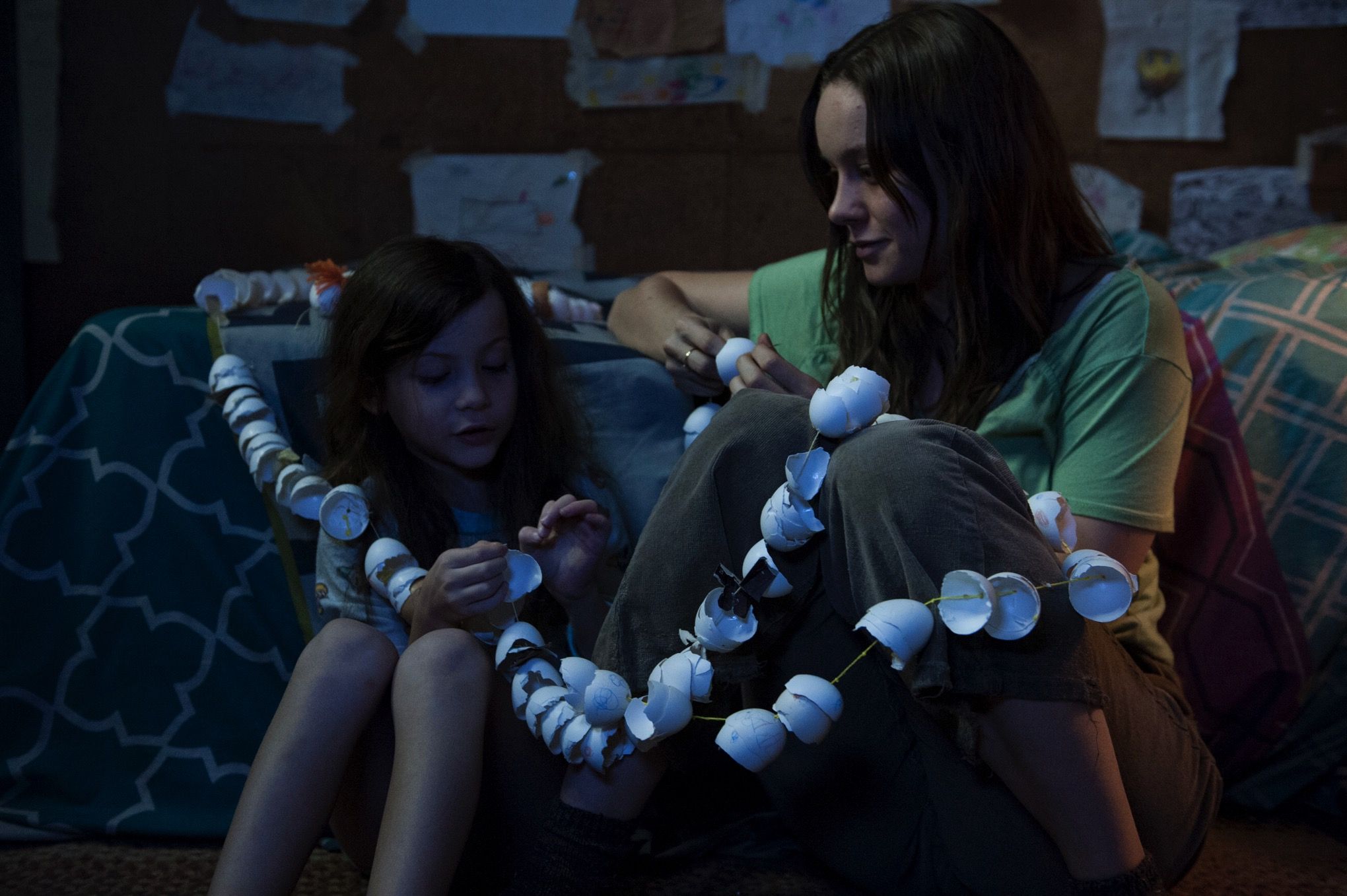
Jacob Tremblay and Brie Larson in Room
Editor’s Note: This essay contains plot spoilers for Room and Where The Wild Things Are.
In one of the very first scenes of Room, Jack, played by Jacob Tremblay, moves around Room touching almost every object he can find. “Morning lamp, morning rug, morning wardrobe,” he says. These household furnishings are alive to Jack; in fact, they are the only world he has ever known. Jack then looks under his bed and turns to Eggsnake, a creation built out of hundreds of leftover eggshells, and he tells the toy, “Morning Eggshell. It’s my birthday. I’m five.”
First a book and now a film nominated for four Academy Awards including Best Picture, Room is a simple story of a child and an adult. The child is Jack, the adult is named, with savage irony, Joy. But we know Joy by the name she goes by to Jack: Ma. Ma and Jack are prisoners in an abandoned shed called Room. A man, Old Nick, abducted Ma seven years ago. He has raped her repeatedly and Jack is both the result of these rapes and the eventual means to set Ma free.
Beyond a few scenes in the middle of the film, Room isn’t much of a thriller. It’s certainly not a horror story; we only watch a scene of rape from the perspective of Jack, sheltered in a cabinet and by ignorance, and the film is rated R not for violence, but for language. I suppose Room could be classified as a family or character drama. It does movingly portray the love between a mother and son, and there is some change of setting. But to classify Room as either a film about kidnapping or a family damaged by tragedy is to both misread and sell this wonderful movie short.
By any standard, Room is a film full of meaning. But compared to the other contenders for Best Picture, including Spotlight, The Big Short and The Revenant, Room possesses a singularly ambitious vision. This may seem a strange thing to say about a movie shot mostly in a single room with a handful of actors. However, Room’s thin premise conceals an almost boundless thematic complexity. The film, directed by Lenny Abrahamson, illuminates what we lose (and gain) from becoming adults. It’s a trade that is forced upon on us all. And Room suggests that childhood may hold the key to understanding meaning in our own lives, if only we look close enough.
Room and Boyhood: What Films About Childhood Can Teach Us
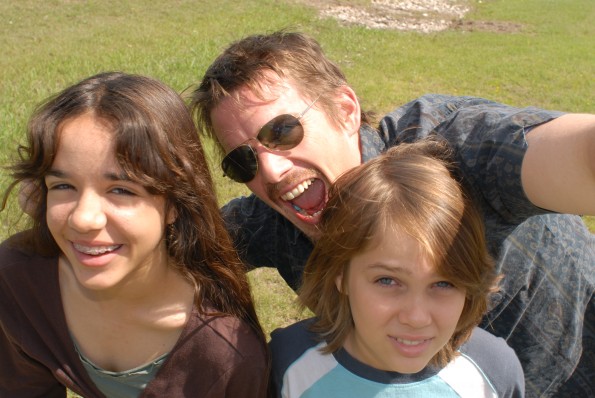
A still from Richard Linklater’s BOYHOOD
Jack’s first real glimpse of the outside world comes after he has unrolled himself from his metaphorical shield, the rug. Lying on his back in the speeding bed of Old Nick’s pick-up truck, he stares up in wonder at the blue sky. It’s a moment that is reminiscent of the opening shot of Boyhood, a Best Picture nominee from last year. In that movie, the 6-year old Mason Jr. is lost in his own little world, lying in the grass and staring at the sky, interrupted only by the calls of his mother. Over the course of the film 12-year timeframe, we watch the passage of time and the gradual growth of Mason. By the end, Mason Jr. is beginning college and just starting to understand what it means to be an adult.
Although it lacks the technical feats of Boyhood, Room is also a film about time. Not the steady flow of the years, but the immediacy and vastness of minutes and hours in childhood. On his birthday, Jack complains that Old Nick hasn’t given Ma and him any candles to light. Sulking, he tells Ma: “Next week when I’m six, you better ask for real candles.” Ma quickly corrects him. “Next year, you mean.” Years of confinement have made Ma desperate for escape. But Jack lives in the moment. Like so many children, he might go to bed angry or upset, only to wake up fresh and energetic. The past isn’t a burden; it’s weightless.
But time cannot remain this way forever. After he and Ma are liberated, Jack has a new understanding of time. In a voiceover, he tells us, “I’ve been in the world nineteen hours.” It’s the first indication we have that Jack knows how to tell, or even understand, time. In a way, a child that can tell time is no longer truly a child.
Echoing this revelation, a later scene involves Ma showing Jack photos from when she competed in track during high school, before she was abducted by Old Nick. “We were the relay team. I was the anchor. I was fast. We did track together,” she tells him. But these memories soon become too painful for Ma and she puts the photos away. It’s reminiscent of a similar scene at the end of Boyhood, in which Mason Jr.’s mother breaks down after looking at an old photo, memorably stating “I thought there would be more.”
Unlike adults, young children have no real sense of what they have lost in their lives. They are spared the pain of the past. So it’s more than a little sad to watch Jack play, knowing that these days are coming to an end. Like an adult, Jack feels a need to make peace with his past. Room ends with Jack asking Ma if the two of them can return to visit their old home, Room, for a final time. When they go back, Jack is shocked. “This isn’t Room,” he says. “Has it shrinked?” Jack then walks around Room and says his goodbyes to every object that hasn’t been taken for evidence. A bulldozer sits just outside; soon the shed will be torn down. For sure, Jack will always have his memories of this strange place. Even when the past it gone, it isn’t really gone. That is the burden of growing up.
Room and Toy Story: Children and Parents
 In a 2014 essay for The Paris Review, Norwegian writer Karl Ove Knausgaard reflected on the fundamental difference between children and their parents. Knausgaard, himself a father raising young children, admits that: “For quite a few years, I thought that being a child was like being a prisoner, at the mercy of adults’ favors and whims, and that to be a parent was to be a prison warder. Now I think maybe it is the other way around. That the child is the one who is free, the adults are the captives.” Knausgaard’s confliction is at the heart of Room. Even more than the film is concerned with the nature of time, it is asking difficult questions about the nature of freedom. Are children free? And if they are more free than adults, what does it say about us adults?
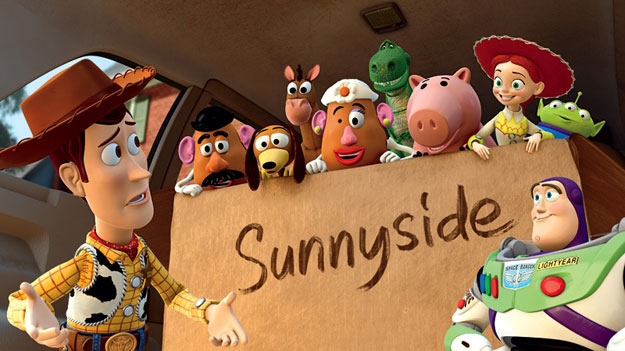
These are vexations that we seen repeatedly raised by other films over the last decade, most notably in the Toy Story franchise. Think of Jessie in Toy Story 2, abandoned by her old owner, who has begun to grow up and had lost the freedom to imagine Jessie, a doll, as alive. Similarly, in Toy Story 3, the emotional climax arrives in the final scenes between a 17-year old Andy and his beloved toys. Andy has long outgrown the freedom of childhood, but the toys, who are eternally young, yearn to be played with. So Andy ends the film by donating the gang to a little girl, Bonnie, who can breathe life into Woody and Buzz. It’s a bittersweet ending. We become aware of what Andy has lost by growing up, but also of the love Andy and now Bonnie have shown towards a bunch of plastic, inanimate objects. Childhood may be a fantasy, Toy Story tells us, but that doesn’t mean it’s not real.
If there is a major flaw in Toy Story 3, it is that the movie suggests, through our identification with Woody and Co., that we may not have to grow up. Remember, Boyhood begins with a shot of the blue sky to symbolize the present state of childhood that will soon erode in Mason’s life. In contrast, the final shot of Toy Story 3 is of the peaceful blue, cloudy sky that goes on forever. Even when we do grow older, like Andy, we can always find a child of our own, to serve and love, to make the center of our lives. This view taken to its extreme, Knausgaurd writes, “extends as far as to consider that childhood is the true meaning of life, the apex of our existence, while all the rest of life is one slow journey away from it, where the main task is to be at the disposal of those who are now at the center of existence, that is, the children.”
I don’t sense that Room agrees with this idea or the glorification of childhood. But it’s never easy to trade the freedom of childhood for the confines of adult reality. We only have to look to other areas of the movie industry for evidence. When Jacob Tremblay, the nine-year old actor who plays Jack, was asked what he thought about Room after seeing it for the first time*,* he reportedly said that “it’s good, but it’s no “Avengers”. We live in a culture dominated by superhero movies, movies that are loved by children and adults alike, precisely because they glorify childhood. These are movies where we are told we are exceptional, blessed with unique powers and where we live in the center of an imagined universe, far from reality. Our superheroes never die and evil is vanquished. The freedom of childhood, after all, is that it is a fantasy.
Room and Where The Wild Things Are: The Freedom of Imagination
 And the freedom of childhood is also to feel that everything is vibrantly alive. The opening scene of Room (“Morning lamp, morning rug”) attests to this experience. It is the implicit premise behind Toy Story and the famed children’s book Where The Wild Things Are, in which a boy escapes the confinement of his bedroom to the freedom of the inhabited forest. Knausgaard powerfully describes this aspect of youth as impossible to explain, but also impossible to forget. “Everything had a face, every tree, every hillock, every bicycle…was something I felt connected to, for I saw the tree, the hill, the bicycle, and I recognized them,” he writes. “This way of seeing is gone.”
The sadness and tragedy in Room is not only the adult barbarity of kidnapping and rape. Through the narration and focus on Jack, we are left unsure of what replaces the joy and the intimacy between a child and the world. Indeed, Emma Donoghue’s script gives us little sense of the happiness possible to adults without a strong connection to children. It’s made clear that the kidnapping of Ma destroyed the marriage of her parents. Ma herself suffers a breakdown after being rescued. She complains, “I can’t feel anything.” She watches in frustration as Jack plays on a smartphone, slowly becoming accustomed to a world beside, but separate from, Ma. “I thought this would be heaven,” she cries. “But it’s worse.”
For a few scenes in the second half of Room, Ma is absent, taken presumably to a mental hospital after a suicide attempt. Jack bakes cupcakes with his grandmother. He’s introduced to a puppy that belongs to his grandmother’s boyfriend, Leo. Along the spectrum of life, animals are the middle ground between inanimate objects and other people. Jack’s love for the puppy foretells that we will soon see next step of maturation: friendship. And soon enough we watch him kick a ball around with a boy his age. They are interrupted by Ma knocking on the door, but the message is clear: Ma’s love is eternal, but it will no longer be the lifeblood of Jack’s existence. There will be friends, dogs and future frustrations. Jack’s world will grow larger in the years to come, even as his freedom to feel connected and to love everything he sees dwindles. He will reside in the world of truth and reality. “Now I see the world as it really is, as faceless, blind and mute matter,” Knausgaard writes.
Conclusion: The Consolation of Love
But if Room and other works of art offer us any consolation, it is that love shines even brighter in contrast to the darkness of adulthood than the bright blue skies of childhood. For an example, re-watch the final moments of the 2009 film adaptation of Where The Wild Things Are. The young boy, Max, has spent the film in his imagination with a group of Wild Things after being ignored by his busy mother and older sister. He convinces the Wild Things that he is a king with magical powers. Eventually Max is forced to admit that really he is just a boy “pretending to be a king.” He grows up and returns to reality. And in the final scene, his mother greets him with a lengthy hug and a large piece of chocolate cake. Growing up is scary for sure, but it has its benefits. Max’s return gives meaning to his mother’s love. And he chooses to love his mother, her flaws notwithstanding. That’s a type of freedom that only adults, not children, possess.
It’s a freedom that we finally glimpse at the end of Room after Ma has returned. She sits on her childhood bed with Jack. They are only just getting used to living together again. And Ma apologizes for abandoning Jack by attempting suicide. “That’s okay,” Jack tells him. But Ma begins to tear up. “I’m not a good enough Ma,” she says. “But you’re Ma,” Jack comforts. It’s a scene that is almost a copy of the wordless ending of Where The Wild Things Are, a confirmation that although a loving bond between mother and son can continue, the grounds of the relationship must change.
Room is a film by adults for adults. It is a work of art that tells us not to yearn for the lost years of our childhood, but to try to recapture and experience the vividness and wonder of a child’s vision. It is worth watching just to be reminded how to love. Watch it, because as with all great works of art, people poured their imaginations, intelligence and emotions into Room. Children don’t have to be real for them to make a difference in our lives.
Previous Post

January 26, 2016
My Best Picture Choice: Mad Max: Fury Road
Next Post

February 1, 2016 Is Snow White Still Essential?
Browse Our Archives
Select a Category 10 Years Later 1999 Top 5 2007 Top 10 2008 Favorite Discoveries 2008 Top 10 2009 Favorite Discoveries 2009 Top 10 2010 Favorite Discoveries 2010 Top 10 2011 Top 10 2012 Top Ten 2013 Top Ten 2014 Top Ten Best Picture Winners Christian Spotlight on Entertainment Christianity Today Coming Soon Disclosure Disclosure--AS Disclosure--Book Disclosure--DVDS Disclosure--SEOL Disclosure--Travel Dissenting Opinion Elsewhere Emergenetics Essays Featured Film Fest DC--2014 Film Festivals Full Frame Documentary Film Festival 2010 Full Frame Documentary Film Festival 2011 Full Frame Documentary Film Festival 2012 Full Frame Documentary Film Festival 2013 Full Frame Documentary Film Festival 2014 Headline Interviews Laura on the Oscar Winners Podcasts Quick Impressions Reviews RiverRun Film Festival 2014 Television The Criterion Collection The Thin Place To Stream or Not to Stream? Top 10s and Other Lists Toronto International Film Festival 2009 Toronto International Film Festival 2010 Toronto International Film Festival 2011 Toronto International Film Festival 2012 Toronto International Film Festival 2013 Toronto International Film Festival 2014 Uncategorized Video Virginia Film Festival 2011 Virginia Film Festival 2013 Women's Film Festival 2012
Select a Month February 2016 January 2016 December 2015 November 2015 October 2015 September 2015 August 2015 July 2015 June 2015 May 2015 April 2015 March 2015 February 2015 January 2015 December 2014 November 2014 October 2014 September 2014 August 2014 July 2014 June 2014 May 2014 April 2014 March 2014 February 2014 January 2014 December 2013 November 2013 October 2013 September 2013 August 2013 July 2013 June 2013 May 2013 April 2013 March 2013 February 2013 January 2013 December 2012 November 2012 October 2012 September 2012 August 2012 July 2012 June 2012 May 2012 April 2012 March 2012 February 2012 January 2012 December 2011 November 2011 October 2011 September 2011 August 2011 July 2011 June 2011 May 2011 April 2011 March 2011 February 2011 January 2011 December 2010 November 2010 October 2010 September 2010 August 2010 July 2010 June 2010 May 2010 April 2010 March 2010 February 2010 January 2010 December 2009 November 2009 September 2009 August 2009 July 2009 June 2009 May 2009 April 2009
Follow Us!
TAKE THE
Religious Wisdom Quiz
What does James say someone who doubts is like?
Select your answer to see how you score.
A house built on sand A wave of the sea, blown and tossed by the wind A leaf falling from a tree A sheep without a shepherd
Related posts from 1More Film Blog

An Inconvenient Truth (Guggenheim, 2006) -- 10 Years...

The Devil Wears Prada (Frankel, 2006) -- 10...

"Telling a Great Story" -- An Interview with...
Is Snow White Still Essential?
TRENDING AT PATHEOS Religious Music & Entertainment

"Les Diabolique" and Transgression
Alongside something like Arrival, Vertigo, or Charade, Les Diaboliques is a...

"The Plague Dogs" and Mortality
So, flashback to the late 70s, early 80s. Walt Disney Studios is...

With the recent and highly successful release of Christopher Nolan’s epic film,...

"L'avventura" and Human Weakness
Today's piece is going to be a little different for a few...

I first want to apologize for not posting or writing anything. I'm...

I've engaged in the multi-year project of reading through the Church Fathers,...
view all Religious Music & Entertainment blogs
Ad-Free & Subscriber Log-In Subscription Support
- About Us
- 2026 Calendar
- Videos
- Podcasts
- Library of World Religions
- Faith In Media Tracker
- Advertise With Us
- Write for Us
- Privacy Policy
- Terms of Service
- Do Not Sell My Data
- Contact Us
- Radiant Digital
- Manage Newsletter Subscriptions
- Unsubscribe From Notifications
- Sitemap
Copyright 2008-2026, Patheos. All rights reserved.
Subscription Support Ad-Free & Subscriber Log-In
Follow Patheos