
BuddhistCatholicContemplativeEvangelicalGeneral ChristianHinduJewishLatter-day SaintMuslimNew VisionsProgressive Christian
Beliefs
- Buddhist
- Catholic
- Contemplative
- Evangelical
- General Christian
- Hindu
- Jewish
- Latter-day Saint
- More Voices
- Muslim
- New Visions
- Pagan
- Progressive Christian
Topics
- Religion News
- Food and Religion
- Sports and Religion
- Religious Art
- Religious Music and Entertainment
- Religious Events
- History and Religion
- Style and Religion
- Politics and Religion
- Women in Religion
- Recreation Outdoors and Religion
- Business Finance and Religion
- Careers Workplace and Religion
- Education and Religion
- Family Parenting and Religion
- Health Fitness and Religion
- Home and Religion
- Relationships and Religion
- Technology and Religion
- Travel and Religion
Columnists
- Buddhist Columnists
- Business Finance and Religion Columnists
- Careers Workplace and Religion Columnists
- Catholic Columnists
- Contemplative Columnists
- Education and Religion Columnists
- Evangelists Columnists
- Family Parenting and Religion Columnists
- General Christian Columnists
- Health Fitness and Religion Columnists
- Hindu Columnists
- History and Religion Columnists
- Home and Religion Columnists
- Jewish Columnists
- More Voices Columnists
- Latter Day Columnists
- Muslim Columnists
- New Visions Columnists
- Nonreligious Columnists
- Pagan Columnists
- Politics and Religion Columnists
- Progressive Columnists
- Recreation Outdoors and Religion Columnists
- Relationships and Religion Columnists
- Religion News Columnists
- Religious Art Columnists
- Religious Events Columnists
- Religious Music and Entertainment Columnists
- Sports and Religion Columnists
- Style and Religion Columnists
- Technology and Religion Columnists
- Travel and Religion Columnists
- Women in Religion Columnists
Resource Library
- 2026 Calendar
- Library of World Religions
- The 100 Most Holy Places on Earth
- Patheos Answers
- Podcasts
- Videos
- Faith Leaders Database
- Anglican Episcopalian
- Bahai
- Baptist
- Buddhism
- Christianity
- Confucianism
- Eastern Orthodoxy
- Hinduism
- Holiness and Pentecostal
- ISKCON
- Islam
- Judaism
- Lutheran
- Methodist
- The Church of Jesus Christ of Latter-day Saints
- New Age
- Paganism
- Presbytarian and Reformed
- Protestantism
- Religion Behind the Scenes
- Roman Catholic
- Scientology
- Shia Islam
- Sikhism
- Sufism
- Sunni Islam
- Taoism
- Zen
- See all religions
Research Tools
 Ad-Free & Subscriber Log-In Subscription Support
Ad-Free & Subscriber Log-In Subscription Support
Follow Patheos 

- Trending:
- Forgiveness
- |
- Marriage
- |
- Consciousness
- |
- Death Penalty
- |
- Election
- |
- Halloween
 1More Film Blog
- Home
- Religious Music & Entertainment
- Last Temptation Turns Twenty-Five
Last Temptation Turns Twenty-Five
Last updated on: December 17, 2014 at 6:45 pm by Kenneth R. Morefield
Last Temptation Turns Twenty-Five 2014-12-17T18:45:33-05:00 Kenneth R. Morefield
Patheos Explore the world's faith through different perspectives on religion and spirituality! Patheos has the views of the prevalent religions and spiritualities of the world.
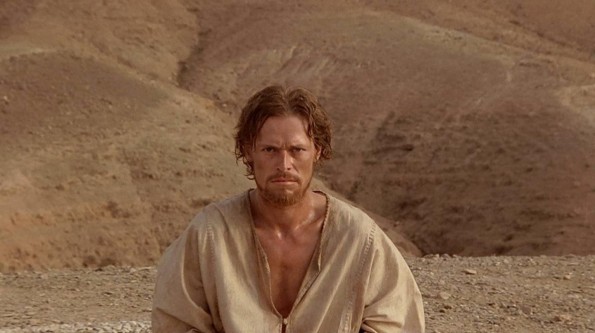
Note: This piece originally ran at Christianity Today Movies & TV. I thought it worth re-posting in light of the recent publicity surrounding Sony’s cancellation of The Interview in the wake of threats against theaters showing the film.
—
“I’ve always wanted to do films of the spirit, spiritual films, but religion gets in the way.”
—Martin Scorsese
There are (at least) two competing stories that get told about The Last Temptation of Christ‘s tortured path to the screen twenty-five years ago. The first one, all but taken for granted in Hollywood, is that Martin Scorsese is a sincere seeker who was temporarily thwarted by institutional religious bigotry. But he doggedly persisted against all odds to make a great work of art.
The second story is taken as the obvious but suppressed truth by those who tell it. They maintain that a secular entertainment community deliberately provoked a controversy to help rally support for a troubled, inferior film.
Whichever version you accept (or remember), The Last Temptation marked a tipping point in the American “culture wars.” There had been other films, and have been since, that generated protest, disdain, or both. Michael Haneke’s Amour, for instance, recently drew fire for (its detractors argue) promoting the culture of death. But it also garnered praise outside of religious circles, not to mention a Palme d’Or at the Cannes Film Festival.
Last Temptation wasn’t simply criticized: it helped establish the battle lines. It is the prime example in the book by Michael Medved that gave this particular battlefield a name: Hollywood vs. America.
And at least once, the battle was not just metaphorical. An attack at a theater showing the film in Paris left at least one viewer burned and several others injured. The venue had to close for three years to be remodeled.
It’s fascinating to listen to the commentary track on the film’s Criterion Collection DVD, released in 2000. Made with a $7 million budget for Universal Studios after Paramount gave up the picture, the film begins with a written disclaimer that it is not based on the Gospels but is a “fictional exploration of the eternal spiritual conflict” which, it says, is the clash of “spirit” and “flesh” that grows out of the “yearning of man to attain God.”
On the DVD commentary, screenwriter Paul Schrader—one of Calvin College’s more controversial graduates—admits that this use of Jesus as a metaphor is “technically” blasphemous. But he claims that the critics of the film never made a sophisticated critique. Instead, they were enraged by just one thing: that the movie showed sexual contact between Jesus and Mary Magdalene. This is the greatest of the temptations that Jesus overcomes by choosing to remain on the cross and be crucified.
 On the commentary track, the film’s creators don’t agree about just what sort of response they expected. Scorsese claims that he did not think it would be such a big controversy. But Schrader and Jay Cocks (who helped revise the script) say they anticipated the responses. They state alternately that they knew it would “upset people” (but that disagreement is good and healthy) and that it would be “willfully misunderstood by some” and “might” scandalize others.
Whatever Scorsese’s expectations during filming—it’s worth remembering that at least one studio backed away from even making the film—he reportedly did not attend its premiere. That event, replete with security concerns so new and alien at the time but so depressingly normal today, is another reminder of the ways America has changed in the last quarter century.
But for those, like me, who did not see it when it was originally released, the biggest surprise is how poorly this film has stood the test of time.
The opening shot shows Jesus rolling on the ground in pain, establishing what Schrader admits was a deliberate motif of God as a headache that Jesus cannot get rid of. Many of the scenes are self-consciously small. Scorsese states that he scaled back the numbers and scope of scenes described in the Bible, convinced from his own research that the remote locations and ancient lack of transportation would have made these events smaller than legend and imagination had previously described them.
But a much more serious problem than the fantasy temptation sequences (for any believing Christian, anyhow) is that in the film, Jesus becomes only gradually aware of God’s plan. In the end he achieves deity, rather than incarnating it.
This motif means there are frequent shifts in tone and style that keep the film from forming a cohesive portrait of Jesus and the world he occupies. In an early scene, Jesus watches Mary Magdalene have sex (and is then alternately tempted and scorned by her when he rejects her advances). The filmmakers say the scene illustrates humans’ ability to be close to temptation but not sin, but it depicts Jesus as repressed and frightened by Mary’s body, rather than capable of looking past it.
There’s more. John the Baptist and his followers are deliberately eroticized—the director claims that sexual passion is always near the surface of religious fervor. Jesus is “surprised” by his own healing abilities. Scorsese admits to thinking that the wilderness temptations were a good place to interject some much-needed humor into a narrative that is supposed to embody all human experiences.
But the strangest stylistic shift comes in a scene in which Jesus removes his own beating heart from his chest and holds it in his hands for the crowd to see. According to Scorsese, this scene is supposed to blur the lines between possible charlatanry and genuine miracle, making it clear that Jesus’s witnesses sincerely thought they saw that which had no scientific explanation. And yet, nowhere else does the film adopt a disciple’s point of view. Even that possible message is blunted by the more powerful and pointed depiction of Paul as a self-aware liar who is constructing a myth of Jesus for his own ends (though this occurs in the final dream sequence, where Jesus becomes aware of what will happen if he doesn’t accept crucifixion.)
 Some who defend the film say that its lack of internal clarity is the fault of Kazantzakis’s novel. For example, Carol Iannone, a conservative writer whom G. W. Bush nominated to serve on the board of the National Endowment for the Humanities, defended the film in the conservative Catholic magazine First Things. She stressed the good intentions of the artists, however misguided the results. Kazantzakis, “in order to speak to modern man,” she said, must make Jesus “to bear the infirmities of our age—the doubt, the angst, the fear and trembling, the existential dread, and yes, even the sexual obsessiveness.” She quotes Scorsese’s own desire to create, like Kazantzakis, “a parable that is fresh and alive.”
On the Criterion DVD, Scorsese recalls answering questioners at Paramount in 1983 who asked him why he wanted to make the film with “I want to get to know Jesus better.” On the other hand, he also speaks of actor Willem Dafoe’s traditional “candy box Jesus” look as lulling audiences into thinking this is the Jesus they already know, allowing him and the film to catch them “off guard.”
Today, though, watching the film suggests a simpler theory about the film. It’s not a living parable or an attempt to deliberately provoke the audience.
It’s that confused notions of Jesus led to a confused film about him.
 Wanting to create something “fresh,” but seemingly without a strong sense of his own about the identity of his protagonist, Scorsese took a modernist fable by Kazantzakis and added Schrader’s deliberate attempts to obscure the traditional biblical elements that, after all, make Jesus worth attending to in the first place. He emerged with a film that reeks with liberal good intentions but is artistically uneven and theologically incoherent.
So how do we account for the film’s critical success? (Positive reviews outnumber pans by a rate of approximately fifteen to one on Rotten Tomatoes and Metacritic.) Medved says that critics did not want to be seen as endorsing evangelical or fundamentalist protests.
It’s also possible that critics were swayed by Scorsese’s status in American cinema. Although the director wasn’t cemented as the giant he is now in the late eighties, it’s still true that The King of Comedy, After Hours, and The Color of Money (his last three films before Last Temptation) are all generally rated higher by critics than casual moviegoers. That Scorsese received an Academy Award nomination for Best Director while no other member of the cast or crew was nominated may help support the idea that his own reputation and popularity made critics evaluate the film through a rose-colored lens.
Given Scorsese’s irreproachable status, he may be the only one capable of criticizing The Last Temptation of Christ without being dismissed as a prejudiced zealot. In one of his more candid moments during the director commentary, he admits that not all of the criticism of the film is reactionary or undeserved:
. . . I mean it’s difficult thinking that a film is successful because you succeeded in putting on screen what you wanted to get on, but does it communicate? Does it mean anything to anybody? I’m not sure. I only know now that you never know. That’s the reality of it, you just keep doing it. But dealing with the imagery head on and dealing with these themes directly in the context of the story of the time of two thousand years ago may have been more difficult and may not have been entirely as successful as I wanted it to be, because I’m not too satisfied with it. It’s probably more . . . fitting for me to be dealing with these themes on an everyday scale the way I did in Mean Streets or Raging Bull or even The King of Comedy.
Scorsese collaborator Jay Cocks suggests that the real artistic importance of The Last Temptation of Christ may have been that it pushed the director to tell stories that were larger in scope than some of his smaller, more personal, character driven films did. And Scorsese has continued to explore spiritual themes—particularly whether or not individual character is determined by harsh environments.
While The Age of Innocence, The Gangs of New York, Kundun, or Casino are modern stories, they are hardly told on an “everyday scale.” And Scorsese’s successful recent movies, including The Departed, Shutter Island, and Hugo, show that he is still interested in personal stories, and in telling them from within a broader setting.
As it often does, perhaps time will present us with a third narrative about the history of The Last Temptation, one that mixes elements from both sides of a cultural divide. Perhaps in another twenty-five years from now, we’ll have a story of the film as neither good theology nor good art. But maybe we’ll say that, at the very least, it helped pave the way for better things to come.
Christianity Today Movies and TV
Previous Post

December 17, 2014
If You Don’t, I Will (Fillieres, 2014)
Next Post
December 17, 2014 "It Was a Christian Movement" -- Wendell Pierce on Selma
Browse Our Archives
Select a Category 10 Years Later 1999 Top 5 2007 Top 10 2008 Favorite Discoveries 2008 Top 10 2009 Favorite Discoveries 2009 Top 10 2010 Favorite Discoveries 2010 Top 10 2011 Top 10 2012 Top Ten 2013 Top Ten 2014 Top Ten Best Picture Winners Christian Spotlight on Entertainment Christianity Today Coming Soon Disclosure Disclosure--AS Disclosure--Book Disclosure--DVDS Disclosure--SEOL Disclosure--Travel Dissenting Opinion Elsewhere Emergenetics Essays Featured Film Fest DC--2014 Film Festivals Full Frame Documentary Film Festival 2010 Full Frame Documentary Film Festival 2011 Full Frame Documentary Film Festival 2012 Full Frame Documentary Film Festival 2013 Full Frame Documentary Film Festival 2014 Headline Interviews Laura on the Oscar Winners Podcasts Quick Impressions Reviews RiverRun Film Festival 2014 Television The Criterion Collection The Thin Place To Stream or Not to Stream? Top 10s and Other Lists Toronto International Film Festival 2009 Toronto International Film Festival 2010 Toronto International Film Festival 2011 Toronto International Film Festival 2012 Toronto International Film Festival 2013 Toronto International Film Festival 2014 Uncategorized Video Virginia Film Festival 2011 Virginia Film Festival 2013 Women's Film Festival 2012
Select a Month February 2016 January 2016 December 2015 November 2015 October 2015 September 2015 August 2015 July 2015 June 2015 May 2015 April 2015 March 2015 February 2015 January 2015 December 2014 November 2014 October 2014 September 2014 August 2014 July 2014 June 2014 May 2014 April 2014 March 2014 February 2014 January 2014 December 2013 November 2013 October 2013 September 2013 August 2013 July 2013 June 2013 May 2013 April 2013 March 2013 February 2013 January 2013 December 2012 November 2012 October 2012 September 2012 August 2012 July 2012 June 2012 May 2012 April 2012 March 2012 February 2012 January 2012 December 2011 November 2011 October 2011 September 2011 August 2011 July 2011 June 2011 May 2011 April 2011 March 2011 February 2011 January 2011 December 2010 November 2010 October 2010 September 2010 August 2010 July 2010 June 2010 May 2010 April 2010 March 2010 February 2010 January 2010 December 2009 November 2009 September 2009 August 2009 July 2009 June 2009 May 2009 April 2009
Follow Us!
TAKE THE
Religious Wisdom Quiz
Who predicted Persia's rise?
Select your answer to see how you score.
Isaiah Ezekiel Daniel Jeremiah
Related posts from 1More Film Blog

An Inconvenient Truth (Guggenheim, 2006) -- 10 Years...

The Devil Wears Prada (Frankel, 2006) -- 10...


My Best Picture Choice: Mad Max: Fury Road
TRENDING AT PATHEOS Religious Music & Entertainment

"Les Diabolique" and Transgression
Alongside something like Arrival, Vertigo, or Charade, Les Diaboliques is a...

"The Plague Dogs" and Mortality
So, flashback to the late 70s, early 80s. Walt Disney Studios is...

With the recent and highly successful release of Christopher Nolan’s epic film,...

"L'avventura" and Human Weakness
Today's piece is going to be a little different for a few...

I first want to apologize for not posting or writing anything. I'm...

I've engaged in the multi-year project of reading through the Church Fathers,...
view all Religious Music & Entertainment blogs
Ad-Free & Subscriber Log-In Subscription Support
- About Us
- 2026 Calendar
- Videos
- Podcasts
- Library of World Religions
- Faith In Media Tracker
- Advertise With Us
- Write for Us
- Privacy Policy
- Terms of Service
- Do Not Sell My Data
- Contact Us
- Radiant Digital
- Manage Newsletter Subscriptions
- Unsubscribe From Notifications
- Sitemap
Copyright 2008-2026, Patheos. All rights reserved.
Subscription Support Ad-Free & Subscriber Log-In
Follow Patheos