
BuddhistCatholicContemplativeEvangelicalGeneral ChristianHinduJewishLatter-day SaintMuslimNew VisionsProgressive Christian
Beliefs
- Buddhist
- Catholic
- Contemplative
- Evangelical
- General Christian
- Hindu
- Jewish
- Latter-day Saint
- More Voices
- Muslim
- New Visions
- Pagan
- Progressive Christian
Topics
- Religion News
- Food and Religion
- Sports and Religion
- Religious Art
- Religious Music and Entertainment
- Religious Events
- History and Religion
- Style and Religion
- Politics and Religion
- Women in Religion
- Recreation Outdoors and Religion
- Business Finance and Religion
- Careers Workplace and Religion
- Education and Religion
- Family Parenting and Religion
- Health Fitness and Religion
- Home and Religion
- Relationships and Religion
- Technology and Religion
- Travel and Religion
Columnists
- Buddhist Columnists
- Business Finance and Religion Columnists
- Careers Workplace and Religion Columnists
- Catholic Columnists
- Contemplative Columnists
- Education and Religion Columnists
- Evangelists Columnists
- Family Parenting and Religion Columnists
- General Christian Columnists
- Health Fitness and Religion Columnists
- Hindu Columnists
- History and Religion Columnists
- Home and Religion Columnists
- Jewish Columnists
- More Voices Columnists
- Latter Day Columnists
- Muslim Columnists
- New Visions Columnists
- Nonreligious Columnists
- Pagan Columnists
- Politics and Religion Columnists
- Progressive Columnists
- Recreation Outdoors and Religion Columnists
- Relationships and Religion Columnists
- Religion News Columnists
- Religious Art Columnists
- Religious Events Columnists
- Religious Music and Entertainment Columnists
- Sports and Religion Columnists
- Style and Religion Columnists
- Technology and Religion Columnists
- Travel and Religion Columnists
- Women in Religion Columnists
Resource Library
- 2026 Calendar
- Library of World Religions
- The 100 Most Holy Places on Earth
- Patheos Answers
- Podcasts
- Videos
- Faith Leaders Database
- Anglican Episcopalian
- Bahai
- Baptist
- Buddhism
- Christianity
- Confucianism
- Eastern Orthodoxy
- Hinduism
- Holiness and Pentecostal
- ISKCON
- Islam
- Judaism
- Lutheran
- Methodist
- The Church of Jesus Christ of Latter-day Saints
- New Age
- Paganism
- Presbytarian and Reformed
- Protestantism
- Religion Behind the Scenes
- Roman Catholic
- Scientology
- Shia Islam
- Sikhism
- Sufism
- Sunni Islam
- Taoism
- Zen
- See all religions
Research Tools
 Ad-Free & Subscriber Log-In Subscription Support
Ad-Free & Subscriber Log-In Subscription Support
Follow Patheos 

- Trending:
- Forgiveness
- |
- Marriage
- |
- Consciousness
- |
- Death Penalty
- |
- Election
- |
- Halloween
 1More Film Blog
- Home
- Religious Music & Entertainment
- Kingdom of Heaven (Scott, 2005) — 10 Year Later
Kingdom of Heaven (Scott, 2005) — 10 Year Later
Last updated on: December 14, 2015 at 8:44 am by Kenneth R. Morefield
Kingdom of Heaven (Scott, 2005) — 10 Year Later 2015-12-14T08:44:41-05:00 Kenneth R. Morefield
Patheos Explore the world's faith through different perspectives on religion and spirituality! Patheos has the views of the prevalent religions and spiritualities of the world.

Given that I revisited Ridley Scott’s director’s cut of Kingdom of Heaven on the same week that a front runner for the Republican presidential nomination proposed a ban on all Muslims entering the United States, it is tempting to inflate the film’s cultural significance.
It’s not that I don’t believe blockbusters have a place in shaping Americans’ political convictions. I’ve written before that the epic films leading up to the invasion of Iraq — The Alamo, Master and Commander, The Lord of the Rings, The Matrix Revolutions — focused on small, undermanned warriors of democracy/freedom fighting off hordes of invasive, soulless despots. As public perceptions and support of the Iraq War dimmed, films such as The Bourne Supremacy and Munich mirrored our ambivalence about armed conflict and those who lead us into it.
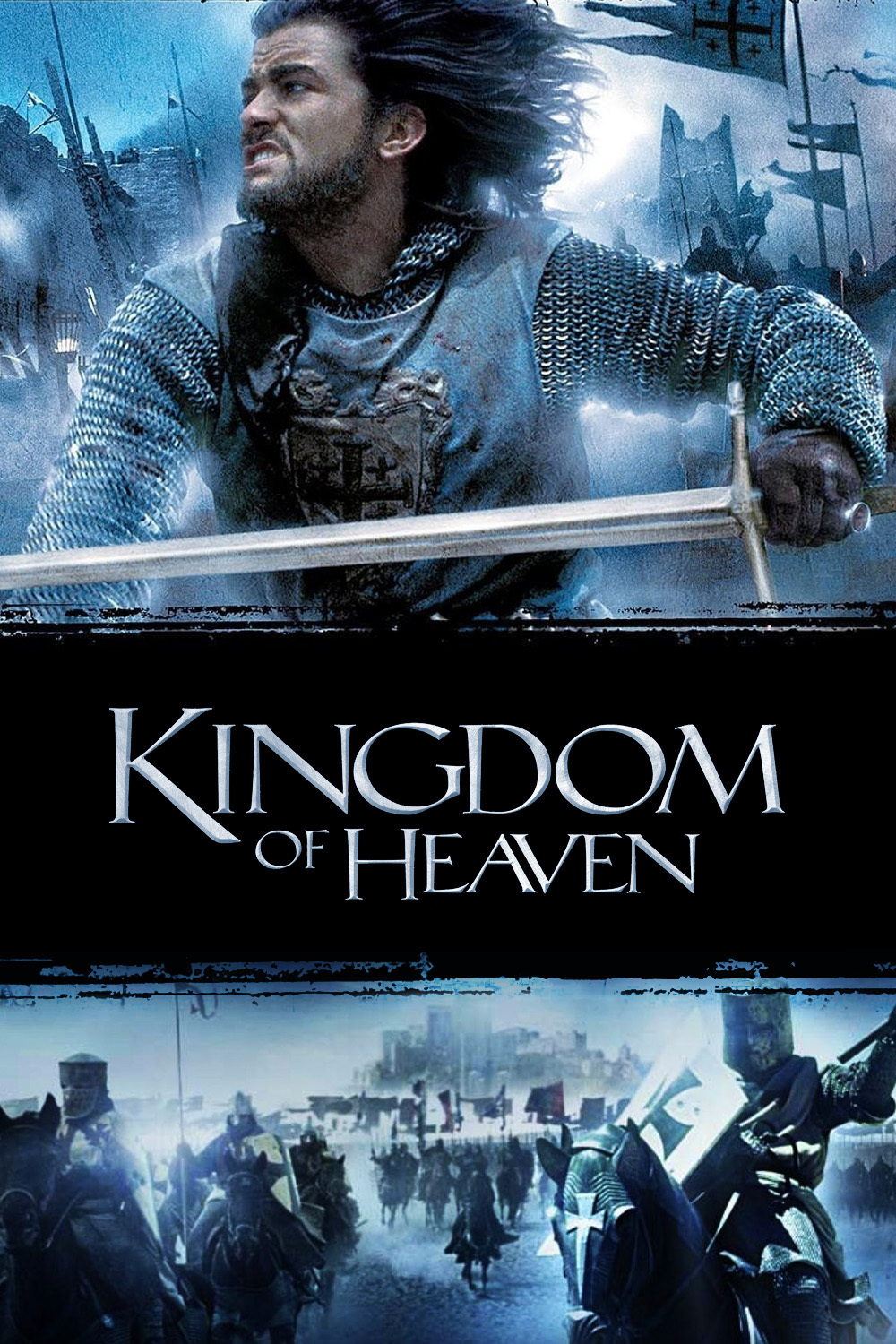 In comparison to some of those earlier films, Kingdom of Heaven sounds anti-war. “I would rather live with men than kill them,” says Tiberias (Jeremy Irons). “No one has claim (to Jerusalem); all have claim,” pronounces Balian (Orlando Bloom). Those sentiments that seem so self-evidently simple, one wonders why we’re still fighting over those lands and those beliefs hundreds of years later.
And that gives me pause. I don’t mind a film that refuses to see the world with the same certainty that those in other times and places did. But the reductive, all-religion-is-bad-religion-because-religion-makes-you-certain rings as false to me as does attempts to position one side or the other as unquestionably in God’s favor. Kingdom of Heaven was four years prior to Alejandro Amenabar’s Agora, yet the two films feel like kindred spirits in retrospect. At the Toronto International Film Festival Amenabar claimed that Agora was “anti-fundamentalist” rather than “anti-religious.”
I am not sure that Scott’s film is interested in such distinctions, because in them nearly all religious people are fundamentalists, even if they practice their religion in time before that term existed. When Tiberias leaves, his final words to Balian are “May God be with you — He is no longer with me.” When Balian negotiates a truce in order to bury dead he says: “God will understand. If He doesn’t, He is not God.” The path of the righteous is either one of renunciation or accommodation. If he cannot pick one or the other, he is not righteous.
That latter sentiment sounds like something out of J.B., Night, or When Bad Things Happen to Good People. In fact, Kingdom of Heaven might well be re-titled When Bad Religion Happens to Good People. Balian and Tiberias retain a streak of personal integrity, but only insofar as they differentiate themselves from those who think there are things worth dying for.
Actually, that’s not quite accurate. Balian’s humanism is similar to the his fellow Christians’ zealotry in that he is willing to sublimate his personal beliefs to a higher cause. It’s just that his higher cause is saving the people from the consequences of the crusade.
All of this makes it sound like I disliked Kingdom of Heaven, but I didn’t. I just didn’t find it to be the thoughtfully ecumenical examination of religious conflict I had been lulled into misremembering.
The three hour director’s cut was more interesting to me as a foreshadowing of Ridley Scott’s influence as a television producer. The same year Kingdom of Heaven was released, Numb3rs began its six season run. The Good Wife began in 2009 and is still going strong. Add to the resume of Executive Producer credits at least five miniseries: The Pillars of the Earth, World Without End, Labyrinth, Crimes of the Century, and Klondike. Scott is also listed as Executive Producer for the Amazon original series The Man in the High Castle.
 It is not my argument that an Executive Producer is an auteur in the same way as a director, but I couldn’t help but notice the director’s cut of Kingdom of Heaven shared a number of qualities with The Good Wife. The two most obvious are an episodic structure and a fascination with the supporting characters that makes the protagonist important only insofar as he or she is at the nexus of the action. (Alicia Florrick always struck me as a political cousin of Mary Richards.) It’s not hard to see in retrospect the germs of the director being interested not merely in bigger stories but in a more serial form of storytelling.
It’s also not hard to see in hindsight the more open skepticism towards Christianity that is sprinkled throughout The Good Wife (or Prometheus, for that matter) coloring The Kingdom of Heaven. A few (very few) Christians can be sincere, and their sincerity might even motivate them to good deeds, but the substance of foundation of their beliefs is never as important as pragmatic concerns or humanistic values that can (and perhaps should) be divorced from any particular religious worldview.
In the last two years Ridley Scott has given us one failed epic, Exodus: Gods and Kings, and one wildly successful one, The Martian. Perhaps in spirit The Martian is a closer kin to Kingdom of Heaven. It portrays a world in which all nations and races work together for the common good, despite religious differences. More importantly, in Mark Watney’s speech (that ends the novel but opens the film’s trailer), it postulates that this cooperation is not exceptional but is, in fact, universal. How then do we explain the Crusades? There seems to be a literary Romantic quality to Scott’s oeuvre. Individual=good; Instiutions=corrupting and bad.
One question worth asking: why is it that men of science are capable of overcoming prejudice and societal/institutional peer pressure, while men of faith more often succumb to it? I sometimes feel like I catch of whiff in Scott’s work not just of the veneration of science but of the claim for the moral and ethical superiority of the scientist. (Did I mention Scott is also listed as producer for Concussion?) Yes, one of our cultural meta-narratives is the scientist questioning blind, untested faith and being momentarily ridiculed but ultimately proved right. But is this the only meta-narrative? Does its current popularity make it any more universally true than that of person propelled and buttressed by faith to challenge corrupt and broken systems (Selma; Invictus).
What finally bugged me the most about Kingdom of Heaven was this…”If this is the kingdom of heaven, then God do with it as He wills.” Balian can be the Christian of integrity amidst hordes of people who pervert religious rhetoric to justify their own ends; he can also be an agnostic who doesn’t believe much of anything. He can’t be both, though the film tries to make him such. Leaving aside the spiritual interpretation of Jesus’s use of the term “kingdom of heaven,” how Balian surrenders Jerusalem tells us little about his beliefs. As a result, the action, while having historic significance, carries little emotional weight. A commander might well feel more grief to find she left a colleague alive back on Mars. “What God desires is here…and here,” says a teacher pointing to Balian’s head and heart. The notion that it doesn’t matter much what he believes so long as he believes it with purity of heart and intention, would have pathos if it were shown to inform Balian’s actions. But it is hard to feel much empathy for the man torn by doubt if he comes across as never having been settled in his convictions to begin with.
Previous Post

December 5, 2015
A GLBTQ Movie Season
Next Post

December 17, 2015 The Big Short (McKay, 2015)
Browse Our Archives
Select a Category 10 Years Later 1999 Top 5 2007 Top 10 2008 Favorite Discoveries 2008 Top 10 2009 Favorite Discoveries 2009 Top 10 2010 Favorite Discoveries 2010 Top 10 2011 Top 10 2012 Top Ten 2013 Top Ten 2014 Top Ten Best Picture Winners Christian Spotlight on Entertainment Christianity Today Coming Soon Disclosure Disclosure--AS Disclosure--Book Disclosure--DVDS Disclosure--SEOL Disclosure--Travel Dissenting Opinion Elsewhere Emergenetics Essays Featured Film Fest DC--2014 Film Festivals Full Frame Documentary Film Festival 2010 Full Frame Documentary Film Festival 2011 Full Frame Documentary Film Festival 2012 Full Frame Documentary Film Festival 2013 Full Frame Documentary Film Festival 2014 Headline Interviews Laura on the Oscar Winners Podcasts Quick Impressions Reviews RiverRun Film Festival 2014 Television The Criterion Collection The Thin Place To Stream or Not to Stream? Top 10s and Other Lists Toronto International Film Festival 2009 Toronto International Film Festival 2010 Toronto International Film Festival 2011 Toronto International Film Festival 2012 Toronto International Film Festival 2013 Toronto International Film Festival 2014 Uncategorized Video Virginia Film Festival 2011 Virginia Film Festival 2013 Women's Film Festival 2012
Select a Month February 2016 January 2016 December 2015 November 2015 October 2015 September 2015 August 2015 July 2015 June 2015 May 2015 April 2015 March 2015 February 2015 January 2015 December 2014 November 2014 October 2014 September 2014 August 2014 July 2014 June 2014 May 2014 April 2014 March 2014 February 2014 January 2014 December 2013 November 2013 October 2013 September 2013 August 2013 July 2013 June 2013 May 2013 April 2013 March 2013 February 2013 January 2013 December 2012 November 2012 October 2012 September 2012 August 2012 July 2012 June 2012 May 2012 April 2012 March 2012 February 2012 January 2012 December 2011 November 2011 October 2011 September 2011 August 2011 July 2011 June 2011 May 2011 April 2011 March 2011 February 2011 January 2011 December 2010 November 2010 October 2010 September 2010 August 2010 July 2010 June 2010 May 2010 April 2010 March 2010 February 2010 January 2010 December 2009 November 2009 September 2009 August 2009 July 2009 June 2009 May 2009 April 2009
Follow Us!
TAKE THE
Religious Wisdom Quiz
Who carried Jesus' cross after He could no longer?
Select your answer to see how you score.
Pilate John Peter Simon of Cyrene
Related posts from 1More Film Blog

An Inconvenient Truth (Guggenheim, 2006) -- 10 Years...

The Devil Wears Prada (Frankel, 2006) -- 10...

"Telling a Great Story" -- An Interview with...

Is Snow White Still Essential?
TRENDING AT PATHEOS Religious Music & Entertainment

"Les Diabolique" and Transgression
Alongside something like Arrival, Vertigo, or Charade, Les Diaboliques is a...

"The Plague Dogs" and Mortality
So, flashback to the late 70s, early 80s. Walt Disney Studios is...

With the recent and highly successful release of Christopher Nolan’s epic film,...

"L'avventura" and Human Weakness
Today's piece is going to be a little different for a few...

I first want to apologize for not posting or writing anything. I'm...

I've engaged in the multi-year project of reading through the Church Fathers,...
view all Religious Music & Entertainment blogs
Ad-Free & Subscriber Log-In Subscription Support
- About Us
- 2026 Calendar
- Videos
- Podcasts
- Library of World Religions
- Faith In Media Tracker
- Advertise With Us
- Write for Us
- Privacy Policy
- Terms of Service
- Do Not Sell My Data
- Contact Us
- Radiant Digital
- Manage Newsletter Subscriptions
- Unsubscribe From Notifications
- Sitemap
Copyright 2008-2026, Patheos. All rights reserved.
Subscription Support Ad-Free & Subscriber Log-In
Follow Patheos