
BuddhistCatholicContemplativeEvangelicalGeneral ChristianHinduJewishLatter-day SaintMuslimNew VisionsProgressive Christian
Beliefs
- Buddhist
- Catholic
- Contemplative
- Evangelical
- General Christian
- Hindu
- Jewish
- Latter-day Saint
- More Voices
- Muslim
- New Visions
- Pagan
- Progressive Christian
Topics
- Religion News
- Food and Religion
- Sports and Religion
- Religious Art
- Religious Music and Entertainment
- Religious Events
- History and Religion
- Style and Religion
- Politics and Religion
- Women in Religion
- Recreation Outdoors and Religion
- Business Finance and Religion
- Careers Workplace and Religion
- Education and Religion
- Family Parenting and Religion
- Health Fitness and Religion
- Home and Religion
- Relationships and Religion
- Technology and Religion
- Travel and Religion
Columnists
- Buddhist Columnists
- Business Finance and Religion Columnists
- Careers Workplace and Religion Columnists
- Catholic Columnists
- Contemplative Columnists
- Education and Religion Columnists
- Evangelists Columnists
- Family Parenting and Religion Columnists
- General Christian Columnists
- Health Fitness and Religion Columnists
- Hindu Columnists
- History and Religion Columnists
- Home and Religion Columnists
- Jewish Columnists
- More Voices Columnists
- Latter Day Columnists
- Muslim Columnists
- New Visions Columnists
- Nonreligious Columnists
- Pagan Columnists
- Politics and Religion Columnists
- Progressive Columnists
- Recreation Outdoors and Religion Columnists
- Relationships and Religion Columnists
- Religion News Columnists
- Religious Art Columnists
- Religious Events Columnists
- Religious Music and Entertainment Columnists
- Sports and Religion Columnists
- Style and Religion Columnists
- Technology and Religion Columnists
- Travel and Religion Columnists
- Women in Religion Columnists
Resource Library
- 2026 Calendar
- Library of World Religions
- The 100 Most Holy Places on Earth
- Patheos Answers
- Podcasts
- Videos
- Faith Leaders Database
- Anglican Episcopalian
- Bahai
- Baptist
- Buddhism
- Christianity
- Confucianism
- Eastern Orthodoxy
- Hinduism
- Holiness and Pentecostal
- ISKCON
- Islam
- Judaism
- Lutheran
- Methodist
- The Church of Jesus Christ of Latter-day Saints
- New Age
- Paganism
- Presbytarian and Reformed
- Protestantism
- Religion Behind the Scenes
- Roman Catholic
- Scientology
- Shia Islam
- Sikhism
- Sufism
- Sunni Islam
- Taoism
- Zen
- See all religions
Research Tools
 Ad-Free & Subscriber Log-In Subscription Support
Ad-Free & Subscriber Log-In Subscription Support
Follow Patheos 

- Trending:
- Forgiveness
- |
- Marriage
- |
- Consciousness
- |
- Death Penalty
- |
- Election
- |
- Halloween
 1More Film Blog
- Home
- Religious Music & Entertainment
- John Sayles Interview
John Sayles Interview
Last updated on: December 25, 2014 at 10:48 pm by Kenneth R. Morefield
John Sayles Interview 2014-12-25T22:48:52-05:00 Kenneth R. Morefield
Patheos Explore the world's faith through different perspectives on religion and spirituality! Patheos has the views of the prevalent religions and spiritualities of the world.
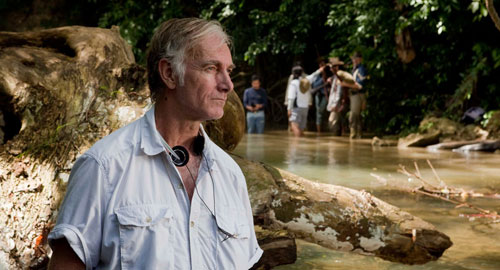
John Sayles: photo from johnsaylesblog.com
John Sayles brought his most recent film, Amigo, to AFI Fest in Los Angeles this week. I was able to interview the director about the film’s production history, historical context, and parallels to other military confrontations in history. Not surprisingly for anyone who knows the directors films, he was informed, thoughtful, and erudite. This interview originally appeared at AFI Fest NOW.
“You know, you can’t make a movie about war and occupation without it being about other wars and other occupations,” John Sayles told audiences at the North American premiere of Amigo when asked about parallels between the American military occupation of the Philippines and contemporary American involvement in Iraq. “I could have set a movie very much like this in a French town during the Vichy period during World War II when Nazis were occupying; I could have set it in Vietnam in 1969. I could have set it in Iraq five years ago. I could have set it in the American South in 1864 when the Union army came down and started taking over southern towns.”
For those well versed in the films of John Sayles, often praised for their rich evocation of local color and period detail, those words may seem startlingly un-Sayles like. When asked if Amigo is less dependent on specific setting than some of his other films, the director demurred. “What you always have to think about,” Sayles told AFI Now, “is that you have the specifics of a story and then there are the things that are just about human behavior.” Citing and recommending Charles Berkowitz’s Odysseus in America (narrated by frequent Sayles collaborator David Strathairn), which deals with responses of soldiers to works of classic Greek tragedy, Sayles suggested that human behavior in and during war may be constant enough to seem familiar to audiences across time, but insisted this doesn’t mean that stories about specific contexts for these behaviors don’t have distinctive features.
What are the specifics of this story that made Sayles want to set Amigo in the Philippines rather than during some other historical occupation? One feature of this conflict that made it so compelling was that this military and political action signaled a sea change in America’s self-conception: “We really had defined ourselves as an anti-imperialist country [….] We really thought of ourselves as, ‘We’re the people who are against empire.’ And, so, there was a bait and switch that happened in the Philippines where we went there ostensibly to help free the Filipino people from the domination of the Spaniards and did this absolute about face and ended up taking over the island and keeping it as a territory.”
Another distinctive of the time period and the conflict, for Sayles, is how “raw” the political and social rhetoric was that was used to justify imperialist actions: “The racism was overt. The Rudyard Kipling poem ‘Pick Up the White Man’s Burden,’ the subtitle of that poem is ‘America in the Philippines.’ And he’s saying ‘It’s our…not our white, Christian opportunity, but our white, Christian duty to straighten out these little dark people, and take over their country.” Perhaps because of the traditional anti-imperialist heritage and history of our country, more subsequent imperialist efforts have tended to be couched in euphemisms or to invoke the historical vocabularies (such as “winning hearts and minds”) from other times, such as the Revolutionary War period.
Amigo represents the act of occupation as military and political, but it is also shows how such actions rely upon the Church to provide a cultural and sociological justification for those actions so that the people engaging in them can continue to think of themselves as good people. When asked at the Toronto International Film Festival about Amigo’s mention of General Order 100, a document actually written during the American Civil War, Sayles characterized that historic document’s purpose as an attempt to say, “Although we’re slaughtering each other, and that’s the point of what we’re doing for us to win and for you to lose, we are still moral people.” He continued: “That’s what people who are slaughtering each other want to believe. They want to believe that there’s still a code. They want to be able to say, ‘God is looking down on us, and He approves of what we’re doing.’”
If that sounds more like a parallel to contemporary terrorists than contemporary political or military structures, the connecting thread is the “absolute” nature of the belief even more than the particular belief system that the imperialist (or rebel) holds to. While speaking bluntly about how institutional religion was part of the problem in the Philippines, Sayles insists that Padre Hidalgo, the Spanish missionary in Amigo, was not a “cynic” but a true-believer. “What he does is absolutely what he thinks should be done.” That kind of absolute certainty in the rightness of one’s moral position—and hence of one’s justification in actions taken in support of it—is not limited to any particular nationality or religion. “The true believers do as much damage as the cynics do.”
When asked if the film was pessimistic or even fatalistic about the possibility for change in human nature, Sayles said it was realistic, but he also suggested that people were less likely to “get involved in something after you’ve just been involved in something really awful.” Another historical difference between American involvement in the Philippines and some other, later wars was that it was the younger generation that really wanted that war. “There has to be a little period of forgetting,” he said, referring to the gap between the American Civil War and military action in the Philippines, “but it doesn’t have to be that long. Forty years isn’t that long for people to forget the true horror of the Civil War.”
If then, we as human beings have a tendency to renew mistakes of the past, a film like Amigo might, perhaps, delay for a little while the inevitable act of forgetting just how horrible were the consequences of wars past no matter how reasonable or idealistic the motives for fighting them seemed at the time.
Previous Post

November 4, 2010
The King’s Speech (Hooper, 2010)
Next Post

November 8, 2010 Directors: Life Behind the Camera (2010)
Browse Our Archives
Select a Category 10 Years Later 1999 Top 5 2007 Top 10 2008 Favorite Discoveries 2008 Top 10 2009 Favorite Discoveries 2009 Top 10 2010 Favorite Discoveries 2010 Top 10 2011 Top 10 2012 Top Ten 2013 Top Ten 2014 Top Ten Best Picture Winners Christian Spotlight on Entertainment Christianity Today Coming Soon Disclosure Disclosure--AS Disclosure--Book Disclosure--DVDS Disclosure--SEOL Disclosure--Travel Dissenting Opinion Elsewhere Emergenetics Essays Featured Film Fest DC--2014 Film Festivals Full Frame Documentary Film Festival 2010 Full Frame Documentary Film Festival 2011 Full Frame Documentary Film Festival 2012 Full Frame Documentary Film Festival 2013 Full Frame Documentary Film Festival 2014 Headline Interviews Laura on the Oscar Winners Podcasts Quick Impressions Reviews RiverRun Film Festival 2014 Television The Criterion Collection The Thin Place To Stream or Not to Stream? Top 10s and Other Lists Toronto International Film Festival 2009 Toronto International Film Festival 2010 Toronto International Film Festival 2011 Toronto International Film Festival 2012 Toronto International Film Festival 2013 Toronto International Film Festival 2014 Uncategorized Video Virginia Film Festival 2011 Virginia Film Festival 2013 Women's Film Festival 2012
Select a Month February 2016 January 2016 December 2015 November 2015 October 2015 September 2015 August 2015 July 2015 June 2015 May 2015 April 2015 March 2015 February 2015 January 2015 December 2014 November 2014 October 2014 September 2014 August 2014 July 2014 June 2014 May 2014 April 2014 March 2014 February 2014 January 2014 December 2013 November 2013 October 2013 September 2013 August 2013 July 2013 June 2013 May 2013 April 2013 March 2013 February 2013 January 2013 December 2012 November 2012 October 2012 September 2012 August 2012 July 2012 June 2012 May 2012 April 2012 March 2012 February 2012 January 2012 December 2011 November 2011 October 2011 September 2011 August 2011 July 2011 June 2011 May 2011 April 2011 March 2011 February 2011 January 2011 December 2010 November 2010 October 2010 September 2010 August 2010 July 2010 June 2010 May 2010 April 2010 March 2010 February 2010 January 2010 December 2009 November 2009 September 2009 August 2009 July 2009 June 2009 May 2009 April 2009
Follow Us!
TAKE THE
Religious Wisdom Quiz
I am an ancestor of King David, born from a foreign widow's faithfulness. Who am I?
Select your answer to see how you score.
Boaz Jesse Obed Salmon
Related posts from 1More Film Blog

"Telling a Great Story" -- An Interview with...


Interview: Patricia Riggen on The 33 and the...

Arts & Faith Ecumenical Jury Nominee -- Stations...
TRENDING AT PATHEOS Religious Music & Entertainment

"Les Diabolique" and Transgression
Alongside something like Arrival, Vertigo, or Charade, Les Diaboliques is a...

"The Plague Dogs" and Mortality
So, flashback to the late 70s, early 80s. Walt Disney Studios is...

With the recent and highly successful release of Christopher Nolan’s epic film,...

"L'avventura" and Human Weakness
Today's piece is going to be a little different for a few...

I first want to apologize for not posting or writing anything. I'm...

I've engaged in the multi-year project of reading through the Church Fathers,...
view all Religious Music & Entertainment blogs
Ad-Free & Subscriber Log-In Subscription Support
- About Us
- 2026 Calendar
- Videos
- Podcasts
- Library of World Religions
- Faith In Media Tracker
- Advertise With Us
- Write for Us
- Privacy Policy
- Terms of Service
- Do Not Sell My Data
- Contact Us
- Radiant Digital
- Manage Newsletter Subscriptions
- Unsubscribe From Notifications
- Sitemap
Copyright 2008-2026, Patheos. All rights reserved.
Subscription Support Ad-Free & Subscriber Log-In
Follow Patheos