
BuddhistCatholicContemplativeEvangelicalGeneral ChristianHinduJewishLatter-day SaintMuslimNew VisionsProgressive Christian
Beliefs
- Buddhist
- Catholic
- Contemplative
- Evangelical
- General Christian
- Hindu
- Jewish
- Latter-day Saint
- More Voices
- Muslim
- New Visions
- Pagan
- Progressive Christian
Topics
- Religion News
- Food and Religion
- Sports and Religion
- Religious Art
- Religious Music and Entertainment
- Religious Events
- History and Religion
- Style and Religion
- Politics and Religion
- Women in Religion
- Recreation Outdoors and Religion
- Business Finance and Religion
- Careers Workplace and Religion
- Education and Religion
- Family Parenting and Religion
- Health Fitness and Religion
- Home and Religion
- Relationships and Religion
- Technology and Religion
- Travel and Religion
Columnists
- Buddhist Columnists
- Business Finance and Religion Columnists
- Careers Workplace and Religion Columnists
- Catholic Columnists
- Contemplative Columnists
- Education and Religion Columnists
- Evangelists Columnists
- Family Parenting and Religion Columnists
- General Christian Columnists
- Health Fitness and Religion Columnists
- Hindu Columnists
- History and Religion Columnists
- Home and Religion Columnists
- Jewish Columnists
- More Voices Columnists
- Latter Day Columnists
- Muslim Columnists
- New Visions Columnists
- Nonreligious Columnists
- Pagan Columnists
- Politics and Religion Columnists
- Progressive Columnists
- Recreation Outdoors and Religion Columnists
- Relationships and Religion Columnists
- Religion News Columnists
- Religious Art Columnists
- Religious Events Columnists
- Religious Music and Entertainment Columnists
- Sports and Religion Columnists
- Style and Religion Columnists
- Technology and Religion Columnists
- Travel and Religion Columnists
- Women in Religion Columnists
Resource Library
- 2026 Calendar
- Library of World Religions
- The 100 Most Holy Places on Earth
- Patheos Answers
- Podcasts
- Videos
- Faith Leaders Database
- Anglican Episcopalian
- Bahai
- Baptist
- Buddhism
- Christianity
- Confucianism
- Eastern Orthodoxy
- Hinduism
- Holiness and Pentecostal
- ISKCON
- Islam
- Judaism
- Lutheran
- Methodist
- The Church of Jesus Christ of Latter-day Saints
- New Age
- Paganism
- Presbytarian and Reformed
- Protestantism
- Religion Behind the Scenes
- Roman Catholic
- Scientology
- Shia Islam
- Sikhism
- Sufism
- Sunni Islam
- Taoism
- Zen
- See all religions
Research Tools
 Ad-Free & Subscriber Log-In Subscription Support
Ad-Free & Subscriber Log-In Subscription Support
Follow Patheos 

- Trending:
- Forgiveness
- |
- Marriage
- |
- Consciousness
- |
- Death Penalty
- |
- Election
- |
- Halloween
 1More Film Blog
- Home
- Religious Music & Entertainment
- In Defense of “To Kill a Mockingbird” — A Response to Roger Ebert
In Defense of “To Kill a Mockingbird” — A Response to Roger Ebert
Last updated on: February 21, 2016 at 8:36 am by Guest Contributor
In Defense of “To Kill a Mockingbird” — A Response to Roger Ebert 2016-02-21T08:36:16-05:00 Guest Contributor
Patheos Explore the world's faith through different perspectives on religion and spirituality! Patheos has the views of the prevalent religions and spiritualities of the world.
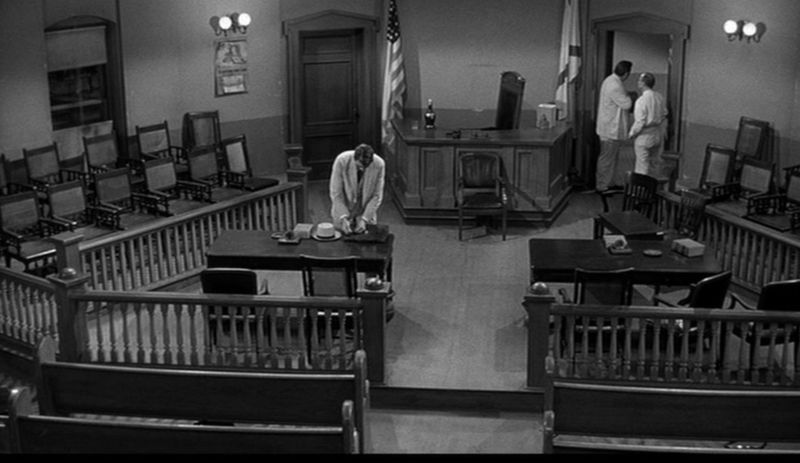
Editor’s Note: Anyone can disagree with a review. Actually attempting to respond to the criticisms in it rather than simply dismissing them is a bit more challenging, particularly when that review was written by one of America’s most respected and admired film journalists. When news of the imminent sequel to To Kill a Mockingbird reminded me of Roger Ebert’s famous take down of the book’s film adaptation, I asked Rachel Davis to do just that. Here is her reply.
—
In January of 2015, Harper Lee, author of the beloved novel To Kill A Mockingbird, announced plans for a sequel, to be released in summer of the same year. Fans went wild. The original novel, published in 1960, tells the story of a summer in a sleepy little town in Alabama and the events of that summer surrounding a white lawyer representing a black man accused of a crime he did not commit. The novel was made into a film just two years later, starring Gregory Peck in one of his best known and loved roles, that of Atticus Finch, the aforementioned lawyer.
In 2001, noted movie reviewer Roger Ebert gave To Kill A Mockingbird two and a half out of four stars in his review (and a “rotten” vote at Rotten Tomatoes), implying that he felt it was a naïve interpretation of the time period. Ebert says that, “it expresses the liberal pieties of a more innocent time, the early 1960s, and it goes very easy on the realities of a small-town Alabama in the 1930s.” He has a few specific examples of plot points he found to be problematic, all of which are addressed from a very cynical mindset.
Ebert was certainly well renown as a film reviewer, but one cannot help but feel that he is addressing the film from different perspective than the narrative intends. Ebert was born in 1942, and To Kill A Mockingbird was released when he was 18 years old. To Kill A Mockingbird is set in the 1930s, before Ebert was even born. He would have no way of discerning the book’s historical accuracy through direct experience. He would have to rely on stories from others. In contrast, Lee was born in 1926, and she would have been around the age of her child narrator during the events of To Kill A Mockingbird. Lee’s perspective, as a child growing up in south during the 1930s, is undeniably more authoritative than her critic’s.
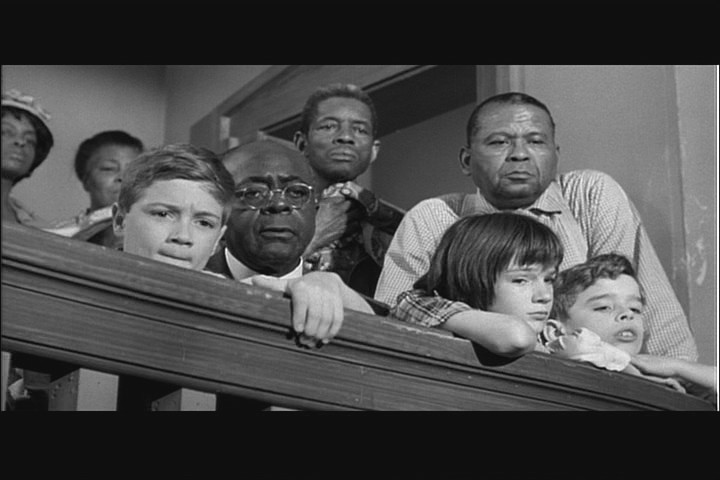 Ebert feels that To Kill A Mockingbird deemphasizes the violence and brutality that would actually be involved in its situations. Also, more than even searching for brutality, real or imaginary, Ebert is looking for the emotion. In the courtroom scene, when Tom Robinson is proclaimed guilty for a crime he did not commit, Ebert is seeking the reaction from the women in the courthouse, from the black people seated in the top seats. He forgets that this is still a courtroom drama. There is emotion, the shocked looks on everyone’s faces convey that, but this is a scene where silence can add as much dramatic effect as outward weeping and gnashing of teeth. It can be compared to a funeral scene, for this essentially, is Tom Robinson’s funeral. If the people sitting in the top of the courthouse realized this–and most of them would–they would show him the respect he is due.
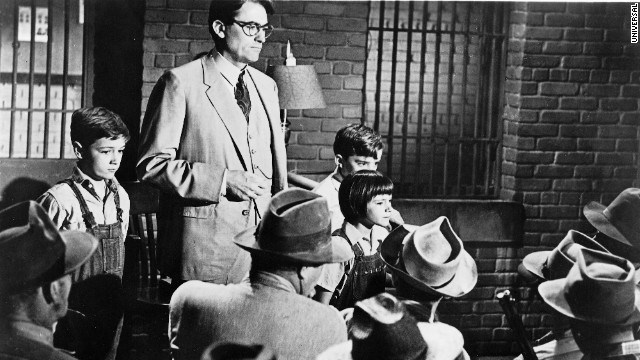 Ebert’s problem with the film’s second half is how idyllic it seems in some places, especially where Atticus Finch’s six year old, Scout, convinces a lynch mob to go home, out of sheer childish anger. He feels no lynch mob would be stopped by the voice of one child telling them how ashamed of them she is, but he seems to be addressing this as a narrative problem, rather than a thematic element. Ebert also appears to be attributing this scene to the film, when in reality, it is part of Lee’s original work. That cannot be credited to the scriptwriters, as much of the dialogue also comes straight from the original text. It is worth noting that Horton Foote won an Academy Award for the screenplay and Lee a Pulitzer Prize for the novel.
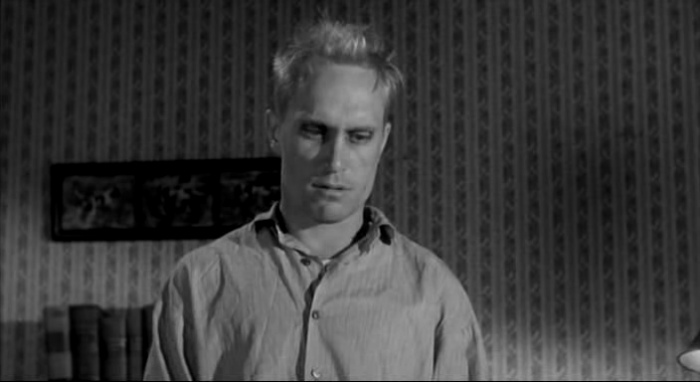 That the story’s conclusion is criticized for being naive or too “upbeat” is ironic considering how bleak the bulk of the narrative actually is. To Kill A Mockingbird ends with both an innocent and a guilty man dead, a failed criminal defense, and a grown man attacking two young children on their way home from school. The one spot of hope in the film’s ending, the neighborhood recluse finally coming out of his home, Ebert dislikes. “Now we are expected to feel good because the events got Boo out of the house,” he says. I don’t know what he would like, perhaps for the film to end tragically? For the protagonists to be unsuccessful until the end? His error is assuming that we are, indeed, supposed to feel good by the end because Boo Radley finally emerged from his house. The film does not end happily, and not everything is suddenly neatly wrapped up by the narrative. The audience is not suddenly going feel good about Tom Robinson’s death or forget about him because of the appearance of Boo. Atticus doesn’t. Scout doesn’t. It is more of a bittersweet ending than anything. If Ebert experienced mixed feelings on his viewing, perhaps that is the exact reaction the filmmakers intended.
Yes, it’s true that one can’t have a bittersweet ending without elements of sweetness. The latter is provided by Boo Radley finally leaving the house. It is not a fairy tale ending, and it’s not supposed to be. But wouldn’t it be nice if all problems were resolved in the same vein as To Kill A Mockingbird? Where even when the world seems at its bleakest, there remained a spot of hope? To Kill A Mockingbird merely emphasizes that hope spot. We would be foolish to criticize this as a negative. Who says hope can’t be grounded in truth?
—
Rachel Davis is a freelance journalist who has previously written feature articles for the Campbell University website.
Previous Post
February 20, 2015
From the Vault: Shaft (Singleton, 2000)
Next Post

February 22, 2015 McFarland, USA (Caro, 2015)
Browse Our Archives
Select a Category 10 Years Later 1999 Top 5 2007 Top 10 2008 Favorite Discoveries 2008 Top 10 2009 Favorite Discoveries 2009 Top 10 2010 Favorite Discoveries 2010 Top 10 2011 Top 10 2012 Top Ten 2013 Top Ten 2014 Top Ten Best Picture Winners Christian Spotlight on Entertainment Christianity Today Coming Soon Disclosure Disclosure--AS Disclosure--Book Disclosure--DVDS Disclosure--SEOL Disclosure--Travel Dissenting Opinion Elsewhere Emergenetics Essays Featured Film Fest DC--2014 Film Festivals Full Frame Documentary Film Festival 2010 Full Frame Documentary Film Festival 2011 Full Frame Documentary Film Festival 2012 Full Frame Documentary Film Festival 2013 Full Frame Documentary Film Festival 2014 Headline Interviews Laura on the Oscar Winners Podcasts Quick Impressions Reviews RiverRun Film Festival 2014 Television The Criterion Collection The Thin Place To Stream or Not to Stream? Top 10s and Other Lists Toronto International Film Festival 2009 Toronto International Film Festival 2010 Toronto International Film Festival 2011 Toronto International Film Festival 2012 Toronto International Film Festival 2013 Toronto International Film Festival 2014 Uncategorized Video Virginia Film Festival 2011 Virginia Film Festival 2013 Women's Film Festival 2012
Select a Month February 2016 January 2016 December 2015 November 2015 October 2015 September 2015 August 2015 July 2015 June 2015 May 2015 April 2015 March 2015 February 2015 January 2015 December 2014 November 2014 October 2014 September 2014 August 2014 July 2014 June 2014 May 2014 April 2014 March 2014 February 2014 January 2014 December 2013 November 2013 October 2013 September 2013 August 2013 July 2013 June 2013 May 2013 April 2013 March 2013 February 2013 January 2013 December 2012 November 2012 October 2012 September 2012 August 2012 July 2012 June 2012 May 2012 April 2012 March 2012 February 2012 January 2012 December 2011 November 2011 October 2011 September 2011 August 2011 July 2011 June 2011 May 2011 April 2011 March 2011 February 2011 January 2011 December 2010 November 2010 October 2010 September 2010 August 2010 July 2010 June 2010 May 2010 April 2010 March 2010 February 2010 January 2010 December 2009 November 2009 September 2009 August 2009 July 2009 June 2009 May 2009 April 2009
Follow Us!
TAKE THE
Religious Wisdom Quiz
True or False: The first plague in Egypt turned the Nile River into blood.
Select your answer to see how you score.
FALSE TRUE
Related posts from 1More Film Blog

An Inconvenient Truth (Guggenheim, 2006) -- 10 Years...

The Devil Wears Prada (Frankel, 2006) -- 10...

"Telling a Great Story" -- An Interview with...

Is Snow White Still Essential?
TRENDING AT PATHEOS Religious Music & Entertainment

"Les Diabolique" and Transgression
Alongside something like Arrival, Vertigo, or Charade, Les Diaboliques is a...

"The Plague Dogs" and Mortality
So, flashback to the late 70s, early 80s. Walt Disney Studios is...

With the recent and highly successful release of Christopher Nolan’s epic film,...

"L'avventura" and Human Weakness
Today's piece is going to be a little different for a few...

I first want to apologize for not posting or writing anything. I'm...

I've engaged in the multi-year project of reading through the Church Fathers,...
view all Religious Music & Entertainment blogs
Ad-Free & Subscriber Log-In Subscription Support
- About Us
- 2026 Calendar
- Videos
- Podcasts
- Library of World Religions
- Faith In Media Tracker
- Advertise With Us
- Write for Us
- Privacy Policy
- Terms of Service
- Do Not Sell My Data
- Contact Us
- Radiant Digital
- Manage Newsletter Subscriptions
- Unsubscribe From Notifications
- Sitemap
Copyright 2008-2026, Patheos. All rights reserved.
Subscription Support Ad-Free & Subscriber Log-In
Follow Patheos