
BuddhistCatholicContemplativeEvangelicalGeneral ChristianHinduJewishLatter-day SaintMuslimNew VisionsProgressive Christian
Beliefs
- Buddhist
- Catholic
- Contemplative
- Evangelical
- General Christian
- Hindu
- Jewish
- Latter-day Saint
- More Voices
- Muslim
- New Visions
- Pagan
- Progressive Christian
Topics
- Religion News
- Food and Religion
- Sports and Religion
- Religious Art
- Religious Music and Entertainment
- Religious Events
- History and Religion
- Style and Religion
- Politics and Religion
- Women in Religion
- Recreation Outdoors and Religion
- Business Finance and Religion
- Careers Workplace and Religion
- Education and Religion
- Family Parenting and Religion
- Health Fitness and Religion
- Home and Religion
- Relationships and Religion
- Technology and Religion
- Travel and Religion
Columnists
- Buddhist Columnists
- Business Finance and Religion Columnists
- Careers Workplace and Religion Columnists
- Catholic Columnists
- Contemplative Columnists
- Education and Religion Columnists
- Evangelists Columnists
- Family Parenting and Religion Columnists
- General Christian Columnists
- Health Fitness and Religion Columnists
- Hindu Columnists
- History and Religion Columnists
- Home and Religion Columnists
- Jewish Columnists
- More Voices Columnists
- Latter Day Columnists
- Muslim Columnists
- New Visions Columnists
- Nonreligious Columnists
- Pagan Columnists
- Politics and Religion Columnists
- Progressive Columnists
- Recreation Outdoors and Religion Columnists
- Relationships and Religion Columnists
- Religion News Columnists
- Religious Art Columnists
- Religious Events Columnists
- Religious Music and Entertainment Columnists
- Sports and Religion Columnists
- Style and Religion Columnists
- Technology and Religion Columnists
- Travel and Religion Columnists
- Women in Religion Columnists
Resource Library
- 2026 Calendar
- Library of World Religions
- The 100 Most Holy Places on Earth
- Patheos Answers
- Podcasts
- Videos
- Faith Leaders Database
- Anglican Episcopalian
- Bahai
- Baptist
- Buddhism
- Christianity
- Confucianism
- Eastern Orthodoxy
- Hinduism
- Holiness and Pentecostal
- ISKCON
- Islam
- Judaism
- Lutheran
- Methodist
- The Church of Jesus Christ of Latter-day Saints
- New Age
- Paganism
- Presbytarian and Reformed
- Protestantism
- Religion Behind the Scenes
- Roman Catholic
- Scientology
- Shia Islam
- Sikhism
- Sufism
- Sunni Islam
- Taoism
- Zen
- See all religions
Research Tools
 Ad-Free & Subscriber Log-In Subscription Support
Ad-Free & Subscriber Log-In Subscription Support
Follow Patheos 

- Trending:
- Forgiveness
- |
- Marriage
- |
- Consciousness
- |
- Death Penalty
- |
- Election
- |
- Halloween
 1More Film Blog
- Home
- Religious Music & Entertainment
- A History of Violence (Cronenberg, 2005) — Ten Years Later
A History of Violence (Cronenberg, 2005) — Ten Years Later
Last updated on: March 8, 2015 at 7:38 pm by Kenneth R. Morefield
A History of Violence (Cronenberg, 2005) — Ten Years Later 2015-03-08T19:38:03-05:00 Kenneth R. Morefield
Patheos Explore the world's faith through different perspectives on religion and spirituality! Patheos has the views of the prevalent religions and spiritualities of the world.
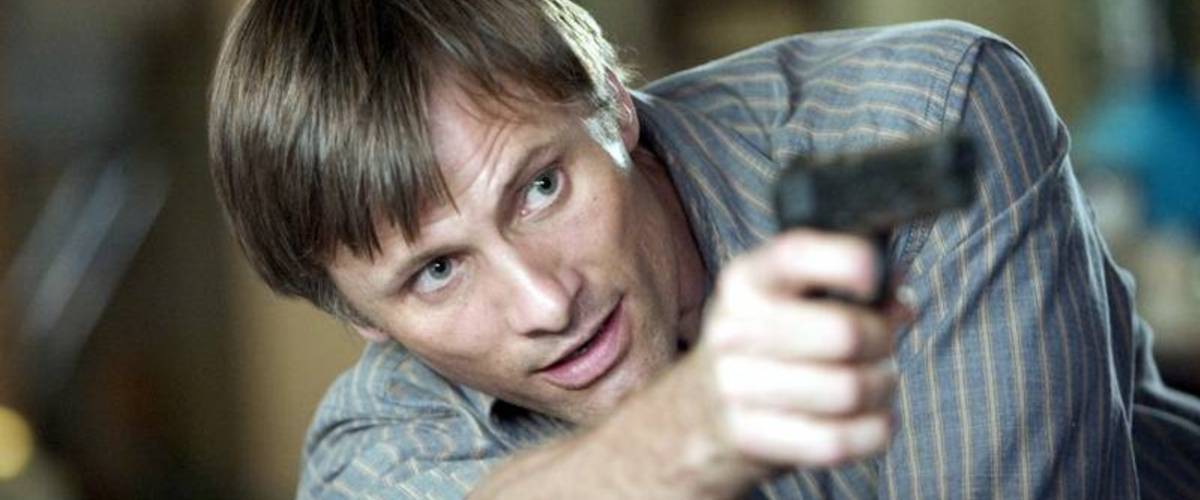
Given that the idea for the “Ten Years Later” column was born of the fact that I didn’t get all the way through The Godfather the first time I watched it, one response that has been conspicuously absent from this series of retrospectives is the massive mea culpa.
My estimation of some films has risen (Master and Commander, Road to Perdition), but these instances have usually been ones where my initial take was one of muted respect rather than genuine antipathy. Conversely, I’ve had films that I initially liked take a nosedive with a second look. (It’s hard for even me to believe that I actually had a Wes Anderson film as one of my annual favorites.) But I’ve yet to revisit a film for this column that I initially disliked only to have a second look convert me.
In looking for that elusive about-face, I thought A History of Violence had some potential. The fact that I liked Michael Mann’s Blackhat made me wonder if I was warming to the idea of a conventional genre film done by an unconventional auteur. Additionally, I liked Cronenberg’s A Dangerous Method more than most anyone I know, so I wondered if I was just late in coming to appreciate the director’s style.
What I Said Then
Originally posted a Viewpoint, a precursor to this blog.)
One of my action movie truisms is that you have to care about the characters before you care about what happens to them. Movies that rely on a character’s past being a mystery have a central problem, then, which is that it is hard to have anything more than generic sympathy for those whom you know nothing about. We get one day with the Stalls before we find out that the Tom we don’t yet know is not really the Tom we thought he might be. Since a major part of that day’s screen time entails Maria Bello in a cheerleader outfit, what we know about Tom before his world is turned upside down is that when he’s not slaving away at the diner, he seems to enjoy sex with his wife. When the film reached what one initially thought would be its climax—a showdown between Stall and Fogarty—and only half the running time had expired, I hoped that it would go off in an unexpected direction, that it would deal with the attempts of the characters to rebuild what had been broken, and that we might learn about them through watching that process. Instead, the last third of the film is basically a reenactment of the same conflicts, this time with a different adversary.
A History of Violence ends with a prolonged scene lacking any dialogue. As I watched it, I couldn’t help but think of Graham Hess’s silence at the end of Signs. Here, the silence is overlaid with significant glances between husband and wife, father and son. We know they are significant because it’s the end of the film, but we suspect (okay, I did) that, as with Signs, it was the silence of the film that knew it had nothing to say that would make sense and so had the sense to say nothing. Consider, in contrast, the silence at the end of Woody Allen’s The Purple Rose of Cairo. That film ended with a sustained close up of Mia Farrow’s face, a shot that worked precisely because we didn’t need words to tell us what she was thinking. Better yet, consider the silence at the end of Big Night, a silence that leaves a key plot decision unresolved because it understands that it is about the people in the film and not merely what happens to them. Perhaps A History of Violence wants its ending to be a Rohrschach test, and that’s fine. Whether you think Stall and his family are sadder, wiser, falling apart, or coming together will say a lot about you. What the film’s ending says about me is that I think the sort of significant silence that plays well over the last page of a graphic novel—and covers maybe ten seconds of real time to read—feels awkward and clumsy when stretched over the last minute of a major motion picture.
What I Say Now
Well, I feel as though I understand the film a little better than I did ten years ago. That doesn’t mean, unfortunately, that I like it any better. I do not, for instance, think there is nearly as much opacity or ambiguity in the ending as what I felt on first viewing. Today I see the ending as less about what will happen next as about how the characters choose to deal with the film’s painful revelations of what has happened before.
I noticed in looking over my previous review (which is only excerpted above) that I said nothing about the film’s formal elements. Perhaps because I was prepared for the History‘s horrific prologue on a second viewing, I was able to spend a little more time thinking about shot composition and some of Cronenberg’s visual choices. There is definitely artistry, perhaps even virtuosity, evidenced in how the territorial space of the screen is used to denote confinement, isolation, and separation.
A young girl is shot in the hotel just as another young girl wakes up screaming from a nightmare. Was the opening a dream? For a second we feel the sweet relief that that which we do not wish to admit might not actually be real. But even as father and brother are telling the little girl that monsters aren’t real, we literally know that this is a lie. We have just seen a monster, and we are wide awake.
The vertical lines created by school lockers merge into the parallel lines of small-town store fronts, hinting that father and son are more similar than they might appear at first glance. When Jack returns home in a panic after being threatened by the site of a mobster, Cronenberg nicely has the daughter descending the stairs while the son is in another field of depth in the room behind the father and mother. Since Jack and Edie are in the slight space between the archway to the kitchen and the archway to the stairs, we actually have three separate depth fields as the couple is visually and symbolically trying to keep their family united.
One of the oddest scenes, visually, is teen Jack Stall’s baseball game. Jack is in the outfield, and rarely showed in the same frame/take as the rest of the game. The colors of the uniforms are bright, as though printed on the glossy pages of a graphic novel, and none of the players have stains, rips, or tears on their jerseys. There is little variation of color in the green of the field or surrounding forest and the film’s frame is usually so sparingly dense, that it looks artificial at times.
The sex between Nick and his wife takes the form of role playing, which, in turn, informs the later revelation of Tom’s secret past. Has his whole life with Edie been a giant role play? Is role playing only fun when it is not for real? Does it speak to some deep-seated human desire to be able to more easily (re)invent ourselves as something closer to what we want to be?
The Verdict
Given all these profitable lines of contemplation, why could I not bump the film higher than my initial “C” grade?
Perhaps it is because that while I admire some of these themes and techniques, I am not persuaded by the way the film develops them.
Stated another way, the film–yes, I know it follows the graphic novel–focuses on the least interesting aspects and part of the story it chooses to tell. How Tom is revealed and how he confronts those seeking his death is not interesting or enlightening. What he chooses to do once that death is avoided might well be…if we ever saw it.
One other comment is worth making, though it isn’t specifically about the film. I recall the sex and violence as pushing the proverbial envelope at the time. Today, both seem less explicit than I recall. We get images as grisly on Criminal Minds or NCIS and more explicit and graphic sexposition in just about any HBO show. I guess ratings creep is a little like global warming; intellectually, you know it is happening, but it’s slow enough that you are always less conscious of it in the short term than you are when doing a longitudinal study.
Previous Post
March 6, 2015
The Mind of Mark Defriest (London, 2014)
Next Post
March 10, 2015 Brokeback Mountain (Ang Lee, 2005) -- 10 Years Later
Browse Our Archives
Select a Category 10 Years Later 1999 Top 5 2007 Top 10 2008 Favorite Discoveries 2008 Top 10 2009 Favorite Discoveries 2009 Top 10 2010 Favorite Discoveries 2010 Top 10 2011 Top 10 2012 Top Ten 2013 Top Ten 2014 Top Ten Best Picture Winners Christian Spotlight on Entertainment Christianity Today Coming Soon Disclosure Disclosure--AS Disclosure--Book Disclosure--DVDS Disclosure--SEOL Disclosure--Travel Dissenting Opinion Elsewhere Emergenetics Essays Featured Film Fest DC--2014 Film Festivals Full Frame Documentary Film Festival 2010 Full Frame Documentary Film Festival 2011 Full Frame Documentary Film Festival 2012 Full Frame Documentary Film Festival 2013 Full Frame Documentary Film Festival 2014 Headline Interviews Laura on the Oscar Winners Podcasts Quick Impressions Reviews RiverRun Film Festival 2014 Television The Criterion Collection The Thin Place To Stream or Not to Stream? Top 10s and Other Lists Toronto International Film Festival 2009 Toronto International Film Festival 2010 Toronto International Film Festival 2011 Toronto International Film Festival 2012 Toronto International Film Festival 2013 Toronto International Film Festival 2014 Uncategorized Video Virginia Film Festival 2011 Virginia Film Festival 2013 Women's Film Festival 2012
Select a Month February 2016 January 2016 December 2015 November 2015 October 2015 September 2015 August 2015 July 2015 June 2015 May 2015 April 2015 March 2015 February 2015 January 2015 December 2014 November 2014 October 2014 September 2014 August 2014 July 2014 June 2014 May 2014 April 2014 March 2014 February 2014 January 2014 December 2013 November 2013 October 2013 September 2013 August 2013 July 2013 June 2013 May 2013 April 2013 March 2013 February 2013 January 2013 December 2012 November 2012 October 2012 September 2012 August 2012 July 2012 June 2012 May 2012 April 2012 March 2012 February 2012 January 2012 December 2011 November 2011 October 2011 September 2011 August 2011 July 2011 June 2011 May 2011 April 2011 March 2011 February 2011 January 2011 December 2010 November 2010 October 2010 September 2010 August 2010 July 2010 June 2010 May 2010 April 2010 March 2010 February 2010 January 2010 December 2009 November 2009 September 2009 August 2009 July 2009 June 2009 May 2009 April 2009
Follow Us!
TAKE THE
Religious Wisdom Quiz
In 2 Timothy, what did Paul leave with Carpus at Troas?
Select your answer to see how you score.
His cloak and scrolls His tent-making tools His money His letters
Related posts from 1More Film Blog

The Devil Wears Prada (Frankel, 2006) -- 10...
The Prestige (Nolan, 2006) -- 10 Years Later

Kingdom of Heaven (Scott, 2005) -- 10 Year...
Munich (Spielberg, 2005) -- Ten Years Later
TRENDING AT PATHEOS Religious Music & Entertainment

"Les Diabolique" and Transgression
Alongside something like Arrival, Vertigo, or Charade, Les Diaboliques is a...

"The Plague Dogs" and Mortality
So, flashback to the late 70s, early 80s. Walt Disney Studios is...

With the recent and highly successful release of Christopher Nolan’s epic film,...

"L'avventura" and Human Weakness
Today's piece is going to be a little different for a few...

I first want to apologize for not posting or writing anything. I'm...

I've engaged in the multi-year project of reading through the Church Fathers,...
view all Religious Music & Entertainment blogs
Ad-Free & Subscriber Log-In Subscription Support
- About Us
- 2026 Calendar
- Videos
- Podcasts
- Library of World Religions
- Faith In Media Tracker
- Advertise With Us
- Write for Us
- Privacy Policy
- Terms of Service
- Do Not Sell My Data
- Contact Us
- Radiant Digital
- Manage Newsletter Subscriptions
- Unsubscribe From Notifications
- Sitemap
Copyright 2008-2026, Patheos. All rights reserved.
Subscription Support Ad-Free & Subscriber Log-In
Follow Patheos