
BuddhistCatholicContemplativeEvangelicalGeneral ChristianHinduJewishLatter-day SaintMuslimNew VisionsProgressive Christian
Beliefs
- Buddhist
- Catholic
- Contemplative
- Evangelical
- General Christian
- Hindu
- Jewish
- Latter-day Saint
- More Voices
- Muslim
- New Visions
- Pagan
- Progressive Christian
Topics
- Religion News
- Food and Religion
- Sports and Religion
- Religious Art
- Religious Music and Entertainment
- Religious Events
- History and Religion
- Style and Religion
- Politics and Religion
- Women in Religion
- Recreation Outdoors and Religion
- Business Finance and Religion
- Careers Workplace and Religion
- Education and Religion
- Family Parenting and Religion
- Health Fitness and Religion
- Home and Religion
- Relationships and Religion
- Technology and Religion
- Travel and Religion
Columnists
- Buddhist Columnists
- Business Finance and Religion Columnists
- Careers Workplace and Religion Columnists
- Catholic Columnists
- Contemplative Columnists
- Education and Religion Columnists
- Evangelists Columnists
- Family Parenting and Religion Columnists
- General Christian Columnists
- Health Fitness and Religion Columnists
- Hindu Columnists
- History and Religion Columnists
- Home and Religion Columnists
- Jewish Columnists
- More Voices Columnists
- Latter Day Columnists
- Muslim Columnists
- New Visions Columnists
- Nonreligious Columnists
- Pagan Columnists
- Politics and Religion Columnists
- Progressive Columnists
- Recreation Outdoors and Religion Columnists
- Relationships and Religion Columnists
- Religion News Columnists
- Religious Art Columnists
- Religious Events Columnists
- Religious Music and Entertainment Columnists
- Sports and Religion Columnists
- Style and Religion Columnists
- Technology and Religion Columnists
- Travel and Religion Columnists
- Women in Religion Columnists
Resource Library
- 2026 Calendar
- Library of World Religions
- The 100 Most Holy Places on Earth
- Patheos Answers
- Podcasts
- Videos
- Faith Leaders Database
- Anglican Episcopalian
- Bahai
- Baptist
- Buddhism
- Christianity
- Confucianism
- Eastern Orthodoxy
- Hinduism
- Holiness and Pentecostal
- ISKCON
- Islam
- Judaism
- Lutheran
- Methodist
- The Church of Jesus Christ of Latter-day Saints
- New Age
- Paganism
- Presbytarian and Reformed
- Protestantism
- Religion Behind the Scenes
- Roman Catholic
- Scientology
- Shia Islam
- Sikhism
- Sufism
- Sunni Islam
- Taoism
- Zen
- See all religions
Research Tools
 Ad-Free & Subscriber Log-In Subscription Support
Ad-Free & Subscriber Log-In Subscription Support
Follow Patheos 

- Trending:
- Forgiveness
- |
- Marriage
- |
- Consciousness
- |
- Death Penalty
- |
- Election
- |
- Halloween
 1More Film Blog
- Home
- Religious Music & Entertainment
- 2014 Arts & Faith Ecumenical Jury Awards — Winners
2014 Arts & Faith Ecumenical Jury Awards — Winners
Last updated on: January 3, 2016 at 8:39 pm by Kenneth R. Morefield
2014 Arts & Faith Ecumenical Jury Awards — Winners 2016-01-03T20:39:45-05:00 Kenneth R. Morefield
Patheos Explore the world's faith through different perspectives on religion and spirituality! Patheos has the views of the prevalent religions and spiritualities of the world.
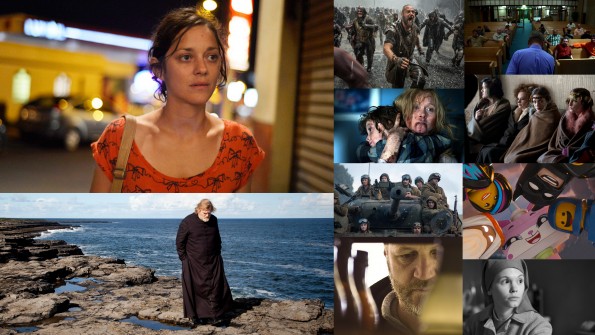
In my post announcing the formation of the Arts & Faith Ecumenical Jury, I stated that I hoped we would “enlarge or expand the perception of what is meant by either labeling a film a ‘Christian’ film or suggesting that it should be of interest to Christian audiences.”
I’d say we did that.
UPDATE: This jury is *not affiliated with SIGNIS/Interfilm in any way. For more discussion about the name of this group, please see this forum. The Arts & Faith forum is affiliated with Image Journal.*
These results reflect a diversity of taste and sensibility, suggesting that the jury took seriously its mandate to consider all the nominations and to honor intelligence, heart, and artistry. The list of winners includes foreign language films, one documentary, an animated classic, a pair of Hollywood studio films, and some deeply personal indie gems. Two of the films focus on clergy and one on a novice nun.
Perhaps surprisingly–given that we had only one female juror–four of the films are headlined by actresses and are about women’s experiences. It is a common refrain in Evangelical circles that the Christian audience feels shut out at the movies, without choices at the multiplex or rental kiosk that engage issues of religion, faith, or spirituality in a positive, provocative, or entertaining manner.
We disagree.
The jury nominated over sixty films for consideration and then faced the daunting task of winnowing down that rich field to the ten films we felt were most worthy of recognition. You may not agree with all of these choices. I confess with chagrin that I gave one of these winners a thumb’s down in my initial assessment. But juries make you stop and think, and maybe, just maybe, see things in a different light. I can’t wait to share with you our jurors’ thoughts about the films we chose…and to hear your responses. Ready? Here we go:
10) Fury — David Ayer
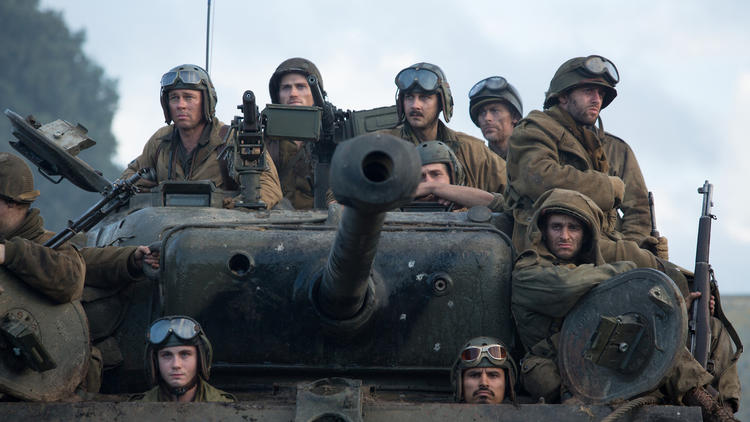 “Ideals are peaceful. History is violent,” explains one soldier in Fury, which shows the intense collaboration required among soldiers during combat, as well as the physical and psychological toll war takes on those who fight it. Principles give way to rationalizations amid repeated kill-or-be-killed engagements, and even Bible-believing soldiers use Scripture to their own questionable ends. Yet while other, similar films have extolled the idea of a noble death for their characters, Fury stops short of that notion, suggesting that there’s a place for the exercise of conscience during warfare, and that the vilest opponents are capable of acts of compassion. The film delivers many of the familiar genre beats of wartime movies, but then goes beyond them, reaching a place that feels more transcendent even as it honors the sacrifice of those who paid the highest price to defeat Germany. Fury leaves us contemplating what sort of choices we would have made had we been in their position, and what we might do when our loyalty to God conflicts with our loyalty to earthly authorities. The film’s great strength is an ambiguity that leaves room for more than one answer. — Christian Hamaker (Crosswalk.com)
9) Noah — Darren Aronofsky
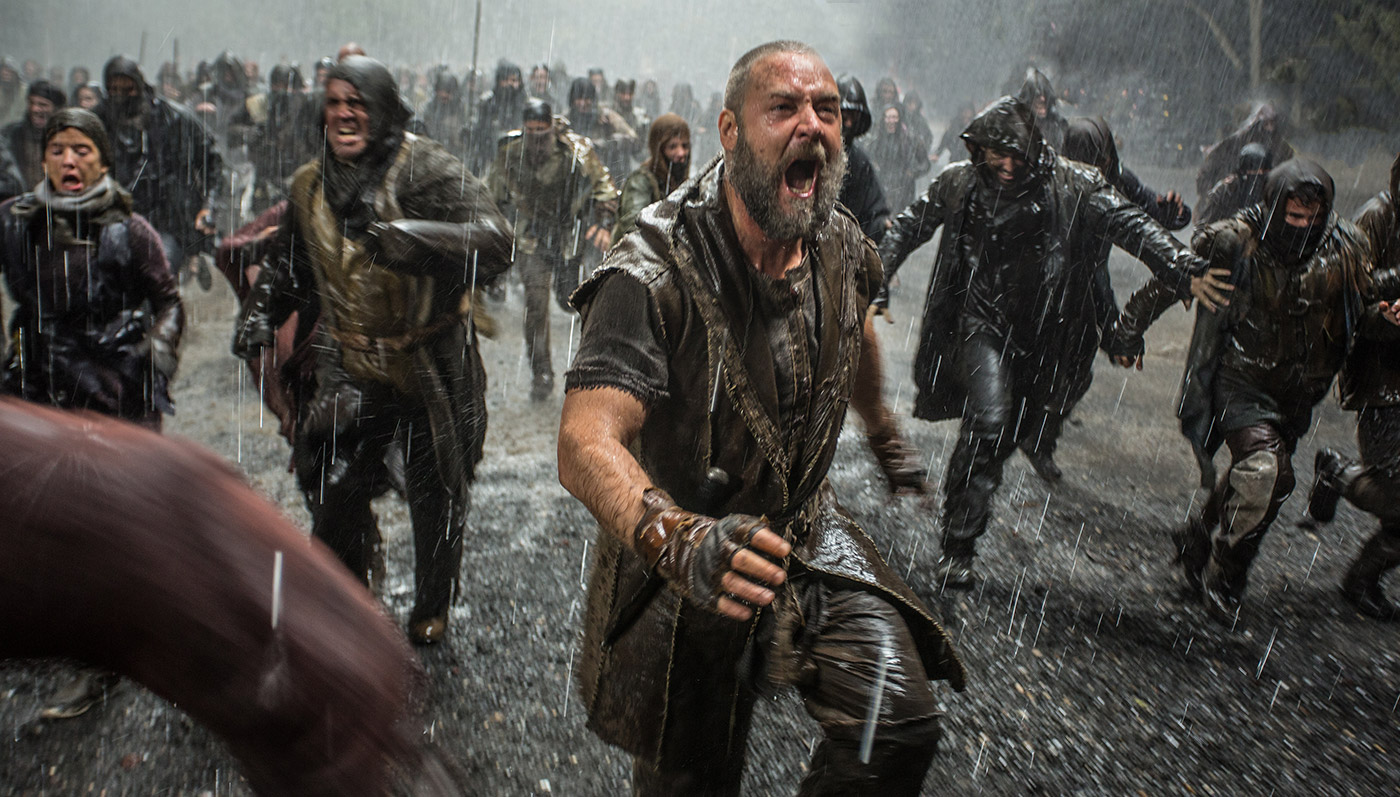 Noah is the filmic mashup between a Narnia-esque fantasy, a Shakespearean family drama, and a gritty biblical morality tale, all rolled into an epic cinematic experience. This is not your Sunday-school Noah, with happy flannel-graph animals gathered on a boat beneath a rainbow. Filmmaker Darren Aronofsky depicts Noah (Russell Crowe) as a tortured soul, a man striving to remain faithful to the Creator and care for his family while embracing the difficult task of being a key figure in the destruction of humanity. While Noah has some flaws, it’s certainly a *fantastic* film, in both senses of that word: “extraordinarily good” and “imaginative.” For those who are hesitant about Noah–particularly those who claim it isn’t “biblical” enough–I would invite them to watch again with open minds and hearts, seeking the truth and beauty in the flood of this tale. Noah reminds us that we are broken and beautiful, bearing both the weight of our sin and the image of God in our souls. — Joel Mayward (The Mayward Blog)
8) The Lego Movie — Phil Lord and Christopher Miller
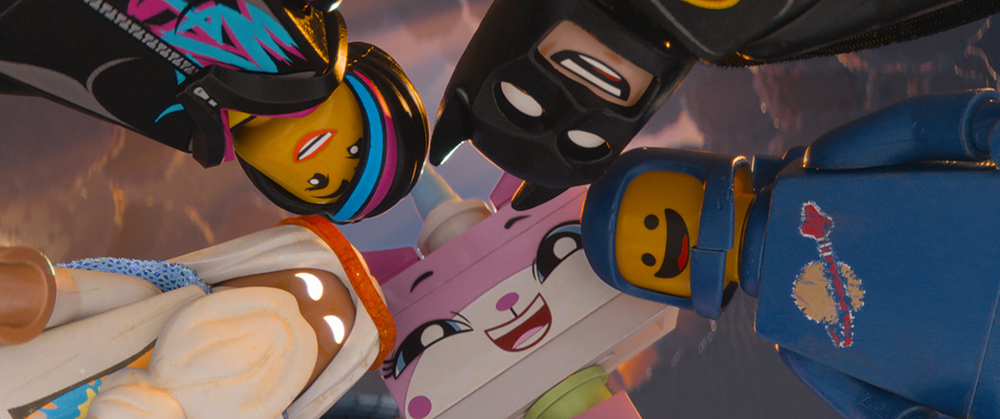 The Lego Movie took critics and audiences by surprise not only by elevating itself beyond a massive commercial, but by the thematic depths it plumbed and its ability to blend humor with serious strands of thought through the centuries. The film navigates the nuances of the act of creation and the boundaries between free will and predetermined fate. It forgoes the all too common thematic affliction of promoting unbridled individualism; instead, The Lego Movie realizes the restorative responsibility of balancing free will with obedience and acknowledging the importance of considering the letter of the law with the spirit of the law. We see the story of humanity; from falling out of sync with the Creator, to living in unknowing slavery to sin, to attempts to attain godhood, to the power of sacrificial love and a resolution attained only through deus ex machina. And all this is to say nothing of its social and cultural commentary, which exists hand in hand with its theology. Although the film may not perfectly line up with Christian theology, it is certainly in dialogue with it, and at a level where The Lego Movie is one of the most spiritually resonant animated films in recent years.
— Josh Hamm (Profound Distractions)
7) The Babadook — Jennifer Kent
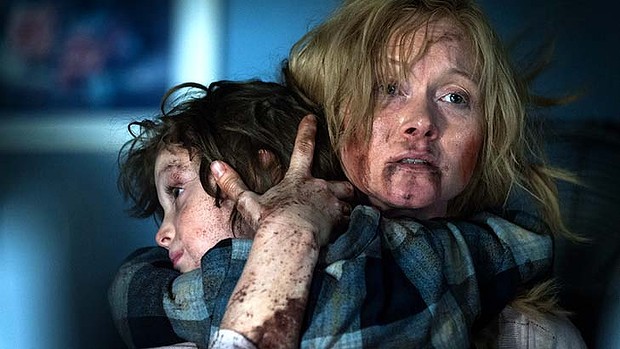 The festering of grief and the frightening ways such grief manifests itself is at the heart of The Babadook, director Jennifer Kent’s horror film about the relationship between a mother and her son. Amelia (Essie Davis) has never really accepted her husband’s death, which occurred as he drove her to the hospital to deliver their son Samuel (Noah Wiseman). With Sam’s seventh birthday approaching, Amelia is feeling increasingly overwrought, and she copes by isolating herself and Sam in their gloomy Victorian home, making an ideal setup for Mister Babadook, a sinister popup book character, to come knocking. Despite their misguided choices, neither Amelia nor Sam ever loses our sympathy. Kent expertly plays upon the audience’s sympathies and fears, reminding us of the beauty of the love between a parent and a child and the tragedy that occurs when it is threatened. — Evan Cogswell (Catholic Cinephile)
6) The Sublime and Beautiful — Blake Robbins
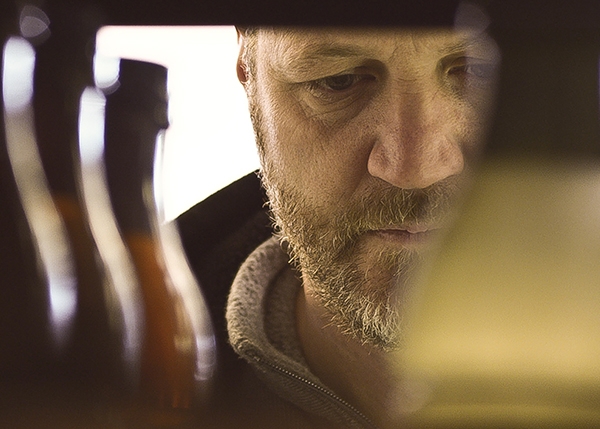 “Would you like a drink?” What might you say to the man who killed your three children? What could you imagine him saying in reply? The second of two films on our list about grieving parents, Blake Robbins’s The Sublime and Beautiful takes a premise we’ve seen before and makes it fresh by reminding us of how messy and non-cinematic grief truly is. Pay close attention and you’ll notice that David Conrad (Robbins) is already heading for–may even be in–an existential crisis before another man’s weakness sideswipes his life. Gaining weight, sleeping with his graduate assistant, wondering (as Robbins said in an interview) if “this is all there is,” the pre-accident David senses that he has already lost something important before additional important things are taken away. David flails in his pain, seeking answers in a silent church and at the end of a rifle. Whether the mid-life crisis will be a wake-up call or the beginning of a downward spiral is an unanswered question. For those in the first waves of grief, the answer may not even matter much. But it matters to us, and we pray that David can hold on long enough to start living again. — Kenneth R. Morefield (1More Film Bog)
5) Calvary — John Michael McDonagh
 John Michael McDonagh says that Calvary is the second in a trilogy starring Brendan Gleeson as an embodiment of contemporary Ireland, which is delightful for me, because the first two have each been my favorite films in their year of release. The earlier The Guard was a perfectly realized tragicomedy, hilarious and full of grace amidst horror. Calvary, like the priest at its center, has the courage of its convictions – rooting itself in the gorgeous and character-building space of the coast near Sligo, asking how to serve the common good when it might get you killed. Like The Guard, it understands Irishness, its discontents, and its gifts. McDonagh is a poet of the Celtic soul, Gleeson is the face of the nation, and Calvary is an icon through which the kind of light can shine that illuminates life itself. Its final scene resonates with Greek myth, and the comparison is earned, for this is a film about a genuinely universal question: how forgiveness is not only possible, but necessary, and maybe even inevitable. — Gareth Higgins (Sojourners)
4) The Immigrant — James Gray
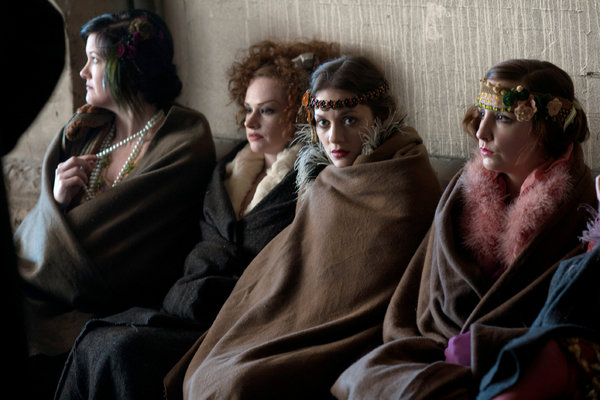 In a nod to the social realism of American cinema in the late silent era, The Immigrant is an operatic take on a city full of charlatans, pimps, and immigrants. Its citizens are larger than life and drawn as broadly as a sepia photograph in fading newsprint. But like Bruno and Ewa, they are carving out a living in whatever way they can, leaving behind the wars and pogroms of fading homelands. What happens in The Immigrant‘s central love triangle is at first a bit of a shock. But then it just continues to crescendo as Gray conducts the performances of Pheonix, Cotillard, and Renner into themes of cruelty, kindness, and humanizing loyalty. Though the film is classic and familiar, its refrains of grace are timeless. The Immigrant is an indelible spiritual reflection in an era of cinema always looking for something new. — M. Leary (Filmwell)
3) The Overnighters — Jesse Moss
 At turns inspiring, challenging, sobering and finally devastating, The Overnighters is an existentially probing documentary with more layers than a twisty Hollywood thriller. Partly this is due to the compelling subject matter: a Lutheran pastor in a booming North Dakota oil town committed to showing Christian hospitality to an influx of out-of-state laborers, many rough around the edges, and to mediating between them and the tense, sometimes testy local community. Partly it’s a matter of circumstance as the situation spirals in unexpected directions. And partly it’s the sheer filmmaking craft on display, particularly in editing. What starts as a seemingly straightforward celebration of Christian virtue becomes a complex chronicle of a community in conflict before finally revealing itself as an excruciating meditation on the contradictions people live with, on the tension between one’s public and private self, and the extent to which heroic virtue and service can coexist with deep moral compromise. — Steven D. Greydanus (Decent Films Guide)
2) Ida — Pawel Pawlikowski
 In his most recent film, director Pawel Pawlikowski grapples with belief, loss, and religious ambiguity in 1960s Communist Poland. The story’s protagonist, a novitiate nun named Anna, is suddenly faced with a crisis of faith when she learns of her family’s dark history. Submersion in the past eventually pushes Anna to question not only her personal identity, but also her commitment to God. Shot in rich monochrome, Ida uses disproportional angles and off-center framing to convey the feeling that life isn’t always as symmetrical as one would like. With powerful performances and a patient, lingering presence, Ida paints a beautiful portrait of faith by showing us that faith isn’t always so beautiful. — Wade Bearden (Christ and Pop Culture; WadeBearden.com)
1) Two Days, One Night — Jean-Pierre and Luc Dardenne
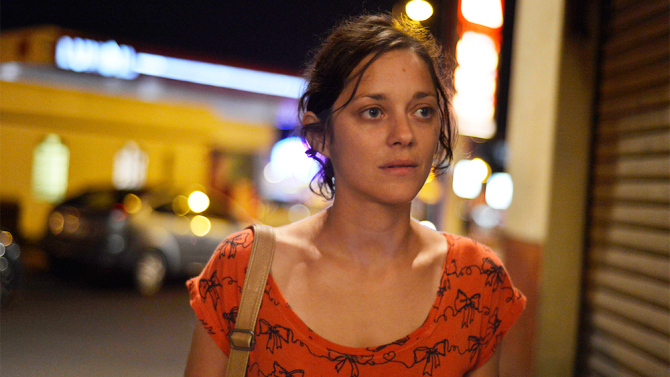 What the Dardenne brothers do best is this: look at that person you’d rather not notice — the woman weeping on the subway, the guy pulling some shady deal on the corner — and take a deep dive into where she came from and where he’s going, thereby turning embarrassment into empathy. Accessible enough for any audience but flawlessly crafted to please the most jaded filmgoer, Two Days, One Night touches the panic of many living hand-to-mouth because they’ve simply fallen on hard times. Each character explodes from greyscale to color when the story touches them, and in every one of them is a quiet reminder that our world is far more complicated than it seems. This is the height of cinematic empathy, the apex of — dare I say it? — an incarnational imagination. — Alissa Wilkinson (Christianity Today)
Juror’s Honorable Mentions
Each juror was afforded the opportunity to select one film that did not make the final list as his or her special “honorable mention.” These are the films that one of us loved more than the rest of us–or that one of us is still waiting for the rest of us to track down!
Wade Bearden — Snowpiercer
Evan Cogswell — The Grand Budapest Hotel
Wes Anderson’s latest film is as whimsical and eccentric as to be expected, but this story of nostalgia for a fantasy world of secret societies, crazy hijinks, unattainable goals, murder mysteries, and above all, friendships is rife with bittersweet humor and surprising poignancy. As the concierge of the titular hotel Ralph Fiennes effortlessly captures the typical self-centered deadpan of Anderson protagonists as well as a longing for something beyond this imperfect world. Told through the eyes of Zero (Tony Revolori), the devoted lobby boy of the Grand Budapest, the film chronicles the final glory days of a time and a world long since past.
Steven D. Greydanus — Chef
Josh Hamm — Violent
On the surface, Violent is simply another millennial coming of age story. But this debut film from experimental rockers We Are The City is so much more under the surface. A cold, quiet film, which, instead of inviting the audience to contemplate God, chooses to give them a cinematic space which allows them to do so almost without realizing His presence. Shot with an eye for juxtaposing the raw majesty of life with the subsequent feelings of insignificance and isolation, the film asks us to question if our faith can see us through a world we can barely navigate. Punctuated by silence – a silence which is either the presence or absence of God – Violent explores how we come to terms with death with sensitivity to spiritual matters without pressing them to the forefront.
Christian Hamaker — The Homesman
Gareth Higgins — The Congress
The Congress is a visually exquisite, emotionally ecstatic exploration of the interaction between love and power. It’s my favorite film of the year after Calvary.
M. Leary — Norte, The End of History
This loose adaptation of Dostoevsky’s Crime and Punishment is one of the most challenging films of the last year, slowly expanding across four hours of richly textured cinema. Woven around its storied images of economy and modernity are deep reflections on who we are and the choices we make. Sometimes these reflections are theological in scope, interacting with Filipino evangelicalism and the depth of Christian theodicy. At other times these reflections are slow and silent visual meditations on the ramshackle edges of urban sprawl and farmland. But at the heart of the film are a murderer and his imprisoned victim, together an unflinching case study in what Jonathan Edwards called “charity and its fruits.” Diaz’s film is one of the most important of our decade; a demanding pilgrimage, an unyielding gaze, a myth. This is the kind of film that could set the tone for theological conversation about cinema..
Joel Mayward — Winter Sleep
An intimate familial drama centered around one man’s relationships with his wife, his sister, his community, and himself, Winter Sleep is both intimate and epic in scope. The story addresses the themes of separation, loss, justice, and spirituality, all set in the misty hills of Anatolia in Turkey. It’s a subtle film, full of complexity and intriguing characters that never feel stilted; they feel wholly human, beautiful and flawed, navigating a winter season together-yet-apart in the crags of the steppe.
Kenneth R. Morefield — Beginning with the End
Mark Moring — Particle Fever
Because it shows God’s fingerprints in the most infinitesimally small things in the universe.
Previous Post

December 20, 2014
The Appalachian Trail: An American Legacy (Sam Henegar, 2014)
Next Post

December 22, 2014 Wild (Jean-Marc Vallee, 2014)
Browse Our Archives
Select a Category 10 Years Later 1999 Top 5 2007 Top 10 2008 Favorite Discoveries 2008 Top 10 2009 Favorite Discoveries 2009 Top 10 2010 Favorite Discoveries 2010 Top 10 2011 Top 10 2012 Top Ten 2013 Top Ten 2014 Top Ten Best Picture Winners Christian Spotlight on Entertainment Christianity Today Coming Soon Disclosure Disclosure--AS Disclosure--Book Disclosure--DVDS Disclosure--SEOL Disclosure--Travel Dissenting Opinion Elsewhere Emergenetics Essays Featured Film Fest DC--2014 Film Festivals Full Frame Documentary Film Festival 2010 Full Frame Documentary Film Festival 2011 Full Frame Documentary Film Festival 2012 Full Frame Documentary Film Festival 2013 Full Frame Documentary Film Festival 2014 Headline Interviews Laura on the Oscar Winners Podcasts Quick Impressions Reviews RiverRun Film Festival 2014 Television The Criterion Collection The Thin Place To Stream or Not to Stream? Top 10s and Other Lists Toronto International Film Festival 2009 Toronto International Film Festival 2010 Toronto International Film Festival 2011 Toronto International Film Festival 2012 Toronto International Film Festival 2013 Toronto International Film Festival 2014 Uncategorized Video Virginia Film Festival 2011 Virginia Film Festival 2013 Women's Film Festival 2012
Select a Month February 2016 January 2016 December 2015 November 2015 October 2015 September 2015 August 2015 July 2015 June 2015 May 2015 April 2015 March 2015 February 2015 January 2015 December 2014 November 2014 October 2014 September 2014 August 2014 July 2014 June 2014 May 2014 April 2014 March 2014 February 2014 January 2014 December 2013 November 2013 October 2013 September 2013 August 2013 July 2013 June 2013 May 2013 April 2013 March 2013 February 2013 January 2013 December 2012 November 2012 October 2012 September 2012 August 2012 July 2012 June 2012 May 2012 April 2012 March 2012 February 2012 January 2012 December 2011 November 2011 October 2011 September 2011 August 2011 July 2011 June 2011 May 2011 April 2011 March 2011 February 2011 January 2011 December 2010 November 2010 October 2010 September 2010 August 2010 July 2010 June 2010 May 2010 April 2010 March 2010 February 2010 January 2010 December 2009 November 2009 September 2009 August 2009 July 2009 June 2009 May 2009 April 2009
Follow Us!
TAKE THE
Religious Wisdom Quiz
In James, what is the correct sequence that leads from temptation to death?
Select your answer to see how you score.
Desire, temptation, sin, death Temptation, desire, death, judgment Desire, sin conceived, sin full-grown, death Sin, desire, full-grown sin, death
Related posts from 1More Film Blog
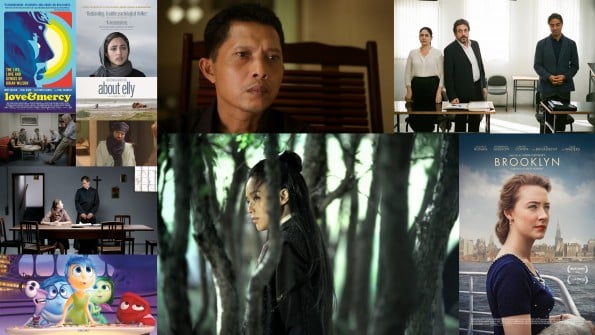
2015 Arts & Faith Ecumenical Jury Awards
Favorite 2015 Discoveries -- Evan Cogswell's List
Josh Wartel: My Year in Movies
TRENDING AT PATHEOS Religious Music & Entertainment

"Les Diabolique" and Transgression
Alongside something like Arrival, Vertigo, or Charade, Les Diaboliques is a...

"The Plague Dogs" and Mortality
So, flashback to the late 70s, early 80s. Walt Disney Studios is...

With the recent and highly successful release of Christopher Nolan’s epic film,...

"L'avventura" and Human Weakness
Today's piece is going to be a little different for a few...

I first want to apologize for not posting or writing anything. I'm...

I've engaged in the multi-year project of reading through the Church Fathers,...
view all Religious Music & Entertainment blogs
Ad-Free & Subscriber Log-In Subscription Support
- About Us
- 2026 Calendar
- Videos
- Podcasts
- Library of World Religions
- Faith In Media Tracker
- Advertise With Us
- Write for Us
- Privacy Policy
- Terms of Service
- Do Not Sell My Data
- Contact Us
- Radiant Digital
- Manage Newsletter Subscriptions
- Unsubscribe From Notifications
- Sitemap
Copyright 2008-2026, Patheos. All rights reserved.
Subscription Support Ad-Free & Subscriber Log-In
Follow Patheos