
BuddhistCatholicContemplativeEvangelicalGeneral ChristianHinduJewishLatter-day SaintMuslimNew VisionsProgressive Christian
Beliefs
- Buddhist
- Catholic
- Contemplative
- Evangelical
- General Christian
- Hindu
- Jewish
- Latter-day Saint
- More Voices
- Muslim
- New Visions
- Pagan
- Progressive Christian
Topics
- Religion News
- Food and Religion
- Sports and Religion
- Religious Art
- Religious Music and Entertainment
- Religious Events
- History and Religion
- Style and Religion
- Politics and Religion
- Women in Religion
- Recreation Outdoors and Religion
- Business Finance and Religion
- Careers Workplace and Religion
- Education and Religion
- Family Parenting and Religion
- Health Fitness and Religion
- Home and Religion
- Relationships and Religion
- Technology and Religion
- Travel and Religion
Columnists
- Buddhist Columnists
- Business Finance and Religion Columnists
- Careers Workplace and Religion Columnists
- Catholic Columnists
- Contemplative Columnists
- Education and Religion Columnists
- Evangelists Columnists
- Family Parenting and Religion Columnists
- General Christian Columnists
- Health Fitness and Religion Columnists
- Hindu Columnists
- History and Religion Columnists
- Home and Religion Columnists
- Jewish Columnists
- More Voices Columnists
- Latter Day Columnists
- Muslim Columnists
- New Visions Columnists
- Nonreligious Columnists
- Pagan Columnists
- Politics and Religion Columnists
- Progressive Columnists
- Recreation Outdoors and Religion Columnists
- Relationships and Religion Columnists
- Religion News Columnists
- Religious Art Columnists
- Religious Events Columnists
- Religious Music and Entertainment Columnists
- Sports and Religion Columnists
- Style and Religion Columnists
- Technology and Religion Columnists
- Travel and Religion Columnists
- Women in Religion Columnists
Resource Library
- 2026 Calendar
- Library of World Religions
- The 100 Most Holy Places on Earth
- Patheos Answers
- Podcasts
- Videos
- Faith Leaders Database
- Anglican Episcopalian
- Bahai
- Baptist
- Buddhism
- Christianity
- Confucianism
- Eastern Orthodoxy
- Hinduism
- Holiness and Pentecostal
- ISKCON
- Islam
- Judaism
- Lutheran
- Methodist
- The Church of Jesus Christ of Latter-day Saints
- New Age
- Paganism
- Presbytarian and Reformed
- Protestantism
- Religion Behind the Scenes
- Roman Catholic
- Scientology
- Shia Islam
- Sikhism
- Sufism
- Sunni Islam
- Taoism
- Zen
- See all religions
Research Tools
 Ad-Free & Subscriber Log-In Subscription Support
Ad-Free & Subscriber Log-In Subscription Support
Follow Patheos 

- Trending:
- Forgiveness
- |
- Marriage
- |
- Consciousness
- |
- Death Penalty
- |
- Election
- |
- Halloween
General Christian
United We Stand: Rediscovering Unity Amidst Division
July 12, 2024 by Matthew Allen
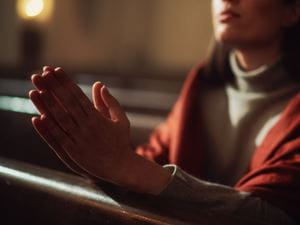
Shutterstock.com
From Babel to Belfast, it seems that division is a fact of life. You will hunt in vain for anywhere in this world where it has been fully transcended. Even if there were such a paradise on earth, who can say for sure that old antipathies would not, if left unchecked for long enough, resurface or be replaced with new ones? Good relations are precious and must be worked at.
Jesus knew this best of all. On the night of his betrayal in Gethsemane, the Lord prayed, ‘that they may all be one; even as thou, Father, art in me, and I in thee’ (John 17.21, RSV). Christ – on his knees in the cool grass, minutes away from the horrors of Roman ‘justice’ – pleads for us before his heavenly Father. Even as emissaries are on the way to bring him in, our Lord’s will is to see the world rediscover unity, the same world that would soon turn its back on him.
This is no begrudging unity, mandated by political correctness, but one which embodies the love that God the Father has for the Son, with whom he is ‘of one substance’, and that God the Son has for the Father. In order to ‘be one’ with our neighbor, we must see them as ‘of one substance’ with us. You, reader, and I share a common humanity, just as God the Father and God the Son share a common divinity. This ‘one substance’ language, in case it sounds familiar, comes from the Nicene Creed, where all the main tenets of our faith are catalogued.
Recently, the divisions where I live, Northern Ireland, have sailed back into view more starkly than a winged elephant. I had optimistically thought, after all these division-plagued years, that we had finally bought our ticket on the streetcar named Shared Future. Soon, thought I, the pointless divisions between British Unionists and Irish Nationalists will have disappeared.
Such was too bold an assumption. Whenever a new housing development appears, for example, one of two flags will almost immediately be flown from the lampposts (the Union Jack or the Irish Tricolour) to signal a British or an Irish identity. Neutrality goes down the pan.
It’s polling season and all (a UK general election is imminent, as I write) but it’s inescapably true that many politicians frame the vote in sectarian terms because it works for them, electorally. They have done so for decades: vote Unionist and keep the Nationalists out; vote Nationalist and keep the Unionists out. Rinse and half-heartedly repeat every four years. We call this playing the orange card (‘vote Unionist’) or playing the green card (‘vote Nationalist’).
Instead, we could spend our time on the practical issues which affect us all. Game of Thrones, a show that has deep links with Northern Ireland, is premised on the need for old enemies – the Greyjoys, the Lannisters, the Starks, and the Targaryens – to leave aside unimportant squabbles and oppose an enemy who threatens them all: the Night King and the White Walkers. There is no lack of issues, God knows, around which we could unite in the real world.
I had also presumed, until recent weeks, that ‘Unionist’ and ‘Nationalist’ were ideological positions on the constitution: United Kingdom or United Ireland. Both of these words, as used in our discourse, have come to sound more like ethnic identities than political stances to me.
Ponder these quotes, all used in a single Northern Ireland Assembly debate: (1) ‘the unionist community’; (2) ‘the unionist people’; (3) ‘the unionist electorate’. If unionism – or, for that matter, nationalism – were a belief system rather than a tribal moniker, then it would be possible to substitute, in the phrases above, the names of other ideological persuasions. Let’s give it a go, then: (1) ‘the conservative community’? Nope; (2) ‘the liberal people’? Nope; (3) ‘the socialist electorate’? Nope. Nobody that I know talks like this (except about unionism or nationalism). This is proof enough that neither are simply political doctrines in the usual sense.
Consider, on the contrary, the Samaritan from Christ’s parable, whose compassion transcends ethnic barriers. Jews and Samaritans lived separate lives but when the cry for help rang out, none of this mattered; the need was the same. Ideologies – whether Judaism or Samaritanism, Unionism or Nationalism – aren’t people. They have no friends or family, no hopes or dreams, no thoughts or feelings. Why, then, do we so frequently put ideologies before human beings?
Given the biblical sources I’ve mentioned, why does God allow division, whether along ideological or other lines? Eight-year-old me looked after his Tamagotchi better, it sometimes feels, than God looks after this world. If it seems that way, however, then it means we believers have a job on our hands: to make this a world where, in St Paul’s words, we are ‘all one in Christ Jesus’ (Galatians 3.28). ‘Christ has no body now but yours,’ the hymn says, ‘Yours are the hands, with which he blesses all the world.’ Indeed, as I wrap this article up, I leave you with one more item from the grain tower of random quotes that float around my head like breadcrumbs in a duckpond: ‘Where there is discord, may I bring harmony’ (Francis of Assisi).
7/12/2024 12:23:11 AM
featured writer
more at patheos
1
Tom Hiddleston: Time Detective Unearths Pompeii Hope
2

SUNY Broome Lawsuits Fuel Religious Freedom Debate
3
Genesis Reimagined: A Reflection on the Garden Experience
4
AI Is A Gateway to the Welfare State

About Matthew Allen
Matthew Allen is a writer and musician based in Northern Ireland. He is a graduate of Queen’s University, Belfast, where he studied Theology and Liberal Arts.
Patheos Explore the world's faith through different perspectives on religion and spirituality! Patheos has the views of the prevalent religions and spiritualities of the world.
Ad-Free & Subscriber Log-In Subscription Support
- About Us
- 2026 Calendar
- Videos
- Podcasts
- Library of World Religions
- Faith In Media Tracker
- Advertise With Us
- Write for Us
- Privacy Policy
- Terms of Service
- Do Not Sell My Data
- Contact Us
- Radiant Digital
- Manage Newsletter Subscriptions
- Unsubscribe From Notifications
- Sitemap
Copyright 2008-2026, Patheos. All rights reserved.
Subscription Support Ad-Free & Subscriber Log-In
Follow Patheos