
BuddhistCatholicContemplativeEvangelicalGeneral ChristianHinduJewishLatter-day SaintMuslimNew VisionsProgressive Christian
Beliefs
- Buddhist
- Catholic
- Contemplative
- Evangelical
- General Christian
- Hindu
- Jewish
- Latter-day Saint
- More Voices
- Muslim
- New Visions
- Pagan
- Progressive Christian
Topics
- Religion News
- Food and Religion
- Sports and Religion
- Religious Art
- Religious Music and Entertainment
- Religious Events
- History and Religion
- Style and Religion
- Politics and Religion
- Women in Religion
- Recreation Outdoors and Religion
- Business Finance and Religion
- Careers Workplace and Religion
- Education and Religion
- Family Parenting and Religion
- Health Fitness and Religion
- Home and Religion
- Relationships and Religion
- Technology and Religion
- Travel and Religion
Columnists
- Buddhist Columnists
- Business Finance and Religion Columnists
- Careers Workplace and Religion Columnists
- Catholic Columnists
- Contemplative Columnists
- Education and Religion Columnists
- Evangelists Columnists
- Family Parenting and Religion Columnists
- General Christian Columnists
- Health Fitness and Religion Columnists
- Hindu Columnists
- History and Religion Columnists
- Home and Religion Columnists
- Jewish Columnists
- More Voices Columnists
- Latter Day Columnists
- Muslim Columnists
- New Visions Columnists
- Nonreligious Columnists
- Pagan Columnists
- Politics and Religion Columnists
- Progressive Columnists
- Recreation Outdoors and Religion Columnists
- Relationships and Religion Columnists
- Religion News Columnists
- Religious Art Columnists
- Religious Events Columnists
- Religious Music and Entertainment Columnists
- Sports and Religion Columnists
- Style and Religion Columnists
- Technology and Religion Columnists
- Travel and Religion Columnists
- Women in Religion Columnists
Resource Library
- 2026 Calendar
- Library of World Religions
- The 100 Most Holy Places on Earth
- Patheos Answers
- Podcasts
- Videos
- Faith Leaders Database
- Anglican Episcopalian
- Bahai
- Baptist
- Buddhism
- Christianity
- Confucianism
- Eastern Orthodoxy
- Hinduism
- Holiness and Pentecostal
- ISKCON
- Islam
- Judaism
- Lutheran
- Methodist
- The Church of Jesus Christ of Latter-day Saints
- New Age
- Paganism
- Presbytarian and Reformed
- Protestantism
- Religion Behind the Scenes
- Roman Catholic
- Scientology
- Shia Islam
- Sikhism
- Sufism
- Sunni Islam
- Taoism
- Zen
- See all religions
Research Tools
 Ad-Free & Subscriber Log-In Subscription Support
Follow Patheos 

- Trending:
- Advent
- |
- Forgiveness
- |
- Thanksgiving
- |
- Election
- |
- Seasonal Holidays
- |
- Marriage
The Hidden History of Monastic Mary Gardens
April 28, 2021
Pixabay
by Alyson Rockhold
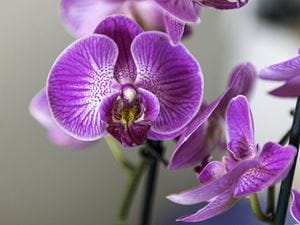
While modern Christians have apps, podcasts, and sermon downloads, illiterate Christians in the Middle Ages had windows, beads, and flowers.
Yes, flowers.
Christian communities have long recognized the power of the senses in aiding Christian life. Stained glass windows depicting scenes from the Bible became a mainstay of Christian churches in the 7th century. These artistic renderings were designed not just to be beautiful, but educational. In the 13th century, monks started teaching people to pray using rosary beads, believing that incorporating the sense of touch into prayer aided with memory and concentration.
However, there is another means of catechesis developed in the Middle Ages that has largely been forgotten: The secret of flower theology.
Whispers of this ancient tradition call to Christians every Easter when churches decorate their sanctuaries with lilies. Modern believers connect the flower to the holiday, and many appreciate how the lifecycle of the lily parallels Jesus’ horrific death, time in the dark tomb, and miraculous resurrection. (Also, the lilies’ trumpet shape calls people to celebrate the glorious mystery.)
Few people, however, realize that there are whole sermons embedded in the traditional Christian names of many flowers, or even that flowers often have a traditional Christian name. The bright red Christ’s Bloody Back plant, called a ‘Yarrow’ by many today, is intended to serve as a reminder of the lashes Christ received before His crucifixion. Perhaps a creative priest was trying to teach his congregants about the Holy Spirit descending during Jesus’ baptism when he stumbled upon a delicate, white flower fluttering in the wind. He cut off a bloom to use in Sunday’s sermon, and, thereafter, it was christened the Dove of the Holy Spirit. (One cannot imagine quite such a fetching tale about the botanist who named the same flower a white columbine!)
Flower theology brought the sacred into everyday life, making faith tangible and accessible even to the illiterate masses of the Middle Ages. During this time, a small sect of believers took this ancient tradition even further. Hidden in monasteries and crowded into backyard corners, faithful flower theologians kept Mary Gardens. These spiritual gardeners chose plants based on their religious meaning. Since each plant embodied a spiritual truth, tending to these gardens became a form of prayer.
Most flowers found in Mary Gardens honored Mary the Mother of God. For example, pansies were called “Our Lady's Delight” as a reminder of how Mary delighted in the Christ child. In a Mary Garden, daffodils became Mary’s Star, irises were christened Mary’s Sword of Sorrow, and morning glories were renamed Our Lady’s Mantle. These gardens reminded believers of how Mary loved her son and called them to do the same.
The Reformation relabeled Mary Gardens as idolatry, and then the printing press proliferated the scientific names of flowers. So, the practice retreated deeper into the shadows.
Many of the faith practices from the Middle Ages were lost over time, but a few devoted gardeners have kept flower theology alive. Their work was rediscovered in 1932 when Mrs. Frances Crane Lillie stumbled upon a Mary Garden while on vacation in England. Upon returning home, she made the first Mary Garden in the United States in Woods Hole, Massachusetts.
A magazine article about the project said, “And brightly (Mrs. Lillie) looked forward to a day when ‘the right man’ would turn up…a gardener who would make it the passion of his life to choir Our Lady’s glories in blossoms.” In 1949, John Stokes read that article, and his heart burned within him. He knew without a doubt that he was ‘the right man’!
John Stokes founded the Mary’s Gardens organization in Philadelphia, Pennsylvania in 1951. He began researching flower theology along with his colleague, Edward McTague. They compiled lists of the religious names and stories of flowers and discovered that the oral tradition led to a plethora of different names, sometimes for the same flower!
Katrina Harrington is another modern champion of flower theology. She incorporates much of its teachings into her artwork. “Mary gardens and the historical legends of religious flowers are a great path back to Christ. I really love talking about how you can see them everywhere, and they will help your day,” Harrington says.
Harrington is also doing her part to ensure that flower theology continues into the next generation. She explains how bright fuchsia bougainvillea flowers grow abundantly in her area. Their religious name is “Trinitaria,” because they have three white petals surrounded by 3 pink petals. When she walks by these plants with her children, she points out the Trinitaria and asks, “What prayers should we pray?” They respond by praying the “Glory Be” together. As Harrington says, “That’s been really great, to always be pointing my children to the Divine and having fun stories that could help them really lock in that image and lead them into prayer.”
Harrington summarizes her fascination with flower theology by saying, “God is the most prolific artist, and He’s always trying to lead us to him with beauty. God is giving us these hints everywhere through His creation.” For her, flowers become a means of God calling believers into deeper communion with Him.
Priests of the medieval era created flower theology to minister to the illiterate masses. Yet, the power of plants to remind us of God’s presence remains intact today. Modern Christians have a plethora of materials to help them study God’s word. When Christians feel overwhelmed by choices and distracted by differing viewpoints, returning to the simpler tenets of faith can help an overwatered faith bloom again. And that is the true secret of flower theology.
You can read more about flower theology here:
- Robert Boyle, Thomas Birch “The Works of the Honourable Robert Boyle: In Five Volumes”, 1744, The Excellency of Theology, p. 429
- "Letters of Saint Paul of the Cross" (3 Volumes), Hyde Park, NY: New City Press, 2000
Alyson Rockhold is passionate about sharing stories that honor God and encourage people. Her writing has been featured on The National Catholic Reporter, Busted Halo, A Life Overseas, and more. You can follow her work and sign up for her newsletter at www.alysonrockhold.com.
4/28/2021 1:40:36 PM
more at patheos
1

New York City's Growing Homeless Problem
2

The One Thing You Have Never Seen: Yourself
3
The Deacon's Table — Who Actually Gets to Sit There?
4

About
Patheos Explore the world's faith through different perspectives on religion and spirituality! Patheos has the views of the prevalent religions and spiritualities of the world.
Ad-Free & Subscriber Log-In Subscription Support
- About Us
- 2026 Calendar
- Videos
- Podcasts
- Library of World Religions
- Faith In Media Tracker
- Advertise With Us
- Write for Us
- Privacy Policy
- Terms of Service
- Do Not Sell My Data
- Contact Us
- Radiant Digital
- Manage Newsletter Subscriptions
- Unsubscribe From Notifications
- Sitemap
Copyright 2008-2026, Patheos, part of the Radiant Digital network of media brands. All rights reserved.
Subscription Support Ad-Free & Subscriber Log-In
Follow Patheos