
BuddhistCatholicContemplativeEvangelicalGeneral ChristianHinduJewishLatter-day SaintMuslimNew VisionsProgressive Christian
Beliefs
- Buddhist
- Catholic
- Contemplative
- Evangelical
- General Christian
- Hindu
- Jewish
- Latter-day Saint
- More Voices
- Muslim
- New Visions
- Pagan
- Progressive Christian
Topics
- Religion News
- Food and Religion
- Sports and Religion
- Religious Art
- Religious Music and Entertainment
- Religious Events
- History and Religion
- Style and Religion
- Politics and Religion
- Women in Religion
- Recreation Outdoors and Religion
- Business Finance and Religion
- Careers Workplace and Religion
- Education and Religion
- Family Parenting and Religion
- Health Fitness and Religion
- Home and Religion
- Relationships and Religion
- Technology and Religion
- Travel and Religion
Columnists
- Buddhist Columnists
- Business Finance and Religion Columnists
- Careers Workplace and Religion Columnists
- Catholic Columnists
- Contemplative Columnists
- Education and Religion Columnists
- Evangelists Columnists
- Family Parenting and Religion Columnists
- General Christian Columnists
- Health Fitness and Religion Columnists
- Hindu Columnists
- History and Religion Columnists
- Home and Religion Columnists
- Jewish Columnists
- More Voices Columnists
- Latter Day Columnists
- Muslim Columnists
- New Visions Columnists
- Nonreligious Columnists
- Pagan Columnists
- Politics and Religion Columnists
- Progressive Columnists
- Recreation Outdoors and Religion Columnists
- Relationships and Religion Columnists
- Religion News Columnists
- Religious Art Columnists
- Religious Events Columnists
- Religious Music and Entertainment Columnists
- Sports and Religion Columnists
- Style and Religion Columnists
- Technology and Religion Columnists
- Travel and Religion Columnists
- Women in Religion Columnists
Resource Library
- 2026 Calendar
- Library of World Religions
- The 100 Most Holy Places on Earth
- Patheos Answers
- Podcasts
- Videos
- Faith Leaders Database
- Anglican Episcopalian
- Bahai
- Baptist
- Buddhism
- Christianity
- Confucianism
- Eastern Orthodoxy
- Hinduism
- Holiness and Pentecostal
- ISKCON
- Islam
- Judaism
- Lutheran
- Methodist
- The Church of Jesus Christ of Latter-day Saints
- New Age
- Paganism
- Presbytarian and Reformed
- Protestantism
- Religion Behind the Scenes
- Roman Catholic
- Scientology
- Shia Islam
- Sikhism
- Sufism
- Sunni Islam
- Taoism
- Zen
- See all religions
Research Tools
 Ad-Free & Subscriber Log-In Subscription Support
Ad-Free & Subscriber Log-In Subscription Support
Follow Patheos 

- Trending:
- Forgiveness
- |
- Marriage
- |
- Consciousness
- |
- Death Penalty
- |
- Election
- |
- Halloween
Progressive Christian
From Evangelical to Progressive: Finding a Jesus-Shaped Faith After Deconstruction
March 06, 2026 by Duncan Pile
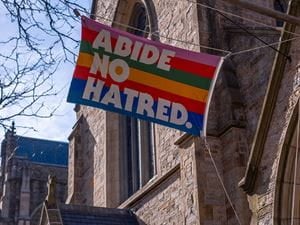
Shutterstock
The Evangelical tradition I was brought up in handed me a package of beliefs and told me it was indivisible – I had to accept all of it or none of it. Some of it was junk, but amidst burdensome notions of faith was the love of Jesus, which was wonderful enough to keep me from rejecting the package as a whole. Like many other ex-Evangelicals, I owned that set of beliefs for decades, until I finally worked out it was okay to divide it up and assess the value of each part. It was hard work, and I often felt afraid, but I was able to find a new, Jesus-shaped faith that is far more transformative than the tradition I inherited.
It's only natural, then, that ex-Evangelicals are suspicious of picking up an alternative package of indivisible beliefs to replace the one they’ve rejected, but I’m not sure that theological individualism is workable or healthy in a community. A group of believers with entirely contradictory notions of Jesus are going to struggle to find unity that is more than just cosmetic. I’m not talking about minor interpretive tensions, or shining different lights on passages of scripture, but irreconcilable understandings of Jesus’ nature, and therefore of the nature of God.
To be a unified community of believers pulling in the same direction, we surely need some shared core principles at the very least. If that’s the case, what might those principles be and how do we test them?
Christ-centred theology
To identify the core principles of progressivism we need to start by understanding what progressivism is and why it exists as a movement. Most progressives have been deeply damaged by other expressions of the Christian faith, and in particular Evangelicalism. Evangelicalism is inseparably wed to reformed theology, which teaches that we are unworthy of God’s love, and that we deserve to be crucified for our faults. It teaches that most people who have ever existed will burn in insufferable eternal agony, and that human beings don’t even get a choice about this, predestined by God either to be saved or forever tormented. Unavoidably, this would mean that that a god who is supposed to be loving has, in fact, chosen to condemn the majority of his creation to eternal punishment.
I was taught these things from childhood to adulthood, and it left me with zero sense of self-worth and a terrible fear or an even more terrible God. These days, I believe that such theology is incompatible with faith in Jesus, but it took decades to realign my thinking. Today, my faith centres on the belief that Jesus is the pure, perfect, and full expression of God, and that all theological ideas must be tested against what he modelled for us. To put it simply, if we can’t see it in Jesus, it isn’t part of the nature of God. John 9:7-10, If you really know me, you will know my Father as well. From now on, you do know him and have seen him.
Philip said, “Lord, show us the Father and that will be enough for us.”
Jesus answered: “Don’t you know me, Philip, even after I have been among you such a long time? Anyone who has seen me has seen the Father. How can you say, ‘Show us the Father’? Don’t you believe that I am in the Father, and that the Father is in me? The words I say to you I do not speak on my own authority. Rather, it is the Father, living in me, who is doing his work.”
Progressive theology majors on the nature and teachings of Jesus, and rejects all ideas that conflict with his gentleness, kindness, and care for those in need. This core value is drawn directly from Jesus himself. The Sermon on the Mount follows this pattern, when Jesus made his series of “You have heard…But now I tell you” statements, but perhaps its clearest outworking is in Luke 9, when Jesus was travelling to Jerusalem prior to his crucifixion. His disciples had gone ahead to find a place for the night in a Samaritan village, but the locals refused to welcome him. Infuriated, James and John wanted to call down fire to consume them, and asked Jesus if they could do so. To be clear, James and John’s desire was scriptural, based on Elijah calling down fire to consume Ahaziah’s forces because of his idolatry, but Jesus was having none of it. Luke 9:54-56, And when His disciples James and John saw this, they said, “Lord, do You want us to command fire to come down from heaven and consume them, just as Elijah did?”
But He turned and rebuked them, and said, “You do not know what manner of spirit you are of. For the Son of Man did not come to destroy men’s lives but to save them.” And they went to another village. Jesus rejected James and John’s Old Testament notion of a violent, vengeful God, even though it was scriptural. This is a familiar process for progressive believers, reshaping our faith in the image of Jesus and by doing so, becoming more like him.
Any theological approach that takes our gaze away from Jesus, or that hardens our hearts towards others should be rejected by progressives. In my view, this includes reformed theology, because of its cruelty, its exclusion, its fatalism, and its utter joylessness.
Progressive theology should always be compassionate, and though we would be unwise to decide on an unquestionable package of beliefs, we should yield to an organic migration in Christ’s direction and the formation of a shared set of values.
Inclusion is non-negotiable
One of the core values of progressivism is inclusion – a full, joyful welcome of the LGBTQIA+ community. I’ve recently joined a progressive Christian community in Nottingham and absorbed the painful stories of LGBTQIA+ people being marginalised and rejected by the churches they used to call home. One girl came out and was ostracised by people she thought were her friends. The mother of a gay teenage boy left her fellowship after her son was shunned for his sexuality. A pastor told the leadership team in his church that he and his wife would only serve in positions that were also available to LGBTQIA+ people. He was shocked to discover that he could no longer teach, lead in any way, serve food and drink, or even to be on the welcome team. The only role he and his wife were permitted to take was directing traffic in the car park.
The experience of LGBTQIA+ people in Evangelical churches is eye-wateringly cruel. They are on the receiving end of continual suspicion and told to abandon any hope of romance, love, or having a family if they wish to belong. LGBTQIA+ people are led to believe there is something wrong with who they fundamentally are, and in some cases, are subjected to the gaslighting trauma of conversion therapy. During one of the gatherings of the progressive community I’m a part of, a girl fled the hall in floods of tears during the worship. Thankfully, a friend of mine noticed and followed her out. After she’d calmed down, the girl met my friend’s gaze and tremulously asked, “Am I safe here?” She’d been treated appallingly by the church she used to attend, and was struggling to believe that a safe, inclusive Christian community was an existential possibility.
Once a compassionate person has met enough LGBTQIA+ people and heard their stories of exclusion, it becomes impossible to ignore their pain. Compassion is the hallmark of progressive Christianity, and inclusion is a crucial shared value.
I understand that some people reading this would love to be inclusive but are afraid of ignoring scripture and angering God. Personally, I think that measuring the hard-heartedness of anti-LGBTQIA+ attitudes against the character of Jesus is enough, but for those who need more than that, there are theological answers to difficult questions about the “clobber verses”. For instance, the term translated as “homosexual” most likely means paedophile – I found this article on the topic particularly helpful.
A clear trajectory
Progressives might claim that we all think for ourselves and don’t adhere to a fixed package of beliefs, and although I think this is true in part, it isn’t the whole story. Engaging with other progressives has shown me that we’re also moving in the same direction. In terms of theology, we have Christ at the centre and test all ideas against his nature and teaching. In terms of values, we esteem compassion and mercy. In terms of our relationship with the LGBTQIA+ community, we welcome them with open arms and unconditional acceptance – in fact, the journey often happens the other way around, with the LGBTQIA+ community providing the welcome. I haven’t touched on social justice in this article, but that too is a core principle of progressivism – looking after the poor, feeding the hungry, housing the homeless, visiting the prisoner, and welcoming the immigrant. We are not a collective of individuals, fighting for oxygen and importance. We are a community on a shared journey of softening hearts and ever-greater compassion, as we become more like Christ.
Note from the author: I’m writing a book on the subject of deconstructing and reconstructing faith in the company of the Holy Spirit, the purpose of which is to help believers identify and ask the questions they feel they need to, while avoided pitfalls along the way. This means sacrificing time I would usually spend on paid tasks, so I’m asking for help. Readers are invited to support me with a one-off gift or a monthly pledge through my Patreon page.
3/6/2026 9:47:04 PM
featured writer
more at patheos
1
Archbishop Timothy P. Broglio Blesses Sacramental Oils
2

Clean Drinking Water from 125 New Jesus Wells Helps 37,000
3

Augustine Institute Expands Catholic Leadership Formation
4

How Does Yāšaʿ Connect Mass Shootings & Project Freedom?

About Duncan Pile
Duncan Pile is a writer, author and speaker, living in Derbyshire, England with his wife and stepson. His mystical approach to faith straddles the Evangelical/Progressive divide, and flowing from lived experience, he is passionate about the deconstruction and reconstruction of the Christian faith.
Patheos Explore the world's faith through different perspectives on religion and spirituality! Patheos has the views of the prevalent religions and spiritualities of the world.
Ad-Free & Subscriber Log-In Subscription Support
- About Us
- 2026 Calendar
- Videos
- Podcasts
- Library of World Religions
- Faith In Media Tracker
- Advertise With Us
- Write for Us
- Privacy Policy
- Terms of Service
- Do Not Sell My Data
- Contact Us
- Radiant Digital
- Manage Newsletter Subscriptions
- Unsubscribe From Notifications
- Sitemap
Copyright 2008-2026, Patheos. All rights reserved.
Subscription Support Ad-Free & Subscriber Log-In
Follow Patheos