
BuddhistCatholicContemplativeEvangelicalGeneral ChristianHinduJewishLatter-day SaintMuslimNew VisionsProgressive Christian
Beliefs
- Buddhist
- Catholic
- Contemplative
- Evangelical
- General Christian
- Hindu
- Jewish
- Latter-day Saint
- More Voices
- Muslim
- New Visions
- Pagan
- Progressive Christian
Topics
- Religion News
- Food and Religion
- Sports and Religion
- Religious Art
- Religious Music and Entertainment
- Religious Events
- History and Religion
- Style and Religion
- Politics and Religion
- Women in Religion
- Recreation Outdoors and Religion
- Business Finance and Religion
- Careers Workplace and Religion
- Education and Religion
- Family Parenting and Religion
- Health Fitness and Religion
- Home and Religion
- Relationships and Religion
- Technology and Religion
- Travel and Religion
Columnists
- Buddhist Columnists
- Business Finance and Religion Columnists
- Careers Workplace and Religion Columnists
- Catholic Columnists
- Contemplative Columnists
- Education and Religion Columnists
- Evangelists Columnists
- Family Parenting and Religion Columnists
- General Christian Columnists
- Health Fitness and Religion Columnists
- Hindu Columnists
- History and Religion Columnists
- Home and Religion Columnists
- Jewish Columnists
- More Voices Columnists
- Latter Day Columnists
- Muslim Columnists
- New Visions Columnists
- Nonreligious Columnists
- Pagan Columnists
- Politics and Religion Columnists
- Progressive Columnists
- Recreation Outdoors and Religion Columnists
- Relationships and Religion Columnists
- Religion News Columnists
- Religious Art Columnists
- Religious Events Columnists
- Religious Music and Entertainment Columnists
- Sports and Religion Columnists
- Style and Religion Columnists
- Technology and Religion Columnists
- Travel and Religion Columnists
- Women in Religion Columnists
Resource Library
- 2026 Calendar
- Library of World Religions
- The 100 Most Holy Places on Earth
- Patheos Answers
- Podcasts
- Videos
- Faith Leaders Database
- Anglican Episcopalian
- Bahai
- Baptist
- Buddhism
- Christianity
- Confucianism
- Eastern Orthodoxy
- Hinduism
- Holiness and Pentecostal
- ISKCON
- Islam
- Judaism
- Lutheran
- Methodist
- The Church of Jesus Christ of Latter-day Saints
- New Age
- Paganism
- Presbytarian and Reformed
- Protestantism
- Religion Behind the Scenes
- Roman Catholic
- Scientology
- Shia Islam
- Sikhism
- Sufism
- Sunni Islam
- Taoism
- Zen
- See all religions
Research Tools
 Ad-Free & Subscriber Log-In Subscription Support
Ad-Free & Subscriber Log-In Subscription Support
Follow Patheos 

- Trending:
- Forgiveness
- |
- Marriage
- |
- Consciousness
- |
- Death Penalty
- |
- Election
- |
- Halloween
A Theological Response to the Buddhist Doctrine of Karma and the Christian Doctrine of Theodicy
December 15, 2016 by David Moe
Analogously, Buddhism teaches that everyone has his or her individual freedom to do either good karma or evil karma. Everyone will benefit according to what they have acted in the past. A point of contact between Buddhism and Christianity is that since no one conceives Adam and Eve, they freely chose to eat the fruit of the tree (Gen. 3:6). Christians believe that such misuse of Adam's freewill is the origin of sin and its effect was the problem of evil, suffering and death. Sin and death came into the world through one man (Rom. 5:12). Does Buddhists believe the transmission of Adam's karmic sin in the world? I do not think so because their notion of karma has more to do with its individual and internal effect rather than to do with its universal and external effect. Thus, they do not accept suffering of infants as the cause of the external Adam's sin (Ps. 51).
The contrast between Buddhism and Christianity is that the former sees sin or karma more as a condition or an immoral deed, while the latter sees sin more as a state. In response to Buddhists, Christians ought to re-define the meaning of Adam. Adam (adama in Hebrew) means humankind. So Adam is none other than ourselves. Or Adam is the source of human race. This may help Buddhists better understand the transmittable karma of Adam to human race. Though they stress that karma returns to its doer, they accept that the karma of children are determined by their parents'. This I call "external cause." Though Buddhists stress self-cause, they embrace external cause within a samsaric family. In this sense, Buddhist may see suffering of infants not only as the cause of their own karma, but also as their great grand parents' evil karma (Adam as analogy).
In sum, God created humans with freewill. We see the link between human freedom of karma and divine act of justice in the lives of Israel. Israel freely chose to do bad karma by breaking the law and turning away from God. "Israel' s idolatry and unfaithfulness are the most common sins in the OT. God does His justice by reacting to Israel with anger in terms of punishing the evildoers and rewarding the good doers. Likewise, God does justice by cursing Adam and Eve (Gen. 3:17-24). God's anger does not cancer His love. Anger is the action of just God and love is the essence of merciful God. Thus, ultimately, God sent His Son Jesus into the world to redeem us (Jn. 3:16).
3. Soteriological Response to Karma and Theodicy
Soteriologically speaking, there is a contrast between Buddhist doctrine of karma and Christian doctrine of grace. Karma comes and goes around from inside (from us) in an expected way; whereas grace comes as a surprising gift from outside (from divine) in an unexpected way. Buddhists teach self-salvation by karma. Buddhists see the suffering of Christ on the cross as a problematic and dreadful image because their doctrine of ahimsa stands against a violent death of any living being. In response to Buddhists, I must argue that the suffering for Christ is a necessary punishment for our sin and salvation (Lk. 24:26; Rom. 5:8-10; Heb. 9:22). God punishes the innocent Jesus for our karmic sin. Jesus died not because of His karma, because of our karma (sinful deed). This is the highest justice of God in human history. We call this the penal and substitutionary atonement—Jesus suffered and died for us. This is the essence of Christian gospel.
Some Buddhists think that God kills Jesus the Son. They wonder how possible it is for a loving God to kill His Son. I do not that this is morally right. Jesus' death is a combination of God's wrath and Jesus' self-giving. By self-giving, Jesus redeems us as new creation (2Cor. 5:17). In order to redeem us, He had to pay the price, that is the cost of life. Just as the evil karma of Adam leads us to death, so the good karma (atoning act) of Christ restores us into communion with God (Rom. 5:12-21). Sin separates us from God, but through Christ new communion and forgiveness is possible. Buddhists doubt about the possibility of God's justice of forgiveness. They ask: how would Jesus' death in 2000 years ago be possible to forgive and to liberate from our sinful karma today.
To respond this, I compare Jesus' vicarious death in 2000 with Aung San's sacrificial death for liberation of Myanmar in 1947. As Aung San's fight for liberation from British colonialism at the cost of his life in 60 years ago effects the entire 60 million of Burmese today, so Jesus' fight for liberation from the power of sin and evil at the cost of His life on the cross could also effect the entire human race. Jesus Himself said, "When I am lifted up from the earth, I will draw all people to myself" (Jn. 12:32). We are all forgiven, but our life is bounded by daily repentance to Christ with new life. Finally, one of the greatest achievements of God's justice of the cross is defeating the powers of evils through the resurrection of Christ. We call this the victory model of atonement. This does not mean that we are now in evil-less world. Evil remains challenging God's power.
Article Continued On Next Page
Page: 2 of 4
5/6/2021 4:12:30 PM
more at patheos
1

The Crayons We Hold in Common: On Jamaal Howard
2

Why Punk and Hip Hop May Hear God Better Than Worship
3
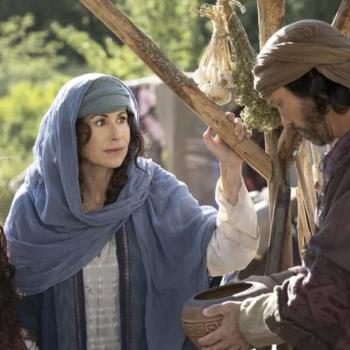
The Faithful: FOX Retells Genesis Through Its Women
4

Christian Dating After Divorce: Discernment Over Fear
About
Patheos Explore the world's faith through different perspectives on religion and spirituality! Patheos has the views of the prevalent religions and spiritualities of the world.
Ad-Free & Subscriber Log-In Subscription Support
- About Us
- 2026 Calendar
- Videos
- Podcasts
- Library of World Religions
- Faith In Media Tracker
- Advertise With Us
- Write for Us
- Privacy Policy
- Terms of Service
- Do Not Sell My Data
- Contact Us
- Radiant Digital
- Manage Newsletter Subscriptions
- Unsubscribe From Notifications
- Sitemap
Copyright 2008-2026, Patheos. All rights reserved.
Subscription Support Ad-Free & Subscriber Log-In
Follow Patheos