
BuddhistCatholicContemplativeEvangelicalGeneral ChristianHinduJewishLatter-day SaintMuslimNew VisionsProgressive Christian
Beliefs
- Buddhist
- Catholic
- Contemplative
- Evangelical
- General Christian
- Hindu
- Jewish
- Latter-day Saint
- More Voices
- Muslim
- New Visions
- Pagan
- Progressive Christian
Topics
- Religion News
- Food and Religion
- Sports and Religion
- Religious Art
- Religious Music and Entertainment
- Religious Events
- History and Religion
- Style and Religion
- Politics and Religion
- Women in Religion
- Recreation Outdoors and Religion
- Business Finance and Religion
- Careers Workplace and Religion
- Education and Religion
- Family Parenting and Religion
- Health Fitness and Religion
- Home and Religion
- Relationships and Religion
- Technology and Religion
- Travel and Religion
Columnists
- Buddhist Columnists
- Business Finance and Religion Columnists
- Careers Workplace and Religion Columnists
- Catholic Columnists
- Contemplative Columnists
- Education and Religion Columnists
- Evangelists Columnists
- Family Parenting and Religion Columnists
- General Christian Columnists
- Health Fitness and Religion Columnists
- Hindu Columnists
- History and Religion Columnists
- Home and Religion Columnists
- Jewish Columnists
- More Voices Columnists
- Latter Day Columnists
- Muslim Columnists
- New Visions Columnists
- Nonreligious Columnists
- Pagan Columnists
- Politics and Religion Columnists
- Progressive Columnists
- Recreation Outdoors and Religion Columnists
- Relationships and Religion Columnists
- Religion News Columnists
- Religious Art Columnists
- Religious Events Columnists
- Religious Music and Entertainment Columnists
- Sports and Religion Columnists
- Style and Religion Columnists
- Technology and Religion Columnists
- Travel and Religion Columnists
- Women in Religion Columnists
Resource Library
- 2026 Calendar
- Library of World Religions
- The 100 Most Holy Places on Earth
- Patheos Answers
- Podcasts
- Videos
- Faith Leaders Database
- Anglican Episcopalian
- Bahai
- Baptist
- Buddhism
- Christianity
- Confucianism
- Eastern Orthodoxy
- Hinduism
- Holiness and Pentecostal
- ISKCON
- Islam
- Judaism
- Lutheran
- Methodist
- The Church of Jesus Christ of Latter-day Saints
- New Age
- Paganism
- Presbytarian and Reformed
- Protestantism
- Religion Behind the Scenes
- Roman Catholic
- Scientology
- Shia Islam
- Sikhism
- Sufism
- Sunni Islam
- Taoism
- Zen
- See all religions
Research Tools
 Ad-Free & Subscriber Log-In Subscription Support
Ad-Free & Subscriber Log-In Subscription Support
Follow Patheos 

- Trending:
- Forgiveness
- |
- Marriage
- |
- Consciousness
- |
- Death Penalty
- |
- Election
- |
- Halloween
General Christian
Is Religion a Factor in Ireland's Political Drama?
April 10, 2024 by Matthew Allen
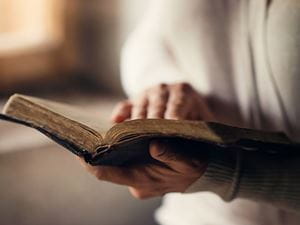
Shutterstock.com
Last month, I wrote a piece on the politics of Northern Ireland. This time, I turn to the Republic. Seven days before my previous article went live, Leo Varadkar’s government held a pair of referendums, focussed on women’s issues, to coincide with International Women’s Day: the Thirty-Ninth Amendment (or Family Amendment) and the Fortieth Amendment (or Care Amendment). Ireland rejected both proposals. What went awry, then, for the ‘Yes’ campaign?
An Coimisiún Toghcháin, Ireland’s Electoral Commission, lays out some background info. ‘The first Referendum concern[ed] the concept of Family in the Constitution,’ we read on its website, ‘The second Referendum propose[d] to delete an existing part of the Constitution and insert new text providing recognition for care provided by family members to each other.’
Need more detail? No problem. Rory Carroll, an Observer correspondent, succinctly summarises the mooted measures: ‘The family amendment proposed widening the definition of family from a relationship founded on marriage to “durable relationships” such as cohabiting couples and their children,’ he reports, ‘The care amendment proposed replacing a reference to a “mother’s duties in the home” with a clause recognising care provided by family members.’ In essence, Varadkar wanted to modernise the language in the Constitution.
As if two failed referendums in one day weren’t enough drama for one fortnight, Varadkar announced his departure as Taoiseach. While many were shocked, we have, as Taylor Swift might say, seen parts of this movie before. David Cameron, British ex-premier (now Lord Cameron the Foreign Secretary), won a vote on Scotland’s place in the Union. Then he campaigned against Brexit and lost. Varadkar had gone to the public on divorce regulations, blasphemy laws, and abortion rights during his mandate. He ran out of luck on this occasion.
If religion, our stock-in-trade at Patheos, was a factor in the failure of two referendums, then that’s a big story; not least because double referendum defeat seems to have brought forward the Taoiseach’s exit, and it has amplified calls for a general election. To see what role (if any) religion had in the vote, I did something unthinkable: used maths! Wonders will never cease.
According to Atlassian, a software company, ‘Scatter plots are used to observe relationships between variables.’ This is the method of analysis I would use. I wanted to know if there was a relationship between support for a ‘No’ vote in the two March 2024 polls (variable 1) and religious affiliation (variable 2) My first obstacle was that, as far as I know, there is no breakdown of the returns by religion. There are, though, census figures on religion, broken down per Dáil constituency by the Oireachtas Library and Research Service. I plotted this data, in two separate scatter plots, alongside net support for ‘No’. This uncovered fascinating trends.
The blue trend-lines (auto-generated in Pages for iOS) reveal that constituencies with greater percentages of Catholics voted ‘No’ more overwhelmingly. Those with more non-Catholics – people of another faith (green lines), or of no faith (grey lines) – voted ‘No’ by smaller margins. Percentages are useful in this context because they let us compare constituencies like-for-like.
Dublin Central is an outlier in both referendums. (Wikipedia states, helpfully, that on the map of Dublin, ‘Dublin Central is at the centre.’ Glad we straightened that out.) I think this is because a relatively high percentage of people in this area didn’t state a religion on the Census. Either that or Catholics in central Dublin are especially conservative, which is unlikely!
There is a large gap (approx. 20 percent) between the three constituencies of Dublin Bay South, Dublin Rathdown, and Dún Laoghaire (pronounced ‘Dunleary’), on the one hand, and the rest of the Republic, on the other. The number of Roman Catholics who live in these constituencies is below the national figure of 78.3 percent. Dún Laoghaire, incidentally, voted by the tiny margin of 0.6% in favour of the Family Amendment. No constituency signed up to the Care Amendment.
What had the Catholic episcopate said, which might have swayed Catholic opinion, in the runup to the referendums? ‘While the bishops do not explicitly say whether to vote “Yes” or “No” in the referendums,’ reported The Catholic Herald, ‘a “No” vote in each would mean the current wording in the Irish Constitution remains extant, and in line with the Church’s teachings.’ Then again, the Church’s voice is not as powerful as it was; it was unable to secure its preferred result in the 2015 equal marriage referendum or the 2018 abortion referendum.
Overall, it’s a complex picture. We noted above that a constituency’s ‘No’ vote increases, as a general rule, the larger its Catholic electorate is in percentage terms. What does this infer? Well, it would appear the Church’s voice in public affairs remains not inconsiderable. Many within Catholic Ireland, it is true, will have attached great importance to the Church’s position. Others will not. Indeed, a lot of Catholics, we can reasonably suppose, will have backed ‘Yes’!
Ultimately, the proposals fell due to lack of clarity. See, for example, the Newstalk segment uploaded to YouTube as “Your referendum questions answered”. It’s fair to say that it raised far more questions than it answered! Anyway, the debate – far from being settled – has been shelved for another day, with Sinn Féin eager to hold a second set of referendums if elected.
It’s a healthy thing for the Church to give its take on political issues, provided it do so generously. There has to be space within the churches, also, for those who take a different approach to the hierarchy. This is critical in the Republic of Ireland, where plebiscites have become a frequent occurrence; in the six decades from 1937-97 there were 22 referendums, while in the two decades from 2004-24 there have been, so far, no fewer than 16 of the things!
In a year filled with electoral contests across the world, I can think of no better note on which to finish than this call for better conversations between those who see things differently, ‘with all lowliness and meekness, with patience, forbearing one another in love’ (Ephesians 4.2, RSV). Let’s aim to finish 2024 on good terms, no matter how stark our disagreements may be.
4/10/2024 3:28:36 AM
featured writer
more at patheos
1
Without Moroni statues, is the Church rejecting its past?
2
Did God Speak To The World Before Jesus Came?
3
4

Archbishop Broglio Leads Sacred Heart Consecration

About Matthew Allen
Matthew Allen is a writer and musician based in Northern Ireland. He is a graduate of Queen’s University, Belfast, where he studied Theology and Liberal Arts.
Patheos Explore the world's faith through different perspectives on religion and spirituality! Patheos has the views of the prevalent religions and spiritualities of the world.
Ad-Free & Subscriber Log-In Subscription Support
- About Us
- 2026 Calendar
- Videos
- Podcasts
- Library of World Religions
- Faith In Media Tracker
- Advertise With Us
- Write for Us
- Privacy Policy
- Terms of Service
- Do Not Sell My Data
- Contact Us
- Radiant Digital
- Manage Newsletter Subscriptions
- Unsubscribe From Notifications
- Sitemap
Copyright 2008-2026, Patheos. All rights reserved.
Subscription Support Ad-Free & Subscriber Log-In
Follow Patheos