
BuddhistCatholicContemplativeEvangelicalGeneral ChristianHinduJewishLatter-day SaintMuslimNew VisionsProgressive Christian
Beliefs
- Buddhist
- Catholic
- Contemplative
- Evangelical
- General Christian
- Hindu
- Jewish
- Latter-day Saint
- More Voices
- Muslim
- New Visions
- Pagan
- Progressive Christian
Topics
- Religion News
- Food and Religion
- Sports and Religion
- Religious Art
- Religious Music and Entertainment
- Religious Events
- History and Religion
- Style and Religion
- Politics and Religion
- Women in Religion
- Recreation Outdoors and Religion
- Business Finance and Religion
- Careers Workplace and Religion
- Education and Religion
- Family Parenting and Religion
- Health Fitness and Religion
- Home and Religion
- Relationships and Religion
- Technology and Religion
- Travel and Religion
Columnists
- Buddhist Columnists
- Business Finance and Religion Columnists
- Careers Workplace and Religion Columnists
- Catholic Columnists
- Contemplative Columnists
- Education and Religion Columnists
- Evangelists Columnists
- Family Parenting and Religion Columnists
- General Christian Columnists
- Health Fitness and Religion Columnists
- Hindu Columnists
- History and Religion Columnists
- Home and Religion Columnists
- Jewish Columnists
- More Voices Columnists
- Latter Day Columnists
- Muslim Columnists
- New Visions Columnists
- Nonreligious Columnists
- Pagan Columnists
- Politics and Religion Columnists
- Progressive Columnists
- Recreation Outdoors and Religion Columnists
- Relationships and Religion Columnists
- Religion News Columnists
- Religious Art Columnists
- Religious Events Columnists
- Religious Music and Entertainment Columnists
- Sports and Religion Columnists
- Style and Religion Columnists
- Technology and Religion Columnists
- Travel and Religion Columnists
- Women in Religion Columnists
Resource Library
- 2026 Calendar
- Library of World Religions
- The 100 Most Holy Places on Earth
- Patheos Answers
- Podcasts
- Videos
- Faith Leaders Database
- Anglican Episcopalian
- Bahai
- Baptist
- Buddhism
- Christianity
- Confucianism
- Eastern Orthodoxy
- Hinduism
- Holiness and Pentecostal
- ISKCON
- Islam
- Judaism
- Lutheran
- Methodist
- The Church of Jesus Christ of Latter-day Saints
- New Age
- Paganism
- Presbytarian and Reformed
- Protestantism
- Religion Behind the Scenes
- Roman Catholic
- Scientology
- Shia Islam
- Sikhism
- Sufism
- Sunni Islam
- Taoism
- Zen
- See all religions
Research Tools
 Ad-Free & Subscriber Log-In Subscription Support
Ad-Free & Subscriber Log-In Subscription Support
Follow Patheos 

- Trending:
- Forgiveness
- |
- Marriage
- |
- Consciousness
- |
- Death Penalty
- |
- Election
- |
- Halloween
Did Jesus Teach Eternal Torment or Restoration?
September 03, 2025 by Duncan Pile
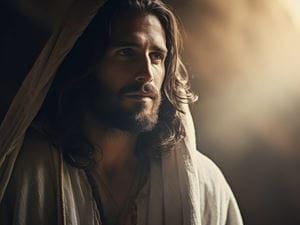
Adobe Stock
It’s important that universalists like myself are able to make sense of scriptures that don’t, at first glance, appear to fit into our understanding of the everlasting mercy of God. Otherwise, we’re just cherry-picking our favorite scriptures and ignoring difficult ones. In Matthew 7, Jesus says he will rebuke people who have prophesied, cast out demons, and performed wonders in his name, saying,
"I never knew you; depart from Me, you who practice lawlessness!"
Similarly, in Matthew 25, Jesus told three parables in which he made similar statements to different groups – the foolish virgins who had not filled their lamps with oil in preparation for the arrival of the bridegroom at the wedding feast, the servant who failed to invest the ‘talents’ he’d been given by the his lord, and those who failed to care for the poor, the stranger, the sick, and the captive. His words to that final group are particularly telling:
‘‘Assuredly, I say to you, inasmuch as you did not do it to one of the least of these, you did not do it to Me."
As a child, I was taught that this departure from Jesus meant an eternal banishment to hell, which at first glance, appears to be what the passage is saying in its concluding verse (verse 46):
“And these will go away into everlasting punishment, but the righteous into eternal life.”
How then, is this not referring to eternal conscious torment?
A deliberate mistranslation?
The Greek word translated as ‘everlasting’ and ‘eternal’ in the King James and other translations of the Bible is ‘Aionios’, which does not mean an unending quantity of time. ‘Aionios’ refers to an indeterminate period of time, the quality of which is defined by what it is describing, be that ‘aionios life’ or ‘aionios punishmen’.
Many of the early church fathers believed that ‘aionios kolasis’ (the phrase used in verse 46, translated ‘eternal punishment’) refers to a temporary era of remedial punishment, designed to heal rather than harm the one enduring it.
Clement or Alexandria, who lived in the second century, was the first to speak of God’s ‘wise fire’:
“God’s punishments are saving and disciplinary (in Hades) leading to conversions, and choosing rather the repentance than the death of the sinner, and especially since souls, although darkened by passions, when released from their bodies, are able to perceive more clearly because of their being no longer obstructed by the paltry flesh. We can set no limits to the agency of the Redeemer to redeem, to rescue, to discipline, is His work, and so will he continue to operate after this life.” Clem. str. 5:14.90.4-91.2
In the fourth century, Gregory of Nyssa expressed a similar sentiment:
“What therefore is the scope of Paul’s argument in this place? That the nature of evil, at length, be wholly exterminated, and divine, immortal goodness embrace within itself every rational creature; so that of all who were made by God, not one shall be excluded from his Kingdom. All the viciousness, that like a corrupt matter is mingled in things, shall be dissolved and consumed in the furnace of purgatorial fire; and everything that had its origin from God, shall be restored to its pristine state of purity.” Tract, in Dictum Apostoli, Tunc etiam ipse Filius subjicietur, and c.p. 137, and seqq.
This belief in a restorative, wise fire, as a place of healing (after death) rather than a place of destruction, was commonly held theology for the first five centuries of the Early Church, until the State church and Augustine of Hippo interfered. Pope Damasus I commissioned Saint Jerome to translate the Koine Greek and Hebrew texts of the Old and New Testament into a standardised Latin translation of the Bible in 382 AD, for use in Roman churches. This translation became known as the Latin Vulgate, and it is this work that was further translated into the King James Bible. The Greek and Hebrew texts were translated into Latin, and a millennium later, retranslated into English and other modern languages, which created opportunities for error.
Instead of translating ‘aionios’ as ‘an age’, meaning a period of time with a beginning and an end, the Latin Vulgate translated it as if it were ‘aidios’, which strictly means ‘eternal’ in Koine Greek. ‘Aionios’ was erroneously translated as ‘aeternus’ in the Latin, fundamentally perverting the meaning and message of the text. A temporary period of repentance, healing, and restoration, endured for your own good, is a very different animal to eternal punishment meant only to destroy you.
Augustine had a very limited knowledge of Greek and was keen to accept the mistranslated idea of eternal punishment, which aligned with his theology. As a highly influential figure, he propagated the false understanding of eternal conscious torment, skewing the Church’s understanding of the Gospel and the goodness of God. How deliberate all of this was is a matter of debate, but the consequences of his actions have undermined the spread of the true Gospel throughout church history and still do so today. Any ‘reformed’ denomination is reliant on Augustine’s teachings and shares his belief in a God who would torture his own creation forever and ever.
Why would Jesus tell people to depart from him?
If salvation is for all, leaving no-one out, then where are the foolish virgins, unfaithful servant, and uncaring believers being told to depart to? If not hell, then where?
To precisely the place I’ve been writing of – a place of temporary challenge, leading to repentance, to reconciliation with those you’ve hurt, and ultimately to healing and unity with all God’s creatures in Heaven. In the Bible, this place is called Sheol (Hell is not a Biblical word in the Greek or the Hebrew). I like to see what happens there as the process of judgement all of us will face – that’s right, all of us, including Christians. Paul wrote of this process in 1 Corinthians 3: 12-15, describing how the lives we’ve built on the foundation of Christ will be tested come the Day of Judgement:
“If anyone builds on this foundation using gold, silver, costly stones, wood, hay or straw, their work will be shown for what it is, because the Day will bring it to light. It will be revealed with fire, and the fire will test the quality of each person’s work. If what has been built survives, the builder will receive a reward. If it is burned up, the builder will suffer loss but yet will be saved—even though only as one escaping through the flames.”
Much like Matthew 25, this reveals that all of us, including those who have found Christ, will be judged based on what we’ve done in the body. This might seem contradictory to the notion of being redeemed through the blood of Jesus and standing before God in his righteousness rather than our own, until we remember that this part of an age of restoration rather than a gateway to eternal punishment. This isn’t about our place in Heaven; it’s about facing up to what we’ve done in our lives. None of us will arrive at Heaven’s gates perfectly healed and restored. There will be many things that need to be said, apologies offered, forgiveness extended, and the greatest outpouring of mercy and grace anyone has ever seen. That’s the kind of Judgement Day I anticipate, rather than an era of terror.
This is our ‘aionios’, the outworking of our salvation, our true sanctification. I take great comfort from this belief. Every time I am outraged by injustice, I remind myself that the person perpetuating destruction won’t get away with it. The worse the atrocity, the more work they will have to do in the ‘aionios’ of judgement. And that work won’t be done in private, between them and God, but in public, with the people we’ve hurt. After all, if we sin against each other, it is each other’s forgiveness we need to seek.
Judgement, then, is mercy, and the Gospel is the ultimate and holistic union of all people with God and with each other. Ephesians 1:8-10,
‘With all wisdom and understanding, he made known to us the mystery of his will according to his good pleasure, which he purposed in Christ, to be put into effect when the times reach their fulfilment—to bring unity to all things in heaven and on earth under Christ.”
To dig into this more deeply, I recommend Richard Murray’s outstandingly detailed article, Four Reasons the Early Church Did Not Believe “Hell” Lasts Forever. Previously, I wrote on this topic from the angle of the Rich Man and Lazarus.
Note from the Author: I’m planning to write a book called Deconstructing in the Company of God. The purpose of the book is to provide insights into the process of deconstruction from the point of view of believers who know they need to go there but want to maintain their relationship with Jesus. I want to show how keeping close to the Lord during deconstruction is not only possible but the ideal way to do it. I intend to address some common pitfalls and offer gentle advice on how to avoid them, while supporting believers with insights and wisdom gained from doing things the hard way.
I need help to get this done. The book might take 3 months to write if I devoted myself to it, full time, but I’m a freelance writer and can’t afford to step away from my usual gigs. Readers who want this book to be written can help make that a reality by making a pledge or one-off donation on my Patreon page. I welcome every supporter and offer my thanks in advance for helping me bring this book to life.
9/3/2025 6:57:32 PM
featured writer
more at patheos
1
Aproskopos in the New Testament: Definition and Meaning
2

Palm Sunday's Tragic Beauty - March 29, 2026
3

The Church Keeps You in the Helicopter
4
The #1 Book on Amazon in Christianity Right Now

About Duncan Pile
Duncan Pile is a writer, author and speaker, living in Derbyshire, England with his wife and stepson. His mystical approach to faith straddles the Evangelical/Progressive divide, and flowing from lived experience, he is passionate about the deconstruction and reconstruction of the Christian faith.
Patheos Explore the world's faith through different perspectives on religion and spirituality! Patheos has the views of the prevalent religions and spiritualities of the world.
Ad-Free & Subscriber Log-In Subscription Support
- About Us
- 2026 Calendar
- Videos
- Podcasts
- Library of World Religions
- Faith In Media Tracker
- Advertise With Us
- Write for Us
- Privacy Policy
- Terms of Service
- Do Not Sell My Data
- Contact Us
- Radiant Digital
- Manage Newsletter Subscriptions
- Unsubscribe From Notifications
- Sitemap
Copyright 2008-2026, Patheos. All rights reserved.
Subscription Support Ad-Free & Subscriber Log-In
Follow Patheos