
BuddhistCatholicContemplativeEvangelicalGeneral ChristianHinduJewishLatter-day SaintMuslimNew VisionsProgressive Christian
Beliefs
- Buddhist
- Catholic
- Contemplative
- Evangelical
- General Christian
- Hindu
- Jewish
- Latter-day Saint
- More Voices
- Muslim
- New Visions
- Pagan
- Progressive Christian
Topics
- Religion News
- Food and Religion
- Sports and Religion
- Religious Art
- Religious Music and Entertainment
- Religious Events
- History and Religion
- Style and Religion
- Politics and Religion
- Women in Religion
- Recreation Outdoors and Religion
- Business Finance and Religion
- Careers Workplace and Religion
- Education and Religion
- Family Parenting and Religion
- Health Fitness and Religion
- Home and Religion
- Relationships and Religion
- Technology and Religion
- Travel and Religion
Columnists
- Buddhist Columnists
- Business Finance and Religion Columnists
- Careers Workplace and Religion Columnists
- Catholic Columnists
- Contemplative Columnists
- Education and Religion Columnists
- Evangelists Columnists
- Family Parenting and Religion Columnists
- General Christian Columnists
- Health Fitness and Religion Columnists
- Hindu Columnists
- History and Religion Columnists
- Home and Religion Columnists
- Jewish Columnists
- More Voices Columnists
- Latter Day Columnists
- Muslim Columnists
- New Visions Columnists
- Nonreligious Columnists
- Pagan Columnists
- Politics and Religion Columnists
- Progressive Columnists
- Recreation Outdoors and Religion Columnists
- Relationships and Religion Columnists
- Religion News Columnists
- Religious Art Columnists
- Religious Events Columnists
- Religious Music and Entertainment Columnists
- Sports and Religion Columnists
- Style and Religion Columnists
- Technology and Religion Columnists
- Travel and Religion Columnists
- Women in Religion Columnists
Resource Library
- 2026 Calendar
- Library of World Religions
- The 100 Most Holy Places on Earth
- Patheos Answers
- Podcasts
- Videos
- Faith Leaders Database
- Anglican Episcopalian
- Bahai
- Baptist
- Buddhism
- Christianity
- Confucianism
- Eastern Orthodoxy
- Hinduism
- Holiness and Pentecostal
- ISKCON
- Islam
- Judaism
- Lutheran
- Methodist
- The Church of Jesus Christ of Latter-day Saints
- New Age
- Paganism
- Presbytarian and Reformed
- Protestantism
- Religion Behind the Scenes
- Roman Catholic
- Scientology
- Shia Islam
- Sikhism
- Sufism
- Sunni Islam
- Taoism
- Zen
- See all religions
Research Tools
 Ad-Free & Subscriber Log-In Subscription Support
Ad-Free & Subscriber Log-In Subscription Support
Follow Patheos 

- Trending:
- Forgiveness
- |
- Marriage
- |
- Consciousness
- |
- Death Penalty
- |
- Election
- |
- Halloween
I Carried Family Pain for Decades. One Conversation Changed Everything.
May 08, 2026 by Duncan Pile

Adobe Stock
The Healing Power of a Brave Conversation
Being let down by people we love is one of life’s few guarantees. In all relationships, including the treasured bonds of family, one person will eventually hurt a loved one, and how we deal with that pain determines the trajectory of that relationship.
It’s tempting to sweep uncomfortable subjects under the rug, especially where family is concerned, but doing so only nurtures the pain, which over time becomes increasingly toxic. Unaddressed pain becomes resentment, and resentment finds expression in sometimes epic explosions of bitterness that ruin relationships. This is something I know all too well.
I was brought up in a polite, English family which didn’t tend to deal with conflict in a healthy way. The pain that had been swept under our rug over the years became a massive accumulation that went unaddressed all the way through to my late thirties.
I won’t go into the details of what caused the hurt in the first place, but it’s important to understand that when I left home, I carried a burden of unresolved issues that greatly hindered my personal development. I felt unimportant, unwanted, and on the outside looking in. I subconsciously viewed myself as an example of who not to be and lacked any sense of value or self-worth.
Pain Doesn’t Dissipate Over Time
I took that pain with me to university, where it polluted my faith. I couldn’t accept that God loved me and sometimes vocalised that while he might use me to serve the Kingdom of God (I was a proper little Evangelical!), I had no place within it. I was just a useful tool in his kit. After uni, I became a missionary, and despite leading many to the Lord, I couldn’t escape the subconscious belief that I was worthless. I remember ministering to a group of individuals one night, on a flat roof in Kowloon where we’d gathered to pray. Every person there had a profound encounter with God except me, even though I was the one ministering, and after everyone left, I sat on the edge of the roof and cried, feeling unloved and bereft. That might sound pathetic, but it was old pain seizing the moment, and that pain was just too much.
After serving as a missionary, I returned to England and got on with a fairly ordinary life – career, good friendships, church – but every couple of years, something would happen to stir up old pain, and I would be floored once again. Without knowing it, my family had their fingers on the triggers that would set me off, and a harsh judgement here, or an unfair assumption there was all it would take to reinforce my pain and send me into a spin, often for a week or longer. I would deal with the pain privately, keeping my cards close to my chest, but from time to time it would explode in angry words and cause further conflict, which in turn made me feel evermore on the outside of the family, looking in.
In my late thirties, I was accidentally copied in to a family email that was heavily critical of me. I couldn’t ignore it. The unaddressed pain was so torturous I decided to address things head on. I initiated the most uncomfortable conversation of my life, staged at a neutral venue, and told certain members of my family everything – what had been said and done in my childhood, how I felt about it at the time, and how it had affected my self-esteem ever since. I won’t go into specific details, other than to say that my family members were willing to listen and, agonising though it was, we brought everything into the light.
That was the first step towards reconciliation. The illusions and false assumption had no place to hide, and I felt seen for the first time. More than a decade later, we are closer than we’ve ever been. There haven’t been any fallouts, communication feels safe and comforting, and I am at complete peace in an area of life that had long seemed irrecoverable. The healing that has taken place between those specific family members and I opened the door to the restoration of other relationships too. After years of fallouts with one of my brothers, we too buried the hatchet. There’s nothing but peace and friendship between us now, though that too needed a couple of difficult conversations to initiate.
As for self-esteem, I no longer drink from the toxic brew of self-criticism that used to fill my cup. It’s over. I feel loved to my very bones – I feel loved by God and loved by my family and have even found a rich measure of positive self-regard. This utter transformation was made possible by the brave choice to have a painful conversation, and the equally brave choice my family made to listen and to apologise.
Don’t Put it Off
There are people who aren’t ready to listen or be vulnerable, and for the sake of all concerned, it is better to forgive them from a distance and wait for a time when they are able to hear, but there are also those who have the maturity to listen and reconcile. The Holy Spirit helps us discern which relationships are ripe for reconciliation, and when that becomes clear, we can move forwards with confidence and bring the Kingdom of God to those connections. The best advice I can offer is not to put it off. Someone has to start the chain of events that lead to peace, so why not you?
Who in your life do you need to have a brave conversation with? A parent? A sibling? A partner? A friend? It might feel daunting, but it can be the only road to peace. Resentment, bitterness, and judgement are a hindrance for a follower of Jesus, impacting every part of our lives. It is very likely that harm has been inflicted by everyone involved, including yourself, so go willing to listen and apologise for your part.
Where all parties are willing, love invites us to tumble the barriers between us – to have difficult conversations, bravely sharing our feelings, and in mutual vulnerability, finding the strength to forgive. Love doesn’t leave hurt festering in darkness; it shines a light. It exposes the truth and calls us to reconcile. If this resonates, I encourage you to initiate that brave conversation, talk and listen with humility, and give God room to heal.
Psalm 133:
‘How good and pleasant it is
when God’s people live together in unity…
For there the Lord bestows his blessing,
even life for evermore.’
5/8/2026 11:00:36 PM
featured writer
more at patheos
1

The Saturday Evening Musings of a "Mean Teacher"
2
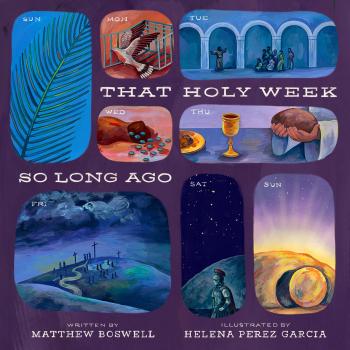
A Little One for the Little Ones for Holy Week
3

Liturgia De Boda Ecológica - nupcial centrada en la creación
4
Sinners in the hands of an angry God is a lousy sermon

About Duncan Pile
Duncan Pile is a writer, author and speaker, living in Derbyshire, England with his wife and stepson. His mystical approach to faith straddles the Evangelical/Progressive divide, and flowing from lived experience, he is passionate about the deconstruction and reconstruction of the Christian faith.
Patheos Explore the world's faith through different perspectives on religion and spirituality! Patheos has the views of the prevalent religions and spiritualities of the world.
Ad-Free & Subscriber Log-In Subscription Support
- About Us
- 2026 Calendar
- Videos
- Podcasts
- Library of World Religions
- Faith In Media Tracker
- Advertise With Us
- Write for Us
- Privacy Policy
- Terms of Service
- Do Not Sell My Data
- Contact Us
- Radiant Digital
- Manage Newsletter Subscriptions
- Unsubscribe From Notifications
- Sitemap
Copyright 2008-2026, Patheos. All rights reserved.
Subscription Support Ad-Free & Subscriber Log-In
Follow Patheos