
BuddhistCatholicContemplativeEvangelicalGeneral ChristianHinduJewishLatter-day SaintMuslimNew VisionsProgressive Christian
Beliefs
- Buddhist
- Catholic
- Contemplative
- Evangelical
- General Christian
- Hindu
- Jewish
- Latter-day Saint
- More Voices
- Muslim
- New Visions
- Pagan
- Progressive Christian
Topics
- Religion News
- Food and Religion
- Sports and Religion
- Religious Art
- Religious Music and Entertainment
- Religious Events
- History and Religion
- Style and Religion
- Politics and Religion
- Women in Religion
- Recreation Outdoors and Religion
- Business Finance and Religion
- Careers Workplace and Religion
- Education and Religion
- Family Parenting and Religion
- Health Fitness and Religion
- Home and Religion
- Relationships and Religion
- Technology and Religion
- Travel and Religion
Columnists
- Buddhist Columnists
- Business Finance and Religion Columnists
- Careers Workplace and Religion Columnists
- Catholic Columnists
- Contemplative Columnists
- Education and Religion Columnists
- Evangelists Columnists
- Family Parenting and Religion Columnists
- General Christian Columnists
- Health Fitness and Religion Columnists
- Hindu Columnists
- History and Religion Columnists
- Home and Religion Columnists
- Jewish Columnists
- More Voices Columnists
- Latter Day Columnists
- Muslim Columnists
- New Visions Columnists
- Nonreligious Columnists
- Pagan Columnists
- Politics and Religion Columnists
- Progressive Columnists
- Recreation Outdoors and Religion Columnists
- Relationships and Religion Columnists
- Religion News Columnists
- Religious Art Columnists
- Religious Events Columnists
- Religious Music and Entertainment Columnists
- Sports and Religion Columnists
- Style and Religion Columnists
- Technology and Religion Columnists
- Travel and Religion Columnists
- Women in Religion Columnists
Resource Library
- 2026 Calendar
- Library of World Religions
- The 100 Most Holy Places on Earth
- Patheos Answers
- Podcasts
- Videos
- Faith Leaders Database
- Anglican Episcopalian
- Bahai
- Baptist
- Buddhism
- Christianity
- Confucianism
- Eastern Orthodoxy
- Hinduism
- Holiness and Pentecostal
- ISKCON
- Islam
- Judaism
- Lutheran
- Methodist
- The Church of Jesus Christ of Latter-day Saints
- New Age
- Paganism
- Presbytarian and Reformed
- Protestantism
- Religion Behind the Scenes
- Roman Catholic
- Scientology
- Shia Islam
- Sikhism
- Sufism
- Sunni Islam
- Taoism
- Zen
- See all religions
Research Tools
 Ad-Free & Subscriber Log-In Subscription Support
Ad-Free & Subscriber Log-In Subscription Support
Follow Patheos 

- Trending:
- Forgiveness
- |
- Marriage
- |
- Consciousness
- |
- Death Penalty
- |
- Election
- |
- Halloween
God's Rest at the Cross
July 27, 2023 by Tom Sugimura
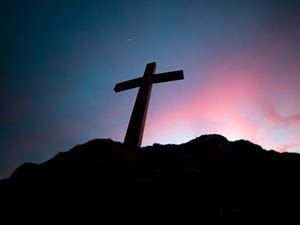
Lightstock
Our God grounded the Sabbath rest in the biblical accounts of both creation and covenant. He then expanded his covenant with Israel to all the nations through the power of the cross (Romans 1:16). Yet although man was made for rest in God, we sacrificed that joyful rest as sin besmirched the world. Still today, we claw and scratch and kick and scream in order to earn God’s favor. We run restless with anxiety, fear, and guilt over unforgiven sin. In Augustine’s words, “Our hearts are restless, Lord, until they find their rest in Thee.” Thus, all of life apart from Christ, seems a striving to succeed, a striving not to fail, or a striving to please others. We know not happiness in this life apart from Christ. Yet as we rest in God, we discover perfect peace, forgiveness for our sin, and freedom from life’s worries. God’s rest is paradise restored.
The Sabbath day for Israel was but a brief reminder of paradise lost—what might have been—what they’d been missing. Yet like watching a movie on TV instead of the big screen, God’s rest never quite attained its monumental import. Until Christ came, God’s Sabbath rest could not be fully realized. Until Christ came, God’s Sabbath rest was just a shadow. Yet once Christ came to fulfill the promises of creation and the covenant, the Sabbath symbol was no longer needed. As Jesus promised of himself, “‘Come to me, all who labor and are heavy laden, and I will give you rest” (Matthew 11:28). Jesus offered the blessed rest for which we had been longing. As the old, Mosaic covenant was fulfilled, the cross became the new covenant symbol of God’s rest. For as Paul would explain, the Sabbath was merely “a shadow of the things to come, but the substance belongs to Christ” (Colossians 2:17). Thus, the church no longer must observe the Sabbath day for the Sabbath has been fulfilled in Christ.
Jesus made this clear distinction throughout his ministry as when he healed the paralytic: “The Sabbath was made for man, not man for the Sabbath. So the Son of Man is lord even of the Sabbath” (Mark 2:27–28). The Jews had grown preoccupied with keeping the Sabbath rules until it no longer felt either like a day of rest or a day of mercy. They even got upset when Jesus performed miraculous healings on the Sabbath. They could not see how the Messiah bringing comfort and hope was a greater fulfillment of the Sabbath than abstaining from their work. Entombed by their own legalism, they forgot that the Sabbath was made for man. Even worse, they refused to worship the Lord of the Sabbath himself. They did not know that joyful rest had found its climax in Jesus Christ when he gave his life upon the cross. For like he had declared on Day 6 of the creation week, so also Jesus bellowed from the cross: “It is finished” (John 19:30). Just as creation was completed in the beginning, so Christ completed his work of re-creation at the cross. He took his Sabbath rest within the tomb to rise again just three days later.
Jesus then arose not on the Sabbath, but on a Sunday (Mark 16:1-6). Thus, the church today now worships every Sunday, on the first day of the week (e.g., Acts 20:7). We do not abolish the Sabbath principles of rest, but we have now added to our joy. For on that first Creation Sabbath, God rejoiced over all that he had made (Genesis 1:31). Then, on that initial Easter Sunday, God rejoiced at Christ’s resurrection (1 Corinthians 15:4). Therefore, every Sunday following, the church now celebrates Christ who died for sin, was buried in the grave, and rose again on the first day of the week. On Sundays, we rejoice with Jesus who ushers us into the Father’s rest. For only in Christ can we claim the forgiveness of our sin. Only in Christ do we possess such perfect peace and freedom from anxiety. Only in Christ can we sing the songs of both creation and the covenant as we stand in restful joy before our Savior’s cross.
7/27/2023 9:47:19 PM
featured writer
more at patheos
1
Did a Church Father Deny Christ's Real Presence at Mass?
2

Iran and Just War: A Catholic Assessment
3
Why don't you come to your senses?
4

Christianity is Far More Radical Than Leftist Ideologies

About Tom Sugimura
Tom Sugimura is a pastor-writer, church planting coach, and professor of biblical counseling. He writes at tomsugi.com, ministers the gospel at New Life Church, and hosts the Every Peoples Podcast. He and his wife cherish the moments as they raise their four kids in Southern California.
Patheos Explore the world's faith through different perspectives on religion and spirituality! Patheos has the views of the prevalent religions and spiritualities of the world.
Ad-Free & Subscriber Log-In Subscription Support
- About Us
- 2026 Calendar
- Videos
- Podcasts
- Library of World Religions
- Faith In Media Tracker
- Advertise With Us
- Write for Us
- Privacy Policy
- Terms of Service
- Do Not Sell My Data
- Contact Us
- Radiant Digital
- Manage Newsletter Subscriptions
- Unsubscribe From Notifications
- Sitemap
Copyright 2008-2026, Patheos. All rights reserved.
Subscription Support Ad-Free & Subscriber Log-In
Follow Patheos