
BuddhistCatholicContemplativeEvangelicalGeneral ChristianHinduJewishLatter-day SaintMuslimNew VisionsProgressive Christian
Beliefs
- Buddhist
- Catholic
- Contemplative
- Evangelical
- General Christian
- Hindu
- Jewish
- Latter-day Saint
- More Voices
- Muslim
- New Visions
- Pagan
- Progressive Christian
Topics
- Religion News
- Food and Religion
- Sports and Religion
- Religious Art
- Religious Music and Entertainment
- Religious Events
- History and Religion
- Style and Religion
- Politics and Religion
- Women in Religion
- Recreation Outdoors and Religion
- Business Finance and Religion
- Careers Workplace and Religion
- Education and Religion
- Family Parenting and Religion
- Health Fitness and Religion
- Home and Religion
- Relationships and Religion
- Technology and Religion
- Travel and Religion
Columnists
- Buddhist Columnists
- Business Finance and Religion Columnists
- Careers Workplace and Religion Columnists
- Catholic Columnists
- Contemplative Columnists
- Education and Religion Columnists
- Evangelists Columnists
- Family Parenting and Religion Columnists
- General Christian Columnists
- Health Fitness and Religion Columnists
- Hindu Columnists
- History and Religion Columnists
- Home and Religion Columnists
- Jewish Columnists
- More Voices Columnists
- Latter Day Columnists
- Muslim Columnists
- New Visions Columnists
- Nonreligious Columnists
- Pagan Columnists
- Politics and Religion Columnists
- Progressive Columnists
- Recreation Outdoors and Religion Columnists
- Relationships and Religion Columnists
- Religion News Columnists
- Religious Art Columnists
- Religious Events Columnists
- Religious Music and Entertainment Columnists
- Sports and Religion Columnists
- Style and Religion Columnists
- Technology and Religion Columnists
- Travel and Religion Columnists
- Women in Religion Columnists
Resource Library
- 2026 Calendar
- Library of World Religions
- The 100 Most Holy Places on Earth
- Patheos Answers
- Podcasts
- Videos
- Faith Leaders Database
- Anglican Episcopalian
- Bahai
- Baptist
- Buddhism
- Christianity
- Confucianism
- Eastern Orthodoxy
- Hinduism
- Holiness and Pentecostal
- ISKCON
- Islam
- Judaism
- Lutheran
- Methodist
- The Church of Jesus Christ of Latter-day Saints
- New Age
- Paganism
- Presbytarian and Reformed
- Protestantism
- Religion Behind the Scenes
- Roman Catholic
- Scientology
- Shia Islam
- Sikhism
- Sufism
- Sunni Islam
- Taoism
- Zen
- See all religions
Research Tools
 Ad-Free & Subscriber Log-In Subscription Support
Ad-Free & Subscriber Log-In Subscription Support
Follow Patheos 

- Trending:
- Forgiveness
- |
- Marriage
- |
- Consciousness
- |
- Death Penalty
- |
- Election
- |
- Halloween
Courage for the Fainthearted
July 02, 2026 by Tom Sugimura
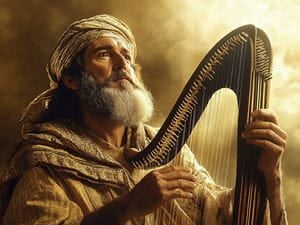
Adobe Stock
In Psalm 61, David rests his hope upon God’s holy character—his eternal promises and comforting presence. He petitions, “Hear my cry, O God, listen to my prayer; from the end of the earth I call to you when my heart is faint” (vv. 1-2a). David is exiled from Jerusalem—from his palace and his people. Yet “the end of the earth” can also be a spiritual metaphor as the psalmist feels distant from God. His heart is faint, discouraged, and weary from the dangers all around him. He is exhausted by life’s pressures, brought low by the sorrows of sin, and emptied out to the point of death.
Rock
So, David cries for help with powerful word pictures to convey his confidence in God. First, he prays, “Lead me to the rock that is higher than I” (61:2a). In the wilderness, a rock is a place of safety—out of reach from the dangers below. But more than just a physical rock, David seeks the Lord to be his Rock. For David might be the king, yet God is the Rock who stands higher than him. As the Scriptures progress, we discover this Rock to be Christ himself—the Son of God (1 Corinthians 10:4). He keeps us safe beyond the enemy’s reach, yet none can reach him by ourselves. We must be led by God’s Holy Spirit, who awakens our souls, alerts us to our need, and secures our commitment to Christ. So, we pray from the midst of our wilderness: Lead us to Christ, our Rock and our Redeemer.
Refuge
David continues, “For you have been my refuge, . . . Let me take refuge under the shelter of your wings!” (Psalm 61:3a, 4b). God has been his refuge in the past, so God will be his refuge once again. David’s present prayer is based on God’s past faithfulness. We discover this Refuge also to be Christ himself as the sure and steadfast Anchor of our souls (Hebrews 6:18-20). For Christ would brave the storm on our behalf and grant us access to the Father.
Strong Tower
The Lord also stands as our “strong tower” (Psalm 61:3b). For if the enemy breaches the walls of an ancient city, the people run to the tallest tower for a final stand. The door is shut and barred tight. The tower provides both protection and companionship. In this way, “The name of the Lord is a strong tower; the righteous man runs into it and is safe” (Proverbs 18:10). So, when we are in trouble, let us run to God, name his names, and remember his holy character. For he is our Strong Tower who always keeps us safe.
Dwelling Place
David then pictures himself dwelling in God’s tent—the tabernacle of Israel, ornately designed for God’s people to meet with God (Psalm 61:4a; see Exodus 25:1-9). Yet David has been exiled from the city away from this place of worship. He longs to return once more and envisions the day when he will worship God for all eternity. Even more remarkably, though, the tabernacle foreshadows the coming Messiah—David’s Greater Son. For when Jesus comes as a man, “the Word became flesh and dwelt among us, and we have seen his glory, glory as of the only Son from the Father, full of grace and truth” (John 1:14). At his incarnation, God’s Son tabernacles with his people and ushers us into his Father’s glory. In Christ Jesus, we encounter both grace and truth with the promise that we shall dwell with him forever (Revelation 21:3-4).
Shelter
Lastly, David imagines God as a mother hen providing shelter for her chicks (Psalm 61:4b). Beneath her mighty wings, they are protected from the wind and rain. She keeps them warm beside her beating heart and willingly bears the discomfort of the elements. Such is the instinct of a mother bird and such is the nature of our God. Jesus himself would use this metaphor to describe his love for Israel, promising salvation to any who could testify, “Blessed is he who comes in the name of the Lord” (Matthew 23:37-39).
Praise
In Psalm 61, David uses such vivid word pictures to declare his faith in God. He then concludes: “So will I ever sing praises to your name, as I perform my vows day after day” (v. 8). David commits to trusting God day after day for the remainder of his life. As at a wedding, he speaks his vows in the ceremony, then renews them in daily practice. So also, worship, like marriage, is an everyday commitment. We cry out to God in humble prayer when we’re troubled in the wilderness. We claim him as our Shelter when we’re battered by the storm. We trust him as our Rock and Refuge—our Strong Tower and our Dwelling Place. Then, as we commit our trust to God, we praise Christ as our Precious Savior.
Pray Psalm 61:
- O God, you are my Rock and my Refuge—my Strong Tower when my heart grows faint (vv. 1-3).
- I long to worship you for all eternity and sing praises to your name forever (vv. 4-5, 8).
- May Christ be enthroned as King for every generation (vv. 6-7).
7/2/2026 4:01:05 PM
more at patheos
1
2

7 Scriptures for Overcoming Workplace Anxiety
3

A Response to Francis Chan's Public Apology
4
This Is My Song: How Black Artists Changed American Music

About Tom Sugimura
Tom Sugimura is a pastor-writer, church planting coach, and professor of biblical counseling. He writes at tomsugi.com, ministers the gospel at New Life Church, and hosts the Every Peoples Podcast. He and his wife cherish the moments as they raise their four kids in Southern California.
Patheos Explore the world's faith through different perspectives on religion and spirituality! Patheos has the views of the prevalent religions and spiritualities of the world.
Ad-Free & Subscriber Log-In Subscription Support
- About Us
- 2026 Calendar
- Videos
- Podcasts
- Library of World Religions
- Faith In Media Tracker
- Advertise With Us
- Write for Us
- Privacy Policy
- Terms of Service
- Do Not Sell My Data
- Contact Us
- Radiant Digital
- Manage Newsletter Subscriptions
- Unsubscribe From Notifications
- Sitemap
Copyright 2008-2026, Patheos. All rights reserved.
Subscription Support Ad-Free & Subscriber Log-In
Follow Patheos