
BuddhistCatholicContemplativeEvangelicalGeneral ChristianHinduJewishLatter-day SaintMuslimNew VisionsProgressive Christian
Beliefs
- Buddhist
- Catholic
- Contemplative
- Evangelical
- General Christian
- Hindu
- Jewish
- Latter-day Saint
- More Voices
- Muslim
- New Visions
- Pagan
- Progressive Christian
Topics
- Religion News
- Food and Religion
- Sports and Religion
- Religious Art
- Religious Music and Entertainment
- Religious Events
- History and Religion
- Style and Religion
- Politics and Religion
- Women in Religion
- Recreation Outdoors and Religion
- Business Finance and Religion
- Careers Workplace and Religion
- Education and Religion
- Family Parenting and Religion
- Health Fitness and Religion
- Home and Religion
- Relationships and Religion
- Technology and Religion
- Travel and Religion
Columnists
- Buddhist Columnists
- Business Finance and Religion Columnists
- Careers Workplace and Religion Columnists
- Catholic Columnists
- Contemplative Columnists
- Education and Religion Columnists
- Evangelists Columnists
- Family Parenting and Religion Columnists
- General Christian Columnists
- Health Fitness and Religion Columnists
- Hindu Columnists
- History and Religion Columnists
- Home and Religion Columnists
- Jewish Columnists
- More Voices Columnists
- Latter Day Columnists
- Muslim Columnists
- New Visions Columnists
- Nonreligious Columnists
- Pagan Columnists
- Politics and Religion Columnists
- Progressive Columnists
- Recreation Outdoors and Religion Columnists
- Relationships and Religion Columnists
- Religion News Columnists
- Religious Art Columnists
- Religious Events Columnists
- Religious Music and Entertainment Columnists
- Sports and Religion Columnists
- Style and Religion Columnists
- Technology and Religion Columnists
- Travel and Religion Columnists
- Women in Religion Columnists
Resource Library
- 2026 Calendar
- Library of World Religions
- The 100 Most Holy Places on Earth
- Patheos Answers
- Podcasts
- Videos
- Faith Leaders Database
- Anglican Episcopalian
- Bahai
- Baptist
- Buddhism
- Christianity
- Confucianism
- Eastern Orthodoxy
- Hinduism
- Holiness and Pentecostal
- ISKCON
- Islam
- Judaism
- Lutheran
- Methodist
- The Church of Jesus Christ of Latter-day Saints
- New Age
- Paganism
- Presbytarian and Reformed
- Protestantism
- Religion Behind the Scenes
- Roman Catholic
- Scientology
- Shia Islam
- Sikhism
- Sufism
- Sunni Islam
- Taoism
- Zen
- See all religions
Research Tools
 Ad-Free & Subscriber Log-In Subscription Support
Ad-Free & Subscriber Log-In Subscription Support
Follow Patheos 

- Trending:
- Forgiveness
- |
- Marriage
- |
- Consciousness
- |
- Death Penalty
- |
- Election
- |
- Halloween
Christian Worship in Schools: A UK Debate
June 04, 2025 by Matthew Allen
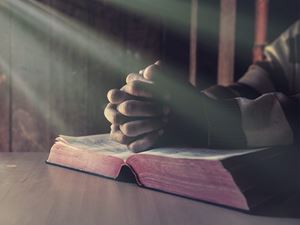
Northern Ireland schools that receive state funding, and their counterparts in England and Wales, are obliged by law to facilitate one act of Christian worship every day (typically during assembly). However, it isn’t compulsory for any child to participate; a caregiver may choose to withdraw their kids from these acts of worship.
This raises questions around whether the current law divides children more than it unifies them. I should say that parents who choose to withdraw their children from assemblies are not at fault in this; the law puts them in an awkward and unenviable situation.
Every now and then, the collective worship rule draws the public interest and results in fresh rounds of debate (after which, if past experience is anything to go by, nothing ever changes).
Recently, for example, the British House of Lords debated a legislative proposal called the Education (Assemblies) Bill, ‘to repeal the requirement for those schools [all state-funded schools, that is] to hold collective worship’.
Interestingly, the Church of England bishops represented in the House (yes; in the UK, senior bishops double as politicians!) did not all side with one viewpoint or the other. It goes to show that, on this issue, there isn’t a ‘party line’ that every Christian has to support.
In that light, I was more persuaded by the points in the bill’s favor than those against. Lord Davies (Labour) argued, for example, that having to make a decision as to whether a child should be withdrawn from assembly ‘places an unfair burden on families and can isolate children from their peers’.
Baroness Bennett, the former Green Party leader, suggested a secular alternative to religious assemblies: ‘a local theatre group could come in [to school] and put on a little play that poses a moral conundrum, which could then be discussed.’
What a great idea! This would also help to re-balance the curriculum, which places far too much emphasis on STEM (Science, Technology, Engineering, and Mathematics).
If you’re a Christian, don’t misunderstand what I’m about. I hope that every child would come to know God’s love, and I’ve never taken a back seat while others do the Lord’s work. I get up every Sunday morning and volunteer in a local parish, teaching the Bible and the Christian faith to kids.
Christianity means everything to me, but is teacher-led worship acceptable, nowadays, in a state-funded school? (Schools run by Christian denominations, of course, are a different matter).
Even as an Anglican and a Sunday school teacher, I would struggle to justify mandatory collective worship. I’m always up for sharing the Good News with anyone who wants to hear it. State-funded schools, on the other hand, must cater for the whole community.
Consider a different aspect of education: sexuality and relationships. It would be deeply wrong to pitch RSE (Relationships and Sexuality Education) solely to the heterosexual population. Imagine, for instance, telling a room filled with 16-year-olds of all different orientations that sex is only for straight couples.
This is what happened when I was at school… an outside group (with a Christian ethos) came in to give us a presentation. They sent us an ambassador of abstinence, who told us (brace for cringe) that: ‘You’ll have the best sex of your life if you wait until marriage’! This was before same-sex marriage was legalized in Northern Ireland, so you can guess who that left out.
Exclusion of anyone based on their minority sexual orientation is unacceptable. Why, then, should we be content with sidelining the non-religious and those of non-Christian faiths?
I mentioned above that I’m a practicing Anglican. It was once the case that my denomination, the Church of Ireland, was the state-sponsored faith on this island. William Gladstone, the Liberal British prime minister, as part of his reforming agenda, took away the Church’s official status in 1869. Henceforth, we would have to make our own case to the people of Ireland, north and south, without a leg up from Big Brother.
Christians must learn to stand on our own two feet, like the Church of Ireland all those years ago, shunning unfair assistance from government. In this case, help comes from the state in the form of making schools offer Christian worship, even when that school does not hold an explicitly Christian ethos.
I remember primary school assemblies. There was always one child of a different faith (a Muslim kid, in all probability), sitting alone outside the hall. His peers had gone in for their Christian assembly, leaving him on his own. I remember that lonely child much more vividly than anything that was ever preached or prayed in the hall.
Two decades later, with immigration and social change, it’s not uncommon for double-digit numbers of kids to have to wait patiently, their education put on hold, while their Christian peers take part in assembly.
Societies across the western world are becoming religiously more diverse. Like it or not, it’s a fact. Integration between adherents of different faiths, then, is a must. Shared experience is the foundation of an integrated society. How does it make for a common experience of school when we segregate children by creed?
What impression does mandatory worship send out about us, as Christians? Do we seem chauvinistic with our beliefs? – only too happy to give them special status and privilege?
I don’t expect any change in the law to come from this latest spike of interest in state schools and mandatory collective worship. It has, nevertheless, given those of us who hadn’t really considered the topic (and I would include myself in this category) the chance to clarify what we think.
6/4/2025 5:48:02 PM
featured writer
more at patheos
1

Can You Know the Bible and Still Not Be a Disciple?
2

3
Sunday Readings: Faith, Trust, And Discipleship In Focus
4

About Matthew Allen
Matthew Allen is a writer and musician based in Northern Ireland. He is a graduate of Queen’s University, Belfast, where he studied Theology and Liberal Arts.
Patheos Explore the world's faith through different perspectives on religion and spirituality! Patheos has the views of the prevalent religions and spiritualities of the world.
Ad-Free & Subscriber Log-In Subscription Support
- About Us
- 2026 Calendar
- Videos
- Podcasts
- Library of World Religions
- Faith In Media Tracker
- Advertise With Us
- Write for Us
- Privacy Policy
- Terms of Service
- Do Not Sell My Data
- Contact Us
- Radiant Digital
- Manage Newsletter Subscriptions
- Unsubscribe From Notifications
- Sitemap
Copyright 2008-2026, Patheos. All rights reserved.
Subscription Support Ad-Free & Subscriber Log-In
Follow Patheos