
BuddhistCatholicContemplativeEvangelicalGeneral ChristianHinduJewishLatter-day SaintMuslimNew VisionsProgressive Christian
Beliefs
- Buddhist
- Catholic
- Contemplative
- Evangelical
- General Christian
- Hindu
- Jewish
- Latter-day Saint
- More Voices
- Muslim
- New Visions
- Pagan
- Progressive Christian
Topics
- Religion News
- Food and Religion
- Sports and Religion
- Religious Art
- Religious Music and Entertainment
- Religious Events
- History and Religion
- Style and Religion
- Politics and Religion
- Women in Religion
- Recreation Outdoors and Religion
- Business Finance and Religion
- Careers Workplace and Religion
- Education and Religion
- Family Parenting and Religion
- Health Fitness and Religion
- Home and Religion
- Relationships and Religion
- Technology and Religion
- Travel and Religion
Columnists
- Buddhist Columnists
- Business Finance and Religion Columnists
- Careers Workplace and Religion Columnists
- Catholic Columnists
- Contemplative Columnists
- Education and Religion Columnists
- Evangelists Columnists
- Family Parenting and Religion Columnists
- General Christian Columnists
- Health Fitness and Religion Columnists
- Hindu Columnists
- History and Religion Columnists
- Home and Religion Columnists
- Jewish Columnists
- More Voices Columnists
- Latter Day Columnists
- Muslim Columnists
- New Visions Columnists
- Nonreligious Columnists
- Pagan Columnists
- Politics and Religion Columnists
- Progressive Columnists
- Recreation Outdoors and Religion Columnists
- Relationships and Religion Columnists
- Religion News Columnists
- Religious Art Columnists
- Religious Events Columnists
- Religious Music and Entertainment Columnists
- Sports and Religion Columnists
- Style and Religion Columnists
- Technology and Religion Columnists
- Travel and Religion Columnists
- Women in Religion Columnists
Resource Library
- 2026 Calendar
- Library of World Religions
- The 100 Most Holy Places on Earth
- Patheos Answers
- Podcasts
- Videos
- Faith Leaders Database
- Anglican Episcopalian
- Bahai
- Baptist
- Buddhism
- Christianity
- Confucianism
- Eastern Orthodoxy
- Hinduism
- Holiness and Pentecostal
- ISKCON
- Islam
- Judaism
- Lutheran
- Methodist
- The Church of Jesus Christ of Latter-day Saints
- New Age
- Paganism
- Presbytarian and Reformed
- Protestantism
- Religion Behind the Scenes
- Roman Catholic
- Scientology
- Shia Islam
- Sikhism
- Sufism
- Sunni Islam
- Taoism
- Zen
- See all religions
Research Tools
 Ad-Free & Subscriber Log-In Subscription Support
Ad-Free & Subscriber Log-In Subscription Support
Follow Patheos 

- Trending:
- Forgiveness
- |
- Marriage
- |
- Consciousness
- |
- Death Penalty
- |
- Election
- |
- Halloween
Progressive Christian
An Irish Anglican Finds Home on Vancouver Island
July 06, 2026 by Matthew Allen
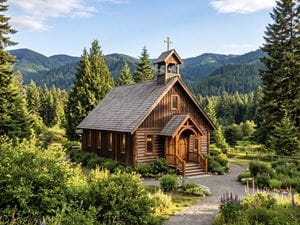
St Christopher, about whom we do not know much outside tradition, is often invoked as the defender of travelers. In legend, it was Christopher who shouldered the Christ Child and waded across treacherous waters to set him down on the distant shore, where it would be safe. Christopher, therefore, came to be known as the saint in whom we trust for safe conduct on our travels.
It was a nice coincidence, then, that in the town of Lake Cowichan, British Columbia, the church I visited was called St. Christopher's and St. Aidan's. (We'll call it St. C's and St. A's for short.) Aidan was an Irish saint, and this was a nice coincidence also. There is no better combination of saints who could have welcomed us to Vancouver Island, the visitors from Ireland that we were!
St. C's and St. A's boast a beautiful wooden exterior dotted with shrubs. It has about as North American a look as can be – with its rustic, somewhat barn-like aesthetic. Inside, the wooden theme continues as almost all the main fixtures are made with local varieties of timber.
There is an information board inside St. C's and St. A's that explains how the church came about. It relates that Anglicans have been active in Lake Cowichan since 1912, and that a certain Reverend Christmas was the town's first incumbent. It made me smile to think that, had Reverend Christmas been a Roman cleric, then his title would've been Father Christmas!
Now, the reason the church's name has two saints in it (one saint is the norm) is not far to seek. St. C's and St. A's were once two distinct entities, in different locations, before their eventual unification.
St. C's traces its roots back to 1948, when a lumber merchant made resources available to build an Anglican church. It was erected at Mesachie Lake, four miles (≈ 6½ km) from Lake Cowichan. Until then, services in the area had been itinerant, not fixed in a consistent location. Construction, which enlisted scores of local hands, took around 18 months, all told.
St. A's was built in the heart of Lake Cowichan. Anglicans in the town had looked at St. C's, four miles down the road, and fancied their own church a little closer to home. Connections between the faithful of St. C's and the faithful of St. A's flourished in short order, with close bonds of affection between the two communities visible from the outset.
Some three decades later, the church of St. C's was moved from the site at Mesachie Lake to where it stands now: beside St. A's in Lake Cowichan. Yes, the church was dismantled, lifted onto flatbed vehicles, and relocated. The first vehicle rolled out of Mesachie Lake at dawn on June 18, 1980. The last vehicle arrived in Lake Cowichan before lunchtime!
St. C's was reconstructed beside St. A's, and a structure was built which connects the two churches. Now that St. C's had been relocated to Lake Cowichan, it was decided that St. A's would cease to host services; it would become the local hall, where social functions and other events could be held. Nevertheless, the saints associated with both churches were included in the combined church's new name.
It was in St. C's, then, that we took our seats for the Eucharist, which followed the same structure that a service in the Church of Ireland would. I noticed obvious differences, however, when it came to the music. In the British Isles, the choral tradition of English cathedrals is our touchstone. In St. C's and St. A's, North American folk influence was front and center. Harmonies whirled from the Hammond organ. Familiar tunes, like "Great Is Thy Faithfulness," had more of a lilt.
Now, to the main event. I like to comment, when I write about churches, on the sacramental wine that's used. I'm afraid St. C's and St. A's use an amber wine instead of a fortified red, but I won't hold that over them; salvation is found in the chalice, even when our favored wine is not!
On a serious note, it was this Eucharist in Lake Cowichan which underlined to me the worldwide reach of our Anglican Communion. Here I was in Canada, 4,200 miles from home, on an unfamiliar continent; and I felt as connected to the Anglican faith as if I had never left Ireland. The Anglican Communion is often treated as an abstract idea when debates are had about its future direction. It is, however, not an abstraction but a vibrant, worldwide network: there to welcome us home when we land on distant shores.
After the dismissal, we crossed into St. A's hall for nibbles. There was a table, on the far side, furnished with treats: from homemade cheesecake to fresh watermelon slices. There was a drinks table with tea, coffee, milk, and a substance known as "cream." I treated this "cream," oblivious tourist as I was, like an alien fluid. Thanks to the internet, I now know that "cream" is what North Americans call full-fat milk. I harbor no further hostilities towards it.
We took our snacks to the central table, where seats had been set out; and we were treated with kindness and warmth. In between all the cheesecake and watermelon, we heard stories about ancestral homelands in Ireland. (One ancestor almost sailed on the Titanic!) I have set foot in churches where not even a basic welcome is offered. But folk in St. C's and St. A's went further than a mere welcome and showed us inclusion: a literal seat around the table.
It was time to bid St. C's and St. A's farewell, and we drove into the sunshine of a summer afternoon with new memories made. The Eucharist and the coffee time afterward reminded me that Anglicanism is an international faith and that our connections with other Anglicans around the world are to be cherished. In fact, where faith is concerned, I now feel that I have a home from home.
Thanks to St. C's and St. A's for our visit!
7/6/2026 8:28:55 PM
more at patheos
1
Patheos May 2022 Featured Writer Gene Edward Veith
2

Patheos November 2024 Featured Writer
3
Patheos July 2022 Featured Writer James Ford
4
Patheos June 2022 Featured Writer Duncan Edward Pile

About Matthew Allen
Matthew Allen is a writer and musician based in Northern Ireland. He is a graduate of Queen’s University, Belfast, where he studied Theology and Liberal Arts.
Patheos Explore the world's faith through different perspectives on religion and spirituality! Patheos has the views of the prevalent religions and spiritualities of the world.
Ad-Free & Subscriber Log-In Subscription Support
- About Us
- 2026 Calendar
- Videos
- Podcasts
- Library of World Religions
- Faith In Media Tracker
- Advertise With Us
- Write for Us
- Privacy Policy
- Terms of Service
- Do Not Sell My Data
- Contact Us
- Radiant Digital
- Manage Newsletter Subscriptions
- Unsubscribe From Notifications
- Sitemap
Copyright 2008-2026, Patheos. All rights reserved.
Subscription Support Ad-Free & Subscriber Log-In
Follow Patheos