
BuddhistCatholicContemplativeEvangelicalGeneral ChristianHinduJewishLatter-day SaintMuslimNew VisionsProgressive Christian
Beliefs
- Buddhist
- Catholic
- Contemplative
- Evangelical
- General Christian
- Hindu
- Jewish
- Latter-day Saint
- More Voices
- Muslim
- New Visions
- Pagan
- Progressive Christian
Topics
- Religion News
- Food and Religion
- Sports and Religion
- Religious Art
- Religious Music and Entertainment
- Religious Events
- History and Religion
- Style and Religion
- Politics and Religion
- Women in Religion
- Recreation Outdoors and Religion
- Business Finance and Religion
- Careers Workplace and Religion
- Education and Religion
- Family Parenting and Religion
- Health Fitness and Religion
- Home and Religion
- Relationships and Religion
- Technology and Religion
- Travel and Religion
Columnists
- Buddhist Columnists
- Business Finance and Religion Columnists
- Careers Workplace and Religion Columnists
- Catholic Columnists
- Contemplative Columnists
- Education and Religion Columnists
- Evangelists Columnists
- Family Parenting and Religion Columnists
- General Christian Columnists
- Health Fitness and Religion Columnists
- Hindu Columnists
- History and Religion Columnists
- Home and Religion Columnists
- Jewish Columnists
- More Voices Columnists
- Latter Day Columnists
- Muslim Columnists
- New Visions Columnists
- Nonreligious Columnists
- Pagan Columnists
- Politics and Religion Columnists
- Progressive Columnists
- Recreation Outdoors and Religion Columnists
- Relationships and Religion Columnists
- Religion News Columnists
- Religious Art Columnists
- Religious Events Columnists
- Religious Music and Entertainment Columnists
- Sports and Religion Columnists
- Style and Religion Columnists
- Technology and Religion Columnists
- Travel and Religion Columnists
- Women in Religion Columnists
Resource Library
- 2026 Calendar
- Library of World Religions
- The 100 Most Holy Places on Earth
- Patheos Answers
- Podcasts
- Videos
- Faith Leaders Database
- Anglican Episcopalian
- Bahai
- Baptist
- Buddhism
- Christianity
- Confucianism
- Eastern Orthodoxy
- Hinduism
- Holiness and Pentecostal
- ISKCON
- Islam
- Judaism
- Lutheran
- Methodist
- The Church of Jesus Christ of Latter-day Saints
- New Age
- Paganism
- Presbytarian and Reformed
- Protestantism
- Religion Behind the Scenes
- Roman Catholic
- Scientology
- Shia Islam
- Sikhism
- Sufism
- Sunni Islam
- Taoism
- Zen
- See all religions
Research Tools
 Ad-Free & Subscriber Log-In Subscription Support
Ad-Free & Subscriber Log-In Subscription Support
Follow Patheos 

- Trending:
- Forgiveness
- |
- Marriage
- |
- Consciousness
- |
- Death Penalty
- |
- Election
- |
- Halloween
An Anglican in Inverness
August 12, 2025 by Matthew Allen
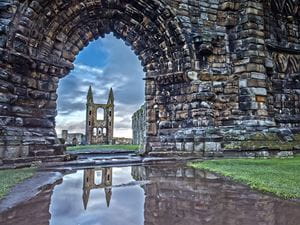
Adobe Stock
Back in 2022, when I was last in Scotland, I wrote a piece called “An Anglican in Edinburgh”, which was great fun to produce. It was a ‘mystery worshipper’ type of article, if I were to draw parallels with other media, but without ranking anyone’s preaching from 1-10!
I reflected on what it was like to receive Holy Communion in three different Episcopal parishes in Scotland’s capital, a small sample of what is on offer in Edinburgh’s Anglican scene. The Diocese of Edinburgh kindly reposted it on Facebook, to my pleasant surprise!
Today’s article focuses on Anglicanism in Inverness, the central hub of the Scottish Highlands. Inverness, where I spent a few days in early July, is the UK’s most northerly city; and while smaller than Edinburgh, there are still a range of options in Inverness for the visiting Anglican…
St Andrew’s Cathedral, Ardross Street
Impressive, though not as grand as Edinburgh Cathedral, St Andrew’s was located on the far side of the River Ness from where my lodgings were (about a 45-minute walk through the city).
Every time I visit a cathedral, I come away with new respect for Christian art and symbolism. Take the statues of saints inlaid in the cathedral buttresses (a buttress is a kind of support for an exterior wall). Denis McNamara, whose book How to Read Churches I bought in the cathedral bookshop, writes that statues of saints inlaid in cathedral buttresses are a common architectural feature. They represent how the church leans upon great figures from the past.
I loved the baptistry, located around the corner to the right when you walk in. It was in the form of an angel statue holding a scallop shell. This angel was crafted with soft, flowing textures in its marble wings, hair and robes – making it a reassuring and approachable sight for the child to be christened.
On the subject of younger visitors (I must’ve been the target audience, then), someone had scattered knitted mouse characters around the cathedral – you had to see whether you could find them all during your visit. It was like an episode of BBC1’s The Clangers, but only the mice were dressed in ecclesiastical garb. Anglicans do have a sense of humour, you know!
After I had roamed around the cathedral’s interior, I stayed for the service of evening prayer. I was all alone in the pews! It was being live-streamed, to be fair; so there could’ve been dozens watching online in their pyjamas, for all I knew.
St John the Evangelist, Southside Road
Situated in a well-heeled part of Inverness, this church was a humble wee parish. It had more of a Church of Scotland (Presbyterian) vibe than the other two churches I visited. I was inordinately delighted to see visible masonry, both inside and outside. If I could make an eleventh commandment, it would be: ‘Thou shalt not smother high-quality brick- and stonework in plaster!’
There were three stained-glass panels in the west window: (1) St John the Evangelist (d. 100 AD); (2) St Columba (d. 597 AD); and (3) St Margaret, Queen of Scotland (d. 1093 AD). You love to see people from such different eras rubbing shoulders. They’d make a formidable quiz team.
Behind the plainly dressed altar, there was a simple reredos carved in wood, with a circle design that evoked the communion elements. It seemed like a church which takes its Anglicanism seriously but in an unpretentious way, which is admirable.
Why was I here, then? It wasn’t for a church service, per se, but for an afternoon concert. It was an eclectic programme: a piano and cello duet; a recorder quartet; a solo pianist; a solo piper; and a solo vocalist (who was also the priest-in-charge, the Rev’d Grace Sironomy).
There was a chance to grab a cup of tea before proceedings began, which I didn’t refuse! Taking a seat with my refreshments, I noticed a good Anglican several pews in front, sipping contentedly from an Oliver Cromwell mug. Scottish Calvinism does cast a long shadow….
First up was the piano/cello double-act. It was nice to hear the instrument I’ve dedicated so much of my life to being played alongside the instrument I’ve always wanted to learn. The quartet, who went next, made up for my previous experience of recorder: learning it with classmates in primary school – a musical apocalypse.
The other acts were fabulous as well. It’s just a shame I wasn’t in Inverness long enough to go to the Sunday service at St John’s. I will, if I’m ever back!
St Michael and All Angels, Abban Street
Located on the same side of the River Ness as the cathedral, St Michael’s is justifiably proud of its links with Sir Ninian Comper, the Scottish architect; an info card in the pews calls the parish church the ‘Comper Jewel in the Highlands of Scotland’ – quite an accolade!
St Michael stands, in statue form, in an alcove above where the votive candles are. I wouldn’t like to try blowing out anyone’s prayers because he’s got a sword in his right hand! Other angelic figures were depicted in the church’s east window; the place is like an army barracks for the heavenly host.
Undoubtedly, the ceiling is the most visually striking feature in the church; it was made up of light-blue square panels outlined in white like a beautiful, Minecrafty sky. Doubtless, this was a reference to the winged angels being airborne creatures, as in the Book of Revelation.
From the celestial ceiling hung a two-tier chandelier, descending to the middle of the nave like something Cersei Lannister would eat her dinner under. It made things interesting for the crucifer during the procession. Carrying a tall object in a room with a chandelier would be quite a navigational challenge for even the most experienced crucifer!
This was very much an Anglo-Catholic parish: ‘After tea/coffee’, read a footnote on the printed order of service, ‘the Angelus and the Rosary will be said in the Lady Chapel, contemplating the Glorious Mysteries’. I decided that I was a little too Protestant for these items!
It was at St Michael’s that I received the Eucharist for the one and only time that I was in Inverness. Anglicans, back home and in Scotland, are good at sensing house rules when it comes to the turn-taking aspect of Holy Communion. It would be nice if it were the perennial board-game rule of ‘youngest player first’ because that would usually be me! Nevertheless, they seemed to have a ‘north aisle first; south aisle second’ etiquette in St Michael’s, which I duly followed.
I’m happy that I was able to squeeze in some fellowship around the Lord’s Table before I left Inverness.
It wouldn’t have been a complete visit, and I wouldn’t have felt qualified to talk about Anglicanism in the city, had I not!
8/12/2025 7:39:32 PM
featured writer
more at patheos
1
2
Who You Are Beneath the Roles You've Played
3

Sarvastivada: An Extinct Buddhist Sect That's Still With Us
4

Meet Catholic Horror and Cyberpunk Writer Michael Gallagher

About Matthew Allen
Matthew Allen is a writer and musician based in Northern Ireland. He is a graduate of Queen’s University, Belfast, where he studied Theology and Liberal Arts.
Patheos Explore the world's faith through different perspectives on religion and spirituality! Patheos has the views of the prevalent religions and spiritualities of the world.
Ad-Free & Subscriber Log-In Subscription Support
- About Us
- 2026 Calendar
- Videos
- Podcasts
- Library of World Religions
- Faith In Media Tracker
- Advertise With Us
- Write for Us
- Privacy Policy
- Terms of Service
- Do Not Sell My Data
- Contact Us
- Radiant Digital
- Manage Newsletter Subscriptions
- Unsubscribe From Notifications
- Sitemap
Copyright 2008-2026, Patheos. All rights reserved.
Subscription Support Ad-Free & Subscriber Log-In
Follow Patheos