
BuddhistCatholicContemplativeEvangelicalGeneral ChristianHinduJewishLatter-day SaintMuslimNew VisionsProgressive Christian
Beliefs
- Buddhist
- Catholic
- Contemplative
- Evangelical
- General Christian
- Hindu
- Jewish
- Latter-day Saint
- More Voices
- Muslim
- New Visions
- Pagan
- Progressive Christian
Topics
- Religion News
- Food and Religion
- Sports and Religion
- Religious Art
- Religious Music and Entertainment
- Religious Events
- History and Religion
- Style and Religion
- Politics and Religion
- Women in Religion
- Recreation Outdoors and Religion
- Business Finance and Religion
- Careers Workplace and Religion
- Education and Religion
- Family Parenting and Religion
- Health Fitness and Religion
- Home and Religion
- Relationships and Religion
- Technology and Religion
- Travel and Religion
Columnists
- Buddhist Columnists
- Business Finance and Religion Columnists
- Careers Workplace and Religion Columnists
- Catholic Columnists
- Contemplative Columnists
- Education and Religion Columnists
- Evangelists Columnists
- Family Parenting and Religion Columnists
- General Christian Columnists
- Health Fitness and Religion Columnists
- Hindu Columnists
- History and Religion Columnists
- Home and Religion Columnists
- Jewish Columnists
- More Voices Columnists
- Latter Day Columnists
- Muslim Columnists
- New Visions Columnists
- Nonreligious Columnists
- Pagan Columnists
- Politics and Religion Columnists
- Progressive Columnists
- Recreation Outdoors and Religion Columnists
- Relationships and Religion Columnists
- Religion News Columnists
- Religious Art Columnists
- Religious Events Columnists
- Religious Music and Entertainment Columnists
- Sports and Religion Columnists
- Style and Religion Columnists
- Technology and Religion Columnists
- Travel and Religion Columnists
- Women in Religion Columnists
Resource Library
- 2026 Calendar
- Library of World Religions
- The 100 Most Holy Places on Earth
- Patheos Answers
- Podcasts
- Videos
- Faith Leaders Database
- Anglican Episcopalian
- Bahai
- Baptist
- Buddhism
- Christianity
- Confucianism
- Eastern Orthodoxy
- Hinduism
- Holiness and Pentecostal
- ISKCON
- Islam
- Judaism
- Lutheran
- Methodist
- The Church of Jesus Christ of Latter-day Saints
- New Age
- Paganism
- Presbytarian and Reformed
- Protestantism
- Religion Behind the Scenes
- Roman Catholic
- Scientology
- Shia Islam
- Sikhism
- Sufism
- Sunni Islam
- Taoism
- Zen
- See all religions
Research Tools
 Ad-Free & Subscriber Log-In Subscription Support
Ad-Free & Subscriber Log-In Subscription Support
Follow Patheos 

- Trending:
- Forgiveness
- |
- Marriage
- |
- Consciousness
- |
- Death Penalty
- |
- Election
- |
- Halloween
- Home
- Evangelical
- Education and Religion
- Answers
- Why Does Hosea Warn That Gods People Perish for Lack of Knowledge
Patheos answers the question:
Why Does Hosea Warn That God’s People ‘Perish For Lack of Knowledge’?
Lightstock
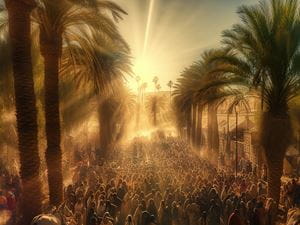
Traditionally dated to somewhere in the 8th century BCE, the Book of Hosea is a book filled with warnings to God’s people; warnings given because of their consistent “unfaithfulness” to their deity and His revealed Law.
In the fourth chapter of the book of Hosea, Yahweh declares, “My people perish for lack of knowledge” (V:6). The Hebrew word translated as “perish” implies that they will be “destroyed,” “cut off,” or “cease” to exist. In other words, “the Lord” (or Jehovah) commands His people through His prophet to “hear” His “words” (V:1). And then He describes what He sees as their unfaithful and unrighteous state
Israel’s God speaks of His “people” (or “nation”)—the “children of Israel” (V:1)—as void of “truth” or the “knowledge of God.” He says that they are guilty of dishonesty, immorality, and violence (V:2) and, as a result, they will be given reason to “mourn” and be “weakened” as God takes from the “the beasts of the filed, the fowls of the air, and the fish of the sea” (V:3).
Having described (through the prophet, Hosea) His discontent with His “people,” Yahweh then informs them that they are like people who “contend” or “argue” with God’s priests and, consequently, they will “fall” (or be “destroyed” Heb.) as will their “spokesman” or “false prophet” (V:5). Indeed, He says “I will destroy thy mother”—a metaphor for the “nation of Israel” or the “people of God” living in the 8th century BCE.
All of this explains the context of what Hosea meant when he declared (on behalf of Yahweh) that “My people are destroyed because they have no knowledge” (ERV) or “my people are destroyed by refusing to obey” (as the Contemporary English Version renders the Hebrew).
Essentially, Israel’s prophet in warning the people that they have put themselves in a precarious situation. They have a God who is aware of them, and a prophet who receives His word (or commandments) for them, and yet they ignore what He gives, choosing to “argue” with the priests and follow the “false prophets” who tell them what they want to hear and who lead them down a path that ends in destruction.
The “knowledge” that Hosea says the people of God are lacking—the “knowledge” that leads to their “destruction”—is the “knowledge of God.” It isn’t that they don’t know about Him or aren’t aware of what He has taught.
Rather, they have His law and His inspired messenger (in the form of Hosea), but they reject it. They don’t want it. As the Darby Translation of this passage explains: “My people are destroyed for lack of knowledge; for thou hast rejected knowledge, and I will reject thee, that thou shalt be no priest to me; seeing thou hast forgotten the law of thy God, I also will forget thy children.”
In the Hebrew Bible, the “children of Israel” were “chosen” to be God’s people, the bearers of His covenant, the recipients of His blessings, and the one’s “authorized” to function in His tabernacle and temple.
However, because these ancient “chosen” people loved the “world” more than God, and they desired the “law” of a flexible “false prophet” more than the law of the Divine, their God would reject them as His “people.”
Here Yahweh informs them that He will take from them their status as His “nation” and remove from them the privilege of having “priests.” Because of their unfaithfulness, they will be—in God’s eyes—like the heathen nations who reject Him and, thereby, lose the blessings He has for those who believe and are faithful to God.
Applying this verse to the believers in his day, Theodore, Bishop of Mopsuestia (AD 350-428), summarized God’s message in this way: “My people are like a priest who is compromised. He has fallen from his previous dignity and does not appear worthy for any reason [or in any way], just as a priest who falls into controversy would be set aside and dishonored by everyone… To the greatest extent he will become weak because of the upcoming evils” in which he will engage. (Theodore, Commentary on Hosea 4.)
Thus, in Hosea’s day and Theodore’s—and presumably in our own era—God says that, if the “kingdom of priests, and [His] holy nation” (Exodus 19:6) choose to become “compromised” through sin and rejection of God’s commandments, then they will “destroy” themselves much like a little child that ignores his mother’s warnings to not run into the street.
Theodore, like Hosea, is saying that those who once had God’s ear and aid may lose both if they reject their God for a more worldly life, a “false prophet” who preaches an “easier way,” or a life without “laws.”
And, true to Hosea’s warning, that is exactly what happened. In circa 732 BCE, the Assyrians took God’s people captive, followed by the Babylonians (in circa 586 BCE), then the Persians (circa 539 BCE), and eventually the Romans (AD 70).
Thus, the warnings of Hosea went unheeded, and God’s people “perished for” their lack of obedience to the “knowledge” God had revealed to him.
9/17/2024 8:46:56 PM
Most Popular

- Home
- Evangelical
- Education and Religion
- Answers
- Why Does Hosea Warn That Gods People Perish for Lack of Knowledge
Catholic
The Sermon on the Mount, Part I: Matthew 4:12-5:12

- Home
- Evangelical
- Education and Religion
- Answers
- Why Does Hosea Warn That Gods People Perish for Lack of Knowledge
Catholic
Janie Learns the Way of the Cross: A Catholic Review

- Home
- Evangelical
- Education and Religion
- Answers
- Why Does Hosea Warn That Gods People Perish for Lack of Knowledge
Entertainment

- Home
- Evangelical
- Education and Religion
- Answers
- Why Does Hosea Warn That Gods People Perish for Lack of Knowledge
Evangelical
How the author of the world's best hymn became a Christian

- Home
- Evangelical
- Education and Religion
- Answers
- Why Does Hosea Warn That Gods People Perish for Lack of Knowledge
Catholic
Looking For Good Catholic Writing - October 2026

- Home
- Evangelical
- Education and Religion
- Answers
- Why Does Hosea Warn That Gods People Perish for Lack of Knowledge

- Home
- Evangelical
- Education and Religion
- Answers
- Why Does Hosea Warn That Gods People Perish for Lack of Knowledge
INNER CIRCLE: Profound Mystery (Of Christ In All Of Us)

- Home
- Evangelical
- Education and Religion
- Answers
- Why Does Hosea Warn That Gods People Perish for Lack of Knowledge
General Christian
What Does Gêvâh Mean For Kimberley Guifoyle & Pete...

- Home
- Evangelical
- Education and Religion
- Answers
- Why Does Hosea Warn That Gods People Perish for Lack of Knowledge
General Christian

- Home
- Evangelical
- Education and Religion
- Answers
- Why Does Hosea Warn That Gods People Perish for Lack of Knowledge
Evangelical
Do Not Rejoice When Your Enemy Falls: The Cheers for Death

- Home
- Evangelical
- Education and Religion
- Answers
- Why Does Hosea Warn That Gods People Perish for Lack of Knowledge
Progressive Christian
The purpose-driven labor priest
- Home
- Evangelical
- Education and Religion
- Answers
- Why Does Hosea Warn That Gods People Perish for Lack of Knowledge
The Golden Rule Demands More than We Think
Patheos Explore the world's faith through different perspectives on religion and spirituality! Patheos has the views of the prevalent religions and spiritualities of the world.
Ad-Free & Subscriber Log-In Subscription Support
- About Us
- 2026 Calendar
- Videos
- Podcasts
- Library of World Religions
- Faith In Media Tracker
- Advertise With Us
- Write for Us
- Privacy Policy
- Terms of Service
- Do Not Sell My Data
- Contact Us
- Radiant Digital
- Manage Newsletter Subscriptions
- Unsubscribe From Notifications
- Sitemap
Copyright 2008-2026, Patheos. All rights reserved.
Subscription Support Ad-Free & Subscriber Log-In
Follow Patheos